|
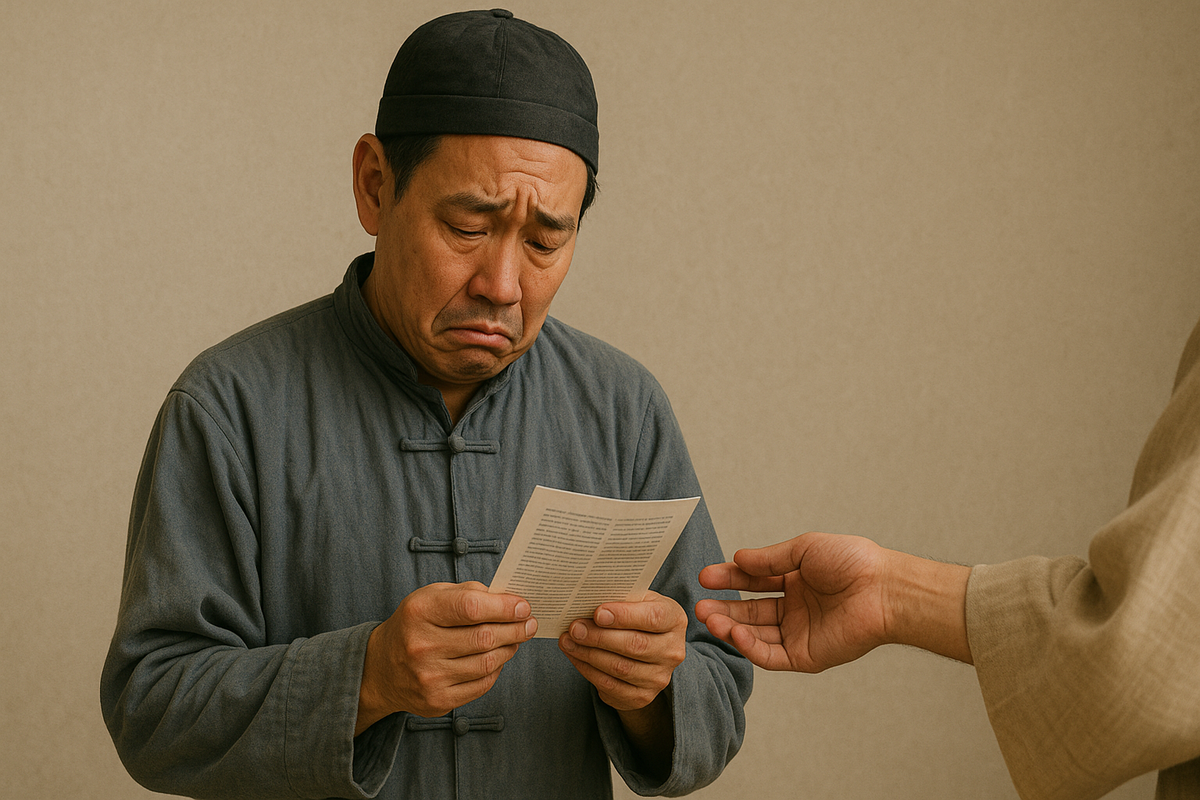
Knowledge 101 Let’s talk about knowing things. Knowing — possessing internalized information — is sometimes a thing that happens without our realizing it. You didn’t decide to learn your colors or hold your breath in water, it just happened. But most often, the older we get, our knowing things takes intentional effort. Seeking to know is a key part of being human. Take reading. When my teens were little, I had the privilege of teaching them each to read. We used a Costco boxset of Bob Books and The Ordinary Parents’ Guide to Teaching Reading, and off we went. I thought of this recently when I encountered the protagonist of Pearl S. Buck’s The Good Earth, Wang Lung: Chinese peasant-turned-landowner. He comes across a written pamphlet for the first time: “A man thrust into his hand a paper printed with strange black marks. Wang Lung stared at it, and because he could not read, he turned it over and over in his hands.” He seeks someone to explain the pamphlet to him and feels shame that he can’t read. But honestly, why does reading matter — to my kids, or to Wang Lung? It matters because by doing it we gain information and access knowledge. When your child reads, he can access the mac-and-cheese box instructions to cook, road signs to stay safe in the neighborhood, books about training the new puppy. The world opens up. If Wang Lu could read, he could understand the brochure, be more civically equipped, and best protect his family. Knowledge gained. And knowledge is better than ignorance; no one prefers ignorance. We all know this innately. That knowledge is better than ignorance is a “first principle” — a foundational, self-evident truth that just is and can’t be proven (like “health is better than sickness,” and “beauty is better than ugliness”). From natural law we become aware that knowledge is, in fact, a basic good. It’s good for its own sake, and pursuing it is always reasonable. So, as you pursue knowledge, you flourish over time. But knowledge isn’t just about literacy. (However great reading is.) There are hundreds of paths to knowledge. We pursue knowledge when we observe elements of nature, study our times tables, learn musical notes and how to play an instrument, succeed in growing crops, effectively steer a sailboat, train a dog to fetch a stick. You get the idea. Growing in knowledge in all these ways enriches our lives and helps us. A key thing here — we must understand this about knowledge — is that it relates to what is real. Knowledge is a good because there are real things that exist in the world, independent of us, that we can know. This is important to say. Some schools of thought, especially in the most recent history, claim that knowing things with certainty isn’t possible. They deny the existence of objective truth and see reality as variable and dependent on individuals’ experiences (“your truth, my truth”). They say, “There’s no such thing as consistent, knowable truth” — but that is actually a truth claim itself. There is a break in logic that betrays the belief and shows the falsehood. Objective truth does exist and is knowable. We can know that 2 times 2 is 4, that pasta cooks in boiling water, that planted apple seeds produce apple trees, that a loving parent produces better outcomes in children than an abusive one. Not everything is knowable in the world or this life — there are puzzles we will never solve and mysteries that remain hidden to us. But a great many things are. By knowing things, we navigate the world. So pursuing knowledge is a gift and a great way to use your time. There are two caveats, though, and they’re pretty important. The first caveat is that while pursuing knowledge is good, the learning of some knowledge will undermine and diminish us. It’s possible to know — and to want to know — things that bring harm. We could gain knowledge about ways to view or enact every type of pornography, to kill humans in mass quantities, to create addictive drugs that harm people. We could gain knowledge about how to lie and deceive others, or salacious facts about others for use in blackmail or gossip. These are all knowable things, components of reality that we can access. But knowing them will corrupt us and harm others — they lead to vice and villainy. So how do we proceed? One word: intention. If our intent in knowing is to advance and protect the basic goods — life, beauty, truth, play, or practical reasonableness — we foster flourishing. The cop gaining knowledge about fentanyl to protect citizens is on a path to flourishing, but the street kid gaining knowledge about fentanyl to use or distribute it is not. So when I pursue knowledge that doesn’t align with the basic goods, even if the knowledge aligns with my appetites or brings me pleasure, I thwart my and others’ thriving. The second caveat is that there is such a thing as too much knowledge — or at least, spending too much time pursuing knowledge. Chasing the goods is an endeavor of balance. A person who spends the day glued to a screen (or even a book) reading articles will not flourish, because he neglects the goods of play and beauty and friendship and health. Same with a person playing or pursuing beauty all day; they won’t flourish. All the goods are necessary. So let’s sidestep the dangers of overdoing the pursuit of knowledge. Let’s choose not to be addicted — as we moderns easily can be — to trying to know (or at least mentally interact with) all things. We don’t thrive when we become like brains in jars, prizing mental activity and intellectual pursuits above other ways of being. Such mechanistic ways of pursuing and consuming information divorces us from our spirits and leave us disembodied — disconnected from the world we inhabit. We are humans, after all, not robots with information inputs! Let’s become aware of the trap this can be, and avoid it. The truths I taught my children when they learned to read still holds for them — and for all of us — today. Great work reading and learning to gain knowledge! Keep doing it well, and lots more of it, now and as you grow! But now, since you’ve been reading for an hour, go outside and play with your friends. Laugh with them. Look at the birds flying overhead. Move your body. It’s wonderful that we know what the goods are, and that by engaging with them all, we thrive. We know! (See what I did there?) What a gift. So here’s to knowing in the best ways, and doing what we know to be good, and being most well. Susan Arico is a New Hampshire-based consultant and writer with focus in digital wellness and the intersection of faith and culture. You can follow her on her Substack, For the Sake of the Good, and at her web site, www.susanbarico.com.
|