| | US mulls further Venezuela-related actions, Chinese robots get more efficient, and people get less w͏ ͏ ͏ ͏ ͏ ͏ |
| |  | Flagship |  |
| |
|
The World Today | 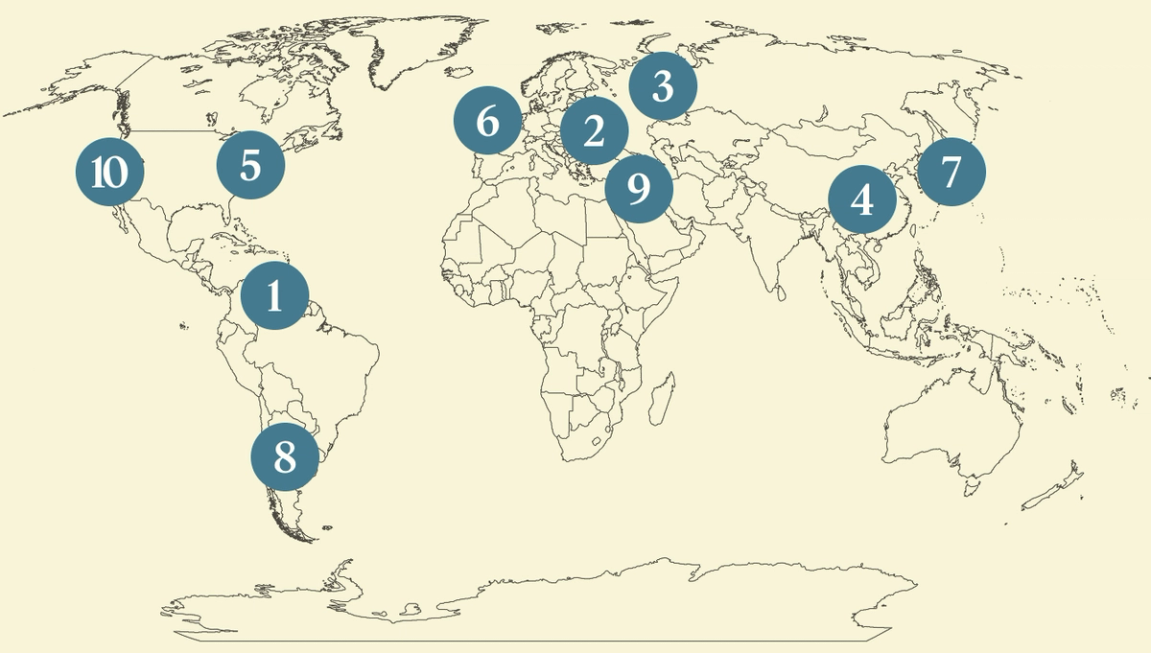 - WH meets on Venezuela
- Kyiv turns to EU for support
- Russia’s drone war success
- China’s robotic advantage
- Trump gets pushback on AI
- VPNs under scrutiny
- Charging foreign tourists
- Argentine restaurants take hit
- The condition of exile
- People are less weird
 Photographing the last refuges of America’s dwindling local newspapers. |
|
US mulls further Venezuela actions |
 Leonardo Fernandez Viloria/Reuters Leonardo Fernandez Viloria/ReutersUS President Donald Trump is expected to discuss Venezuela with his top advisers Monday, as he ramps up his pressure campaign against Caracas. As doubts grow about the legality of US strikes on suspected drug boats in the Caribbean, the White House defended an admiral who ordered a second strike to kill survivors on a targeted vessel. Many believe the US military buildup in the Caribbean is a bid to oust Venezuelan President Nicolás Maduro. But Latin America has largely been silent on Trump’s aggressive approach, because many there want a harsher crackdown on cartels, the editor of Americas Quarterly argued. At the same time, regional leaders are negotiating with China and Europe as alternatives to a “hegemon they find increasingly overbearing.” |
|
Kyiv leans on EU amid diplomatic sprint |
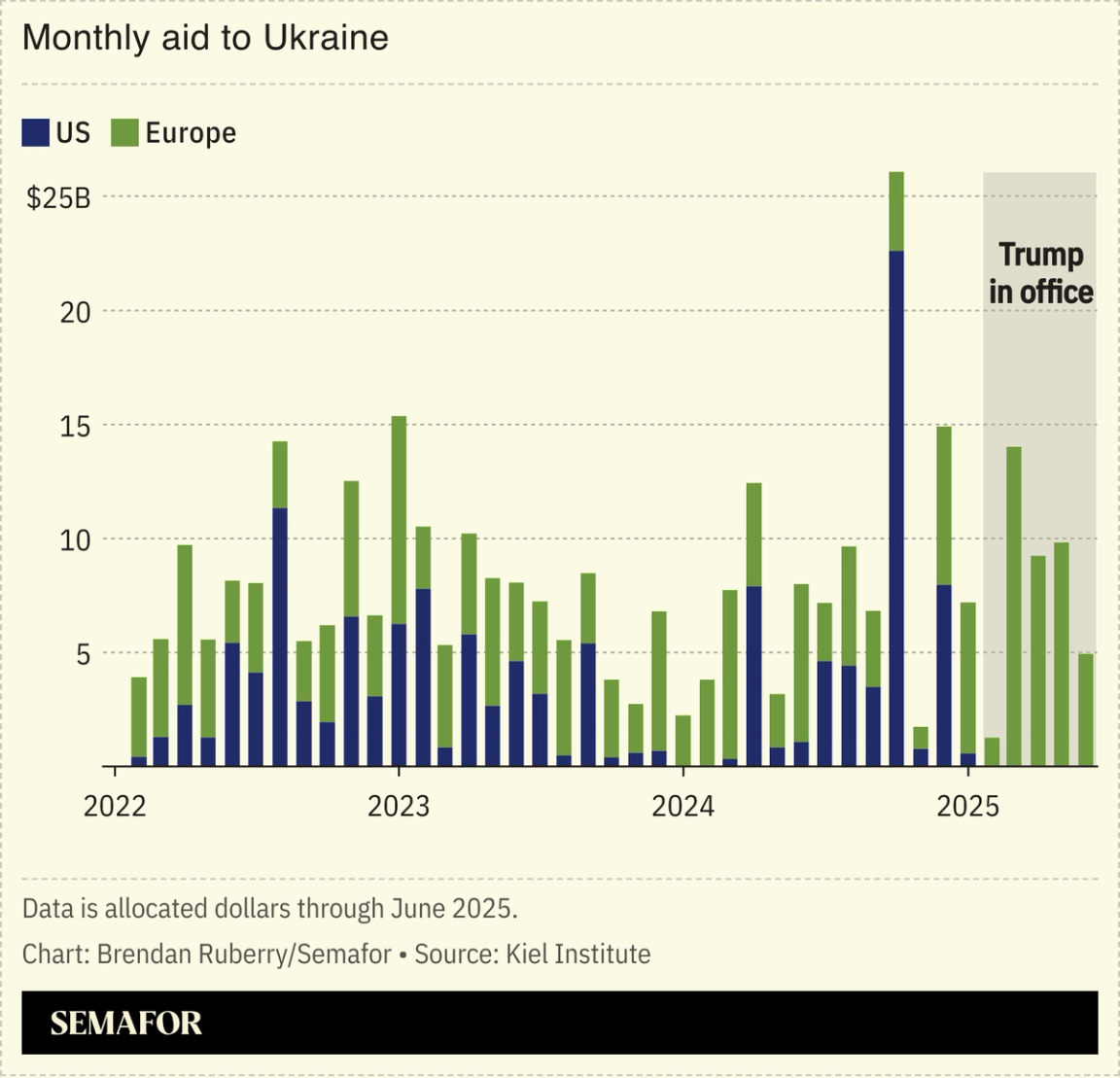 Ukraine is leaning on Europe amid a US-led diplomatic sprint to end Russia’s war. Ukrainian President Volodymyr Zelenskyy discussed security guarantees with France’s Emmanuel Macron Monday, saying, “Much now depends on the involvement of every leader;” Zelenskyy also spoke to the UK’s prime minister and is heading to Ireland. His flurry of meetings with European allies comes as Washington pressures Kyiv to accept a contentious peace plan that is central to negotiations during what an EU official described as “a pivotal week for diplomacy.” But few details emerged from weekend talks between US and Ukrainian negotiators, and key issues remain unresolved. Macron insisted that a peace deal “can only be finalized with the Europeans at the table.” |
|
Russia is winning the drone war |
 Ukrainian serviceman near Kyiv. Gleb Garanich/Reuters Ukrainian serviceman near Kyiv. Gleb Garanich/ReutersRussia’s prowess with drones has matched or even exceeded Ukraine’s, a strategic and diplomatic shift that is undermining Kyiv’s negotiations as the US pushes for an end to the war. For most of the conflict, Ukraine has held a clear advantage in battlefield drones, slowing “Russia’s offensive operations to a crawl,” The Wall Street Journal noted. But Moscow changed tactics in 2024, recruiting top Russian drone pilots into a single unit and targeting Ukrainian supply lines; the tactic was crucial in driving Kyiv’s forces out after its incursion into Kursk. Ukrainian drone and logistics units now suffer more casualties than frontline troops, one analyst said. Russian drones targeting civilians have made one Ukrainian city a “human safari,” The Associated Press reported. |
|
 Tingshu Wang/Reuters Tingshu Wang/ReutersChina’s heavy focus on AI-powered robots could help secure its dominant position in advanced manufacturing and exports, analysts said. While US tech titans often wax poetic about AI’s profound potential to improve humanity, Beijing’s ambitions are far more “prosaic,” The Wall Street Journal wrote, like deploying robots to improve factory efficiency. The country installed 295,000 industrial robots last year, nearly nine times as many as the US. China’s ability to rapidly scale and commercialize its technology is reflected in the success of robot-maker Unitree, The Wire China reported. The firm is exporting robot dogs to several US colleges, companies, and law enforcement agencies, despite Washington’s crackdown on Chinese tech over national security concerns. |
|
Trump gets MAGA pushback over AI |
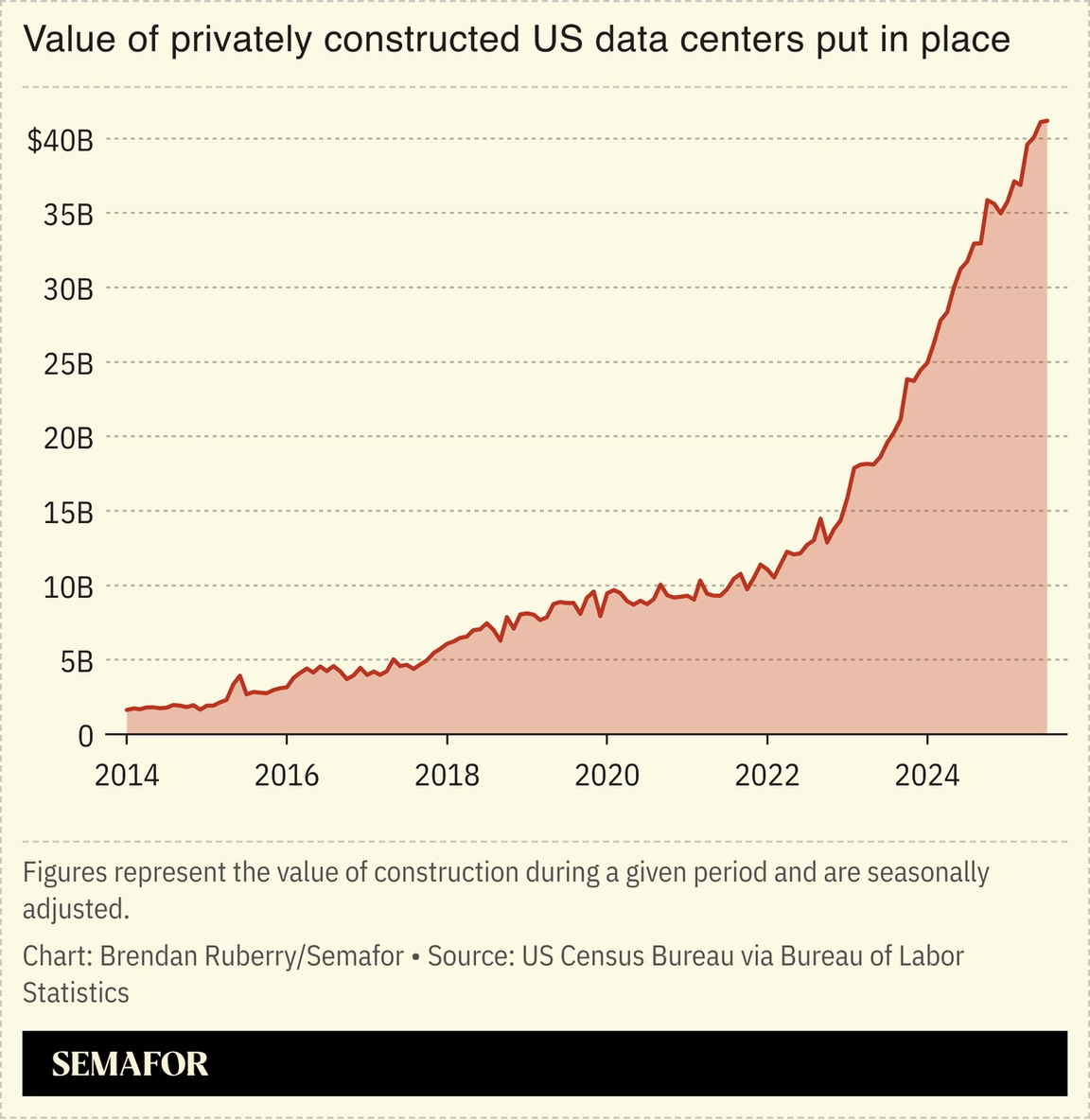 Donald Trump’s expansive AI agenda is provoking backlash from within his base. The rush for cheap land for data centers is straining local resources and increasing utility bills in traditionally pro-Trump rural areas, Reuters reported, uniting locals across party lines to oppose the buildout. AI skepticism has similarly bred “unusual” political bedfellows, NBC News wrote: Prominent MAGA personalities like Steve Bannon and Florida Gov. Ron DeSantis are joining progressives in decrying the lack of AI regulation, which will likely constitute a defining wedge issue in 2026. As the White House pushes for a moratorium on state-level AI rules in a defense bill, a larger fight is brewing between AI maximalists and the Democrats and Republicans who object, Semafor’s Burgess Everett reported. |
|
Social media bans increase VPN scrutiny |
 Morteza Nikoubazl/NurPhoto via Getty Images Morteza Nikoubazl/NurPhoto via Getty ImagesVirtual private networks may be the next target in governments’ attempts to age-gate the internet. VPNs allow users to hide their location so websites think they are in different countries — a loophole for those wanting to visit sites that are blocked or age-limited in certain nations. After the UK required age checks for adult content, some VPNs reported a spike in purchases of 1,000% or more. The government is reportedly considering some restrictions on VPNs. With Australia soon banning social media for under-16s and the EU planning similar restrictions, “we can expect more governments to put VPNs under scrutiny before long,” The Verge reported; some US states are already debating restrictions. |
|
Foreign tourists pay more for attractions |
 Issei Kato/Reuters Issei Kato/ReutersCountries are hiking prices for foreign tourists’ access to government-run attractions. In line with its “America First” approach, the US will charge non-US residents an additional $100 daily entrance fee for popular national parks and $250 for an annual pass, while citizens will still pay the current $20 daily fee and $80 for year-round entry. US communities that rely on park travelers for revenue fretted over the fees amid a decline in international tourism. But the US isn’t alone: Paris’ Louvre Museum hiked prices 45% for most non-EU visitors. Not everyone is unhappy, though. In Japan, locals frustrated by over-tourism largely cheered a dual-pricing system that charges foreign tourists more at attractions like theme parks and ski resorts. |
|
 Check out On NOTUS, an inside look at the people behind our politics. Each week, congressional reporter Reese Gorman sits down with lawmakers like House Majority Whip Tom Emmer and Rep. Marie Gluesenkamp Perez for candid conversations about the issues that motivate them and what brought them to Washington in the first place. Listen to On NOTUS now. |
|
Low inflation hurts Argentinian eateries |
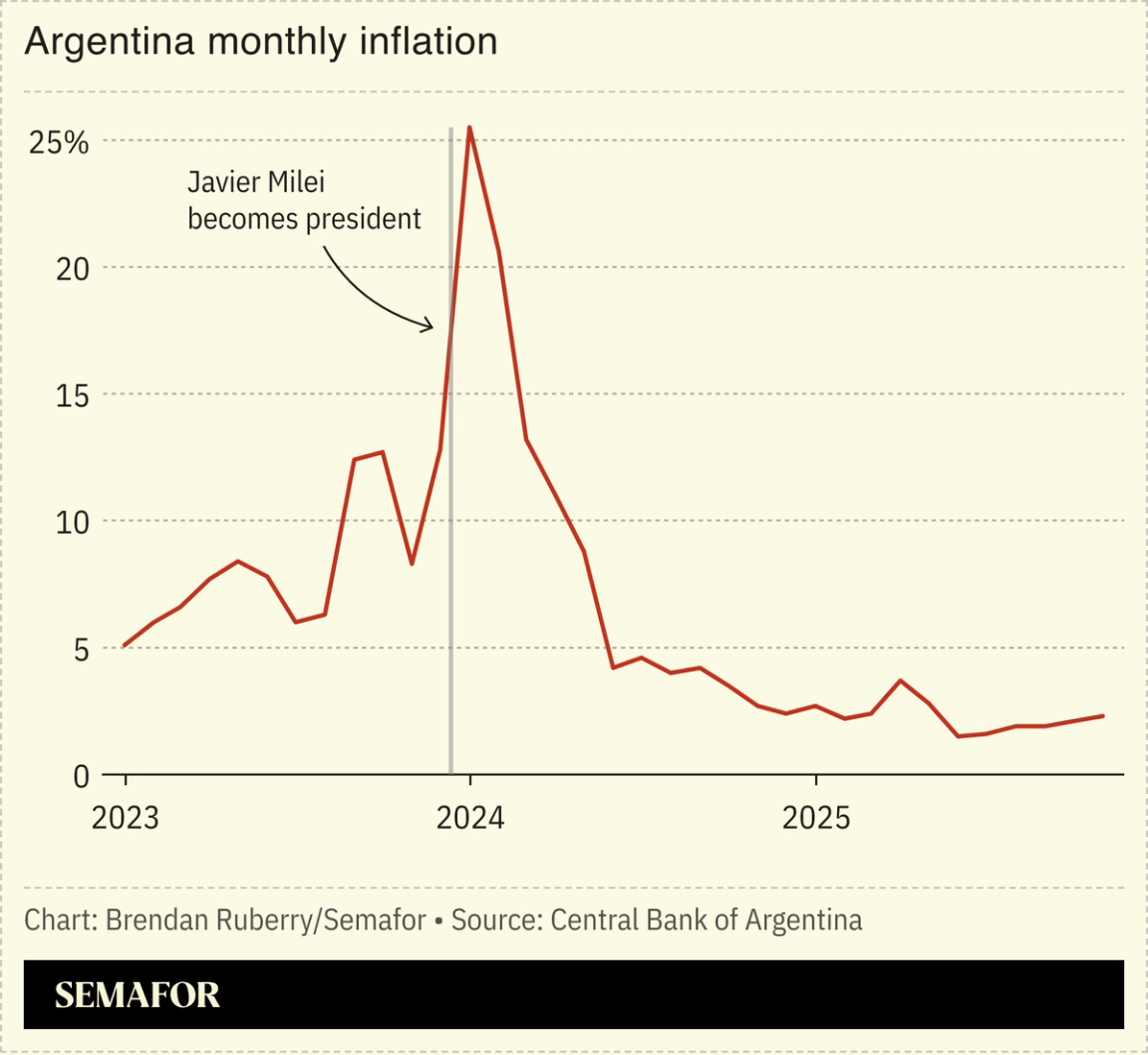 Argentina’s economic recovery has, counterintuitively, been bad for the restaurant business. In 2023, when monthly inflation reached 25%, Argentines rushed to spend their pesos, knowing they would be less valuable tomorrow. But President Javier Milei’s aggressive reforms have reduced inflation to around 2%, and consumers have cut back short-term expenses accordingly. Instead, they are spending more on bigger-ticket items — electronic appliance sales were up almost 400% in the first half of 2025 from the same period in 2023 — and less on eating out. A stronger peso has also reduced inward tourism. One upscale Buenos Aires restaurant saw demand fall as much as 75% in two years, the manager told the Financial Times, and had to close. |
|
A new reporting series examines how the condition of exile defines our time. Exile was once a historical punishment, creating “an irreversible absence,” online magazine Coda wrote. But globalization and technology changed what it means to flee, and understanding displacement has become “central to understanding power itself.” Dissidents in exile can organize their movements from abroad, while authoritarian regimes can still surveil them. Coda’s series spotlights a Syrian photographer living in France grappling with a possible return to her home country and a once-imprisoned Uyghur linguist, while also covering communities imposing a digital exile on themselves by banishing their smartphones. “This may be the most common form of exile our age creates: not fleeing across borders, but fleeing inward.” |
|
Deviance is on the decline |
 Arnd Wiegmann/Reuters Arnd Wiegmann/ReutersSociety is in a “recession of mischief,” a psychology scholar argued. Data shows people are drinking less, committing fewer crimes, joining fewer cults, and staying closer to their hometown. “People are less weird than they used |
|
|


