| | US envoys meet Russian President Vladimir Putin in Moscow, the White House defends in strikes off Ve͏ ͏ ͏ ͏ ͏ ͏ |
| |  | Flagship |  |
| |
|
The World Today | 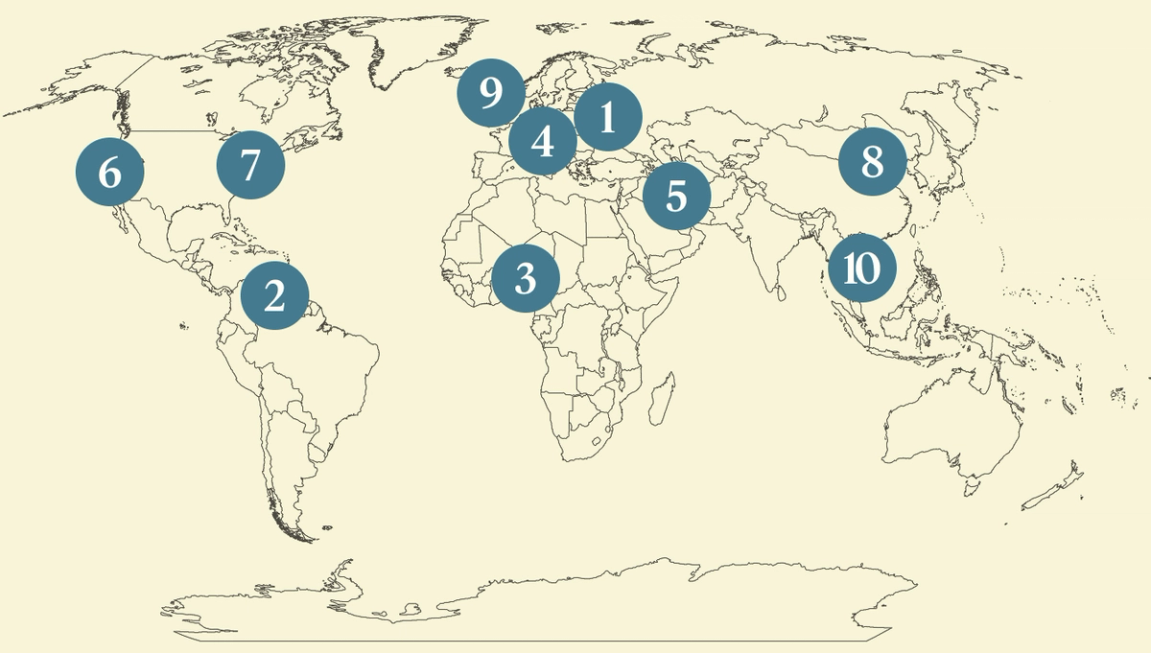 - Trump envoy’s Moscow talks
- Fallout from US strikes
- Nigeria’s worsening violence
- EU’s migration clampdown
- Iran’s rights crackdown
- Apple AI chief replaced
- How AI will change work
- China’s AI ambitions
- The classroom case for AI
- Pivoting from beer
 A recommendation for a play that ‘makes us think and feel in equal measure.’ |
|
US envoy in Russia to push peace deal |
 Alexander Nemenov/Pool via Reuters Alexander Nemenov/Pool via ReutersRussian President Vladimir Putin hosts US President Donald Trump’s envoy at the Kremlin today, talks the White House insists are making progress but which have left Washington’s allies worried. European officials fear that even a revised US-backed peace plan “reads like a wish list for Moscow,” Le Monde wrote, while AFP analysis showed that Russian forces last month made their biggest battlefield gains in a year. Today’s talks are unlikely to achieve major breakthroughs: The Kremlin has shown little sign of compromising on its territorial ambitions. And to Kyiv’s European allies, the US plan appears to be like “a Versailles treaty, except one that punishes the victim and rewards the aggressor,” one expert told The Wall Street Journal. |
|
White House defends Venezuela strike |
 Kevin Lamarque/Reuters Kevin Lamarque/ReutersThe White House confirmed that US Secretary of Defense Pete Hegseth authorized strikes against suspected drug smugglers, but left unclear who was specifically was responsible for a follow-up attack on survivors of the Caribbean military operation. American officials initially defended the strike as an act of “self-defense,” claiming the targets were traffickers ferrying drugs to the US, though President Donald Trump previously said he would not have issued the order. Lawmakers from both parties have repeatedly questioned the legality of the Pentagon’s operations in South America, with some claiming the strike on survivors amounts to a war crime. Experts have also questioned the motivations behind the deployment, claiming American firepower far exceeds what is needed for the US’ stated anti-narcotics operations. |
|
Nigeria’s worsening security situation |
 Vigilante groups operating in Northern Nigeria. Marvellous Durowaiye/Reuters Vigilante groups operating in Northern Nigeria. Marvellous Durowaiye/ReutersNigeria’s defense minister resigned amid spiraling violence that prompted the country’s president to declare a state of emergency last week. Africa’s most populous nation has long struggled to secure its territory, but attacks in the north by Islamist militias have surged recently, including the abduction last month of hundreds of schoolchildren, many of whom remain in captivity. In all, almost 500 people have been kidnapped in the last two weeks, Nigeria’s leading newspaper reported. US President Donald Trump has threatened to intervene militarily should Nigeria fail to stem the violence against Christians, potentially compounding a diplomatic crisis on a security one. |
|
EU seeks tougher migrant rules |
 Florion Goga/Reuters Florion Goga/ReutersThe European Union has reportedly agreed to curb access to its market if developing countries do not take back migrants the bloc wishes to expel, part of a hardening of immigration and refugee policies across the West. The EU plans to review poorer nations’ low-tariff access to the bloc if they do not accept their nationals who are to be deported, Politico reported, as member states look to blunt the rise of anti-immigration, nationalist parties. It is far from alone: The UK last month threatened countries that do not take back deportees with visa bans, while the US has vowed to use tariffs and visa bans in order to force countries to accept deportees, including so-called third-country nationals. |
|
Iran’s ‘surge in repression’ |
 Jafar Panahi. Stephane Mahe/Reuters Jafar Panahi. Stephane Mahe/ReutersIran sentenced a prize-winning film director to a year in prison in absentia for “propaganda activities,” the latest move in a wide-ranging crackdown on dissent. Jafar Panahi, whose It Was Just an Accident won the Palme d’Or at this year’s Cannes film festival, also faces travel restrictions and a ban on joining political groups, one of a number of times the artist has been convicted of crimes that international human rights groups say are politically motivated. His sentencing is part of a “surge in repression” marked in particular by an increase in executions of dissidents, the UN warned in an October briefing; the Nobel peace prize-winner Narges Mohammadi told Bloomberg that teachers and academics were also being targeted. |
|
The Silicon Valley race for AI dominance |
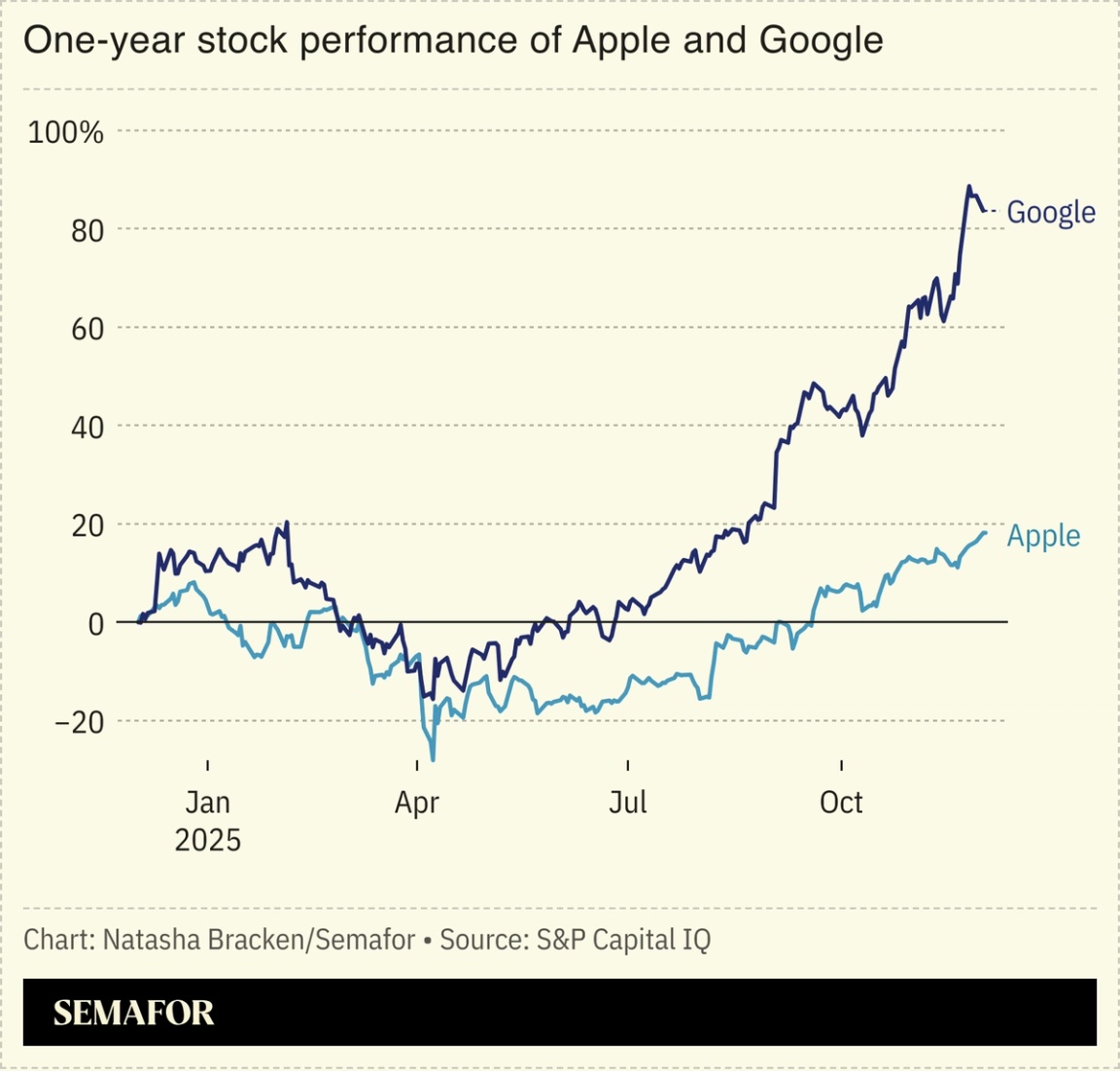 Apple replaced the head of its artificial intelligence division, as investors raise fears the firm is fast falling behind other tech giants. Amar Subramanya, formerly Microsoft’s AI vice president, will instead helm the division, the latest sign of talent poaching among the world’s biggest tech companies as they seek AI dominance, with Apple’s progress in the field “painfully slow,” The Economist noted. Elsewhere, OpenAI CEO Sam Altman declared a “code red” at his company as Google threatens its lead in AI. Long thought to be a sleeping giant in the AI race, Google recently launched a new version of its Gemini AI model that surpassed OpenAI’s on key benchmark tests, The Wall Street Journal reported. |
|
AI set to transform white-collar jobs |
 Artificial intelligence is on the verge of transforming vast amounts of white collar-work in the West. So far, analysts have noted that use of AI has largely been concentrated in programming and computer science-related fields. But these represent “only the tip of the iceberg,” according to a recent MIT study, which found that almost 12% of the US labor force as a proportion of total wages was at risk, nationwide. Top-tier consulting firms such as McKinsey and BCG have frozen salaries for entry-level staffers for as many as three years, as AI upends their hiring model, and in the UK, some young workers are pivoting to skilled trades such as construction in order to future-proof their careers. |
|
 As one of the world’s foremost financial hubs, Abu Dhabi is emerging at the crossroads of innovation, investment, and inclusion — linking markets across the Middle East, Africa, and Asia. Held at Abu Dhabi Finance Week, Semafor will showcase insights from the upcoming Global Findex 2025 report and the Global Digital Connectivity Tracker, translating global research into practical, locally grounded conversations. With Abu Dhabi prioritizing sustainable finance, digital transformation, and cross-border collaboration, the city provides an ideal stage to explore how technology and capital can work together to expand access, inclusion, and economic opportunity. Dec. 11 | Abu Dhabi | Request Invitation |
|
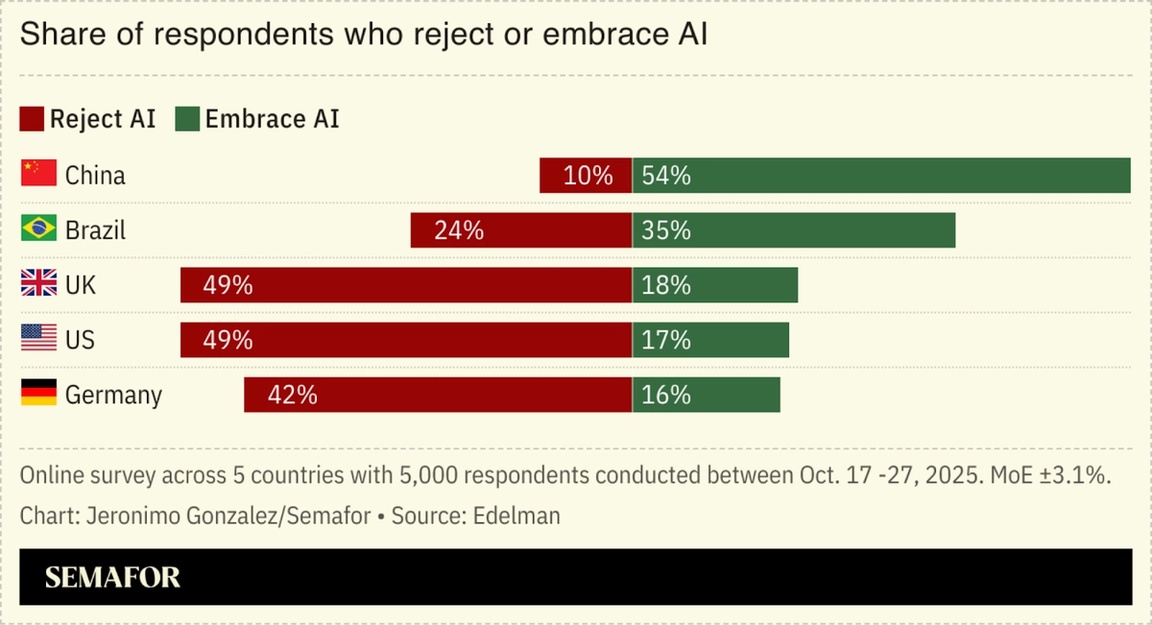
China using AI for ‘social control’ |
 Tingshu Wang/Reuters Tingshu Wang/ReutersChinese AI regulation is increasingly focused on using the technology for censorship and surveillance, analysts warned. A recent Communist Party Politburo meeting focusing on “the governance of the Internet ecosystem” was striking for authorities’ shifting stance on AI, the China-watcher Bill Bishop noted, “moving beyond viewing it merely as a frontier industry to be regulated and instead positioning it as a functional instrument of social control and state capacity.” A separate report by the Australian Strategic Policy Institute, meanwhile, argued that Beijing was using AI to censor sensitive photos, enable mass surveillance, and drive public-sentiment analysis among minority populations. “AI lets the CCP monitor more people, more closely, with less effort,” one of the report’s authors told The Washington Post. |
|
AI might not be so bad for education |
|
|


