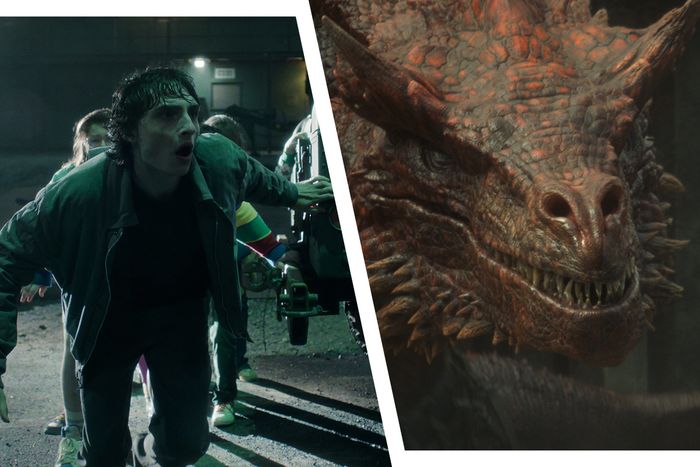
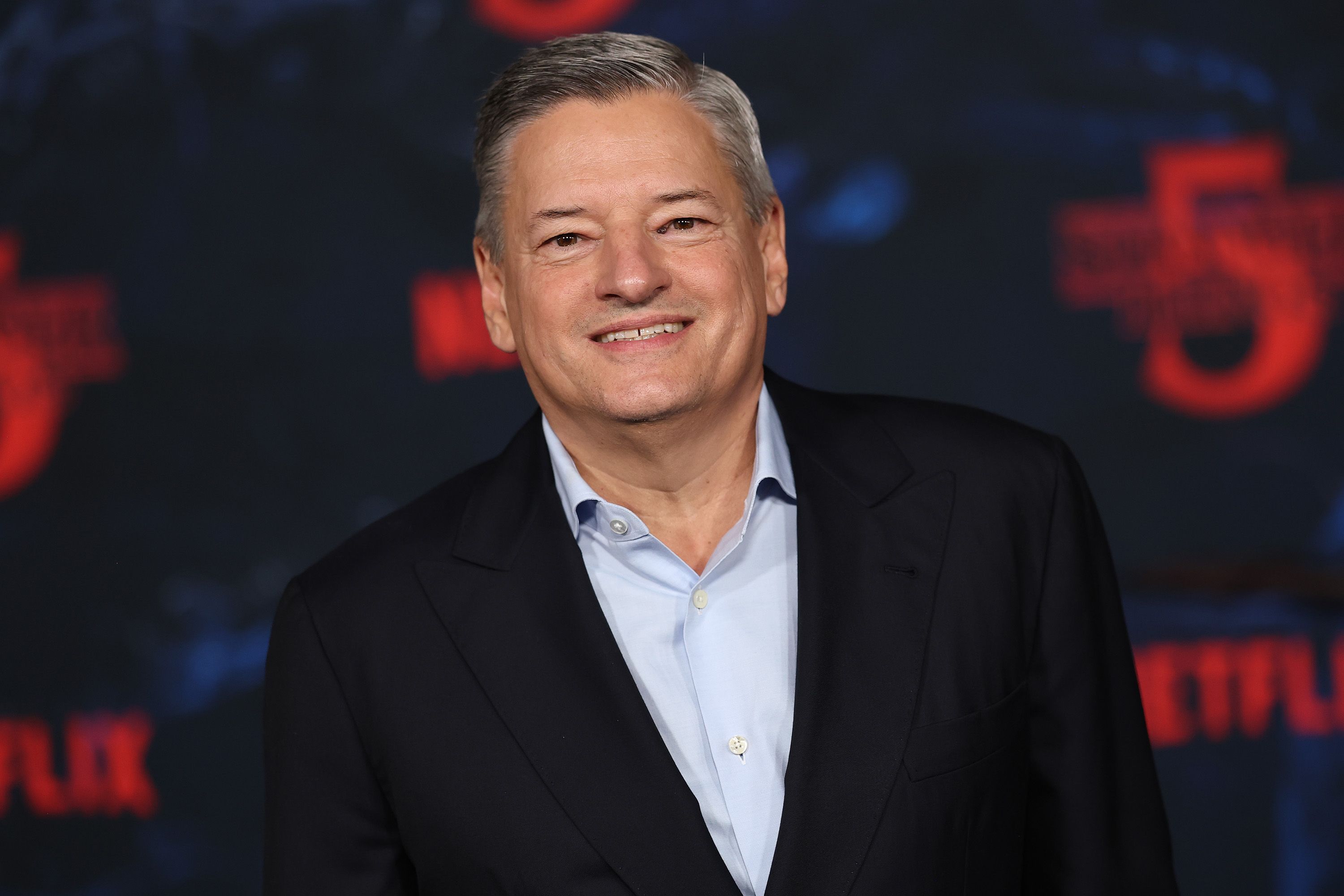
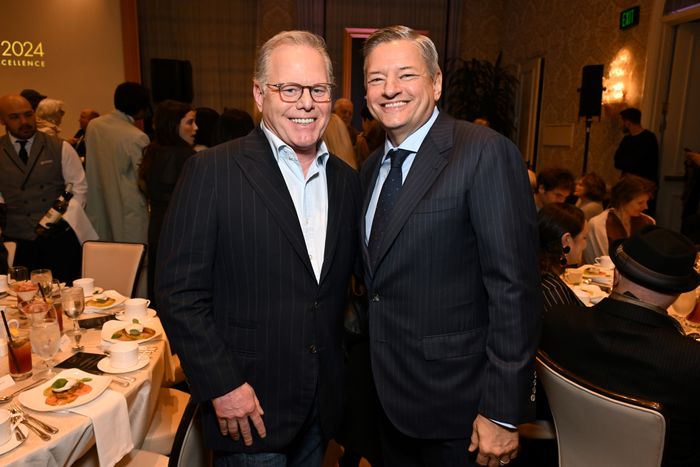
It’s been quite the day for execs and creatives on both coasts, to say nothing of the HBO crowd flying back to the States after a week in London. The Netflix–Warner Bros. Discovery deal has prompted a flurry of questions, concerns, and even some compliments from all corners of Hollywood, Wall Street, and newsroom media desks. What does this mean for theatrical? What will happen to all those parks? Could this actually be a good thing for HBO? Will any of this even actually happen? Buffering has all that and more for you below. See you next week.
|
—Ray Rahman, senior editor |
|
|
“It may be the least worst option,” one WBD insider said of the deal. |
As huge swaths of the movie business are freaking out over the news that Netflix may soon control the iconic Warner Bros. film studio, folks in TV land are furiously trying to figure out what the deal means for the company’s other crown jewel, HBO. The most prestigious brand in television — and its streaming counterpart, HBO Max — could soon be under the purview of a streaming colossus whose reputation in so many ways has been the exact opposite of HBO’s: endless scroll vs. curation, binge releases vs. the sacred Sunday night episode, data-driven decision-making vs. gut calls by programmers. And yet despite those stark differences, folks inside the current Warner Bros. Discovery probably don’t have reason to panic — not yet, at least.
For one thing, despite its huge resources and bank reserves, the company still needs to get past regulators in both the U.S. and Europe, as well as the very real possibility of a jilted David Ellison and Paramount trying to derail the agreement, making it far from certain today’s announcement will end with an approved deal. “I would guess it’s 50/50 they are even able to close it,” one WBD insider told Vulture Friday, adding that the process could drag on for close to 18 months, if not longer.
And then there’s the fact that corporate takeovers have become depressingly commonplace inside the halls of HBO and its sister studio. If the Netflix deal closes, Warner Bros. will have had four owners, and four incarnations, within roughly the space of 10 years: TimeWarner (the old combination of Warners and Turner Network), WarnerMedia (the brief AT&T phase), WBD (the David Zaslav era), and whatever name Netflix settles on for its reign. Given all of that chaos, “The emotions are not all that high,” another veteran WBD staffer says. “Most of the time in these situations, the anxiety comes from not knowing what to expect. Everyone knows how this will play out.”
Well, sort of. The part where everyone waits to see what jobs the new owners will eliminate or who everyone will report into — all that is sadly par for the course at WBD, and quite frankly, at legacy media companies since the streaming bubble burst a few years ago. Anyone who works in product development making sure the HBO Max app runs smoothly or that shows get added to the platform properly (or not) has probably been checking LinkedIn daily for a few years now. “If you’re in tech, you’re probably a little bit nervous right now,” the WBD staffer says.
But for anyone in programming and possibly even marketing, particularly content bosses Casey Bloys and Francesca Orsi, today’s news might actually be … not awful? “It may be the least worst option,” the WBD insider says of Netflix taking over Warner Bros., and with it HBO and HBO Max. Staffers at the company are taking comfort in what Netflix co-CEOs Ted Sarandos and Greg Peters said about HBO on a call with Wall Street analysts just after the deal was announced. Both men indicated they wanted to run both HBO and Warner Bros. Television as semi-autonomous units, with the TV studio selling shows to outside networks and HBO (and possibly HBO Max) continuing “to operate as they are,” i.e., as separate entities within the larger Netflix universe. “They are saying all the right things,” the WBD insider said, somewhat hopefully.
Then there’s the fact that Sarandos in particular has for years been enamored of HBO and what its brand means, famously saying in the early 2010s that he wanted to turn Netflix into HBO before HBO could turn into Netflix. While it soon became clear that Netflix had much grander ambitions — to become a general entertainment giant vs. a boutique brand — he has always held up HBO as an ideal for premium TV. “I thought of them as the gold standard of original programming,” Sarandos told New York in 2017.
Because of that, for all the skepticism many in Hollywood have about Netflix’s algorithmic ways and global scale, an industry exec who knows both companies said he believes the streamer won’t try to erase its identity. “I don’t think Ted is going to want to be the person that destroyed HBO. He’s obsessed with HBO,” this person said. “I really do think he will find some way to keep that business going and carve it out” from the broader Netflix offering. Another industry insider familiar with both Netflix and HBO concurred: “Consumers really love HBO. They’re not going to want to fold it into Netflix and let it disappear. ...”
|
|
|
“If Warner Bros. isn’t making movies for theatrical, some other studio will make more,” says one producer.
|
Depending on your perspective, Netflix’s $83 billion deal to buy Warner Bros. Discovery’s studio and streaming businesses can be understood as either the sum of all Hollywood fears, an unexpected boon to film lovers everywhere, or the ultimate case of dog catching car. In the view of the movie theater industry trade association Cinema United, the deal — which is still pending regulatory approval and would not go into effect until Q3 next year — represents a death blow to multiplexes. “The proposed acquisition of Warner Bros. by Netflix poses an unprecedented threat to the global exhibition business. The negative impact of this acquisition will impact theaters from the biggest circuits to one-screen independents in small towns in the United States and around the world,” Cinema United president and CEO Michael O’Leary said in a statement Friday. “Regulators must look closely at the specifics of this proposed transaction and understand the negative impact it will have on consumers, exhibition and the entertainment industry.”
Top industry players sent an anonymous open letter to Congress Thursday warning against a Netflix-WBD merger before the deal was announced, with Netflix co-CEO Ted Sarandos’s oft-repeated 2023 earnings call remark front of mind: “Driving folks to a theater is just not our business.” In the letter, the group of “concerned” feature film producers say Netflix could “destroy” the theatrical film marketplace by accelerating the amount of time Netflix-Warner Bros. movies are shown in theaters to as little as two weeks before jumping to a Netflix-HBO Max streaming platform — or eliminating the theatrical window altogether. The gargantuan scale of the new studio-streaming conglomerate “would effectively hold a noose around the theatrical marketplace” by both limiting the number of new movies put into production and forcing down licensing fees paid during post-theatrical windowing. And those affronts to standard Hollywood operating procedure threaten millions of jobs across the industry. …
|
|
|
Warner Bros. Discovery’s substantial parks business is its future owner’s shot at becoming the next Disney.
|
By Nicholas Quah and Savannah Salazar |
The Trump administration’s sudden interest in antitrust notwithstanding, Netflix’s pending $82.7 billion acquisition of Warner Bros. Discovery is poised to be the biggest Hollywood story in a generation. The deal would place the revered century-old studio, along with its deep library and bounty of IP assets, into the hands of the streaming giant that has radically reshaped the industry since barging in with its DVD-by-mail biz in the late ’90s. Given the scale of Warner Bros.’ business, it will take quite some time for the merger to shake out, and meanwhile the rest of Hollywood will white-knuckle its way through a sizable list of unanswered questions. One of the many we’re curious about: Will the acquisition give Netflix a genuine foothold in the amusement-park business?
Big Red has been dabbling in the “experiential” lane of late, most prominently with show-specific pop-ups like the Squid Game experience in New York and a handful of so-called Netflix Houses, relatively small and contained yet permanent live-experience hubs featuring attractions themed around popular Netflix shows like Wednesday. At present, there are two Netflix Houses in operation: one in Philadelphia’s King of Prussia Mall and another at Texas’s Galleria Dallas, with a Las Vegas location on the way in 2027. But much like Netflix’s confusing adventures in video games, those efforts seem mostly tentative and experimental — marketing events that double as toe dips into a theoretical line of revenue as opposed to a real commitment to what could be a lucrative unit that stands separate from Netflix’s core streaming business.
Ingesting Warner Bros. changes Netflix’s options on this front, though only partially. … |
|
|
The DGA and the Teamsters union are also among those against the deal.
|
So you don’t want Millie Bobby Brown to star in a Casablanca remake? Netflix’s Warner Bros. deal won’t get through the Trump administration until it contends with Hollywood about industry impacts. The Writers Guild of America came out forcefully against the deal on December 5, citing potential wage decreases and lost job opportunities. “The world’s largest streaming company swallowing one of its biggest competitors is what antitrust laws were designed to prevent,” the guild said in a statement. “The outcome would eliminate jobs, push down wages, worsen conditions for all entertainment workers, raise prices for consumers, and reduce the volume and diversity of content for all viewers. Industry workers along with the public are already impacted by only a few powerful companies maintaining tight control over what consumers can watch on television, on streaming, and in theaters. This merger must be blocked.”
The Teamsters backed up the WGA in opposing the deal.... |
|
|
And the wider media universe, if it can pass significant regulatory hurdles.
|
It’s official: Netflix is buying the back-lot empire home to Batman, Harry Potter, and Tony Soprano. On the heels of weeks of frenzied bidding among rival studio suitors, Netflix announced early on Friday it has bought Warner Bros. Discovery’s studio and streaming assets for $82.7 billion: a blockbuster deal with the potential to reshape Hollywood and the wider media universe, if it can pass significant regulatory hurdles. Pending government approval, the cash-and-stock transaction would close by next fall once Warner Bros. Discovery spins off its cable unit — encompassing CNN, HGTV, Food Network, and Discovery among other channels — into a separate company.
Arriving relatively late to the bidding war in late October, Netflix ultimately bested competing offers from Comcast (the parent company of Universal Pictures that was similarly angling to acquire Warner’s studio and streaming business) and Paramount (headed by upstart mogul |
|
|
|