Dear Educator, It's fair to say that the “war to end all wars” didn’t live up to its name. Nevertheless, World War I provides invaluable lessons to students of history. Whether discussing the causes of the war, the fighting itself, or its impact on the world, World War I is a fascinating case study.
Using one of CFR Education’s most popular resources, this newsletter will:
Happy learning, Caroline Netchvolodoff
Vice President, Education
Council on Foreign Relations
|
|
|
Let's Back Up A Few Decades... |
Not yet ready to dive into World War I? Don't worry. CFR Education offers resources that cover key historical moments before the 20th century. |
|
|
Gaining Dominance in Europe |
Soon after becoming an independent country in 1871, Germany became exceedingly wealthy and began to showcase its power on the global stage.
Kaiser Wilhelm's desire to claim Germany’s “place in the sun” quickly led to abandoning treaties and speaking openly about his desire for German economic and military supremacy. Germany's rapid militarization ignited an arms race on the continent, which unsettled Europe’s balance of power.
Use these resources to further explain Germany's rise and the role of the balance of power: |
|
|
In the lead-up to World War I, nationalism fueled intense competition in Europe, acting both as a unifier and a divider. In fact, the Austria-Hungarian Empire's struggle with nationalism led to the assassination of Archduke Franz Ferdinand.
There are many types of nationalism. Some serve as a basis for unity, inclusion, and social cohesion, while others, when taken to extremes, can fuel violence, division, and global disorder.
Use these resources to explain nationalism as a fundamental concept and also as it relates to World War I:
|
|
|
A shift in the balance of power and a nationalist attack might not, on their own, have been enough to start a world war, but adding a network of alliances caused cascading declarations of war. |
European leaders had spent years before Archduke Franz Ferdinand’s assassination constructing these networks with the promise of collective security, so when the Archduke was murdered, it took only a month before an all-out war broke out on the continent.
Use these resources to teach your students about the alliances of past and present: |
|
|
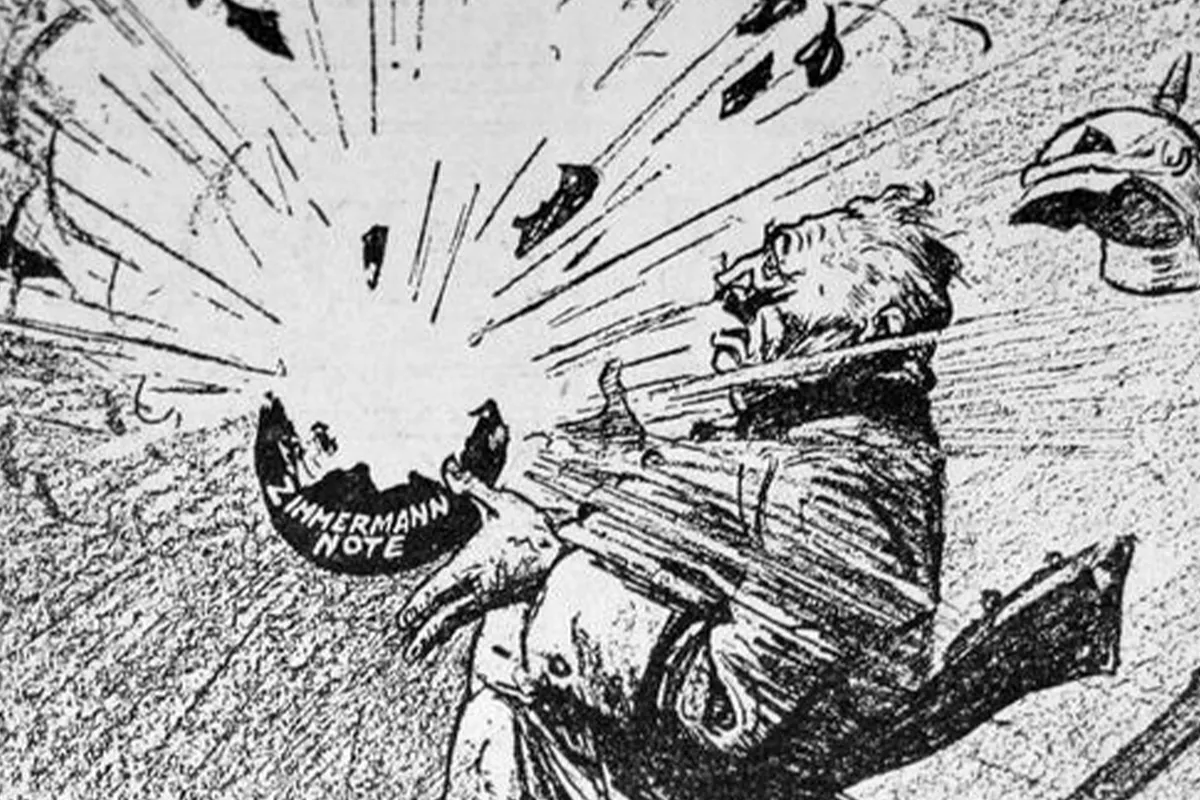
Decision Point: The Zimmerman Telegram |
It is January of 1917, and President Woodrow Wilson has convened his cabinet to decide whether and how to maintain neutrality in the wake of the intercepted telegram. Invite your students to role-play the historical cabinet and consider three policy options.
Don't forget to check out the instructional video! |
| |
|
Council on Foreign Relations. All rights reserved. |
58 East 68th Street – New York, NY 10065 1777 F Street, NW – Washington, DC 20006 |
|
|
|