Thanks for reading The Briefing, our nightly column where we break down the day’s news. If you like what you see, I encourage you to subscribe to our reporting here.
Greetings!
It sometimes feels there’s an element of the supernatural in the Trump administration’s dealings with the business world. Stuff gets announced and then disappears into the ether, never to be heard of again. Take President Donald Trump’s announcement in August that he’d let Nvidia sell its H20 AI chips to China, in exchange for a 15% cut of the resulting revenue. All we’ve heard of that deal since then is Nvidia’s repeated statements in securities filings that the government “has not published a regulation codifying such [a] requirement,” and so it hasn’t sold any of the chips.
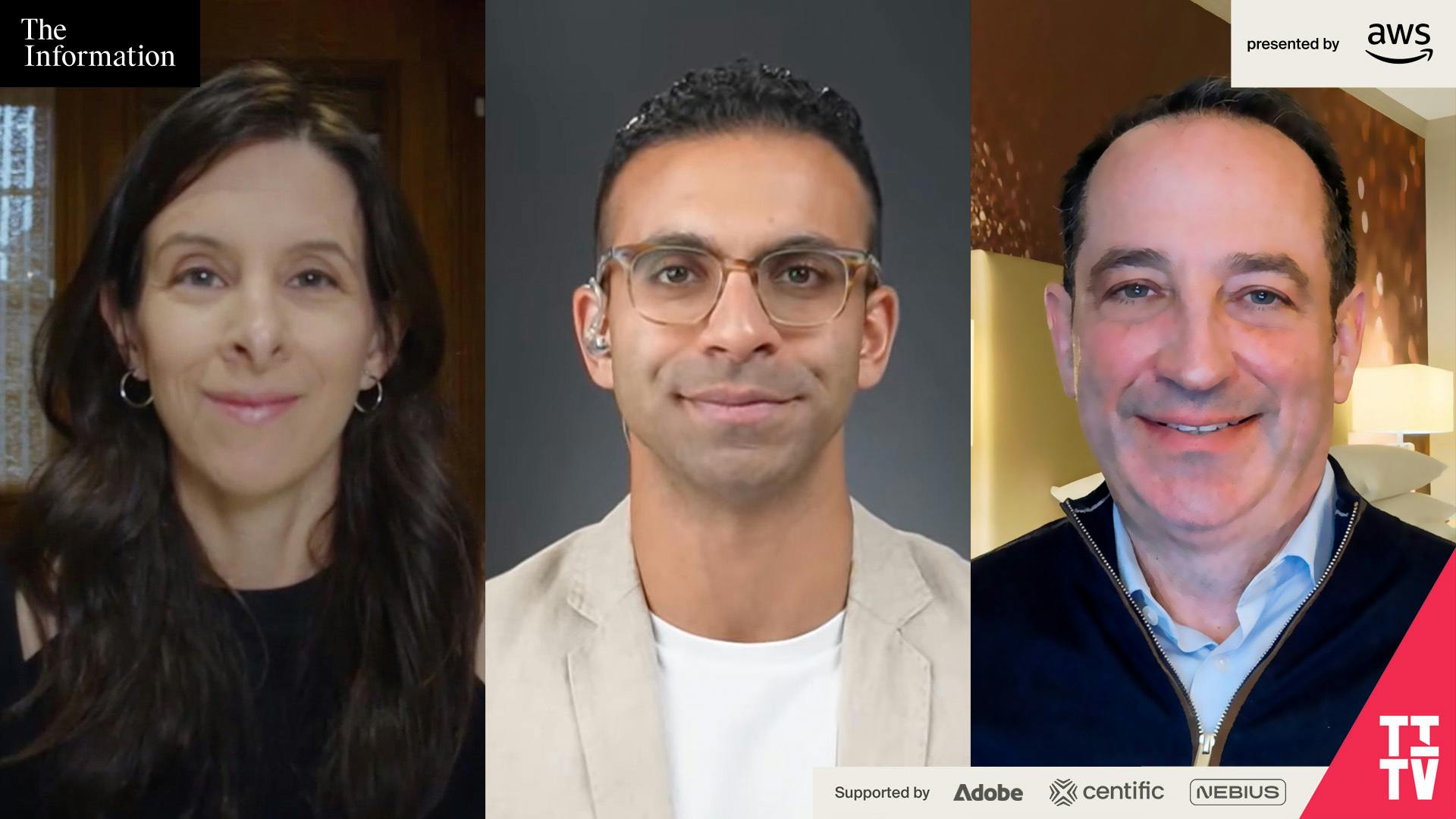
You have to wonder whether the same thing will happen with the latest Nvidia-China approval Trump granted, for the sale of H200 chips, which involves a 25% cut for the U.S. government. Of course, that announcement might be moot for a different reason: The Chinese government might block local companies from buying the chips. While we reported last week that Chinese authorities were OK with local companies buying Nvidia chips for training AI models—which applies to the H200s—things may not be that straightforward, as the Financial Times reported on Tuesday. One skeptic is tech analyst Patrick Moorhead, who said on The Information’s TITV on Tuesday that “until they start shipping and revenue gets cited by Nvidia, I’m not yet a believer that this is a done deal.” The uncertainty may be why Nvidia’s stock slipped a bit on Tuesday.
Another example of the ephemeral nature of Trump’s China announcements is the infamous TikTok saga. On Sept. 25, Trump and Vice President JD Vance announced a deal for a consortium to buy TikTok’s U.S. operations at a value of about $14 billion. At a press briefing, Vance said more details about the investor lineup would be released “in the days to come.” Since then, despite a flood of reports suggesting the deal is essentially just a dressed-up version of the same data security arrangement TikTok already uses to protect U.S. customer data, we’ve heard nothing at all from the government—no new details of investors, nothing. In late October, Treasury Secretary Scott Bessent said Trump and China’s president, Xi Jinping, would finalize the TikTok deal at a meeting they had scheduled. Given that Trump had said in September he had finalized the deal with Xi, Bessent’s statement was puzzling. More puzzling is that we’ve heard nothing else since then!
Through repeated waivers of the law, Trump has allowed TikTok to keep operating all year, despite the law passed last year requiring TikTok to cut ties with its Chinese parent or be banned. Trump's latest waiver expires on Jan. 23. If the deal hasn’t been finalized by then, Trump will have to waive the law again. Perhaps the latest Nvidia concession is designed to win over China and clear the way for the TikTok deal. Or perhaps Trump thinks the issue is resolved and has moved on. Either way, some certainty would be a good thing.
Data Centers in Space
Elon Musk has jumped on the “data centers in space” bandwagon, as this tweet on Tuesday and his appearance last month at a Saudi investment event demonstrated. People like Amazon founder Jeff Bezos have been promoting the idea of launching data centers into outer space for a while now, but Musk is a more recent advocate, at least publicly.
One explanation for his new interest may be a desire to find a narrative to excite potential investors in SpaceX, which The Information revealed on Friday is planning to go public next year. Indeed, Bloomberg reported on Tuesday that SpaceX plans to use money it raises from the IPO to help fund development of data centers in space.
Just as Musk is promoting Tesla as the company that will popularize robots and robotaxis, using SpaceX to launch data centers in space would be a good way to draw in shareholders who might be less interested in its existing rocket-launch and internet-access business.
There could be an issue with that, however. One reason Tesla likely enjoys such a premium valuation over other automakers now—its forward sales multiple is 14 to GM’s 1—is because it’s the only way public investors can buy into an Elon Musk–run business. Once SpaceX goes public, Musk fans will have a choice. There’s a possibility the existence of two Musk public companies will dilute the appeal of both companies. Just something to think about.
In Other News
• Marketing software firm Klaviyo said Tuesday that software executive Chano Fernández will become its co-CEO in January. Fernández will share the top job with co-founder Andrew Bialecki, who has been Klaviyo’s CEO since founding the company in 2012.
• Brookfield, one of the largest real estate investors, and Qatar’s more than $500 billion sovereign wealth fund will jointly invest $20 billion to build physical infrastructure for AI in the Gulf nation and abroad, they announced Tuesday.
Today on The Information’s TITV
Check out our latest episode of TITV in which we break down everything you need to know about Nvidia's H200 chip and policy updates from the US and China.
Recommended Newsletter
Start your day with Applied AI, the newsletter from The Information that uncovers how leading businesses are leveraging AI to automate tasks across the board. Subscribe now for free to get it delivered straight to your inbox twice a week.