Reacting to the Bondi Beach attacks, Mexico’s soft power is on the rise, Kavka Vodka and Switzerland’s finest sledges
|
Monday 15/12/25
|

|
|
London
Paris
Zürich
Milan
Bangkok
Tokyo
Toronto
|
|
|
|

Good morning. For the latest news and responses to the Bondi Beach attack, tune in to Monocle Radio throughout the day. Here’s what’s coming up in the Monocle Minute:
THE OPINION: Terrorism and heroism collide at Bondi Beach
AFFAIRS: Mexico’s soft power is on the rise
DAILY TREAT: Polish tipples from Kavka Vodka
IN PRINT: The family-run workshop crafting Switzerland’s finest sledges
|
|
In the darkness of the Bondi Beach massacre, a civilian’s heroism gives Albanese a clear path forward
By Andrew Mueller
|

|
It is difficult to overstate the shock that will have been felt among Sydneysiders at Bondi Beach yesterday. Australians have been victims of terrorism before – there were 88 among the 202 people killed in the 2002 Bali bombings – but the country itself has almost no history or tradition of deadly sectarian violence. Recent vaguely comparable incidents – the 2014 siege at a Lindt Café in Sydney, which left three people dead, including the perpetrator; and the 2015 murder of a police accountant in Sydney’s western suburbs, after which the killer was shot dead by the victim’s colleagues – were understood more as the actions of the mentally ill rather than due to religion or politics, whatever vainglorious pledges of fealty to Islamic State were made by the lone gunmen responsible.
There were two shooters at Bondi, which indicates a plan involving at least that many conspirators. Of their motives, we might glean all we wish to know from their choice of target: an event celebrating the commencement of Hanukkah. At time of writing, 15 of the people who went to this day at the beach are dead (not including one of the gunmen) and at least 29 injured, some critically.
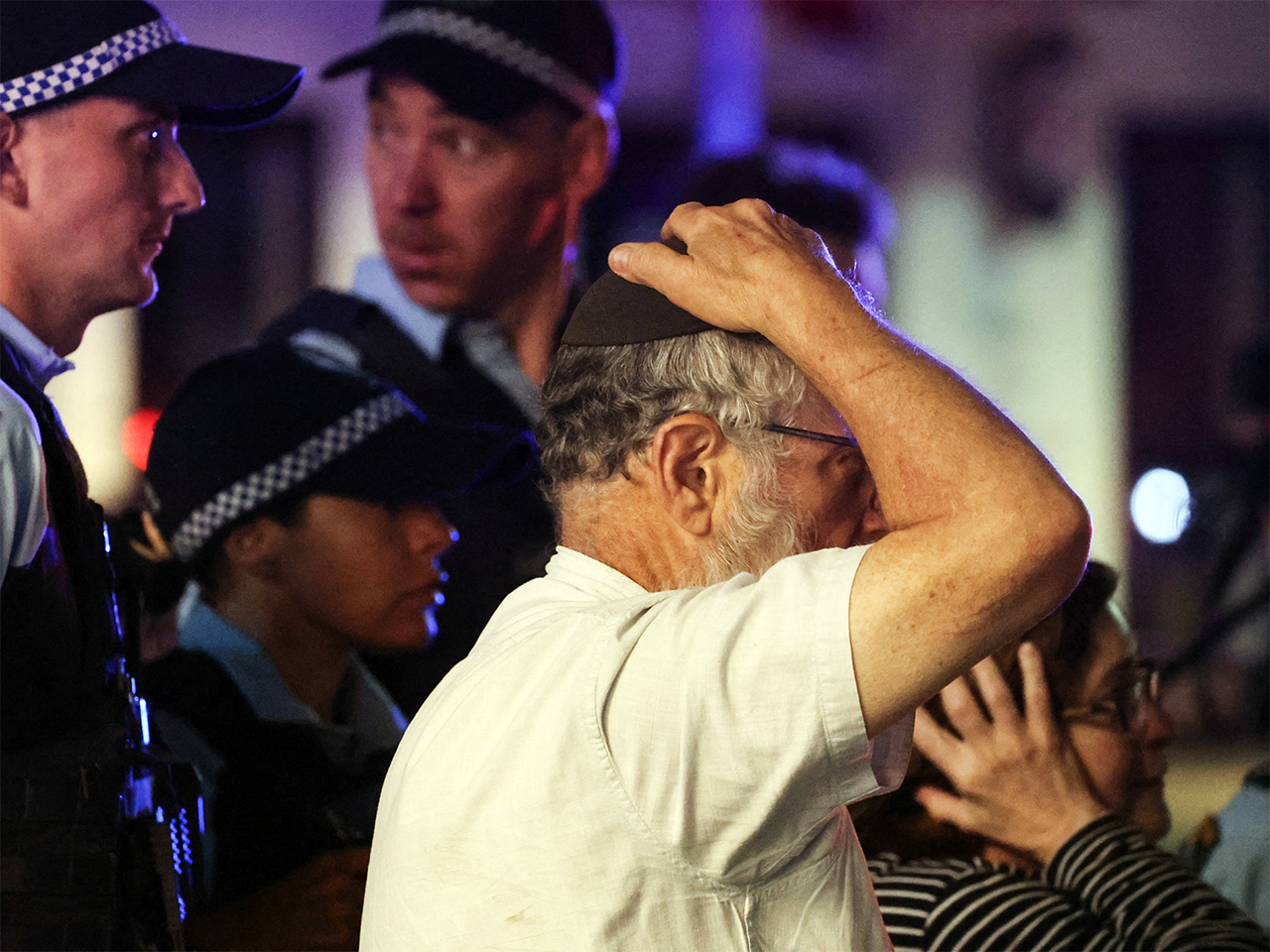
Grief takes hold: Sydneysiders left in shock and disbelief
Australia’s prime minister, Anthony Albanese, is now besieged by a cacophony of questions, none of which have easy or agreeable answers. Leaders of Australia’s Jewish community have long warned of the hazards of over-indulging extremist elements among the regular protests against Israel’s conduct in Gaza. There has been a steady tick of anti-Semitic vandalism, arson and threats of worse, some of which the intelligence services linked to Iran: the Islamic Republic’s ambassador was sent home from Canberra in August. Nevertheless, Israel’s government has piled in noisily and unhelpfully. Prime Minister Benjamin Netanyahu suggested that Australia’s recognition of a Palestinian state in September had somehow encouraged Sunday’s atrocity – a statement which, ironically, echoes the inane “root causes” refrain much beloved of leftists who seek to excuse terrorists responsibility for their choices.
Australia’s noisy cohort of anti-immigration xenophobes will also be insisting that the Bondi massacre vindicates their paranoia. There is considerable potential for further ugliness.
But there are things that Albanese could say, and/or do. Australia recently introduced a ban on most social media for under-16s, and placed the onus on social-media platforms to enforce it. That could be elaborated upon, in that social-media platforms should be held accountable, on pain of having their plugs pulled, for everything that they permit to be published (online hate is not some natural and inextinguishable phenomenon; it simmers and roils because the platform proprietors choose to do nothing about it). He might also note that now would be a good time for Australia’s increasingly vociferous gun lobby to give it a rest. The Bondi shooters were restricted to hunting rifles and shotguns as a consequence of the country’s correctly robust response to the 1996 Port Arthur massacre. Rules on the ownership of automatic and semi-automatic weapons were drastically tightened, and more than 643,000 firearms taken out of circulation in a buyback scheme.
Much will be written, as it should be, about the hero of this miserable hour: Ahmed al Ahmed, a 43-year-old fruitseller who disarmed one of the Bondi gunmen and was wounded by the other. He is undergoing treatment for his injuries while a nation – and the world – marvels at the footage of his courageous actions. He could easily have taken cover and nobody would have blamed him. Instead, he launched himself at an armed and murderous maniac, who might also have been strapped with explosives or concealing other weapons. Ahmed would have understood that this could have been the last thing he ever did. He did it anyway and there are certainly people alive today who would otherwise have been counted among the victims of Sunday’s horror.
All of us – individuals and societies – prefer to think of ourselves as noble. None of us – individuals or societies – really have the least idea how we will react to a given circumstance until or unless we are in it. Wittingly or otherwise, a middle-aged shopkeeper from Sydney has demonstrated the attitude that Australia – and, one might hope, all nations – should take to the eternal lunacy of anti-Semitism: Nope. No you don’t. Not here.
Andrew Mueller is the host of ‘The Foreign Desk’ on Monocle Radio and a regular Monocle contributor. For the latest news and reaction to the Bondi Beach attack, tune in to ‘The Globalist’.
|
|
EDO TOKYO KIRARI  MONOCLE MONOCLE
|
|
diplomacy: MEXICO
From its first female president to joining the Michelin club, Mexico’s soft power is rising
This spring, Monocle commissioned what turned out to be the final piece of writing by Joseph S Nye, the political scientist who coined the term “soft power” and died in May at the age of 88 (writes Alexis Self). Nye’s death came as his idea – to consider a country in terms of its culture, ideals and subtle influence, not just its economy and military – was under attack. But as he argued (and as Monocle has believed since our first survey on the subject in 2010), soft power’s influence is even more important in a multipolar world.
With that in mind, we listed the countries that have notably risen or fallen in the soft-power stakes this year. You can read the piece in full here. But for now, here’s one standout.

Mexico
Michelin has launched its first dedicated Mexico restaurant guide but the nation’s cuisine is only an appetiser. In 2024 it welcomed 45 million international tourists, making it the sixth most-visited country in the world. Claudia Sheinbaum, its first female president, helps to project an image of confidence and coolness. Most of those entering the ballot for tickets to next summer’s Fifa World Cup (jointly held in Mexico, the US and Canada) will surely be hoping to attend a match in this fun, football-mad country.
To read the rest of our Soft Power Survey round-up click here, or pick up a copy of the December/January issue.
|
|
• • • • • DAILY TREAT • • • • •
Be shaken or stirred with Kavka Vodka
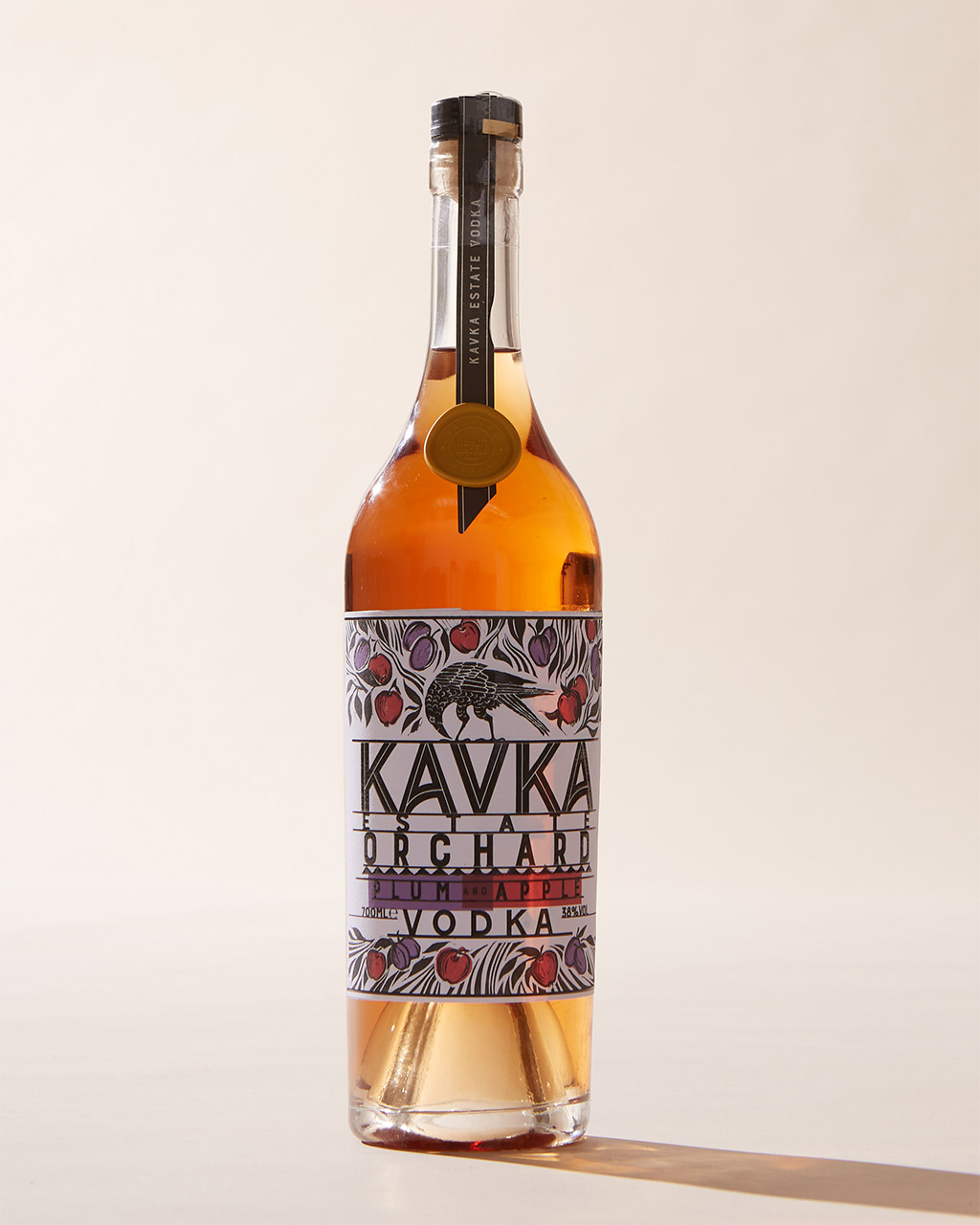
Want to add a new flavour to your drinks cabinet? Then make Kavka Vodka your next tipple. Created by distiller and restaurateur Jan Woroniecki and served at Ognisko, his Polish fine-dining spot in London’s Kensington, Kavka is inspired by the country’s heritage distilleries.
Kavka Tokaji has light fruit and oak notes, and Kavka Orchard is a blend of plum and apple. Meanwhile, Kavka Estate offers a classic taste, made from a blend of fine rye and wheat spirits. Mix it into a martini or drink it neat.
|
|
|
Sponsored by Edo Tokyo Kirari
|
|
|
|
|
|
in print: Switzerland
Meet the Lindauers, the family behind the finest Alpine sledges
Switzerland: The Monocle Handbook brings the best of the country within reach. Here, we meet a specialist company in the canton of Schwyz whose sledges will help you to whizz down snowy slopes more quickly than the rest.
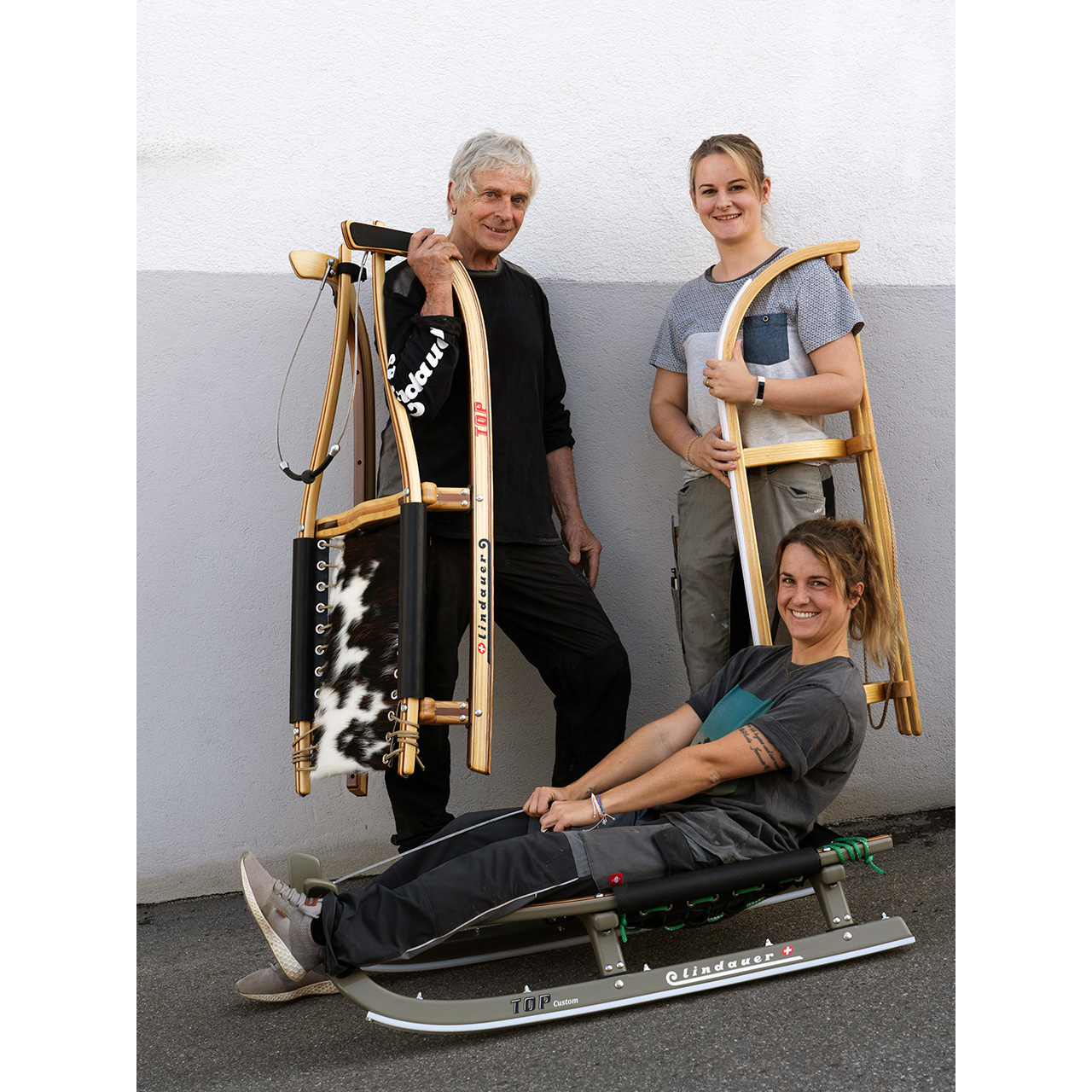
Blade runners: Jo Lindauer with his daughters Viola (right) and Medea
Lindauer’s trusty sledges
“Most people going down the mountain have been overtaken by a Lindauer at some point,” says Jo Lindauer, who crafts sledges at his family’s workshop. Lindauer makes about 200 sledges a year, as well as some 70 toboggans.
lindauerschlitten.ch
Want more tips from Switzerland? Pick up our new handbook on the country here.
|
|
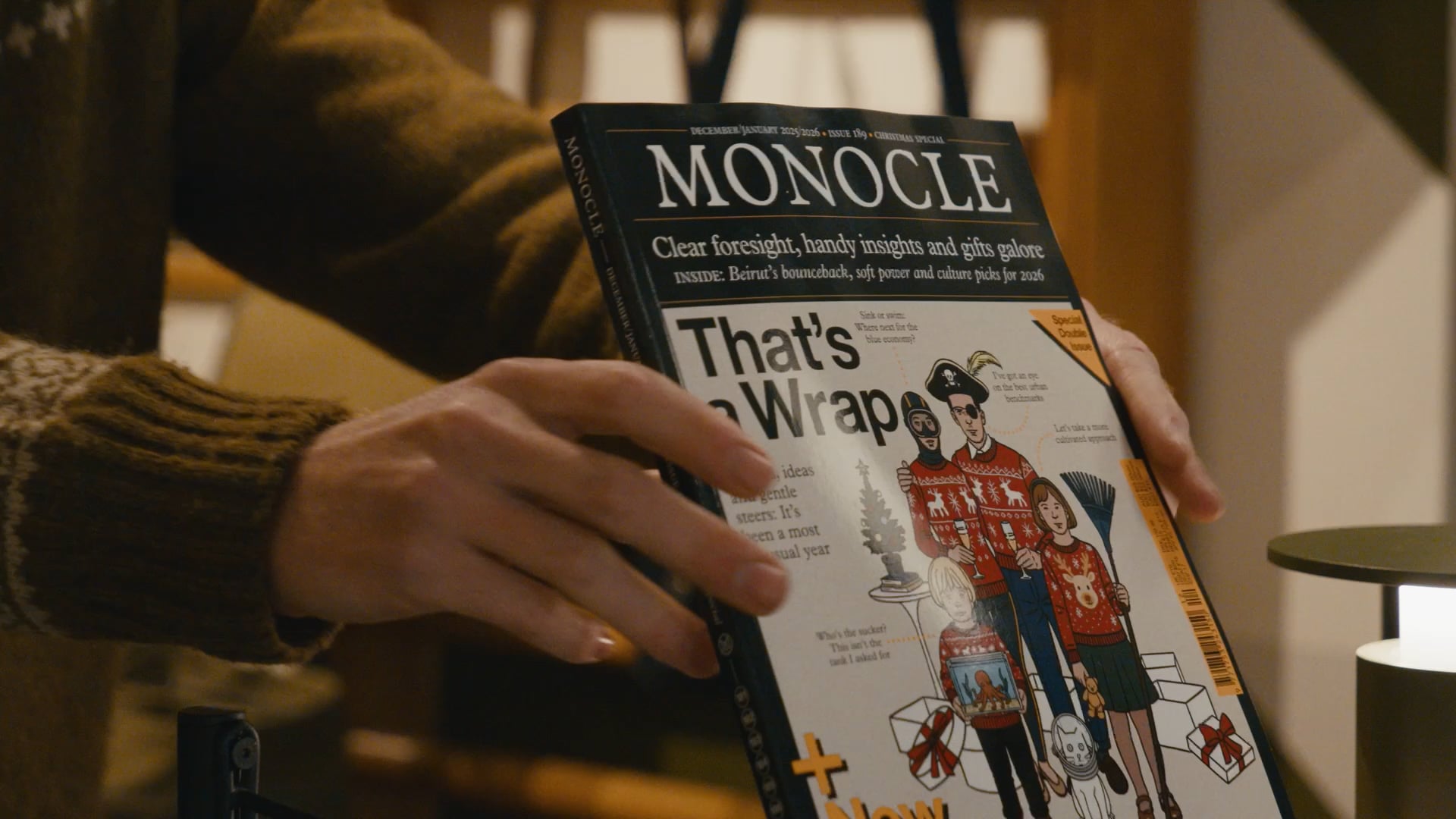
Monocle FILMS: ISSUE 189
A preview of our December/January issue
With handy insights from the past year and a view of what’s to come in 2026, our bumper winter edition is packed with reports, ideas and long reads to savour. We head to Beirut to hear about how the city is bouncing back, step behind the curtains at the Royal Danish Ballet, pick up presents in our festive gift guides and sit down for culinary treats at a few of Paris’s best bistros. Plus: dip into our Japan survey, which has plenty of lessons in mobility and retail for the year ahead.
 | | | | |