|
 |



Rep. Marjorie Taylor Greene’s “f— it, we ball” tour continues! In a CNN interview last night, the former diehard Trump ally took swing after swing at the president. She called his lunatic post about murdered director Rob Reiner “absolutely, completely below the office of the president of the United States,” “classless,” and “just wrong.” She suggested he lacks empathy for economically uneasy Americans: “When he looks into a camera and says affordability is a hoax and just totally tries to make nothing out of inflation, he’s talking to Americans that are just suffering.” And she took aim at his air of invulnerability with the GOP base: “I think the dam is breaking. . . . Lame duck season has begun.”
Will all this hurt Trump? Or will the venue for Greene’s attacks—a series of suddenly sympathetic mainstream media platforms—burn down her own credibility with the MAGA base faster than Trump himself ever could? Guess we’ll see. Happy Wednesday.
 |
Time To Twist the Knife on Tariffs
by Andrew Egger
Donald Trump sees his tariffs as an economic panacea that will supercharge the economy, pay down the national debt, and breathe new life into the manufacturing sector.
But in the eight months since “Liberation Day,” they’ve done the opposite. The economy is stagnant. The federal debt keeps growing. And yesterday, the Bureau of Labor Statistics reported that the economy lost manufacturing jobs for the seventh straight month.
Trump’s tariffs are a bust. So why do Democrats seem oddly reluctant to twist the knife?
In one sense, Democrats are spending a lot of time these days talking about Trump’s tariffs. But they tend to do so broadly and obliquely—passing over the specific issue of the trade wars to talk in more general terms about Trump’s failure to deliver on affordability. There are plenty of reasons for this. Some Democrats, particularly in the upper Midwest, still have a protectionist streak themselves: They might not like these tariffs, but they’re not opposed to tariffs in principle. And at any rate, talking about tariffs is wonkier and more complicated than talking about rising prices.
“People know tariffs raise costs. Costs are the overriding issue,” Democratic strategist David Axelrod told The Bulwark last week. “You don’t [have] to be the master strategist in this one.”
There’s little doubt that Trump’s tariffs are damaging him politically, even without Democrats’ help. They may be tempted to simply sit back and watch it happen. But it’s unclear just how poised Democrats are to benefit from Americans’ tariff remorse. Writing in the Argument last week, Lakshya Jain noted that while voters don’t like how Trump is handling the economy, many “simply aren’t sold on Democrats as the alternative.” Despite Trump’s flailing on the issue, Jain pointed out, Democrats are still having a harder time reaching voters who say that cost-of-living is a top-two issue than with voters who don’t.
This is hardly surprising: It wasn’t long ago that voters turned hard against Democrats as inflation flared out of control on Joe Biden’s watch. But what better way to get that bad taste out of voters’ mouths than by declaring war on Trump’s most preposterous economic policies?
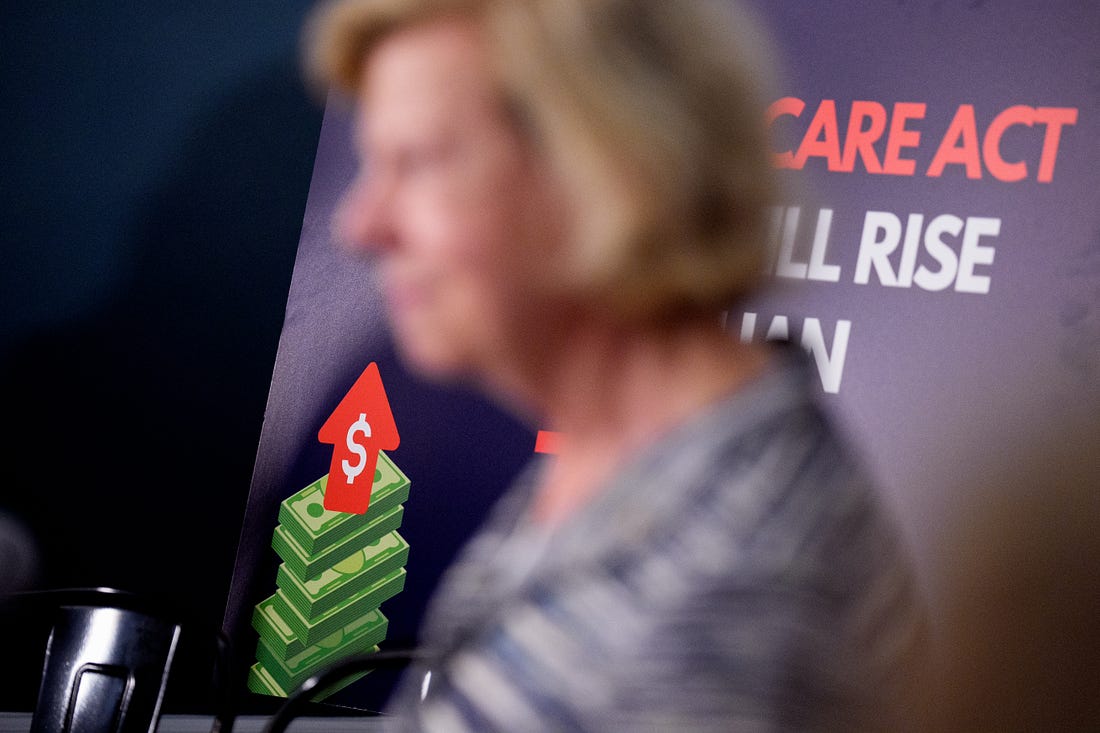
One of the most resounding lessons Democrats learned—or, at least, should have learned—from 2025 is that they have more agenda-setting power when opposing Trump than when trying to cooperate with him. Trump and congressional Republicans are still flailing in the face of expiring Affordable Care Act subsidies, which they have repeatedly refused to renew while failing to put forward a workable replacement plan. Millions of Americans are set to see their health-insurance premiums spike in a matter of days. All this has damaged Trump and been a political win for Democrats.
On messaging, at least, Democrats came out ahead after the last shutdown battle. So with government funding again just weeks from expiring, why not move on to another pain-point issue? Why not refuse to fund the government unless Republicans agree to claw back some of Trump’s economy-killing tariffs?
While Democrats seem to be gliding toward huge wins in next year’s midterms, there’s one possible event that could do major damage to their prospects. If the Supreme Court rules in the weeks ahead that Trump’s tariffs are broadly unconstitutional, it would change the economic landscape of the country immediately—not only taking a pillow off the face of the economy, but giving it a massive adrenaline shot in the form of corporate refunds for tariffs collected so far.
Even if Trump were to try to put tariffs back in place under other emergency authorities—as he and his allies have suggested they’d do—they’d still likely be obliged to return more than $100 billion in duties collected this year. And if the Court is willing to push back on Trump’s tariff-authority claims in one area, they may be willing to do the same in others.
The result could be a world where the economy escapes Trump’s tariffs despite his best efforts—and where, as Catherine Rampell has written, Trump perversely reaps the political reward, standing to take credit for a suddenly “HOT” economy even when he was the one singlehandedly keeping it cold before.
In a world where this outcome is a real possibility—and it sure seems like it is—then “cost talk is better than tariff talk” suddenly becomes terrible advice for Democrats. They should be out there screaming from the rooftops that it’s the trade wars that are responsible for America’s economic malaise. If the Supreme Court ends up saving the economy from Trump’s tariffs, Democrats will need to convince the electorate that the Court saved them from Trump. The best time to start would have been months ago. The second-best time is right now.