|
 |
Hi, y’all. Welcome back to The Opposition. Earlier this year, many California Democratic officials assumed Kamala Harris would run for governor in 2026 to succeed term-limited Gavin Newsom. When she announced over the summer that she would pass, it caught the political class by surprise. (She’s instead been on a months-long book tour, potentially laying the groundwork for another presidential bid.) Then, just a few weeks ago, Sen. Alex Padilla said he would not run for governor, either. Meanwhile, Katie Porter—who once seemed like she could clear the primary field—has struggled to recover after she threatened to walk out of an interview with a CBS reporter and a video leaked of her yelling at a staffer.
All of that to say, the California governor’s race is in chaos. Without a formidable frontrunner to rally around, seemingly everyone in the state’s Democratic party is shooting their shot. (Steph, we’re waiting on you!) Today’s edition is about one of those newly announced candidates who’s hoping that his moment has finally arrived.
As this race heats up—and as the other 2026 primaries get underway across the country—the best way to stay fully informed is with the kinds of scoops and sharp analysis my colleagues and I at The Bulwark will be delivering, and the kinds of conversations you’ll find in our chats and comments sections. Sign up for a Bulwark+ membership today and your first 30 days are free:
We’d love to have you as part of our community!
–Lauren
Tales of a Billionaire-Populist Wannabe Governor
Tom Steyer has hired Zohran Mamdani’s ad firm to help get him elected in California. Can they pull it off?
|
| |||||||||||||||


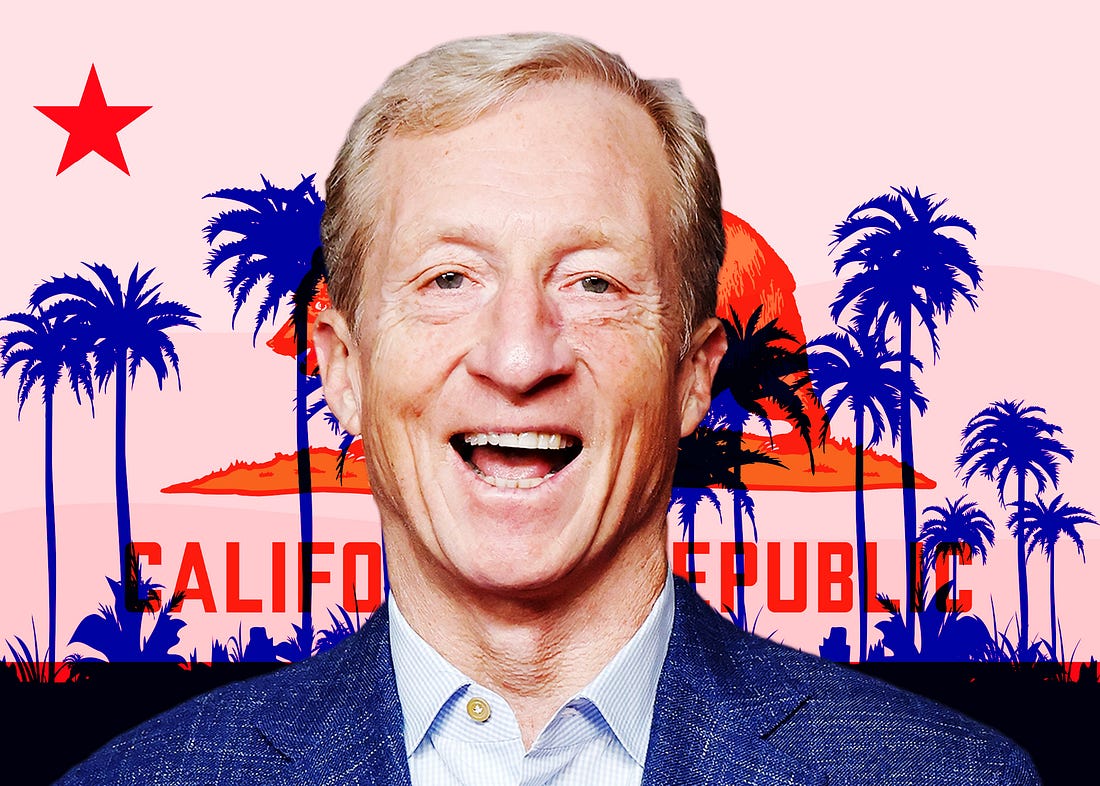 |
LONGTIME DEMOCRATIC DONOR TOM STEYER has worn so many hats in his life—businessman, environmentalist, presidential candidate—that you’d think at the tender age of 68 he would be steely, hardened by the challenges and opportunities the world has thrown at him.
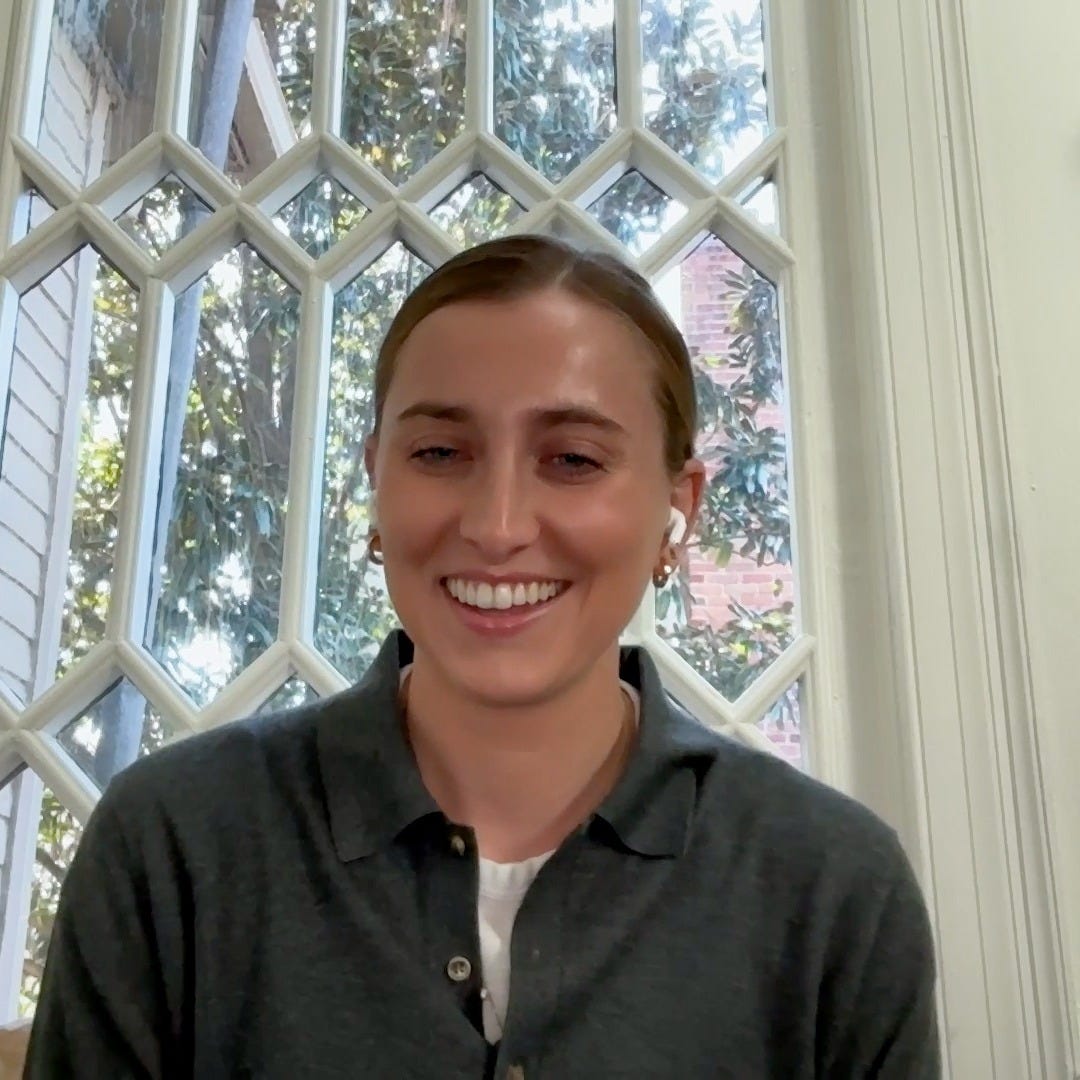
And yet, as he sat on the other side of a FaceTime conversation with me this week, the man who is now running to be governor of California started—I swear to you—crying. Not the type of tears that careen down the lines of one’s face. But the swelling-of-the-eyes variety; the kind that makes the voice quiver but not stumble.
Steyer was talking about his belief in the promise of California, a promise all too often belied by corporations that have come to the state and taken advantage of regular folks. “The working people, the poor people, and the illiterate people of this country have built this system at the risk of their lives,” he said, just as the water works started up. The phone he was holding got a bit wobbly (making me, the interviewer, slightly queasy as his camera jerked around), and his voice approached a whisper. I got the sense that he was working hard to hold back bigger sobs.
“Truthfully, it’s like, I think I’m just a lucky guy in many ways,” he explained when I asked why he was getting so emotional.
The moment felt genuine. But I’m not a resident of California. And the success or failure of Steyer’s candidacy will depend, to a large degree, on whether voters there believe that these sentiments come from a sincere place. Though he is a legitimate crier (at least according to him), this could prove a hard sell. That’s because the public perception of Steyer is that he’s a prominent member of the elite Democratic donor class. A former hedge-fund manager, he has hosted presidents at his house in San Francisco’s wealthy Sea Cliff neighborhood, which overlooks the ocean and has a stunning view of the Golden Gate Bridge. He owns an 1,800-acre cattle ranch on the California coast and a house on Lake Tahoe, where President Joe Biden and the first family stayed during a vacation in 2023. Forbes estimates his net worth at a cool $2 billion.
At a time when the Democratic party is leaning into a populist political message, that’s not exactly the ideal profile. Yet in November, Steyer announced his campaign in a two-minute video slamming “monopolistic” utility companies and the “richest people in America” who “think that they earned everything themselves.” (“Bullshit, man!”) He vowed to make “corporations pay their fair share again” and pitched himself as an outsider candidate who would get money out of politics and deliver real results. When I asked him whether his own life and wealth could complicate this message—and, frankly, whether he thinks billionaires like him should exist—he had a ready response.
“I don’t believe in putting a ceiling on people’s ambitions,” Steyer said. “But let me say this, too: This is an amazing place to come—as I say, best place to start a business, best place to grow a business. But if you come here, you’re part of a community, you’re part of a state, you’re part of something that has been built by working people for decades. . . . Sky’s the limit, but I am absolutely committed to protecting the interest of working Californians from people who want to rip us off.”
Over the decades, plenty of rich Democrats have convinced skeptical voters to look beyond the tensions that exist between their personal wealth and their personal brand as an authentic outsider populist. (Franklin Delano Roosevelt comes quickly to mind.) Steyer thinks he can do the same.
While he is not favored to advance beyond the June primary, California’s nonpartisan “jungle primary” system—in which the top two candidates regardless of party affiliation advance—is unpredictable. That’s especially true this election cycle. At least ten candidates have announced gubernatorial bids so far, and there’s not a clear Democratic frontrunner. By and large, candidates have struggled to raise the money needed to run a competitive statewide race. Steyer’s wealth, at least on this front, creates an obvious advantage. Unlike the others, he can bankroll his own race.
“If it really only takes