| | EU leaders gather for a summit that could shape the bloc’s geopolitical relevance, Western powers st͏ ͏ ͏ ͏ ͏ ͏ |
| |  Brussels Brussels |  Luanda Luanda | Los Angeles |
 | Flagship |  |
| |
|
The World Today |  - EU’s relevance dilemma
- EU-Mercosur pact in peril
- Venezuela to escort tankers
- Putin eyes ‘historic lands’
- US passes defense bill
- US loans to fund Angola rail
- China Vanke faces default
- Australia tackles hate speech
- Online hate fueled by few
- Oscars to move online
 A book about risk, chance, and luck that C-suite executives can’t put down. |
|
Europe’s high-stakes summit |
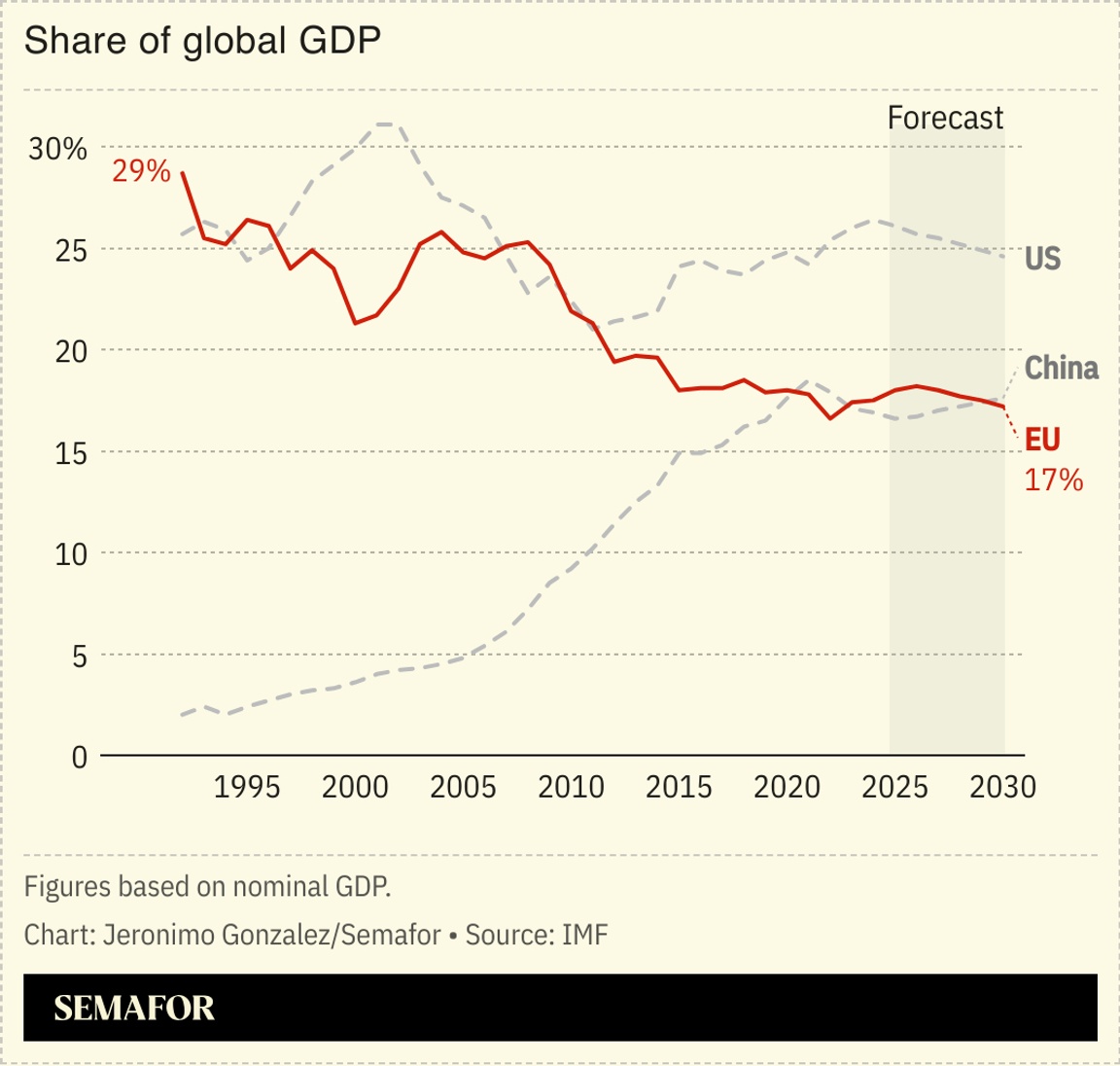 EU leaders gather in Brussels today for a summit that analysts say will determine whether the bloc builds its position as a geopolitical power — or fades to second-tier status. On the agenda are negotiations over long-term funding for Ukraine, finalizing a deal with Latin America’s biggest economic union that has proved controversial within Europe, and the EU’s own long-term spending program. Attacks from Washington on the bloc’s trade strategy, domestic politics, and security spending have intensified internal divisions, but reform is urgently “required to remain relevant” in a world increasingly dominated by the US and China, JP Morgan CEO Jamie Dimon and former British Prime Minister Tony Blair warned in a new report. |
|
Lula threatens EU-LatAm trade deal |
 Michel Euler/Pool/Reuters Michel Euler/Pool/ReutersBrazilian President Luiz Inácio Lula da Silva threatened to walk away from a long-awaited trade deal between South America’s biggest trading bloc and the EU after France and Italy raised objections. “If we don’t do it now, Brazil won’t make any more deals while I’m president,” Lula said. The agreement — in negotiations for decades — would create one of the world’s largest free-trade areas: Germany has pressed for it to be finalized. But EU countries with powerful farming lobbies, including France and Italy, have repeatedly delayed its approval, demanding protections for their agricultural industries. EU diplomats hope a compromise can be reached at a summit today, though one warned that if the deal is not signed this week, “it will die.” |
|
Venezuela navy risks US clashes |
 A Venezuelan Navy patrol. Juan Carlos Hernandez/Reuters A Venezuelan Navy patrol. Juan Carlos Hernandez/ReutersVenezuelan President Nicolás Maduro ordered his country’s navy to escort oil tankers, risking a confrontation with US forces that have been ordered to blockade the South American nation. US President Donald Trump’s decision to restrict oil shipments from Venezuela also risks spilling out into a wider conflict: China, which buys the vast majority of Venezuela’s crude, accused the US of “bullying” Caracas. Venezuela has asked for a UN Security Council meeting to discuss the “ongoing US aggression,” which could worsen the country’s economic crisis — oil makes up around 80% of Venezuela’s exports. Meanwhile, Trump allies are working to set up a White House meeting with Venezuelan opposition leader María Corina Machado, Semafor’s politics team revealed. |
|
Putin vows to take ‘historic lands’ |
 Sputnik/Alexander Kazakov/Pool via Reuters Sputnik/Alexander Kazakov/Pool via ReutersRussian President Vladimir Putin pledged to “liberate [Russia’s] historic lands” and said the European “swine” backing Ukraine would eventually give up. US-brokered peace talks continue — a Russian envoy will meet White House aides in Miami this weekend, while Ukrainian President Volodymyr Zelenskyy is in Brussels today to meet with EU leaders — but Kyiv and Moscow remain far apart on the question of territorial concessions. And despite US President Donald Trump’s apparent keenness to dial back support for Ukraine, he is expected to approve supplying Ukraine with $400 million in military support annually for two years, and his administration is reportedly readying a fresh set of sanctions on Russia’s energy industry. |
|
US passes $900B defense bill |
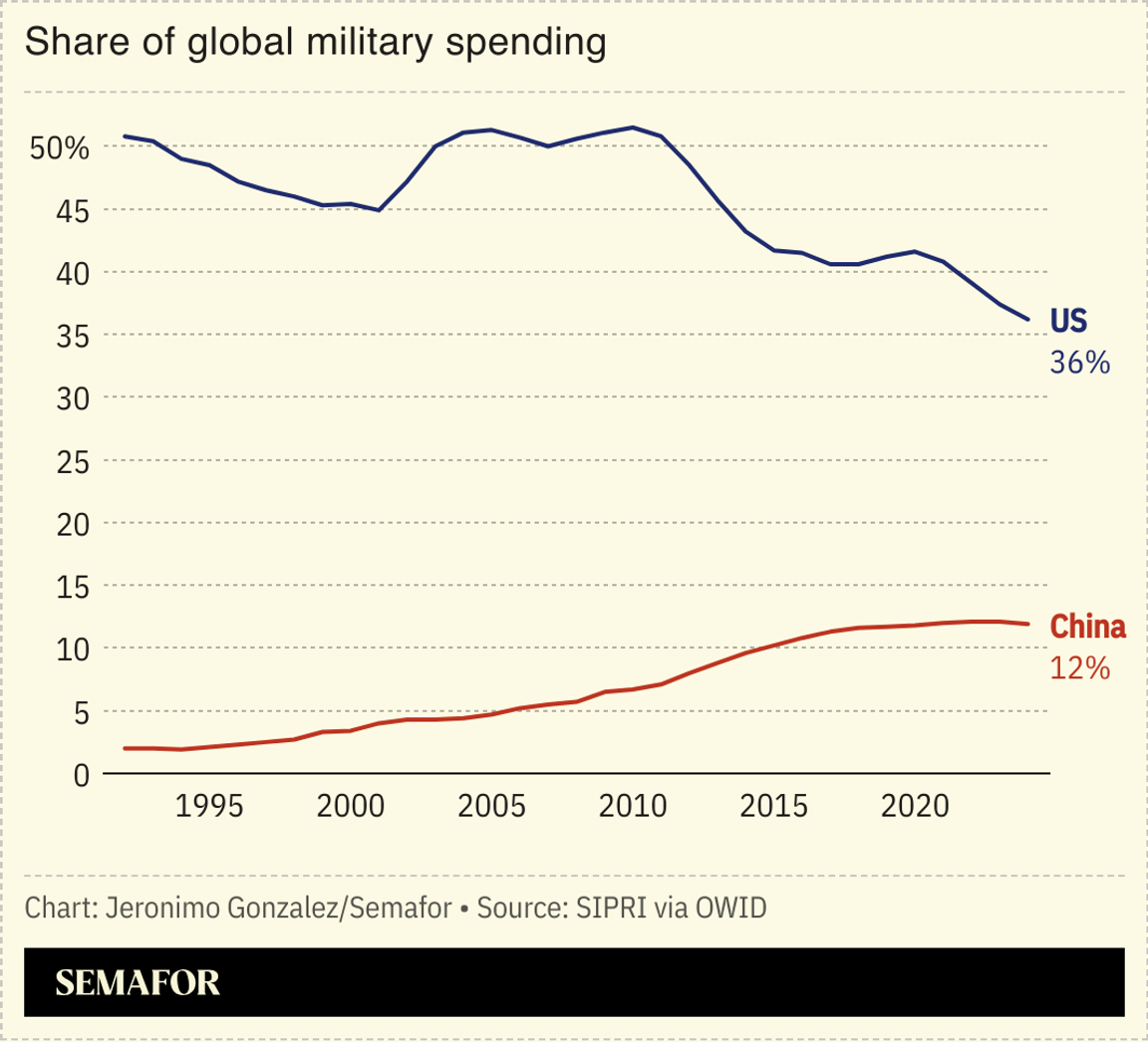 The US Senate passed a $900 billion defense bill, the biggest military spending program in history, highlighting the West’s accelerated rearmament. The sum set out in the National Defense Authorization Act was higher even than US President Donald Trump requested; he is expected to approve it soon. Germany also passed a major bill agreeing €50 billion in defense spending, while the UK is set to unveil its military outlays in the new year. The surge in military spending has revived European manufacturers and intensified competition in the US. The CEO of the defense tech upstart Anduril — which is eyeing an IPO — told Semafor that his rivals were beginning to “fight dirty” to win lucrative government contracts. |
|
US loans Angola $500M for railroad |
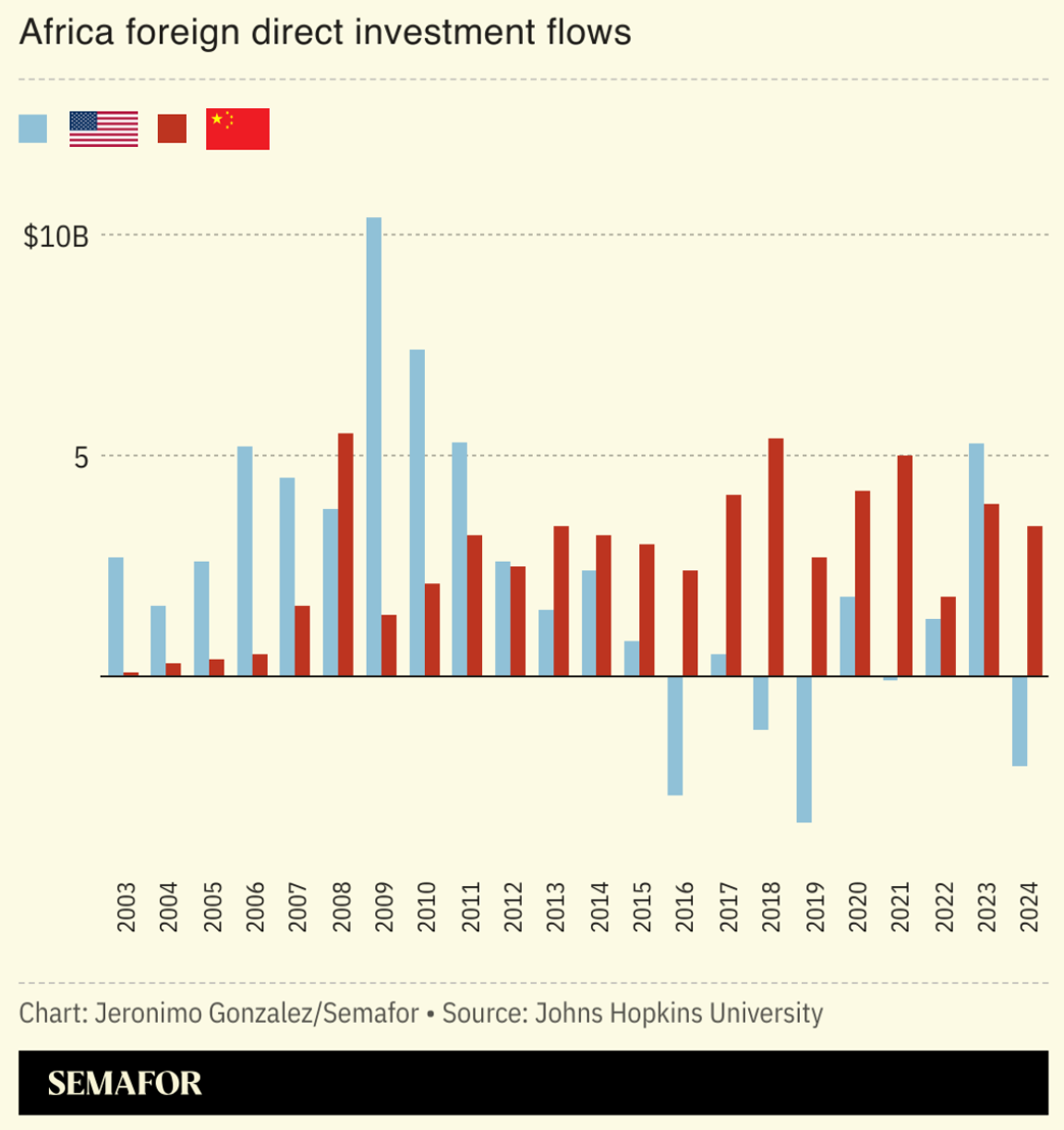 The US approved a $500 million loan to Angola to refurbish a key railway line, part of Washington’s new strategy to promote its interests in Africa. The loan is part of White House efforts to counter China’s influence on the continent, while gaining access to Africa’s vast mineral resources. Once completed, the Lobito Corridor will help move minerals from central Africa to a port on Angola’s Atlantic coast. The landmark deal underscores Washington’s shift from providing aid to African nations to instead finance key projects that align with US priorities. However, the sudden pivot to a “trade, not aid” approach has left several African nations struggling to plug funding gaps. |
|
Chinese real estate firm risks default |
 Lusha Zhang/Reuters Lusha Zhang/ReutersOne of China’s biggest real estate companies will meet with bondholders today as it seeks to avert a default. China Vanke is among a litany of debt-saddled property firms that are under the microscope following a construction boom that saw huge numbers of apartments built that now remain unoccupied. Concerns about the real estate sector — which by some estimates amounted to a quarter of the entire economy at one point — are among myriad issues facing China, including fears of chronic deflation, a youth jobs crisis, and opaque levels of local government debt. Some Chinese authorities have begun censoring online complaints about the property market: “We are going to see more defaults,” an expert told Nikkei. |
|
 Semafor is heading to Davos, to deliver exclusive interviews and sharp insights on the deals, power plays, and ambitions playing out on the global stage. Stay in the know on the big ideas, small talk, and behind-the-scenes happenings at the World Economic Forum’s annual gathering — subscribe to Semafor Davos. |
|
Australia to tighten hate speech laws |
 Hollie Adams/Reuters Hollie Adams/ReutersAustralia will tighten hate speech laws in the wake of the Bondi Beach shootings. Prime Minister Anthony Albanese unveiled plans to create new criminal offences and allow the government to reject or cancel visas for people spreading “hate and division.” Albanese has been criticized by Jewish leaders over his record on anti-Semitism — the father-and-son shooters, apparently inspired by the Islamic State group, killed 15 people at a Hanukkah celebration Sunday, and one former minister said the government has “allowed Australia to be radicalized.” Following the killings, British police said they would also be “more assertive” about anti-Semitic language: Some forces plan to arrest protesters who chant “globalize the intifada,” which many Jews consider a call to violence. |
|
Small fraction behind most online hate |
|
|


