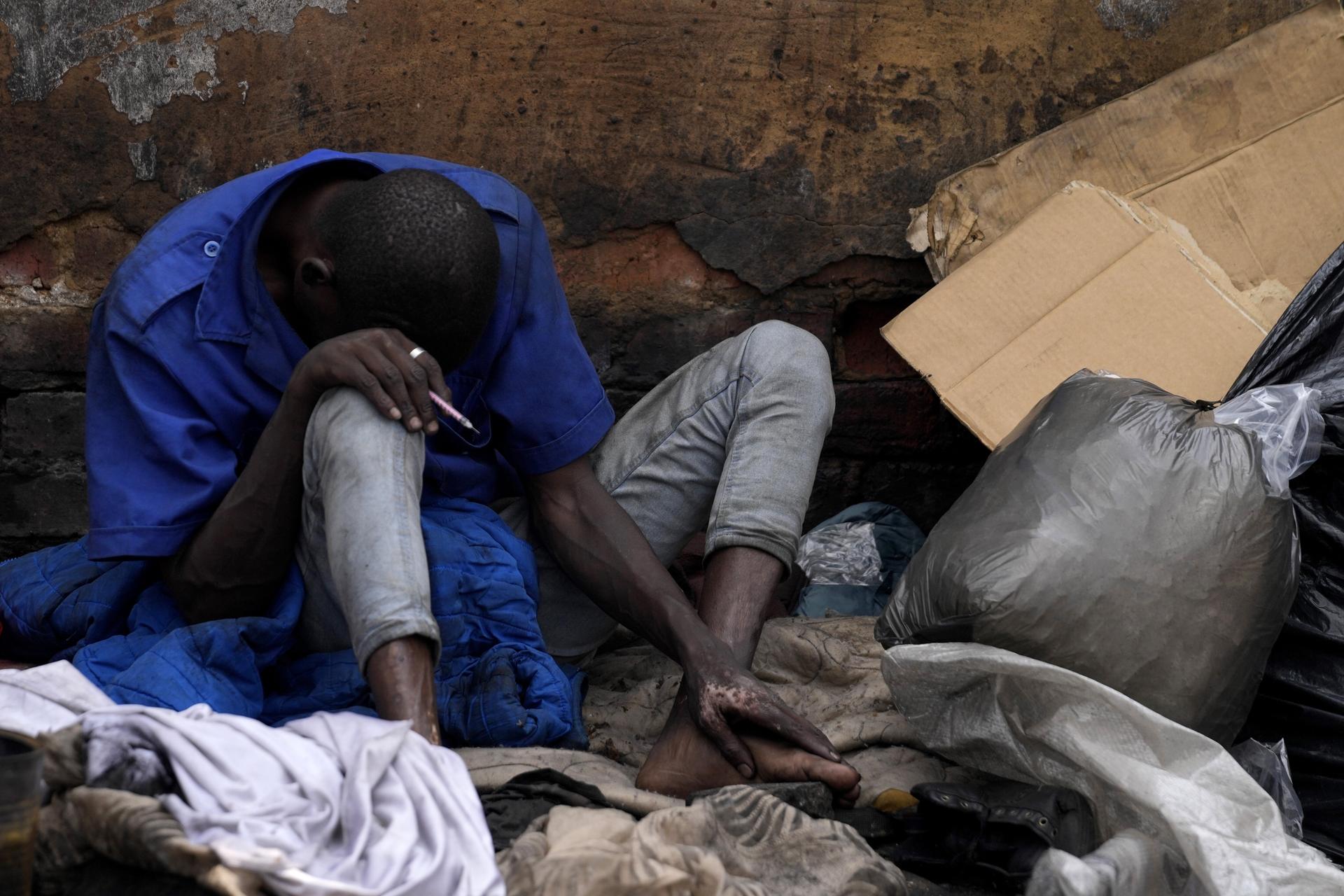
A homeless drug addict holds a syringe after injecting himself, on the outskirts of Pretoria, South Africa, Wednesday, March 5, 2025. (AP Photo/Themba Hadebe) |
When the Trump administration froze foreign aid, AP reporter Mogomotsi Magome showed devastating consequences on the ground in South Africa. Here’s what he said:
When U.S. President Donald Trump announced in January that the United States would freeze foreign aid to several developing nations, South Africa was among those singled out.
The impact of the decision was devastating and immediate in a country that has millions living with HIV and also relies partly on foreign-funded programs to fight the illness. Nearly $400 million in annual financial support was halted, triggering a cascade of consequences for the country’s already strained public health system.
As The Associated Press, we traveled the length and breadth of South Africa reporting on how volunteers who provided HIV support to people living in some of the most remote areas in the country had been fired. Health facilities supporting the most vulnerable in society were getting closed down and patients were being turned away.
Our reporting took us to a drug den in Pretoria, South Africa’s capital, where young people addicted to drugs were also being affected by the cuts, as a health facility that used to assist them with HIV support and drug therapy was also shut down. The den is located in one of the most unsafe areas of the city, and is made up of makeshift structures where those with addiction live and inject themselves with needles.
With my late colleague Sebabatso Mosamo and senior photographer Themba Hadebe, we accompanied a group of doctors and nurses to bring our audiences the story.
We interviewed the addicts themselves about the scourge of drug use and how they found themselves there. Interviewing them revealed what a broken society many young people come from in less developed countries, and the important role of foreign aid to fill the gaps created by economic hardships.
When we were done with the interviews, I returned to my car to find that it had been broken into, and my work devices and personal belongings were stolen. This all happened within the two hours that we were filming there, indicating the unsafe nature of the location we were reporting from.
But we did, along with other reporting in Zimbabwe and Lesotho, in order to bring our audience the many different facets of the U.S. aid cuts story. |