|
This week on Applied Intelligence, we learn how an AI engineer at Notion joined the sales team for a month to understand their challenges and build better tools to solve their problems. His first day on Notion’s sales team, AI engineer Theo Bleier made 40 cold calls. He didn’t land a single meeting — but he did discover insights that would change how Notion built internal AI sales tools. Instead of just throwing AI at the sales team and expecting results, Bleier became a card-carrying member of the sales pod for a month. He had named accounts. He learned about objection handling. He (unsuccessfully) cold-called. Sitting with Notion’s most successful salespeople, Bleier noticed they spent extra time doing account research before any outbound. But he learned the result of that research wasn’t better email messaging — these reps developed a better understanding of when to reach out to these accounts and prioritize them accordingly. “From the outside, it seems obvious we should make the sales team move faster by doing account research for them. But when Theo came in and did research, where he ended up was actually account prioritization."
- Pravesh Mistry, Notion’s Head of Global Sales.
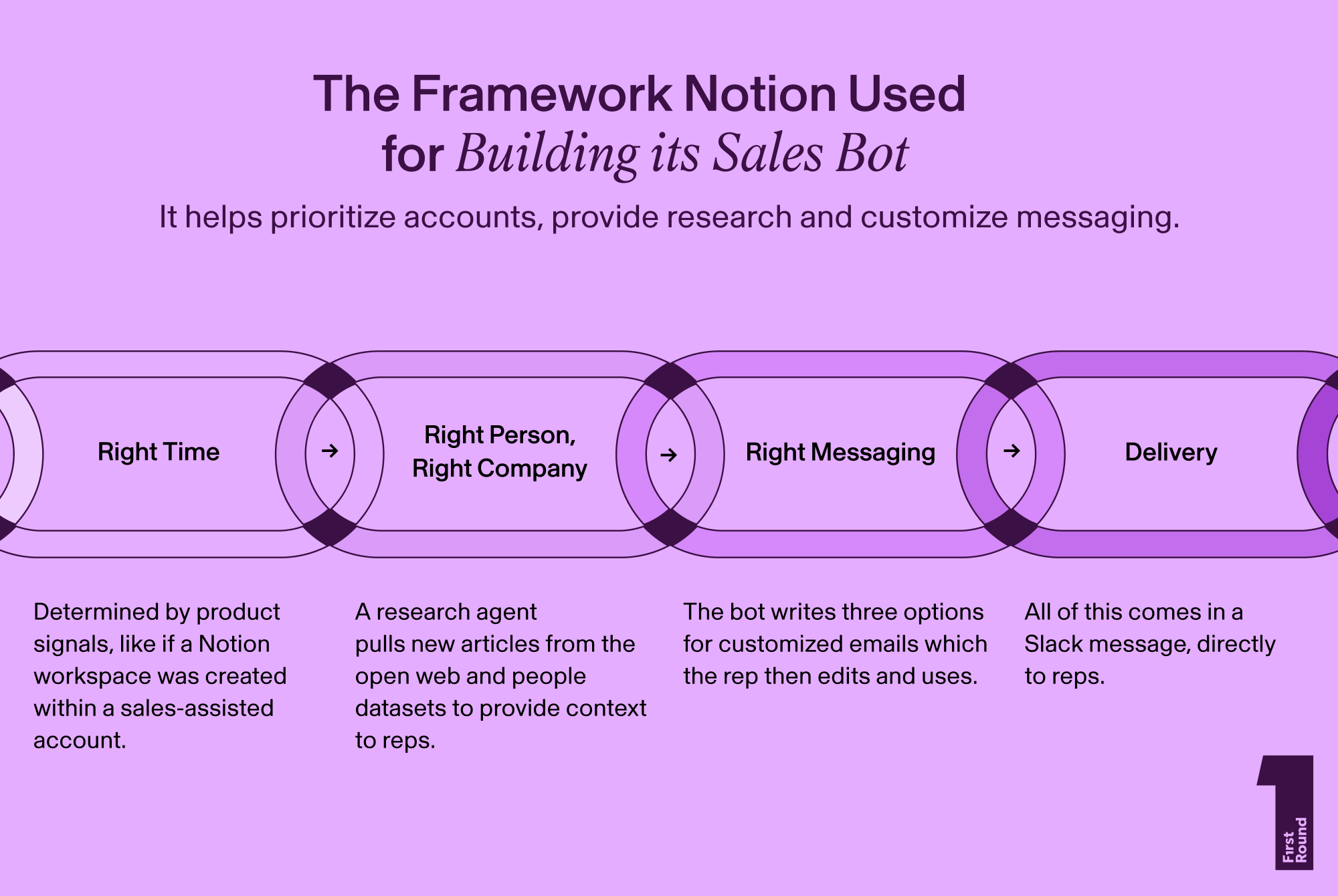
This led to Bleier’s framework for a successful sales process: “Right messaging to the right person at the right company at the right time — and right time is step zero.” As a result, Bleier created an internal tool called “Salestino bot” to automate that process. It gives reps specific product signals they use to better prioritize which accounts to reach out to, while also providing them with customized messaging to edit and use in that outreach. In this exclusive interview, we learn about Bleier’s immersion process to find the right problems and exactly how he built the tools to solve them. If you’re developing internal AI tools, Bleier’s process is a clear example of how to find the real problem before writing a single line of code. Thanks, as always, for reading and sharing, -The Review editors
|