And, how dogs boost owners' mental health.

Get full access to Reuters.com for just $1/week. Subscribe now.


Health Rounds

Health Rounds

By Nancy Lapid, Health Science Editor

Hello Health Rounds readers! Below in our last newsletter until 2026, we highlight a study showing that grants funded this year by the U.S. National Institutes of Health were less likely to mention ethnic, racial and gender considerations, compared to grants funded last year. We also share findings that help explain how dogs improve their humans' mental health.

Happy holidays and best wishes for the new year from all of us on the Reuters newsletter team. We'll be back in January!

Don't miss these breaking news stories: Americans facing soaring health insurance costs may get a lifeline in 2026; Medicare enrollees to pay 50% less for some drugs in 2025; US House passes Republican healthcare bill without ACA subsidy renewal; US CDC ends guidance that all newborns should get hepatitis B vaccine and RFK Jr proposes rules to cut US children's access to gender-affirming care.

Also: Trump moves to ease US marijuana regulations and announces Medicare pilot program to pay for CBD treatments; US Health Department cancels millions of dollars in grants to American Academy of Pediatrics and US NIH races to fill nearly half its top roles after wave of departures.


Industry Updates

  • Lilly pill helps maintain weight loss after switch from injectables.
  • Novo files marketing application for next-gen weight-loss drug.
  • Moderna secures up to $54.3 million funding for bird flu vaccine.
  • US FDA taps Merck drugs for national priority vouchers.
  • GSK wins US approval for twice-yearly asthma drug
  • Medline tops 2025 IPOs with $46 billion valuation.
  • Novartis, Roche near US drug price deal.
  • Takeda's AI-crafted psoriasis pill succeeds in late-stage studies.


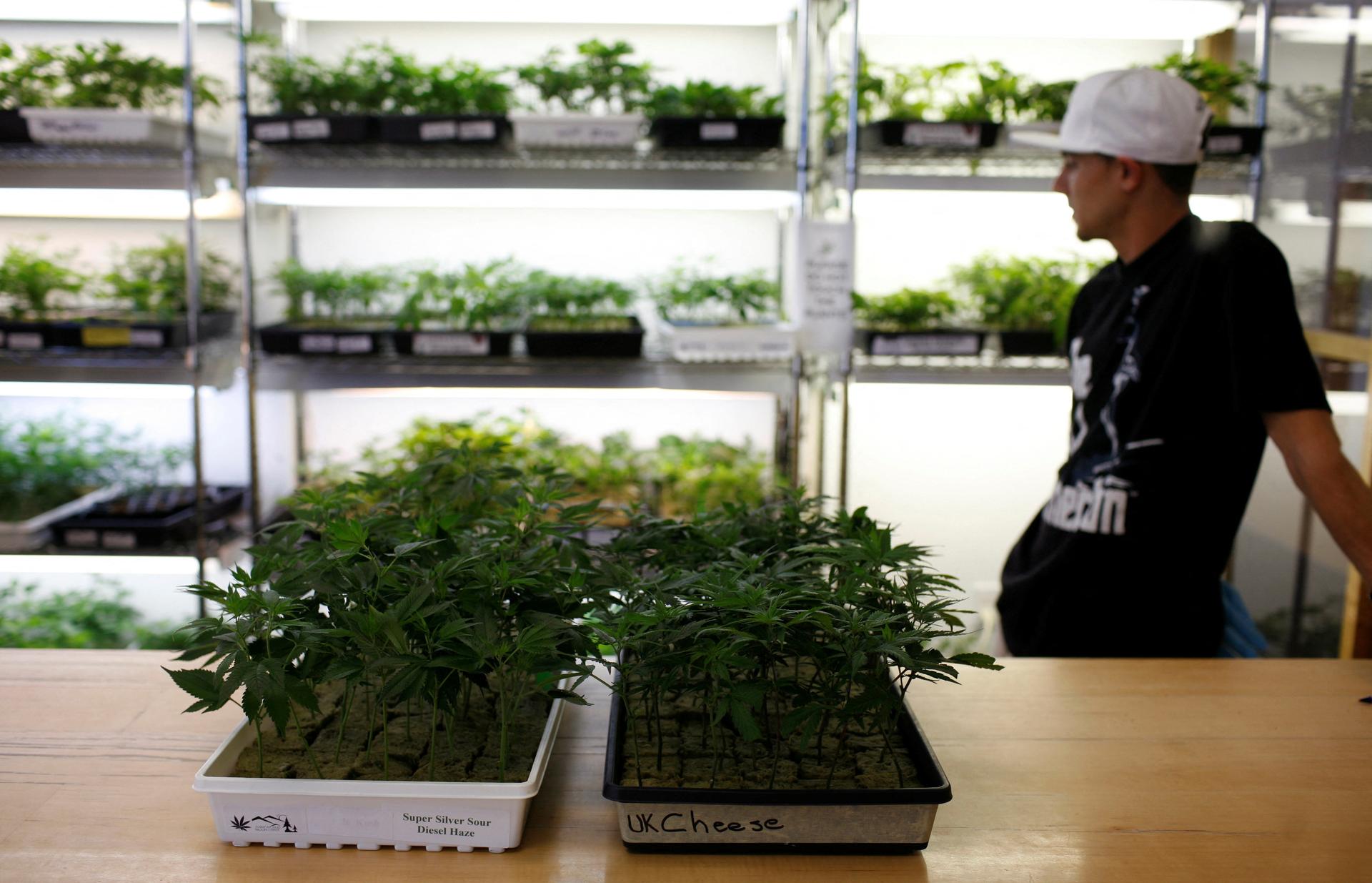
What will change if the US reclassifies marijuana?

REUTERS/Robert Galbraith/File Photo

U.S. President Donald Trump has signed an executive order demanding a speedy reclassification of marijuana that will ease federal restrictions on research that could lead to new medical marijuana products. Here is what you need to know.


Study Rounds

NIH grants show drop in diversity focus


An analysis of language used in grants awarded this year by the U.S. National Institutes of Health suggests that researchers are less likely now than previously to consider study participants' ethnic, racial and gender diversity – or less likely to admit in writing that they plan to do so.

The change is likely due to executive orders targeting diversity, equity, and inclusion-related funding and requiring agencies to “terminate, to the maximum extent allowed by law, all . . . ‘equity-related’ grants or contracts,” the researchers said.

Indeed, medical researchers not involved in the new study told Reuters earlier this year that they have been self-censoring their use of equity, diversity and inclusion language to increase their odds of receiving grants. Others have said they were instructed by NIH officials to strike such language from their applications.

To evaluate the issue, researchers at Harvard Medical School analyzed the abstracts, or summaries, of 17,701 grants awarded by the NIH in 2024 and 2025.

The rate of words reflecting diversity language – such as “Native American,” “gender,” “ethnicity,” and “sexual orientation” - decreased 25% between January 2024 and June 2025, the researchers reported in The BMJ.

Analyzing 1,967 pairs of the same grants in 2024 and 2025, in order to examine changes in language within the same research project, they found that words reflecting diversity language were deleted from grant abstracts at a 10-fold higher rate than other words in 2025.

The findings are “consistent with anecdotal evidence that researchers have modified language to prevent grant abstracts from being flagged for governmental review, suggesting a limitation on researchers’ ability to freely use specific terms in federal research grants,” the researchers said.


Read more about NIH funding in 2025 on Reuters.com

  • Trump administration health research cuts total $1.8 billion, analysis finds
  • CDC orders pullback of new scientific papers involving its researchers, source says
 

Dog ownership alters gut organisms to benefit mental health

Dogs’ beneficial effects on their humans’ mental health may be partly due to sharing of microscopic organisms, a new study suggests.

Living with dogs prompts increases in microbes in and on their humans’ bodies that are associated with mental health, researchers reported in iScience.

The same team of researchers had found in previous studies that people who grow up with a dog from a young age and continue to have dogs later in life score higher on measures of companionship and social support.

Other studies have shown that dog owners have differences in the populations of beneficial microscopic organisms that live in their intestines – the so-called gut microbiome - compared to non-dog owners.

In the new study, the researchers analyzed oral microbiome samples collected from 13-year-olds with and without dogs at home. They found similar species diversity and richness between the two groups. But the microbiome composition showed differences, suggesting that owning a dog shifted the abundances of specific oral bacteria.

When the researchers treated laboratory mice with microbiota from dog-owning teens to see whether and how it affected their social behavior, they found mice with the dog-owning microbiome spent more time sniffing their cage mates and showed more “prosocial behavior.”

“The most interesting finding from this study is that bacteria promoting prosociality, or empathy, were discovered in the microbiomes of adolescent children who keep dogs,” study leader Takefumi Kikusui of Azabu University in Japan said in a statement.

The studies authors say that while more research is needed, the results suggest that a family dog can change the microbiome in ways that support mental health, empathy, and prosocial behavior.


Read more about dogs on Reuters.com