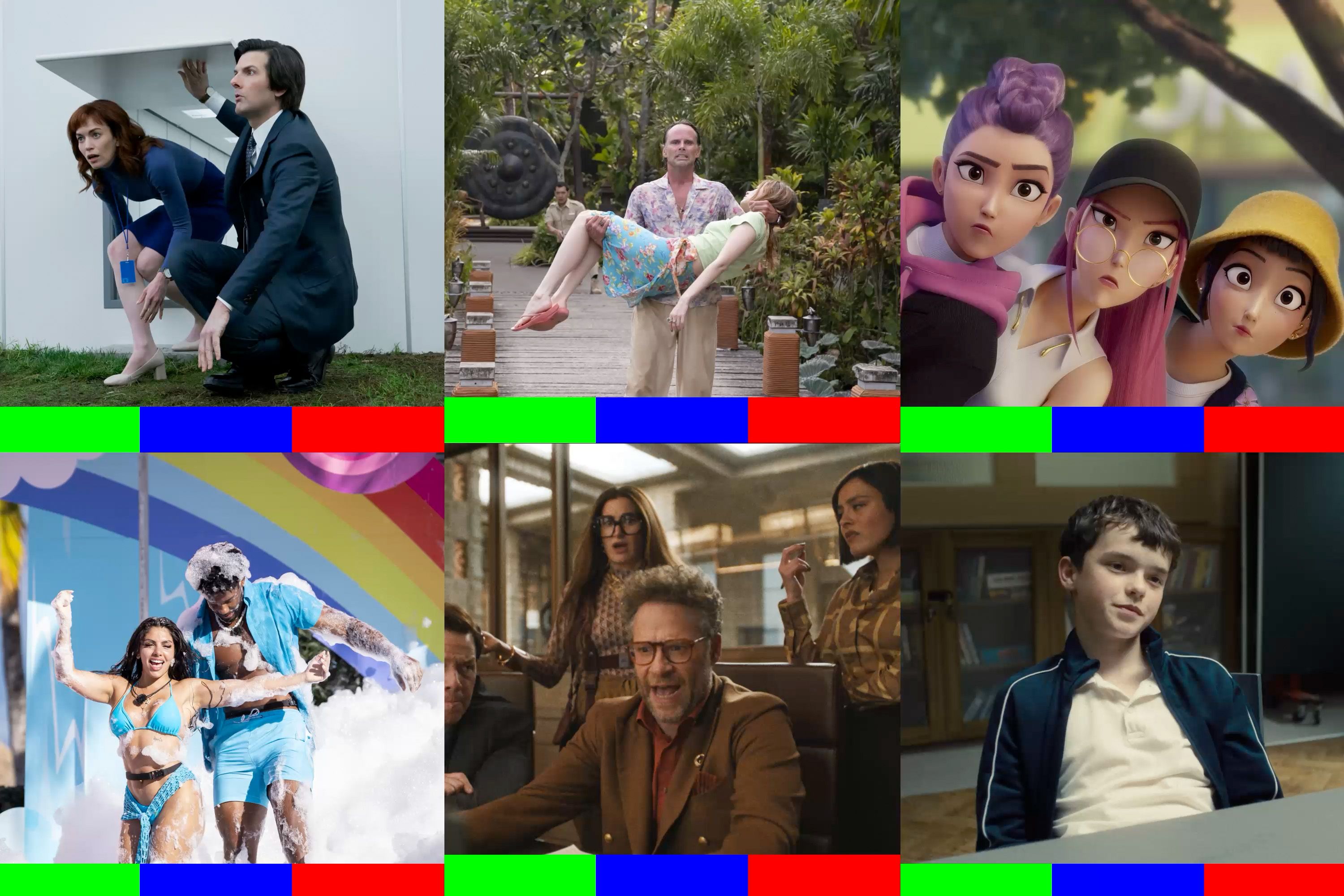
Merry (almost) Christmas, and welcome back to Buffering. By now, you’ve probably read more than your share of year-end lists, but I couldn’t let the summarization season pass without at least one evaluation of the last twelve months. And to do so, I enlisted my Vulture colleagues and asked them to help me figure out which streamers had the most heat in 2025. The rankings we settled on were different from what I thought they’d be when we started our discussion of the year in streaming, but 2025 proved full of surprises. Grab some eggnog and enjoy!
|
—Joe Adalian, Vulture's West Coast editor |
|
|
➽ Eye of the Hurricane. It turns out that the latest episode of 60 Minutes actually did air, just not Stateside. Canadian app Global TV aired the segment on a notorious Salvadoran prison that was initially spiked by CBS News editor-in-chief Bari Weiss. This situation has become a colossal embarrassment for Weiss, the freshly minted boss who claimed the segment “was not ready” over the objections of staffers who produced the segment, despite having gone through several layers of internal fact-checking and legal vetting. The 14-minute investigative report on CECOT, which has been compared to a “concentration camp,” was almost immediately posted by users online.
Vulture managed to watch the segment before the takedown notices went through. In it, veteran correspondent Sharyn Alfonsi interviews former detainees of the prison, who describe being beaten, sexually assaulted, and psychologically abused by the guards there. The conditions described amounted to “months of hell.” In Weiss’s view, it needed “additional reporting,” specifically an on-the-record comment from the Trump administration, which declined. (Per the segment, the Salvadoran government didn’t respond to requests for comment.) The segment’s content and its seemingly accidental release — now out forever, thanks to the Internet — underscores how badly Weiss appears to have miscalculated her attempt to hold the story. As political columnist Ross Barkan wrote this morning at Intelligencer, “CBS could be her Waterloo.”
➽ Larry on the Line. Monday morning, Larry Ellison personally guaranteed to throw more of his billions behind his son’s company’s hostile bid for Warner Bros. Discovery. The elder Ellison is beefing up the Paramount bid with $40.4 billion of equity financing, which should make David happy. Paramount made another important tweak to their offer: raising their breakup fee they would pay to WBD, should regulators reject the deal, to $5.8 billion from $5 billion, to match Netflix’s breakup fee. Both moves are meant to address the stated concerns that led WBD’s board to formally reject the Paramount offer last week. The Ellisons still haven’t raised the big number, $108 billion at $30 per share for the company, but these changes are meant to signal the Paramount side is still serious, and WBD, for its part, promised it would “carefully review and consider” the amended offer.
➽ Upside Down, Through the Roof. The numbers are in, and over Thanksgiving weekend Stranger Things has smashed through the record it previously set — clocking 8.46 billion viewing minutes the week that first half of season five debuted, according to Nielsen’s latest report. It beat the previous record, also set by Stranger Things when season four came out in 2022, by over 1 billion minutes. Nielsen notes that the four new episodes accounted for 57 percent of that 8.46 billion number — meaning a huge percentage of viewers are also catching up on the show’s past seasons. The craziest thing is that this show isn’t even done yet: What kinds of numbers can we expect to see for the season’s final half of episodes, three of which drop on Christmas and the last of which drops on New Year’s Eve?
|
|
|
The 5 Hottest Streaming Services of 2025 In another chaotic year for the industry, these platforms won the war for attention.
|
By Josef Adalian | With Roxana Hadadi, Nicholas Quah, and Kathryn VanArendonk |
Photo-Illustration: Vulture; Photos: Apple, Disney, HBO, Hulu, Netflix, Peacock |
The clearest indication that we’ve entered a new era in streaming history came this April, when Netflix made good on a promise to stop regularly reporting how many subscribers it had gained or lost in the previous quarter. There was nothing subtle about what it was trying to signal: The first phase of the streaming wars is over, and we won. But while Netflix’s flex was well earned — and hard to argue with — size and profits are not the only ways to judge subscription platforms. And so for our look back at streaming this year, we decided to focus on how successful services were at connecting with audiences: Who consistently generated attention and awards? Who made moves to evolve old programming formulas or strengthen their platforms? In short, who was hot in 2025?
The resulting list is based on the reporting I’ve done on the industry this year, supplemented by the opinions of three of my Vulture colleagues: critics Roxana Hadadi, Nick Quah, and Kathryn VanArendonk. We debated the highs and lows of these platforms over the past 12 months, focusing not only on our own professional opinions but what we’ve observed about how people outside the entertainment industry perceive them (or, in some cases, how they don’t even think of them at all). After a lot of back and forth, we agreed on a list that offers a clear snapshot of the industry this year.
Our rankings are based on “hotness” rather than other metrics — like overall scale, subscriber growth, etc. — in part because it feels as if we’re just one or two years away from the start of Streaming Wars II. Whether it’s Netflix or Paramount, odds are that HBO Max will be getting a new owner and a very different business model within the next 24 months, assuming the platform still even exists. YouTube’s Oscar play might just be about ad dollars, but what if it suddenly decides to get back into the originals game it briefly dabbled in a decade ago? Comcast, meanwhile, made its unsuccessful bid for Warner Bros. Discovery because it knows Peacock needs to get bigger or die trying. If and when everything settles down again, the streaming pecking order is likely to look a lot different.
|
|
|
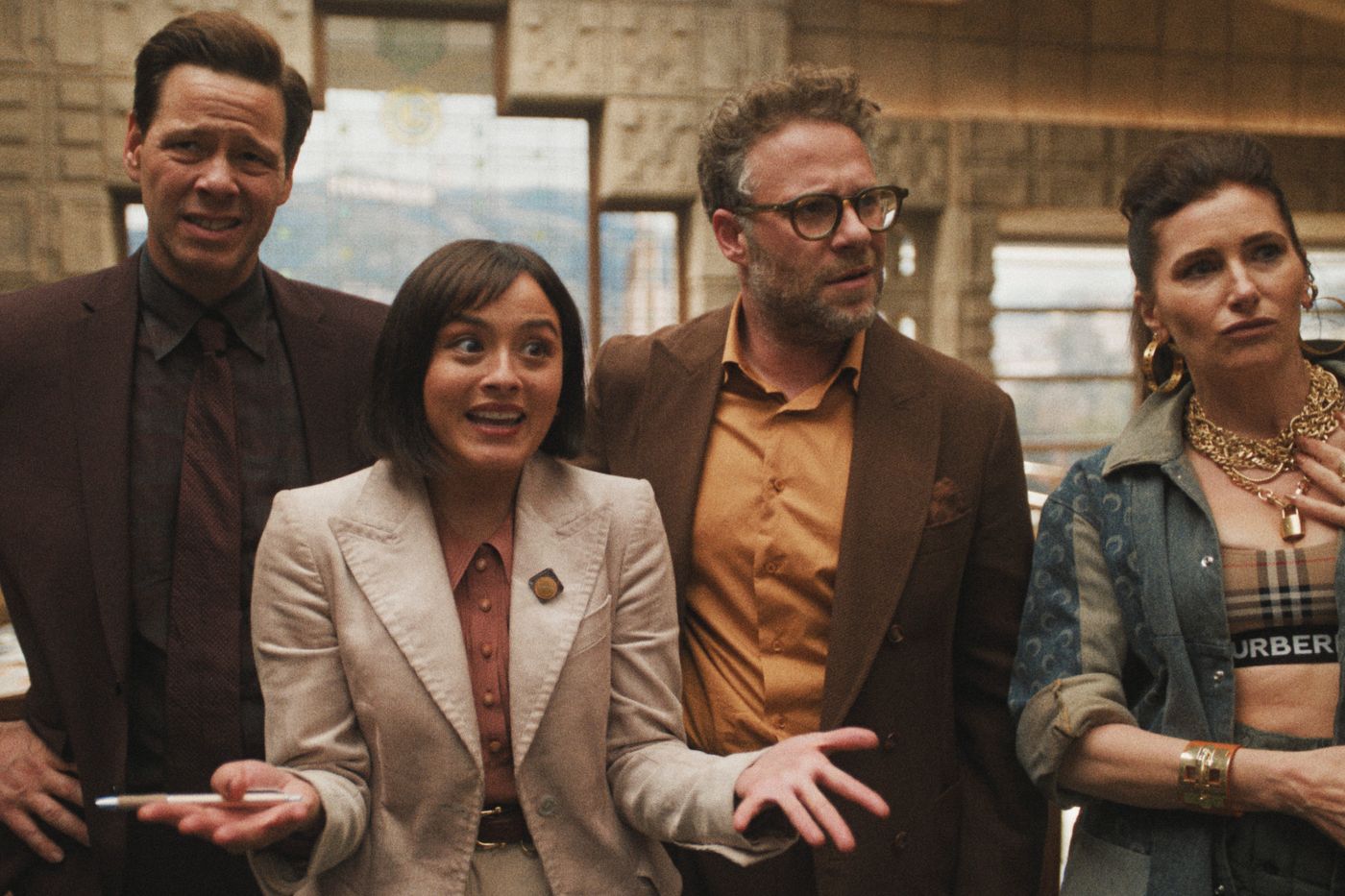
In some ways, this was a breakthrough year for the house that Ted Lasso built: New comedy The Studio and the (way too) long-gestating second season of Severance powered the streamer to its best showing ever at the Emmys, with the former capturing the most trophies for a single season of a comedy season ever. Apple’s release cadence also picked up considerably, so much so that at one point this fall the newly nonplussed Apple TV debuted more hours of scripted episodic programming than ABC. And the streamer landed a legit theatrical blockbuster with its pricey-but-potent Brad Pitt drama F1, giving it the sort of very long run in movie theaters Netflix (so far) refuses to offer its filmmakers. Still, for all its wins, and as much as some folks find it essential, Apple TV continues to suffer from a reputation as something less than a full-service streamer — a platform trying very much to be seen as the new HBO but not consistently good enough to claim that mantle.
Kathryn VanArendonk: I mean, I love Pluribus, but it’s kind of the first time I’ve been excited to open up my Apple screeners app, like, for most of the year.
Roxana Hadadi: I don’t think that they are growing or expanding their viewer base to get more viewers in a way that Peacock has by getting sports contracts or launching widely watched reality TV. It just feels like Apple TV found a formula, and they did it again well this year — but I just I don’t necessarily see anything monumentally different.
Nick Quah: I grade Apple on a bit of a curve, because its lane is so narrow. And if you’re going to be hyperfocused in this lane, win the lane. I don’t think they’ve won their lane this year. These are very small wins, in my opinion. |
|
|
Even though it’s got the smallest overall footprint of any streamer on this list — in no small part because it’s not a global player — the NBCU platform often seemed to punch way above its weight in its fifth year. Its strength remains in unscripted programming, from the firehose of Bravo-branded reality fare and the Emmy-winning The Traitors to summer staple Love Island USA, which blew up in a big way in 2025 both in terms of buzz and viewership. Peacock is also benefiting from the billions parent Comcast is spending on sports rights: While the economics behind the investment are questionable, the NFL, NBA, and Premier League soccer have made it essential for millions of sports fans. Where Peacock still struggles is on finding truly successful scripted franchises: Poker Face had lots of critical love but was canceled this fall after just two seasons, joining a long list of shows that seemed poised to break out but never did (even when they moved to other streamers). And while Sarah Snook’s recent thriller All Her Fault also made a splash, and racked up strong Nielsen numbers, it’s been sold as a limited series — at least for now.
K.V.A.: You could not escape this summer without talking about Love Island USA. It was everywhere. And there are other things going for Peacock. The Bravo universe of shows is not huge, but it has as much, if not more, cultural cachet than anything on Apple.
N.Q.: Reality television should not be undercounted here. Sunday Night Football should not be undercounted here, either.
R.H.: For me, it’s the Sunday Night Football of it all and that they have been able to grow some reality series. The Traitors is huge. I can’t think of another reality-competition show that, to American viewers at least, appeared out of nowhere and immediately became so dominant at winning Emmys and spawning copycats like House of Villains. And I do feel like they finally seemed to have a narrative hit with All Her Fault. They claim people are watching Twisted Metal, but I don’t believe that. It actually felt like people were watching All Her Fault. It was a surprisingly strong, ascendant year for Peacock. It penetrated all the different types of television that we watch.
|
|
|
This was the year Warner Bros. Discovery execs admitted that, yes, they had messed up when they removed “HBO” from the name of their signature streamer. And yet ironically, it was The Pitt — a series from the “Max” side of the platform — that will be remembered as the platform’s watershed moment in 2025. The John Wells/Noah Wyle medical drama was designed to test the idea that the best elements of traditional network-TV procedurals (weekly cadence, high episode count, accessible storytelling) could work for a streaming original. The Pitt proved they could and did so in a spectacular fashion, snagging both a big audience and the Emmy for best drama. Its triumph was coupled with a particularly strong creative year for the HBO side, which included the now familiar mix of niche darlings (The Rehearsal, The Chair Company), prestige dramas (The White Lotus, The Gilded Age, Task) and well-executed franchise fare (The Last of Us, Welcome to Derry). The big question now: With Netflix and Paramount battling for WBD, how much longer will HBO Max as we’ve known it continue to exist?
N.Q.: HBO Max occupied most of my time this year. It set the agenda for a lot of how we think about television writ large, starting with The Pitt and then White Lotus, and The Rehearsal, and The Chair Company. The most interesting people are doing the weirdest things on that platform. From a sheer “I’m really excited to have a new experience” perspective, Max still feels like it’s where the action is.
R.H.: I take the popularity of The White Lotus with a grain of salt. It’s in its third season and feels like a known commodity. But The Pitt must be recognized. Also, with the name-change reversal, the amount of press that they got for being like, “We recognize that people care about the HBO brand,” is actually incredibly funny to me. It’s a sign of the power of HBO that people were like ...
|
|
|
|