| | Donald Trump and Benjamin Netanyahu meet to discuss the future of Gaza, an Italian village celebrat͏ ͏ ͏ ͏ ͏ ͏ |
| |  SINGAPORE SINGAPORE |  TAIPEI TAIPEI | KUALA LUMPUR |
 | Flagship |  |
| |
|
The World Today | 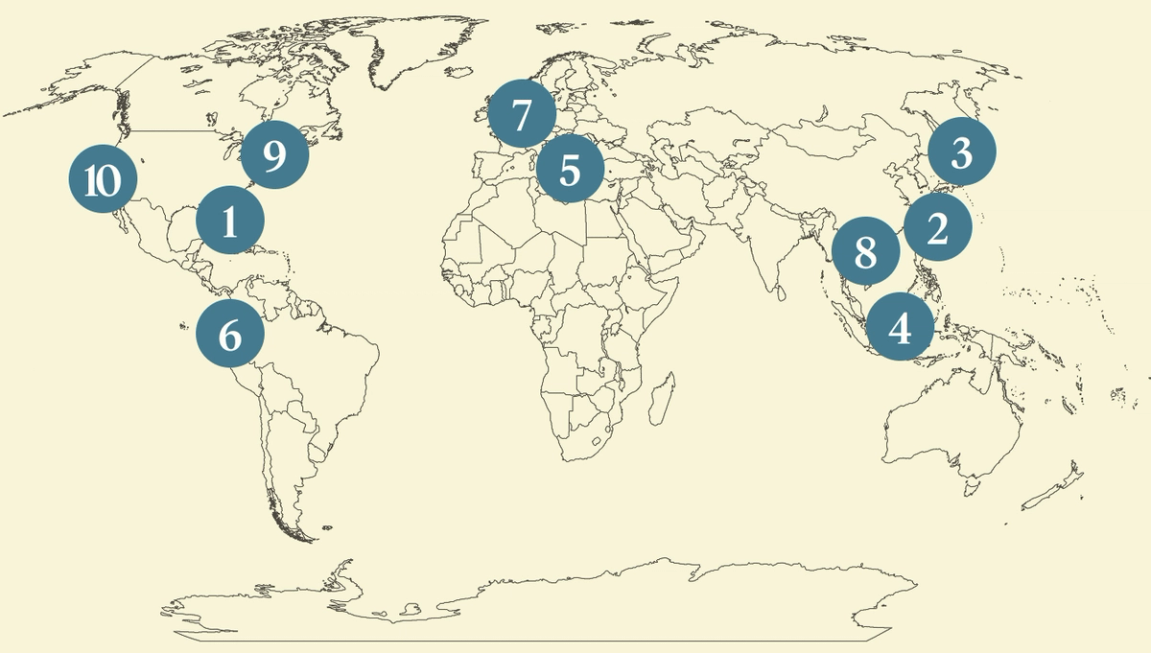 - Trump-Netanyahu meeting
- China aims for proportionality
- SoftBank’s AI data center deal
- Pollution threatens SEAsia
- Italy’s demographic crisis
- Reusing narco submarines
- Rolex’s secondhand strategy
- US tariffs hit fine wine
- Boxing Day takes off in US
- First ‘superkilonova’ detected
 Semafor’s business editor recommends a book about the “world’s oldest and most tangible asset.” |
|
Trump, Netanyahu meet in Florida |
 Jonathan Ernst/Reuters Jonathan Ernst/ReutersUS President Donald Trump said his relationship with Benjamin Netanyahu couldn’t be better as he welcomed the Israeli prime minister in Florida on Monday, despite tensions between them over the future of the Middle East. The leaders are expected to discuss moving the US-brokered Gaza peace plan forward, but Israel’s continued strikes there and in Lebanon have frustrated Trump’s efforts to stabilize the region. This meeting is crucial because “the level of disagreement between the two leaders is at the highest level since Trump got into office,” a former Israeli official said. “If a new Middle East is to have a chance, Trump and Netanyahu will need to reach a shared understanding… on how to get there,” The Times of Israel wrote. |
|
China war games signal proportionality |
 Maxim Shemetov/Reuters Maxim Shemetov/ReutersAt its largest-ever war games near Taiwan — the first since April — China emphasized proportionality over maximum disruption, analysts said. Beijing’s display was unsurprising given the scale of the US arms deal with Taiwan this month, an expert told The New York Times, and appeared to be designed to “push without provoking” a counter response from Washington. China was aiming “to hit the Goldilocks zone of inflicting pain and demonstrating resolve” without inviting escalation, a Singapore-based expert told Bloomberg. But the drills may also be intended for a domestic audience, a Eurasia Group expert argued, as Chinese leader Xi Jinping’s intensifying purge of top brass in the military has raised questions about its combat-readiness. |
|
Softbank deepens AI portfolio |
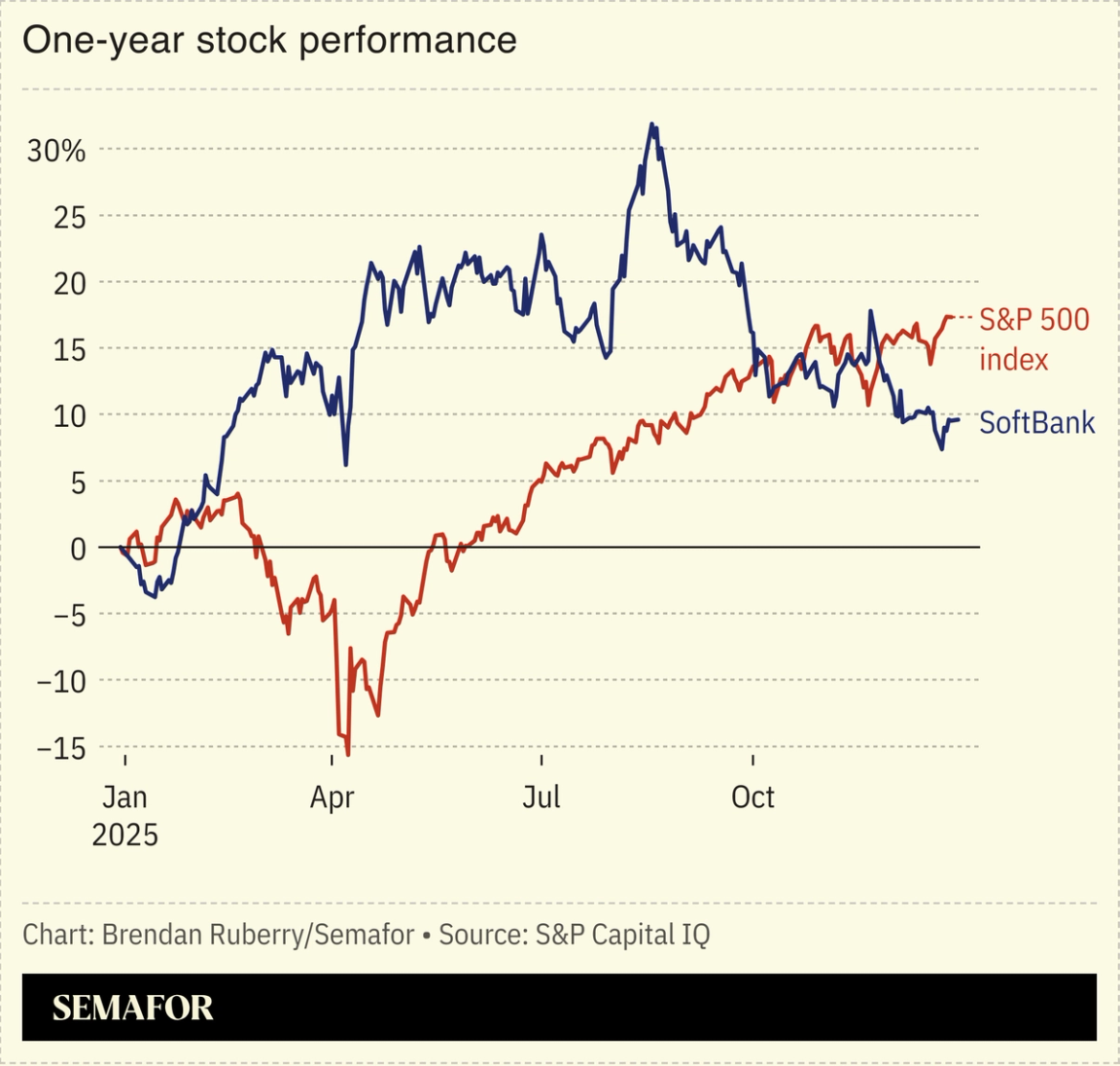 SoftBank Group struck a $4 billion deal Monday to acquire DigitalBridge, a US-based investor in data centers, the latest move by the Japanese conglomerate to deepen its AI-focused portfolio. SoftBank’s billionaire founder and CEO, Masayoshi Son, is betting the tech will “revolutionize business and society,” the Financial Times wrote, and he has been on a dealmaking tear to capitalize on AI’s surging demand for computing power. SoftBank, along with OpenAI and others, has invested billions in Stargate, a massive AI infrastructure venture, but the project has been delayed by disagreements and financing questions. SoftBank’s shares have also taken a hit in recent months over AI bubble fears, but Son, apparently undeterred, said those who have such concerns “are not smart enough.” |
|
Asia’s lung illness spike threatens growth |
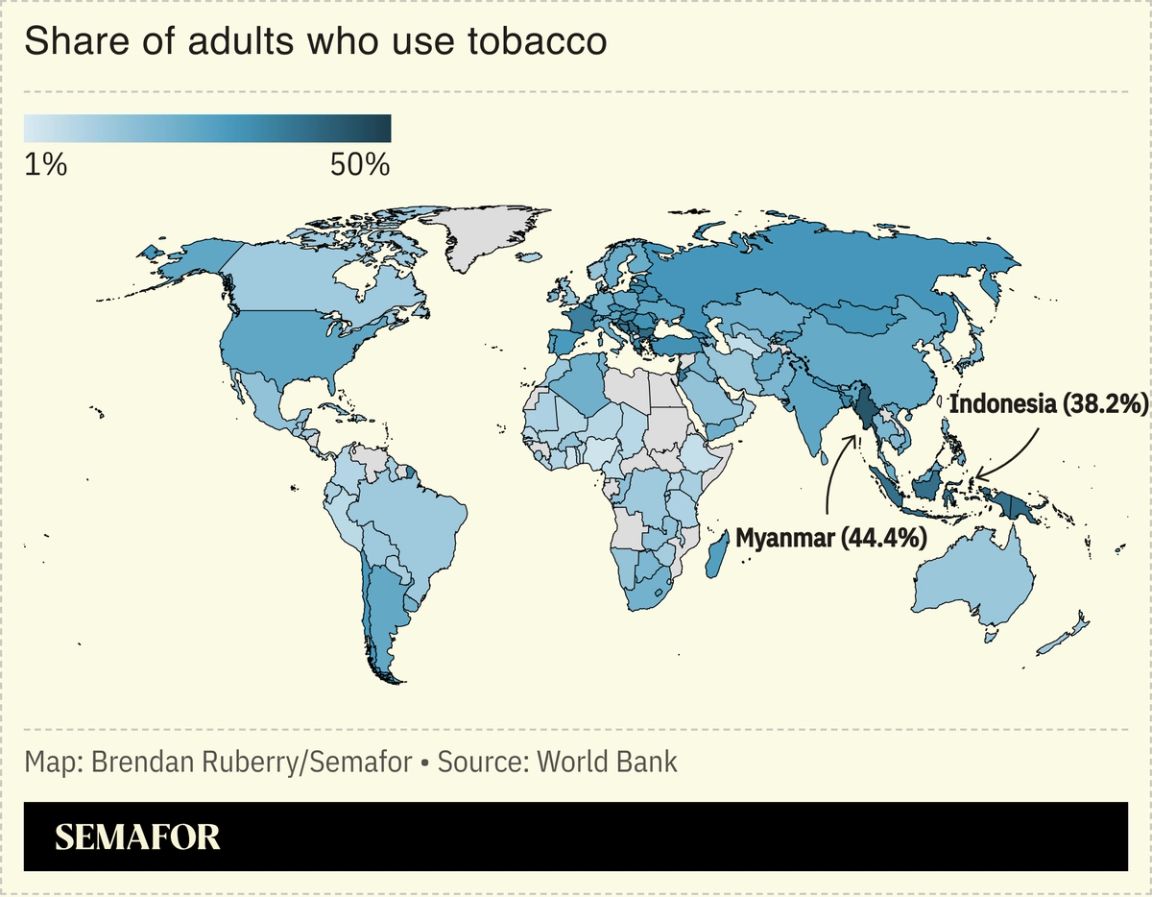 Southeast Asia needs to urgently tackle a spike in chronic respiratory diseases or face economic losses, a World Health Organization envoy warned. Nine of the world’s ten most-polluted cities this year were Asian, and a recent study suggested that deaths linked to air pollution could cost Southeast Asia nearly $600 billion by 2050. Poor air quality, coupled with many smokers in the region, has led to a rise in lung diseases, removing productive workers from the economy. Ironically, it may be some governments’ emphasis on economic growth that makes them reluctant to tackle the crisis, an environmental economist told Nikkei. These diseases are “not the crisis of the day,” the WHO official said, but they are still causing “losses to the economy.” |
|
Italian town hails first baby in 30 years |
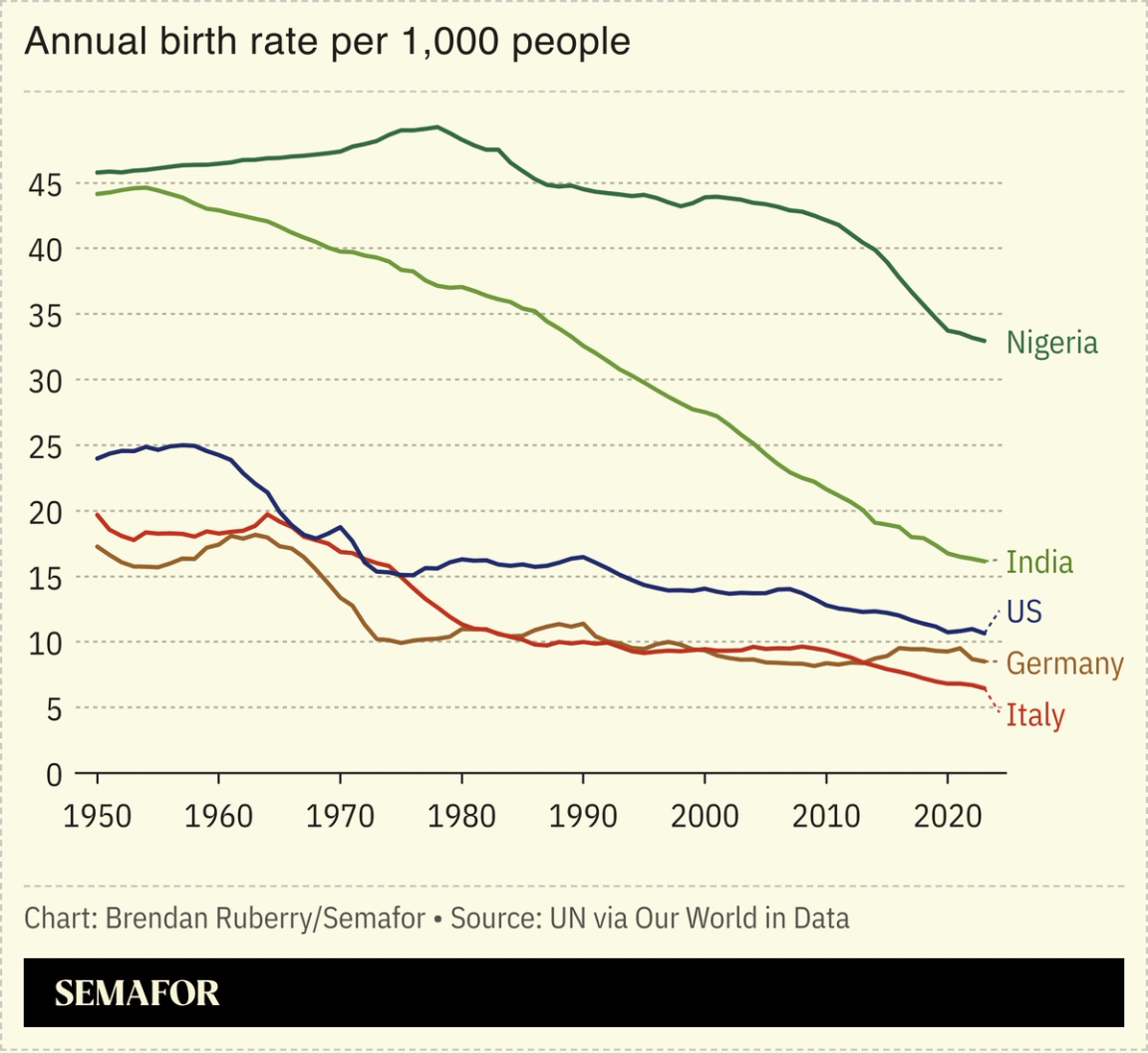 An Italian village celebrated its first birth in nearly 30 years, underscoring one of Europe’s worst demographic crises. Cats outnumber human beings in Pagliara dei Marsi, The Guardian wrote, mirroring national trends: Italy has the highest median age in Europe and saw record low births last year, continuing a 16-year negative trend that Prime Minister Giorgia Meloni has pledged to reverse. While bambina Lara’s parents utilized the government’s one-time payment of about $1,200, in addition to a roughly $400 monthly stipend, they cited childcare access as their biggest challenge. A National Institutes of Health paper found that Europe’s pro-natal subsidies are largely ineffectual by themselves, but may spur fertility when combined with parental leave. |
|
Drug traffickers reuse narco-subs |
 Miguel Riopa/AFP via Getty Images Miguel Riopa/AFP via Getty ImagesPlummeting cocaine prices are forcing drug traffickers to reuse their submarines, Spanish police said. Where submersibles smuggling narcotics from South America to Europe would once have been scuttled — joining a “narco-sub graveyard” between the Azores and the Canary Islands — a production glut has halved cocaine prices in recent years, and submersibles are now refueling at sea to make as many trips as possible, The Guardian reported. The US government believes only a tiny fraction of such ships, which are shielded from radar and can travel as far as Africa and Australia without refueling, are interdicted globally. Last year, the US Marine Corps unveiled plans for autonomous vessels modeled on narco-subs to aid with forward deployment of critical supplies. |
|
Rolex bets on used watch market |
 Jeenah Moon/Reuters Jeenah Moon/ReutersRolex is expanding its presence in the secondhand market for its watches — though it doesn’t expect to make any more money doing so. The Swiss company sells about 1.2 million new timepieces a year, and there’s a waitlist for them, so preowned models can cost more than new ones. The $25 billion annual trade in used Swiss watches, however, is perennially threatened by abundant counterfeits, so Rolex is partnering with independent retailers — who perform the legwork and reap all the profits — to weed out fakes. “The message from Rolex probably may not be one other luxury brands want to hear,” The Wall Street Journal wrote, but such arrangements may become “an unavoidable part of protecting their brand image.” |
|
 Stay informed with Foreign Affairs This Week—a free round up of the week’s top articles curated by the editors of Foreign Affairs, delivered every Friday. From global insights to must-read analysis, it’s the smartest way to end your week. Sign up today and stay ahead of the conversation. |
|
Fine wine hit by US tariffs |
 Claudia Greco/Reuters Claudia Greco/ReutersIt’s been a rough year for fine wine. Bordeaux prices fell more than 6% and vintage Champagnes dropped 4% as US President Donald Trump’s 15% tariffs on EU imports deterred American sales, the Financial Times wrote. Amid geopolitical volatility, investors have piled into traditional safe-haven assets like gold — a reversal from the pandemic era, when buyers poured into wine thanks to time, cash, and low interest rates. There have been signs of a comeback: Merchants say demand is recovering in Asia following a slowdown in China. In Hong Kong, buyers are taking advantage of depressed prices as the city’s stocks have rebounded, one local wine professional said: “There’s a bit more discretionary income from the finance and legal professionals.” |
|
Boxing Day takes off in the US |
 Zou Zheng/Xinhua via Getty Images Zou Zheng/Xinhua via Getty ImagesThe big British shopping holiday of “Boxing Day” is now taking off in the US. The phrase originally referred to a tradition of giving small gifts to employees or tradespeople after Christmas. In the UK, and some Commonwealth countries including Canada and Australia, it also marks the start of post-Christmas sales. More retailers in the US are now offering discounts on Boxing Day as a way to clear inventory before the new year, and the term has, over the years, piqued the interest of Americans who have a predilection for named shopping days such as Cyber Monday or Black Friday. The UK saw strong Boxing Day sales this year, and early US data suggests a big holiday shopping season too. |
|
Rare cosmic explosion confuses scientists |
|
|


