|
The year I stopped calling myself a designer
2025 was a year of shedding old identities, embracing the founder mindset, and learning through doing. I’m sharing 10 lessons that came from building, listening to customers, and making real decisions
| |||||||||||||||


Hey good looking 👋
First off, happy holidays!
I know I’m a day or two early, but wherever you are… Happy New Year 🥳
Soooo… I’m really glad I can say this…
2025 turned out to be a genuinely positive year.
Earlier in the year, though, I felt a bit lost.
I was stuck in this quiet tension of asking myself:
Do I keep leaning into the designer persona and focus on teaching… or do I fully embrace being a startup founder?
For a while, I sat in between.
But the last 2–3 months have been a blast.
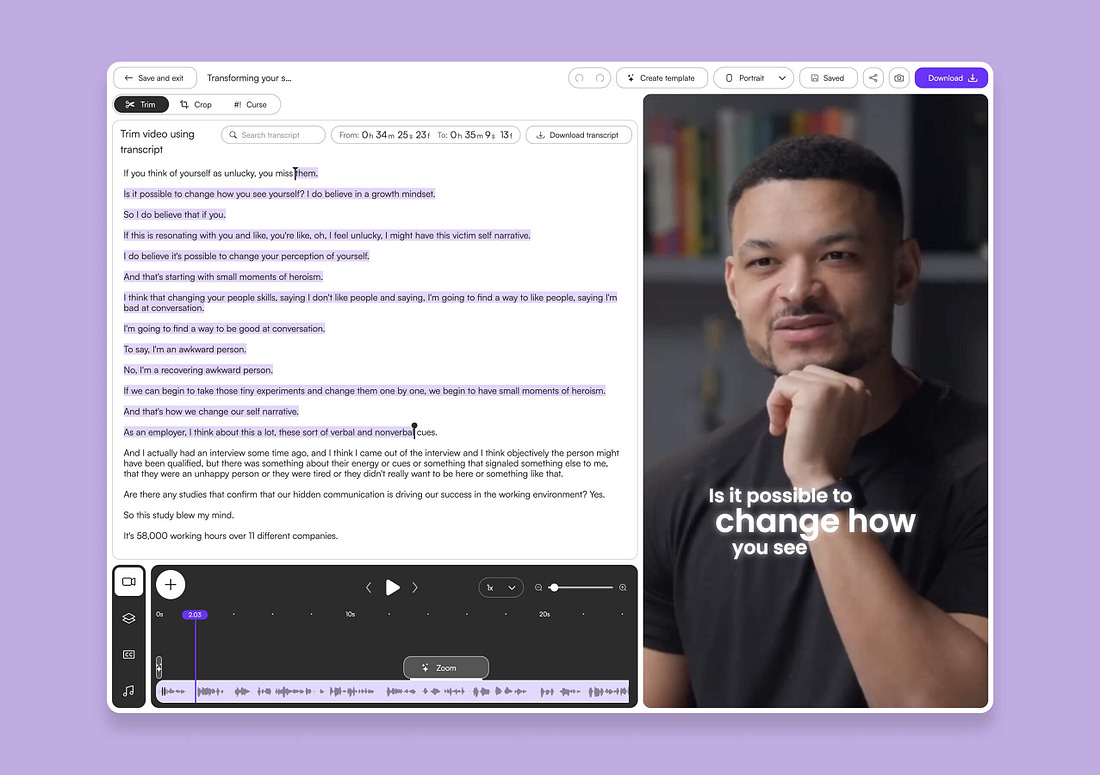
I feel like I’m back in my element… building and scaling my own startups like Choppity (and another currently in early beta) alongside a team I genuinely trust.
 |
I’m waking up excited again.
The team’s aligned.
We’re shipping fast.
The vision is finally snapping into place… To build the Content OS for creators, podcasters and content-led businesses/organisations.
What more could I ask for?
This year forced me to:
Embrace a new identity (Founder > Designer)
Ship faster than I ever felt ready for
Make real decisions with incomplete data
What’s been especially rewarding is realising I’m now applying everything I’ve taught in my Figma and UX courses to my own products and actually seeing the metrics move in the right direction.
So to wrap up 2025, I wanted to share 10 startup learnings written as reminders to myself, but shared in case they help you shortcut a few mistakes along the way.
Let’s get into it.
1. You have to give up the old to make space for the new
For a long time, calling myself a designer felt right.
It matched my skills, my audience, and the version of me that built everything up to that point. But over time, I noticed something shift. I didn’t get energy from talking about design anymore, I got energy from building products end to end.
Design was never the end goal. It was the entry point.
I love solving problems, shipping, marketing, talking to customers, figuring out pricing, and slowly turning ideas into real businesses. Holding onto the old “designer persona” started to feel like staying in a role I’d already outgrown.
Letting that identity go wasn’t clean or instant. It meant changing how I show up publicly and being okay with people not fully recognising the version of me they were used to.
I still design, I just don’t live there anymore.
2. Hire the best, even when it feels expensive
Bringing on a Head of Engineering locally in Sydney felt like a big commitment.
It wasn’t a small decision financially, and it definitely wasn’t the “scrappy” option. But almost immediately, everything changed. We moved faster. Decisions felt lighter. Momentum stopped being fragile.
Having someone full-time, deeply capable, and fully bought in removed an invisible ceiling I didn’t realise we were hitting.
The right hire doesn’t just add output, they change the pace and confidence of the entire business.
3. Do things that don’t scale
This year, I deliberately put myself back into places I’d slowly drifted away from.
Support tickets. Intercom messages. Onboarding calls.
On paper, it doesn’t scale.
Last week I spoke with two churches using Choppity to clip and distribute their weekly sermons. Seeing the people behind the Stripe notifications reframed the work completely. It stopped being about numbers.
Those conversations did more for clarity and motivation than any dashboard ever could.
4. Talk to your customers, everything flows from there
Almost every meaningful decision this year came from a conversation.
Not a metric. Not a roadmap session. Just talking.
Sitting with users, asking what’s frustrating them, hearing where we missed the mark, even when it stings… shaped what we focused on far more than internal debate ever did.
5. The real question isn’t “what’s the priority?” it’s “what can we de‑prioritise?”
In a startup, everything wants attention at once.
That pressure doesn’t go away, you just learn to manage it better.
Progress only happened when I asked a simpler question: What genuinely needs to move today and what can wait?
6. Your life is a pie chart
Your career won’t save you.
If you don’t feel good, you won’t work well no matter how ambitious you are.
Many years ago, I started thinking about life as a pie chart: work, health, family, friends, hobbies, personal growth etc. Ignore one slice for too long and it shows up everywhere else.
The weeks I slept better, trained consistently, and spent time outside work weren’t indulgent.
They were productive.
7. It’s not about how much you make, it’s about how much you keep
Revenue is noisy.
Profit is quiet.
It’s easy to chase the wrong numbers in business… vanity metrics that look impressive but don’t change your actual life.
What mattered more this year was what stayed after costs, stress, and complexity.
Bottom line > headlines.