|
 |
We Have the King That Thomas Paine Feared
The rule of law was central to the American experiment. Is it still?
|


| |||||||||||||||


Two big bits of economic news this morning. The jobs numbers came in showing a middling 50,000 jobs created in December. Worse, the report made revisions to the two prior months’ numbers, reducing the estimated number of jobs gained by 76,000.
Meanwhile, the Supreme Court is widely expected to hand down a ruling this morning on Trump’s massive global “Liberation Day” tariffs. If they rule that Trump exceeded his presidential authority in implementing those tariffs under the International Emergency Economic Powers Act, it would be a massive blow to the president’s trade policy—but possibly a substantial boost to the economy, if SCOTUS ordered the Treasury to refund nearly $150 billion in collected duties to U.S. companies.
Trump has argued for months that a ruling against him in this matter would be apocalyptic for America, calling it “literally LIFE OR DEATH for our country.” If SCOTUS does strike down the tariffs, he’s expected to try to put them back in place using a different authority. Happy Friday.
 |
Is the Law Still King?
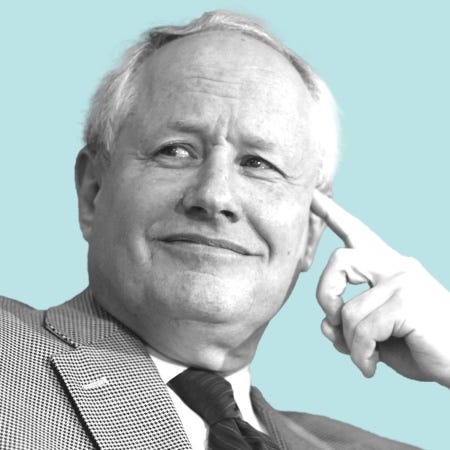
by William Kristol
Two-hundred fifty years ago tomorrow, on January 10, 1776, in Philadelphia, Thomas Paine published his pamphlet Common Sense. Six months before the Declaration, Paine made the argument for independence directly to the people. The pamphlet was a sensation, and seems to have been read and discussed almost immediately and everywhere. The numbers are a bit fuzzy (there was no New York Times best seller list then!), but Common Sense seems to have sold something like 100,000 copies in a few months. In proportion to the population at that time, it may have had the largest sale and circulation of any book in American history.
As a key part of his argument, Paine makes the general case against hereditary or absolute monarchy, and for popular government and the rule of law. Here’s the famous paragraph:
But where, say some, is the King of America? I’ll tell you, friend, he reigns above, and doth not make havoc of mankind like the Royal Brute of Great Britain. . . . [T]he world may know, that so far as we approve of monarchy, that in America the law is king. For as in absolute governments the King is law, so in free countries the law ought to be king; and there ought to be no other.
From the beginning, the rule of law has been central to the American experiment in self-government. Obviously in both theory and practice the concept brings with it complications and controversies. But the rule of law has always been seen as a necessary corollary, a central feature, of popular self-government. From Paine on, No Kings has meant that the law is king.
Is the law king in America today? We’re seeing a sustained and conscious effort to undermine the rule of law. From Minneapolis to Caracas, from the White House to the Department of Justice to the Department of Homeland Security, the Trump administration has engaged in what the Declaration called “a long train of abuses . . . pursuing invariably the same Object”—the object of eviscerating the rule of law and reducing us to mere subjects rather than self-governing citizens.
This has been obvious for the past year to all who have eyes to see, or who are willing to let their eyes do any seeing. But the last few days have provided especially clear instances of the assault on the rule of law. Just yesterday, for example, in the wake of the killing of Renee Good, Donald Trump’s FBI told Minnesota’s criminal investigative agency, the Bureau of Criminal Apprehension (BCA) that they were to be excluded from the investigation into Good’s death. The BCA reported that Trump’s FBI would not allow the BCA to “have access to the case materials, scene evidence or investigative interviews necessary to complete a thorough and independent investigation” of this killing in their jurisdiction. That’s because Trump’s FBI isn’t interested in trying to discover the truth. Their orders are clearly to cover up the lawless behavior of federal agents.
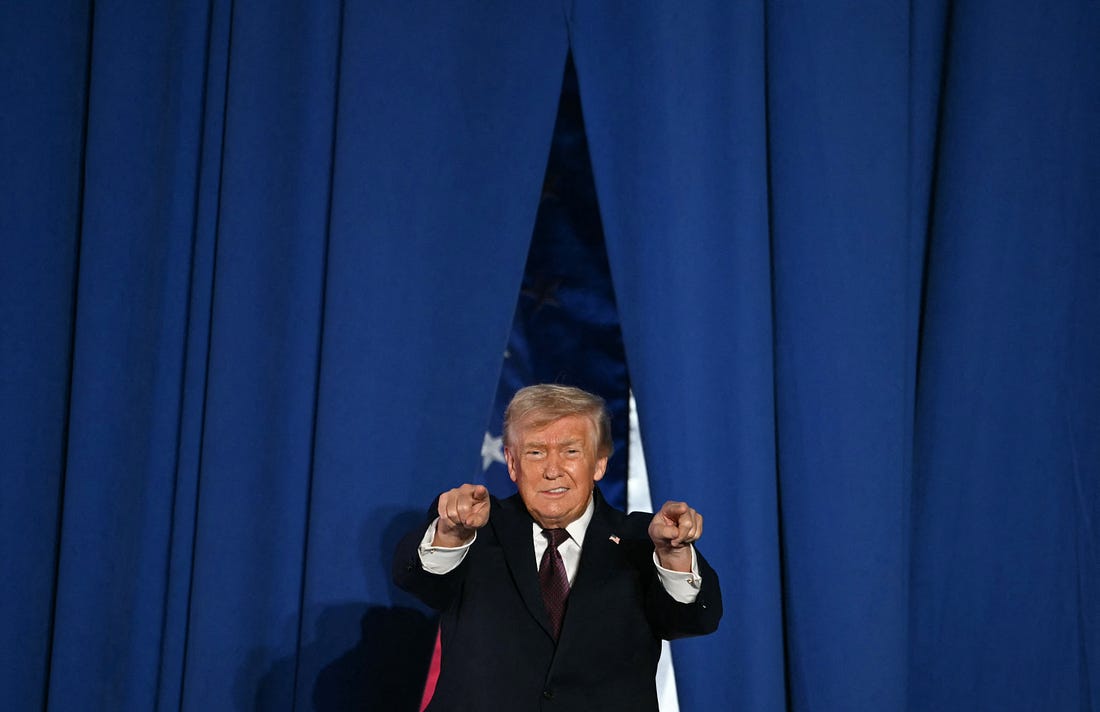
Meanwhile Trump confirmed on Wednesday in an interview with the New York Times that in international matters, he respects no legal limits on his power. The only limits he acknowledges are “My own morality. My own mind. It’s the only thing that can stop me.” I suppose we should thank Trump for providing a kind of living illustration, a kind of tableau vivant, of the claims of absolute monarchy that Thomas Paine ridiculed and denounced. But Trump’s not a faraway king from whom we’re about to separate ourselves. He’s our president.
And all this while Trump’s Justice Department is routinely ignoring the law that required the full release of the Epstein files by December 19, 2025. Yesterday, Reps. Ro Khanna (D-Calif.) and Thomas Massie (R-Ky.), the lead sponsors of the Epstein Files Transparency Act, asked a federal court to appoint “a Special Master and an Independent Monitor to compel” the the Justice Department to produce the Epstein files as the law requires. “Put simply,” they wrote, “the DOJ cannot be trusted with making mandatory disclosures under the Act.” Or put even more simply, Trump’s Department of Justice cannot be trusted to follow the law.
Earlier this week, political scientist Jeffrey Isaac addressed the apparent paradox that people who allegedly believe in “America First” have rallied to support Trump’s attack on another country. But as Isaac puts it, at its heart Trumpism is neither isolationist nor interventionist. It’s about authoritarianism: “contempt for the very idea of law” and “an embrace of the power politics of domination and conquest.” It’s a repudiation of democracy and the rule of law, both at home and abroad.
So which is it to be? A stand for liberty in the spirit of Thomas Paine, or acquiescence to the depredations of our own mad King George? The rule of law or the rule of Trump?