Forget the financial hurdles and consider the consequences.

View in browser
Support our nonprofit journalism

Climate Desk Newsletter

STORIES FROM MOTHER JONES AND ITS PARTNERS

When I awoke early last Saturday to the news that the United States had attacked Venezuela, capturing the country’s president, Nicolás Maduro, and his wife, I was stunned—soon to be horrified.


Like many journalists, I immediately set about interrogating President Donald Trump’s claim that US companies, backed by the federal government, would invest billions to revive Venezuela’s languishing oil sector. But as a fossil fuels and climate reporter at the Guardian, I noticed something missing from the early coverage: Almost no one was asking what Trump’s actions might mean for the climate.


There were extensive analyses of technical and political hurdles: how quickly Venezuela’s decayed infrastructure could be repaired, how much it would cost, and whether oil majors would be willing to assume so much financial risk given all the uncertainty. 


Critical questions, for sure, but my colleague Oliver Milman and I focused on others. Venezuela purportedly holds the world’s largest proven oil reserves, some 300 billion barrels, according to research firm the Energy Institute. Much of it is extra-heavy crude—a thick and viscous oil that’s especially carbon-intensive to extract and refine. 


Any meaningful production ramp-up would require energy-hungry processing and years of investment, analysts say. That could lock in millions of barrels per day of new supply—and the associated emissions—for decades.


Even boosting production to 1.5 million barrels a day from the current level of about 1 million barrels would produce some 550 million extra tons of carbon dioxide annually, Paasha Mahdavi, an associate professor of political science at the University of California, Santa Barbara, told me. That’s more carbon pollution than the UK spews in an entire year.


This reality sits uneasily with the scientific consensus that global oil production must decline rapidly to avoid the worst impacts of the climate breakdown. At a time when governments should be shrinking carbon budgets and making moves to rein in climate damages, Trump is treating fossil fuel expansion as a geopolitical asset rather than a planetary liability.


Check out our story on the climate costs of Trump’s Venezuela ambitions.


—Dharna Noor

Advertisement

Mother Jones Donations Ad
TOP STORY
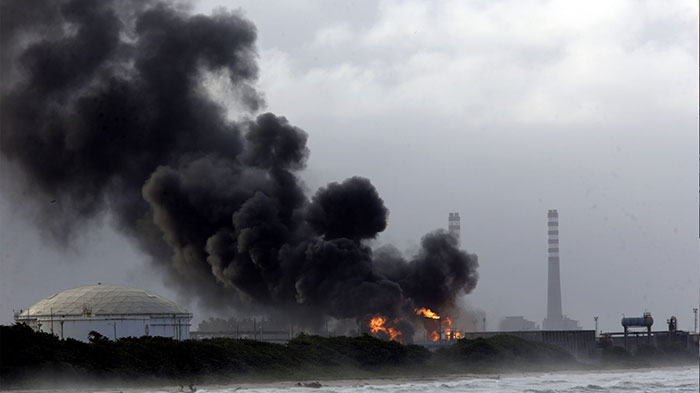
Dark smoke rises from flames from a controlled gas burning at the El Palito refinery facility, in Puerto Cabello, Carabobo state, Venezuela, in January 2020.

JUAN CARLOS HERNANDEZ/ZUMA

Trump's Plan to Exploit Venezuela’s Oil Would Be “Terrible for the Climate,” Experts Say

If it comes to pass, “everybody loses.”

THE GUARDIAN

 
TRENDING

Outcry grows over Trump's withdrawal of the US from global treaties and international coalitions

INSIDE CLIMATE NEWS


Why forcing people to go green can backfire

GRIST


The uncertain future of international scientific collaboration

UNDARK


How this Illinois community turned a Superfund site into lower energy bills

CANARY MEDIA

Advertisement

Mother Jones Subscriptions Ad
EDITOR'S PICK
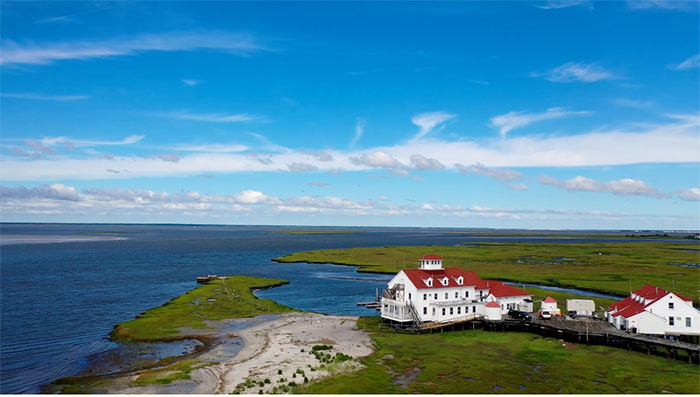
A wide shot of a gorgeous blue sky over the water, with some clouds, and a lush green wetland in the foreground with white house-like buildings with red roofs, very quaint.

THOMAS LENNON

Video: NJ Marine Scientists Track the Inevitable Loss of Their Own Research Outpost to Rising Seas

The goal is to retreat "in a graceful way, while learning something from it.”

YALE E360


HELP CLIMATE DESK THRIVE


This Is Reader-Supported Journalism

Climate Desk is a collaboration of more than a dozen news outlets covering the most essential environmental issues of our time. But great journalism isn’t cheap. Mother Jones, which oversees Climate Desk, is a nonprofit, as are many of our partners. You can help keep this important collaboration going and bringing you timely stories on every aspect of the crisis, from business and politics to culture and science.


We encourage you to subscribe and donate to our partner publications, and to support Climate Desk directly by giving to Mother Jones. Our coverage relies on readers like you to step up at this critical moment, with the independent media under attack. You needn’t be a rich philanthropist—literally, every dollar helps. We appreciate your support.

Donate

Did you enjoy this newsletter? Share it on Facebook and Bluesky.

Climate Desk
Donate Subscribe

This message was sent to npxlpxnaph@niepodam.pl. To change the messages you receive from us, you can edit your email preferences or unsubscribe from all mailings.

For advertising opportunities see our online media kit.

Were you forwarded this email? Sign up for Mother Jones' newsletters today.

www.climatedesk.org
PO Box 8539, Big Sandy, TX 75755