| |  | The Lead Brief | Republicans on Capitol Hill now have their health care blueprint from President Donald Trump — but the trajectory, or overall appetite, for accomplishing the newly released White House plan isn’t totally clear. The proposal — which Trump has dubbed the Great Healthcare Plan — doesn’t come with a lot of detail. But it does outline some policies already floated by Republicans, such as giving Americans cash directly to purchase insurance, and further efforts to implement more price transparency requirements for hospitals and insurance companies. “Plan is a very generous way of putting it,” replied one Senate GOP health aide when I asked what Capitol Hill made of the White House’s offering. “Usually plans have like, specifics and stuff.” The staffer was granted anonymity because they’re not authorized to speak on the record. Some Republicans, however, may be wary of Trump’s desire to require drugmakers to lower prices in the U.S. to match other wealthy nations, known as most-favored nation, or MFN, pricing. → The administration has cut so-called MFN deals with 16 pharma giants since September. The plan calls for “codifying the…deals” into law. A White House official said that the policy it’s pushing would be targeted to the companies that have already agreed to discounts. Meanwhile, there hasn’t been much fanfare — or comment at all — from congressional Republicans in the hours after the plan emerged. Sen. Rick Scott (R-Florida) touted legislation he’d introduced last year to create HSA-style accounts for people to use on their health expenses, aligning with Trump’s vision to “send money directly to the American people.” → Dan Diamond in The Washington Post newsroom has a story with more on the plan and the context surrounding it. Namely, the plan emphasizes increasing affordability as the crucial 2026 midterm elections approach but falls short of Trump’s promise to offer a detailed replacement for the Affordable Care Act. “I’m calling on Congress to pass this framework into law without delay [and] have to do it right now, so that we can get immediate relief to the American people,” Trump said in a video posted by the White House. Voters routinely cite health care costs as a top concern. - Last month, a Gallup poll found that about 30 percent of Americans view the price of health care as the “most urgent health problem” facing the country — the highest level recorded since it began asking the question 25 years ago.
- About 44 percent of Americans said it’s “very or somewhat difficult” for them to afford their health costs, according to a KFF poll.
Groups focused on price transparency hailed the plan. Associations representing insurers and drugmakers took the opportunity to point fingers at one another for the rising cost of health care — welcoming the Trump administration’s spotlight on their industry rivals while largely sidestepping the focus on themselves. PhRMA, the pharmaceutical industry’s main association, cautioned against “imposing broad-based price controls” for drugmakers. Fifteen of the group’s members cut drug pricing deals with the Trump administration. “The Trump administration has rightly called out other countries for failing to pay their fair share for medicines,” said Alex Schriver, a spokesperson for PhRMA. “Importing those same flawed policies into the U.S. would undermine our leadership.” Democrats — whom Republicans likely need to pass most of Trump’s outlined policies due to their slim majority in Congress — broadly panned the White House’s move. “Today’s announcement is more of the same bluster, with zero substance, that Republicans have been peddling since the inception of the” Affordable Care Act, said Rep. Richard E. Neal (Massachusetts), the top Democrat on the House Ways and Means Committee. Neal noted that the plan was released on the final day of open enrollment for Obamacare plans, premiums for which have skyrocketed following the expiration of enhanced premium subsidies. The Trump administration rolled back thousands of mental health and substance abuse treatment cuts just as abruptly as they’d occurred, reports The Post’s David Ovalle. The grant cancellations, which may have totaled as much as $2 billion earmarked for hundreds of nonprofits across the country, sparked massive outcry. The about-face represents a recurring theme for the administration as it aims to reshape health policy: swift, dramatic actions that ultimately have to be reversed following bipartisan political blowback, legal setbacks or — in a recent instance — scientific realities. — What scientific realities? It turns out that promising drug reviews to be completed in just a month or two might be more difficult than advertised. The Food and Drug Administration is delaying reviews of four drugs in a fast-track program aimed at speeding approval for certain medications to four to eight weeks, Reuters reported Thursday morning. Typical approvals can take about 10 months to complete. - The reviews of two of those medications — a Type 1 diabetes drug from Sanofi called Tzield and Disc Medicine’s rare metabolic disorder medication, called bitopertin — are being stalled for safety and efficacy reasons, according to the report, which cited internal documents. Via email, Disc Medicine and Sanofi each declined to comment on the review process but emphasized the importance of patient safety.
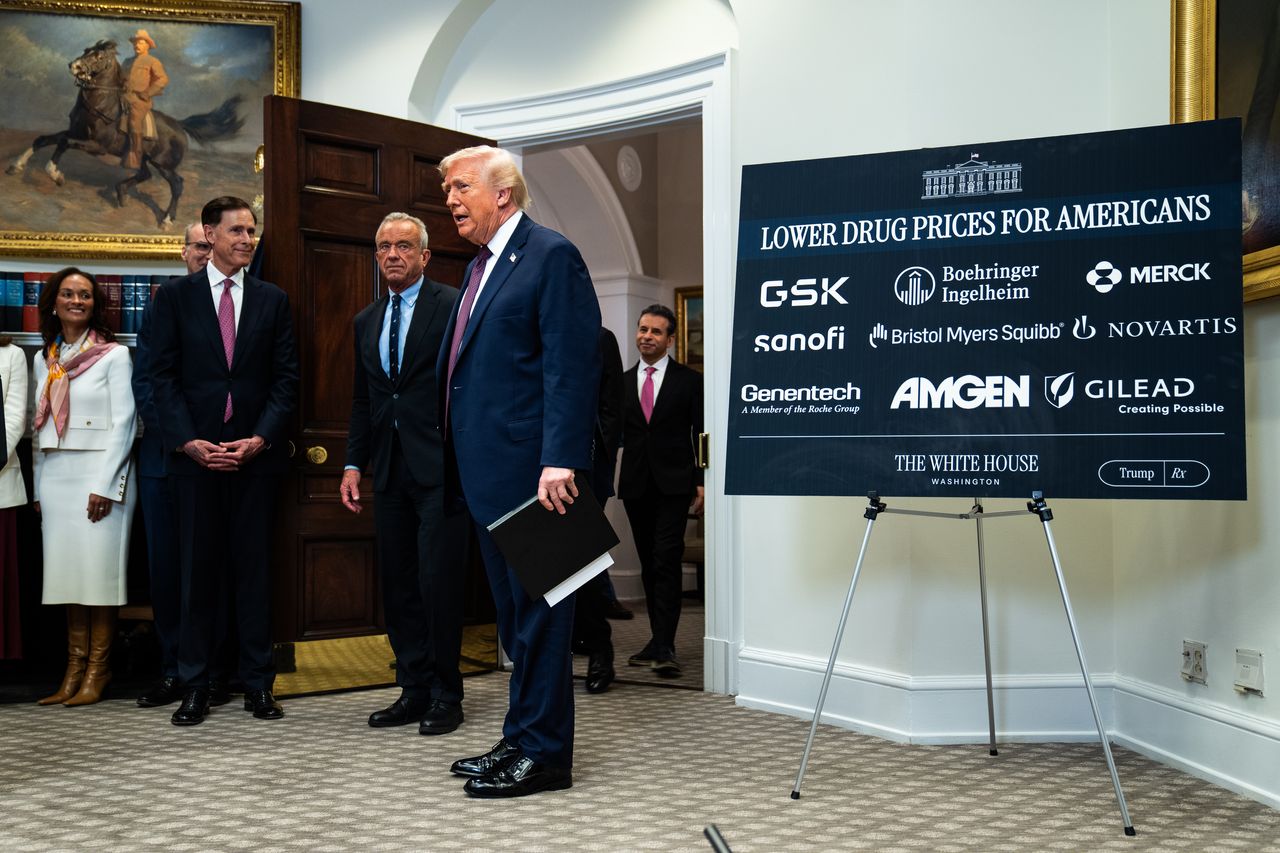
- Two other drugs, including Eli Lilly’s potential blockbuster GLP-1 weight loss pill orforglipron, which was highly touted by officials at a White House drug pricing event, are also being delayed beyond the expected timeline. The Department of Health and Human Services, which oversees the FDA, and Eli Lilly didn’t comment on the reported delays.
→ The pilot program — which gives speedy reviews to companies that have agreed to make the product affordable, increase investments in the U.S. or are meeting an unmet medical need — has come under scrutiny, notably from Richard Pazdur, the longtime FDA official that The Post reported had expressed concerns about its lack of transparency and questioned its legality. Pazdur resigned from the agency shortly thereafter. ADD THIS TO THE LIST Republican lawmakers reportedly pushed back on the administration’s slashing of federal employees at an agency focused on worker safety, which Health Brief reported Wednesday likely played a role in the reinstatement of those jobs. Earlier this week, a federal judge ordered HHS to restore nearly $12 million in grant funding to the American Academy of Pediatrics. WHAT’S NEXT It remains to be seen how courts will respond to several of the administration’s other actions. The shock-and-speed governing style at HHS has drawn several lawsuits, including challenging its moves to reduce its workforce and change the national vaccine recommendations. But the recent rollbacks illustrate the limits of implementing policy in this way. Taken together, the pattern signals a deeper tension: an administration eager to move fast and a system that often forces it to slow down. | 

_tstmp_1756933376-1920-1080.png)