| | Donald Trump says he has the framework of a Greenland deal with NATO, backs down on his tariff threa͏ ͏ ͏ ͏ ͏ ͏ |
| |  GUATEMALA CITY GUATEMALA CITY |  NUUK NUUK | SHENZHEN |
 | Flagship |  |
| |
|
The World Today | 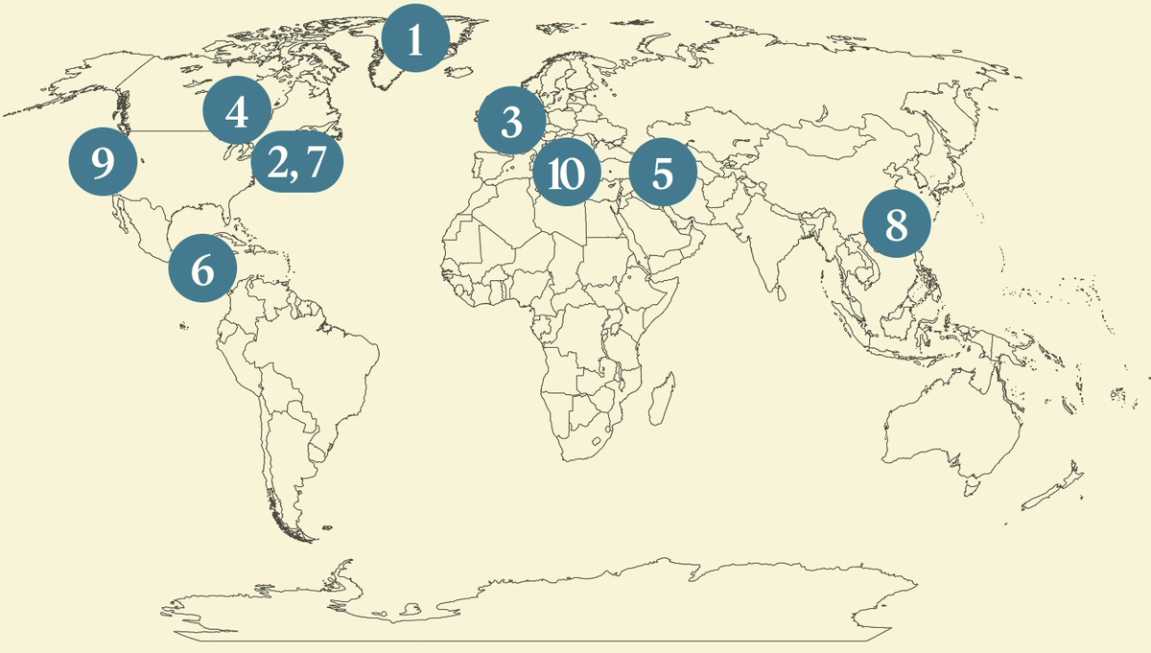 - Trump drops tariff threats
- Stocks rise on Greenland deal
- ‘Music to Europe’s ears’
- Trump hits back at Carney
- US still weighing Iran action
- LatAm fights gangs
- Arguments in US Fed case
- BYD widens overseas push
- Google’s AI advantage
- Vitruvius’ Roman basilica
 Horses jump through flames in a Spanish ritual. |
|
Trump announces Greenland deal |
 Denis Balibouse/Reuters Denis Balibouse/ReutersUS President Donald Trump on Wednesday said reached the “framework of a future deal” with NATO over Greenland, and dropped his tariff threat against European allies who oppose his campaign to seize the Danish territory. The announcement followed Trump’s speech in Davos where he reiterated his demand to acquire Greenland, but said he wouldn’t use force to take it. The specifics of the deal remain unclear, but Trump said it would last “forever” and involve mineral rights and his proposed Golden Dome missile defense system. It marked a stunning turn, given that just hours earlier, Trump threatened those standing in his way of possessing Greenland: “You can say yes and we will be very appreciative, or you can say no and we will remember.” |
|
Markets rebound on Trump climbdown |
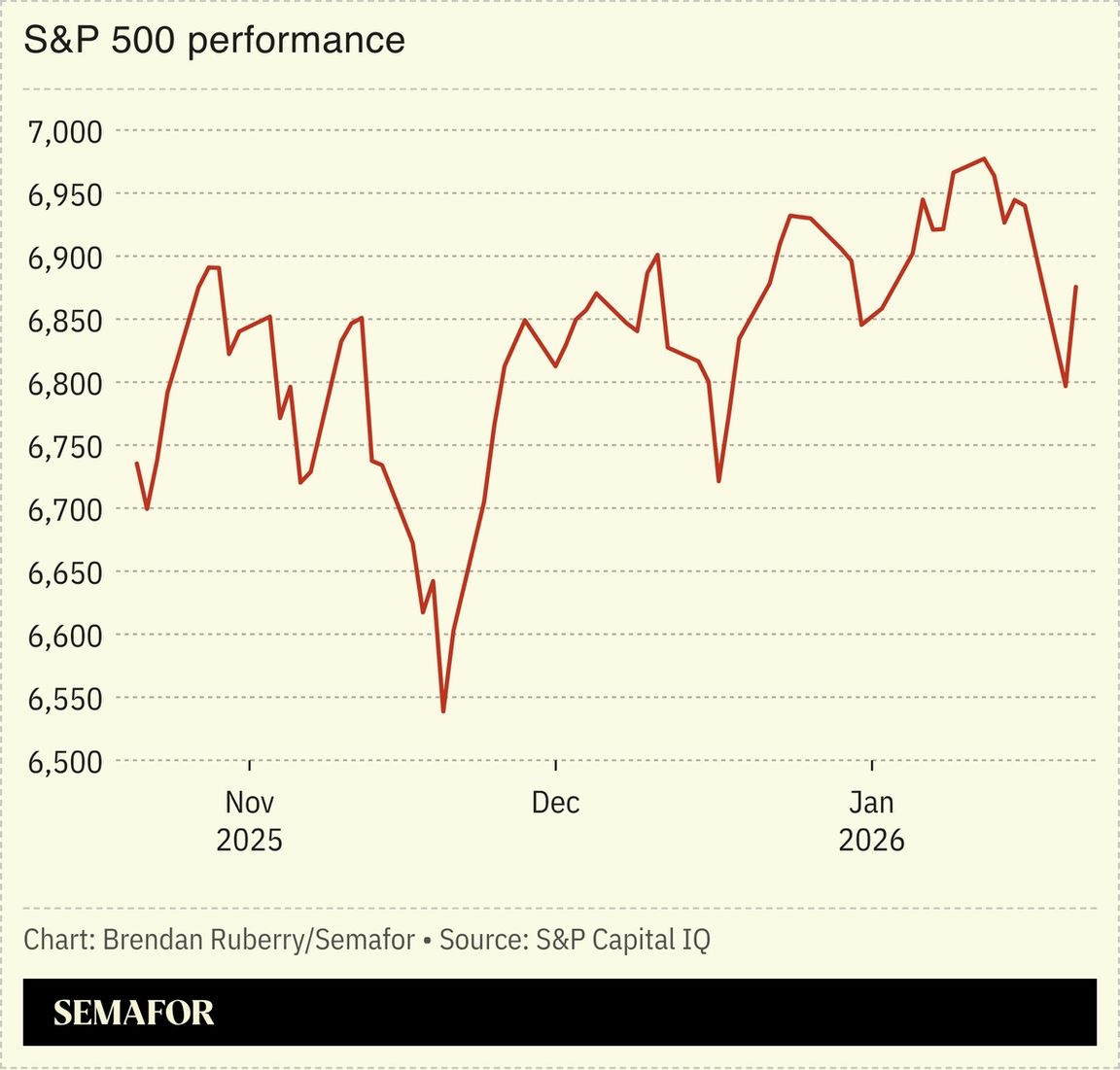 US markets rebounded Wednesday after President Donald Trump eased Europe’s most urgent fears over Greenland, a day after rising tensions sparked a selloff. The recovery suggested the flight from dollar-based assets has calmed, as investors cheered a possible deal over Greenland and Trump’s toned-down rhetoric: “Uncertainty just got priced out,” one analyst said, with Trump signaling a shift to “coordination, not confrontation.” The president had appeared frustrated by Tuesday’s rout, which threatened to eclipse his efforts to bring down the cost of living, Semafor’s US politics team noted. But transatlantic economic tensions remain elevated. European lawmakers on Wednesday suspended the approval of the US-EU trade deal agreed last year. |
|
 Mads Claus Rasmussen/Ritzau Scanpix/via Reuters Mads Claus Rasmussen/Ritzau Scanpix/via ReutersEuropean officials voiced cautious relief after Donald Trump walked back his tariff threat and signaled a deal over Greenland. “The day ends better than it began,” Denmark’s foreign minister said, but emphasized that giving up Greenland is “a red line.” Following Trump’s promise not to invade the territory, “this is the second bombshell of the day that’s music to Europe’s ears,” a BBC correspondent wrote. “Our work together with allies has had an effect,” Sweden’s top diplomat said. Still, Trump’s attacks on Europe, which imperiled the transatlantic alliance, may have lasting effects, Politico wrote. His apparent climbdown, just hours after he lambasted the continent in his Davos speech, capped two weeks of diplomatic whiplash. |
|
Trump hits back at Canada’s Carney |
 Denis Balibouse/Reuters Denis Balibouse/ReutersDonald Trump hit back at Canada in his Davos speech, a day after its leader got a rare standing ovation for his remarks describing the end of the US-led world order. Trump said Canadian Prime Minister Mark Carney should be “grateful” to the US, and hailed America as a great power. His speech stood in stark contrast to Carney’s, who urged the world’s middle powers to unite to ensure their survival in the absence of American security. Carney gave a “cometh the hour” speech, a UK economist said, at a time when world leaders are scrambling to respond to Trump’s aggressive posture. “One leader donned the cloak of statesmanship at Davos this week,” a political commentator wrote. “It wasn’t Donald Trump.” |
|
US military buildup in MidEast over Iran |
 USS Abraham Lincoln. Mike Blake/Reuters USS Abraham Lincoln. Mike Blake/ReutersThe US is building up its military presence in the Middle East, as President Donald Trump weighs action against Iran. Trump, so far, has not acted on his threats to strike Iran over the regime’s deadly crackdown on anti-government protesters, but US officials said he is seeking “decisive” military options: A US aircraft carrier was spotted sailing away from the South China Sea and toward the Persian Gulf, reinforcing Asian officials’ concerns that such redeployment would reduce American naval strength in the Indo-Pacific. But a former US hostage in Iran argued that limited strikes would be unlikely to topple the regime, and that “it would be a mistake to assume” Trump’s priorities “align with the aspirations of the Iranian people.” |
|
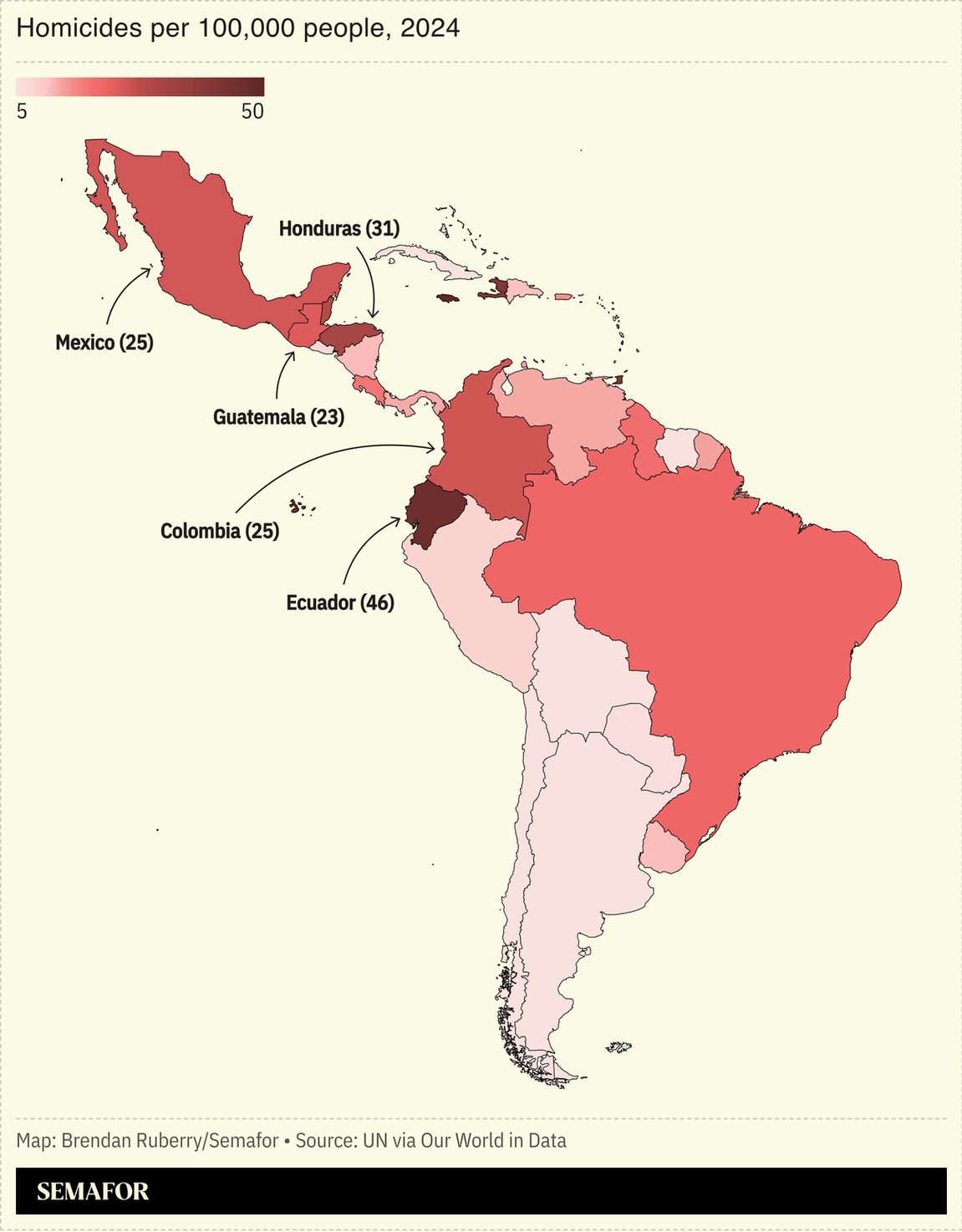 Guatemala became the third Latin American government to declare a state of emergency to combat gang violence, as the region retrenches around security. Guatemala’s move, in response to riots that saw gangs take control of three prisons on Saturday, reflect a regional shift: Colombia’s leftist president, under US pressure, has threatened strikes against guerrillas involved in cocaine trafficking, and Mexico extradited 37 alleged cartel members to the US Tuesday; Guatemala, Honduras, and Costa Rica are planning megaprisons resembling El Salvador’s CECOT. “Fighting the gangs meets the vibe of the moment,” the Latin America Risk Report wrote, as even left-wing governments accede to pressure from Washington and their own voters. “Projecting toughness is a political winner,” an expert told The Associated Press. |
|
SCOTUS skeptical of Fed governor ouster |
 Nathan Howard/Reuters Nathan Howard/ReutersThe US Supreme Court appeared poised to let Federal Reserve Gov. Lisa Cook keep her job, following attempts by the White House to oust her. In a case with major implications for US monetary policy and the economy, the justices appeared skeptical of President Donald Trump’s attempts to assert control over the central bank in his quest for lower interest rates. The arguments came in the wake of the Trump’s administration’s criminal probe of Fed Chair Jerome Powell. That investigation is separate from Cook’s case, but offers “a second potential data point” to bolster her argument that there is a “pattern of pretextual coercion,” The Wall Street Journal wrote. |
|
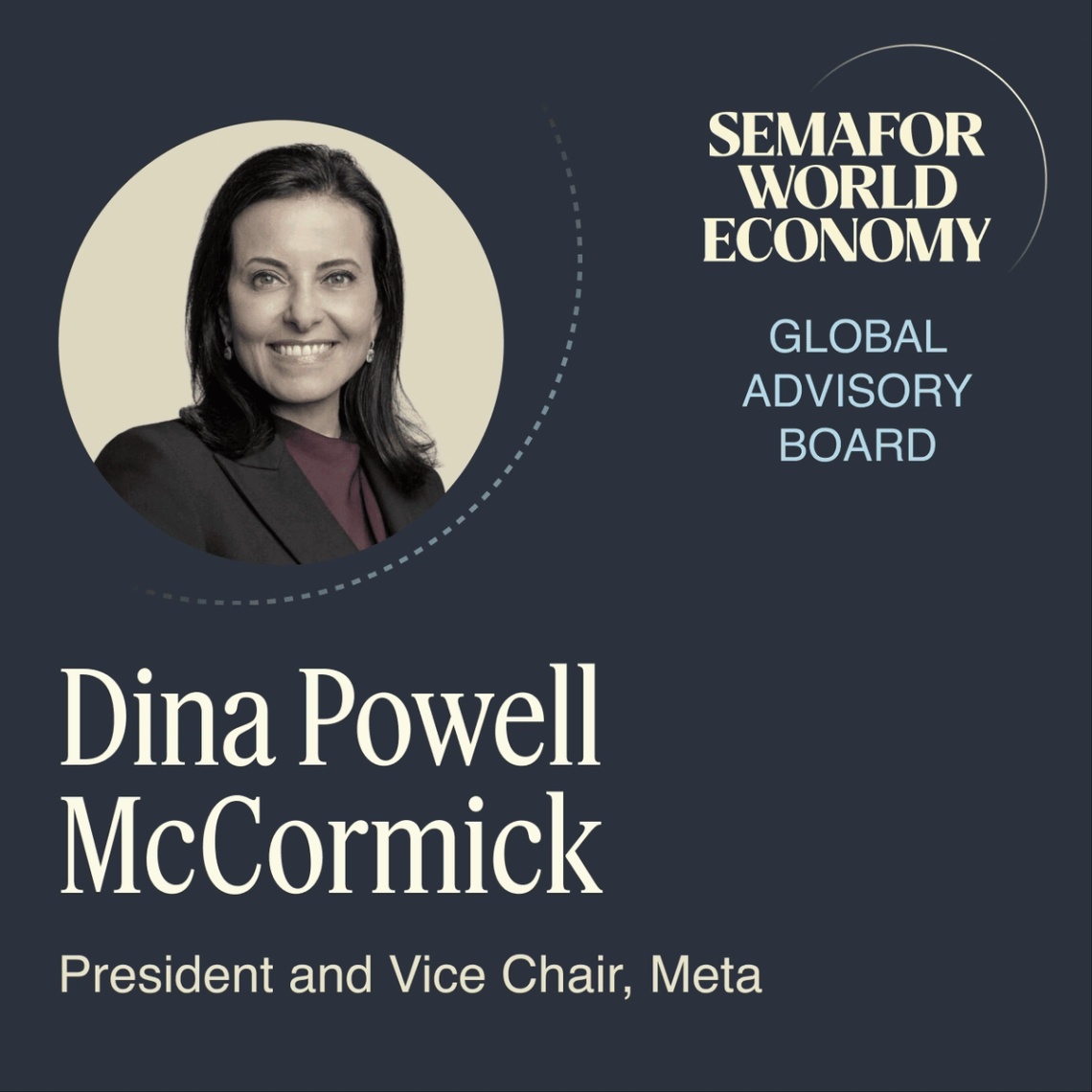 Dina Powell McCormick, President & Vice Chair, Meta, is joining the Semafor World Economy Global Advisory Board — a forum of visionary business leaders guiding the largest gathering of global CEOs in the US. The expanded board represents nearly every sector across the US and G20. Joining the Advisory Board at this year’s convening will be our inaugural cohort of Semafor World Economy Principals — an editorially curated community of innovators, policymakers, and changemakers shaping the new world economy with front-row access to Semafor’s world-class journalism, meaningful opportunities for dialogue, and touchpoints designed for connection-building. Applications are now open here. |
|
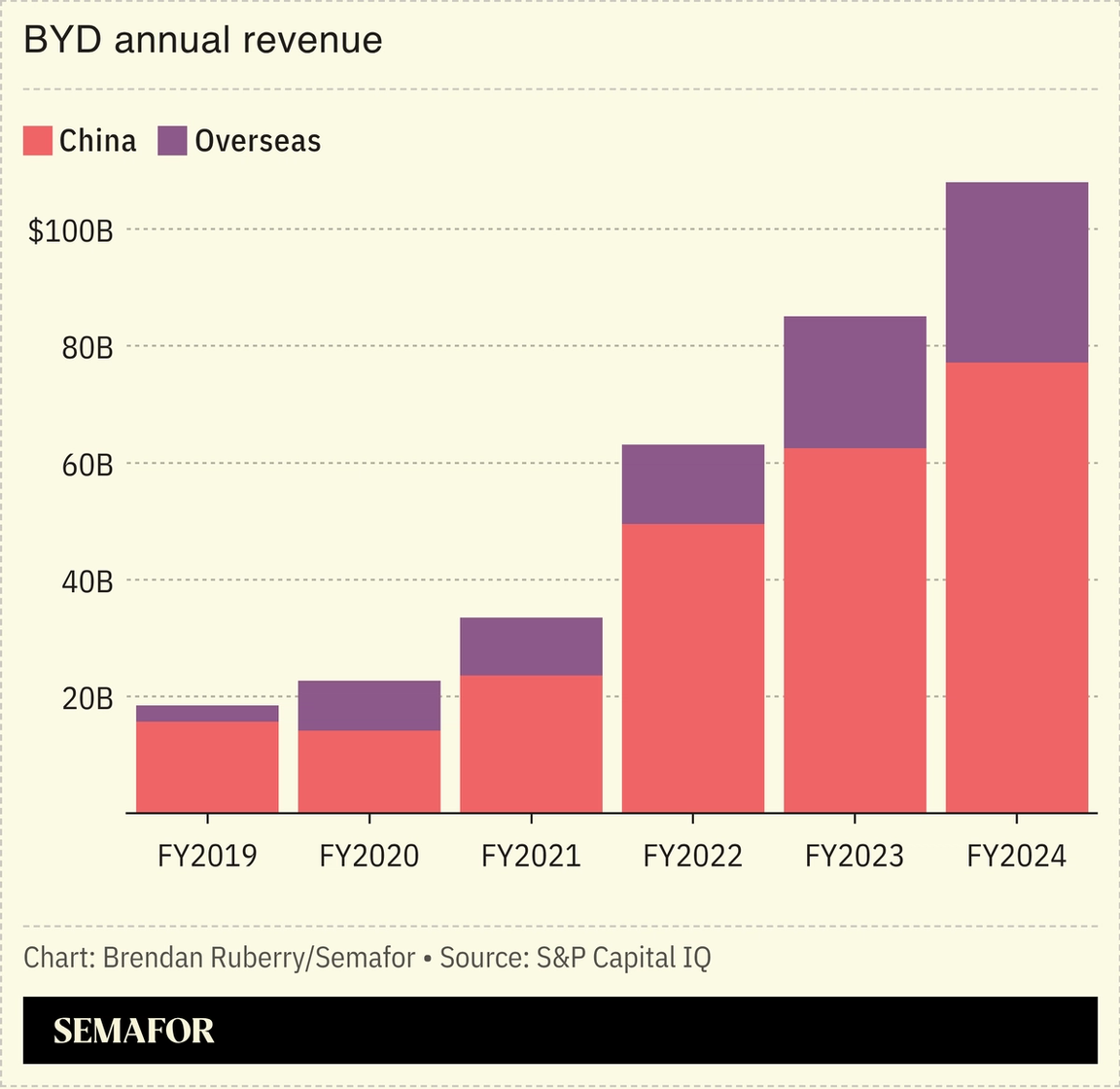 Chinese EV giant BYD is deepening its global push, despite political headwinds, in a bid to cement its dominance in the sector. The Shenzhen-based company, which last year beat Tesla to be the world’s top EV seller, is filling a void left by Western manufacturers who saw “EVs as a luxury good” and priced them accordingly, The Wire China noted. By offering more competitive prices, “politics, not market forces,” became the biggest obstacles to Chinese automakers, The Wall Street Journal wrote, as the US and EU threw up trade barriers. But that may be changing, bolstering BYD’s expansion plans. Canada and Brussels are poised to drop tariffs, and BYD is already making inroads in Mexico despite 50% duties. |
|
Why Google could speed past OpenAI |
 Firebird Films/Semafor Firebird Films/SemaforGoogle is poised to win the AI race, not because of chips or technical talent, but because of access to information, the CEO of internet security company Cloudflare said at Semafor Haus in Davos. Google garners more than three times as much data per web page as rival OpenAI, five times as much as Microsoft and Anthropic, and even more compared to smaller players, Matthew Prince said Wednesday, calling for a more open marketplace to sell data. Google and its US peers, meanwhile, are also central to the global AI race: The company’s president told Semafor on Tuesday that China would fill an AI power vacuum if the US and its tech companies don’t move fast enough to compete globally. |
|
|


