| | European leaders huddle to discuss the future of the transatlantic relationship, the US present a gl͏ ͏ ͏ ͏ ͏ ͏ |
| |  | Flagship |  |
| |
|
The World Today | 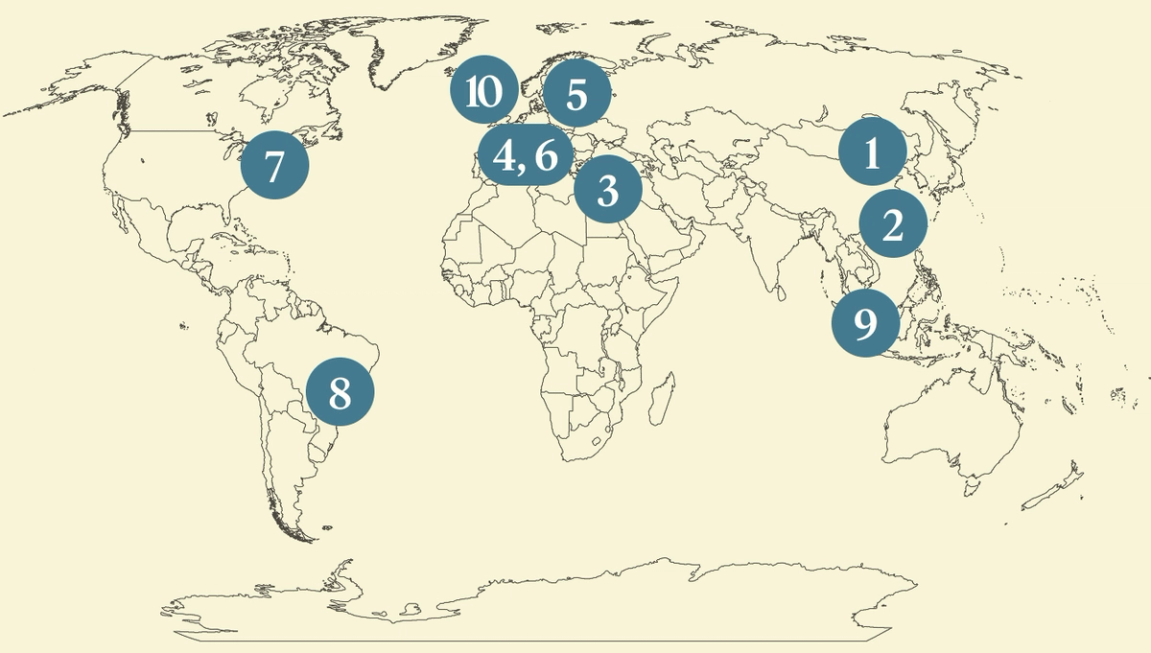 - TikTok deal set to close
- China’s chip firms go public
- Ambitious ‘New Gaza’ vision
- Zelenskyy rebukes Europe
- Poland upgrades its navy
- Davos is relevant again
- Trump sues JPMorgan
- A very global Oscars
- An appetite for spice
- Chimney sweeps’ comeback
 Brazil’s UFO hotspot, and a PR stunt goes wrong in our latest Substack Rojak. |
|
China, US sign off on TikTok deal |
 Maxim Shemetov/Reuters Maxim Shemetov/ReutersWashington and Beijing have signed off on a deal to sell TikTok’s American business to a consortium of mostly US investors, capping a yearslong battle between the two superpowers over the app, Semafor reported. The pact, set to close this week, removes a sticking point in US-China relations: Former President Joe Biden had threatened to ban TikTok if its Chinese parent company ByteDance did not divest its US business. It’s unclear, though, what negotiations occurred over who will oversee TikTok’s powerful algorithm, the app’s crown jewel that has been the main point of contention between the two countries and has scuttled past deals. |
|
Enthusiasm for Chinese chipmakers |
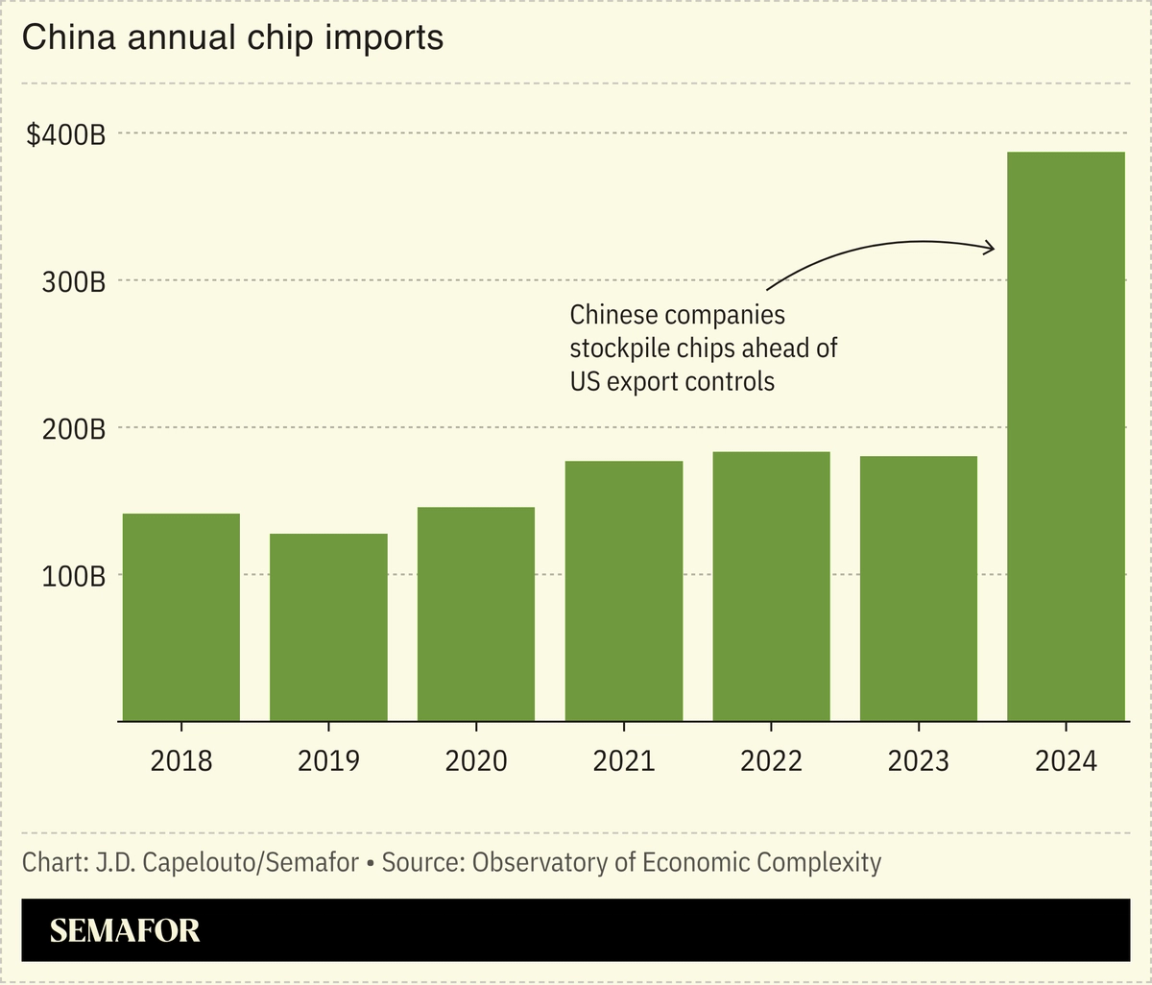 Chinese AI chipmaker Moore Threads tripled its revenue in 2025, estimates show, as Beijing accelerates its push for technological self-sufficiency. The company, which aims to rival Nvidia, is at the front of a stream of Chinese chip firms going public: Tech giants Alibaba and Baidu plan to spin off their semiconductor units as independent listings in a bid to capitalize on enthusiasm for locally made processors. That domestic push is central to the debate over Beijing’s move to restrict imports of powerful Nvidia H200 chips after Washington approved their sale. China wants to reduce reliance on US tech, but Chinese companies are hungry for the superior Nvidia products, with some considering sourcing H200s from the black market. |
|
US lays out ‘New Gaza’ vision |
 Denis Balibouse/Reuters Denis Balibouse/ReutersUS officials on Thursday laid out an ambitious vision for a “New Gaza,” replete with skyscrapers and luxury homes. The plan envisages $25 billion in investment to rebuild the devastated enclave within three years, Donald Trump’s son-in-law Jared Kushner told business leaders at Davos. But the splashy reconstruction ideas “exist mostly on paper,” The New York Times wrote. Israel and Hamas first need to advance a fragile US-brokered ceasefire: Central to that task is the demilitarization of Hamas, whose members have been promised amnesty for disarming. Kushner said his “master plan” was aimed at “catastrophic success,” but Hamas hasn’t agreed to give up its weapons, and Trump’s Board of Peace to oversee Gaza’s reconstruction lacks Palestinian representation. |
|
Europe recalibrates future of US ties |
 Harun Ozalp/Anadolu via Getty Images Harun Ozalp/Anadolu via Getty ImagesEurope’s leaders huddled Thursday to recalibrate the future of their relationship with the US after a week of diplomatic tumult. The emergency summit was convened before US President Donald Trump dropped his tariff threat against eight European countries over Greenland, but “the damage has been done” to the transatlantic relationship, Bloomberg’s Brussels bureau chief wrote. Politico summed up the lasting feeling as “dread and skepticism,” despite Trump’s climbdown of his Greenland ambitions and reports that his deal with NATO would respect Denmark’s sovereignty. Europe’s uncertain approach to Trump prompted a scathing rebuke from Ukrainian President Volodymyr Zelenskyy at Davos, who said Thursday that far from becoming a global power, “Europe looks lost.” |
|
Poland begins major overhaul of navy |
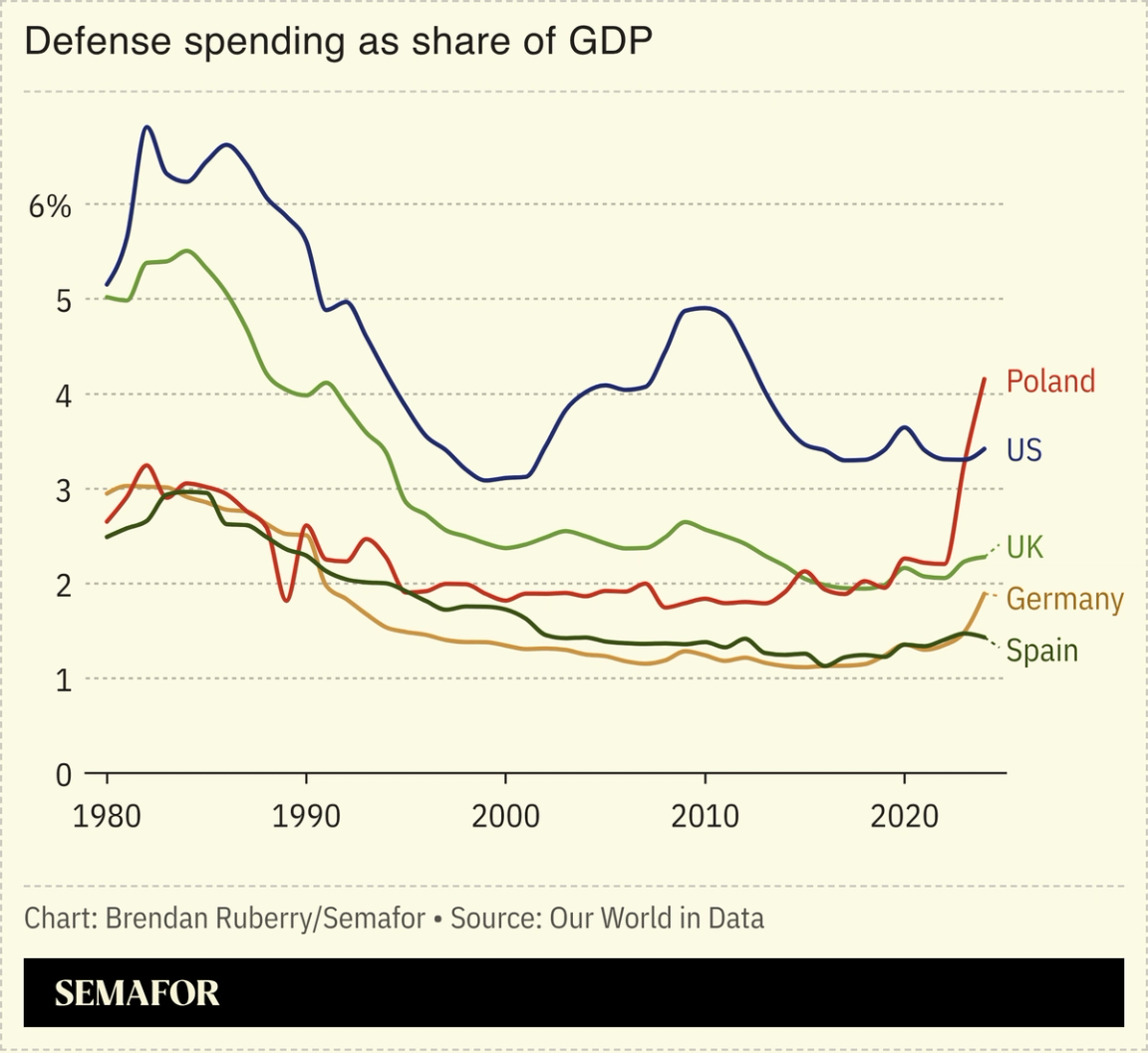 Poland began the largest overhaul of its navy since the Cold War to bolster defenses in the face of Russian expansionism and transatlantic tensions. Warsaw is proportionally NATO’s biggest spender, with 4.7% of GDP going to defense, but its maritime forces have largely been neglected. Moscow’s escalating hybrid warfare, however, has heightened security concerns in the Baltic Sea, and Europe is stepping up coordination and production: Warsaw will buy three new submarines from Sweden, and is expected to sign a defense agreement with the UK. Europe lacks initiative, not ideas, when it comes to innovative defense coordination, the Stimson Center argued, perhaps because it fears that “bold action” could exacerbate US President Donald Trump’s hostility toward the continent. |
|
Making Davos relevant again |
 Denis Balibouse/Reuters Denis Balibouse/ReutersThe World Economic Forum is back from the brink, thanks to Donald Trump and the CEO of the world’s largest money manager, according to longtime Davos attendees. After the departure of chair Klaus Schwab, BlackRock’s Larry Fink took over the annual Swiss confab, which in recent years had started to feel more like a “live-action alpine LinkedIn” instead of the world’s most important gathering, one frequent visitor observed in The Globe and Mail. But a defining speech from Canada’s Mark Carney, the launch of Trump’s Board of Peace, and the US leader’s typical bombast injected relevancy into this year’s global gathering. “If Davos was less free-wheeling than in years past, so is the world,” two Semafor editors wrote from the event. |
|
Trump sues JPMorgan, Dimon |
 Mike Segar/Reuters Mike Segar/ReutersUS President Donald Trump on Thursday sued JPMorgan Chase and CEO Jamie Dimon, alleging they illegally “debanked” him. The bank closed accounts for Trump and his businesses several weeks after the Jan. 6, 2021 Capitol riot; the president has zeroed in on JPMorgan in his effort to oppose what he and his allies see as a systemic effort among financial institutions to refuse services to conservatives. The bank said it doesn’t close accounts for political reasons. Dimon has recently been critical about some of Trump’s economic policies, including tariffs and his proposed credit card interest rate cap. Other Wall Street CEOs at Davos, Bloomberg noted, are taking a different approach to Trump: avoiding talking about him at all. |
|
 Venezuela is back in the global spotlight. Venezuela Weekly is a bilingual newsletter published every Monday, offering a sharp roundup in Spanish and English. It delivers a concise weekly briefing with local sources, depth, and context for readers tracking politics, markets, and society in the country. Subscribe to stay ahead of the curve. |
|
Oscars look beyond Hollywood |
 Wagner Moura. Mike Blake/Reuters Wagner Moura. Mike Blake/ReutersInternational films were represented in all four Oscars acting categories for the first time, reflecting an Academy Awards that is increasingly looking beyond Hollywood. Titles financed and produced outside the US, which predominantly featured non-English languages, were “not only present but dominant,” Deadline wrote: Swedish actor Stellan Skarsgård grabbed a Best Supporting Actor nomination for Norwegian film Sentimental Value, Wagner Moura became the first Brazilian Best Actor nominee, and KPop Demon Hunters — the animated juggernaut that was American-made but centered on Korean culture — scooped two nominations. Thanks to streaming platforms, foreign-language content is now “mainstream viewing,” Monocle wrote, while institutions, not viewers, “continue to draw borders that the screen itself has already dissolved.” |
|
Growing appetite for spicy food |
 Jonathan Wong/South China Morning Post via Getty Images Jonathan Wong/South China Morning Post via Getty ImagesDiners are seeking ever spicier foods. Sichuan restaurants are replacing milder Cantonese ones in Singapore; participants at Berlin’s annual chile festival have increased 13-fold in five years. In the US, 95% of food joints, including burger and pizza places, serve at least one hot option, and surveys find consumers are choosing more fiery foods in dozens of major markets. Researchers told Bloomberg that the change was downstream of globalization and immigration, as cuisines spread worldwide, and because social media challenges are “transforming extreme heat from a niche interest into a badge of honor for young people.” The achievement spurs people to seek even more challenging flavors — like “parachuting,” one scientist said: “If you jump once, you want to do it again.” |
|
|


