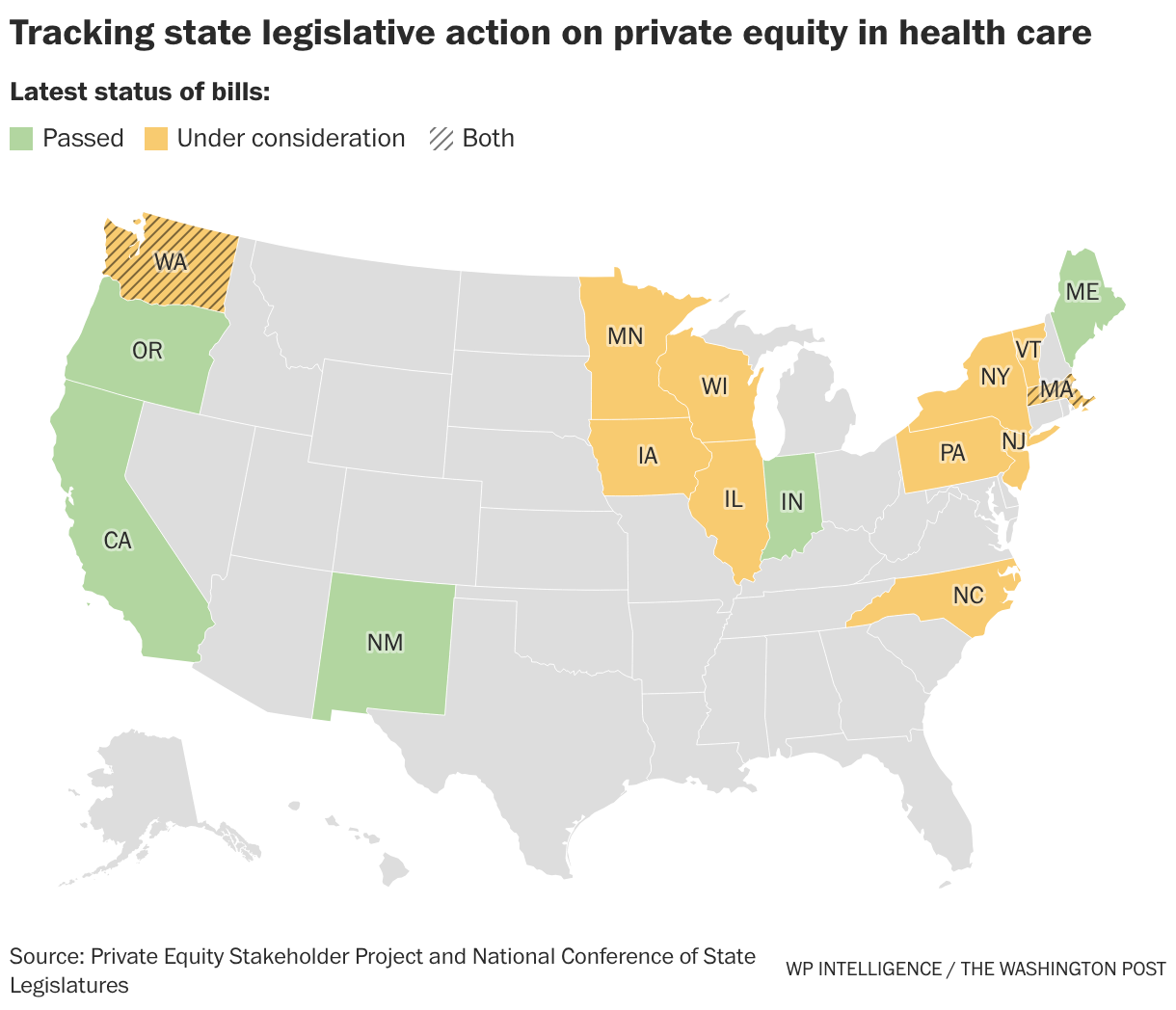
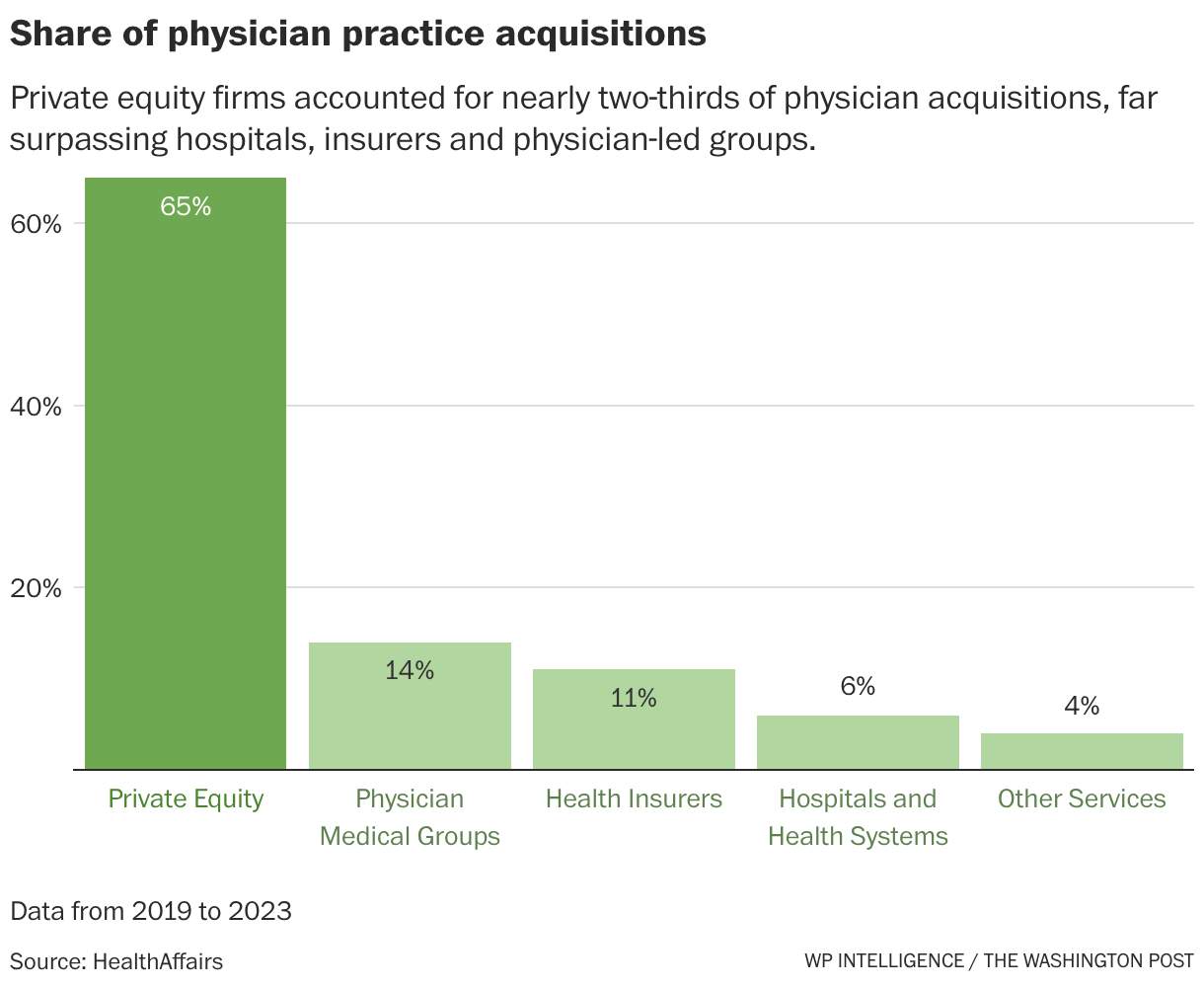
| The 10 states’ various proposals include bills to prevent nonclinical organizations — such as those tied to private equity — from controlling the professional medical judgment of doctor-owned practices. Why it matters: Critics of private equity investments argue that firms make money by burdening hospitals with debt, skimping on care and selling assets without regard for affected communities. Studies show that investments from private equity can lead to increased costs and worsening care. Meanwhile, supporters of the investments counter that firms add operational expertise and efficiency, while empowering medical providers with more negotiating muscle. ZOOM IN Prospect Medical Holdings closed hospitals in Pennsylvania, causing patients challenges in finding medical care and workers to lose their jobs. Delaware County, near Philadelphia, has been under an emergency declaration for almost a year as a result. The Pennsylvania House passed legislation pushed by the state’s Democratic governor, Josh Shapiro. The Republican-controlled Senate will consider it next. The details: The Pennsylvania bill would restrict certain transactions, including those that lessen competition or the quality of care. Under the bill, the Pennsylvania attorney general would gain authority to block other deals, too. → Privately held institutions are tough for states to monitor closely. But, under the Pennsylvania bill, the state would get 60 days’ advance notice of ownership transfers, mergers, acquisitions and other transactions. Other states are considering or have already passed legislation that would add transparency or increase oversight of private equity transactions. This effort includes a pending bill in Illinois that would require the attorney general to consent to health care transactions that receive any financing from a private equity group or hedge fund. → Follow along with this state bill tracker curated by the nonprofit Private Equity Stakeholder Project. But watch the clock: While some state legislatures meet throughout the year, others have short sessions. WHAT ABOUT CONGRESS? Lawmakers have been hesitant to move on legislation that touches on private equity in health care, with disagreement among Republicans and Democrats about the role the federal government should play in regulating investments. Although one bipartisan proposal introduced last Congress that would have required the disclosure of private equity ownership of health care facilities — including hospitals and nursing homes — initially seemed to have momentum, it was cut from a larger health package following objections from the industry. | 

_tstmp_1756933376-1920-1080.png)