|
 |
This Is the Vaccine Story RFK Jr. Doesn’t Want You to Hear
The Trump administration says we should learn from other countries. Maybe they should have looked someplace besides Denmark.
|
| |||||||||||||||


 |
IT WAS ABOUT FIVE IN THE MORNING on April 1, 2025, when Antoine Archambault heard his four-month-old son, Isaac, fussing from the bedside crib inside their first-floor suburban Paris apartment.
It was more of a whimper than a wail, as Antoine recalls it, which was pretty typical for a baby even strangers said was unusually upbeat and given to giggling. Isaac was running a fever, but it was a mild one. Antoine gave him paracetamol (acetaminophen) and soon Isaac fell back asleep, seemingly at peace in his fuzzy sleep sack.
Antoine headed back to bed, hoping to get a little more rest before daybreak. But soon Isaac was up again, because the fever wasn’t going away. Claire Fauvet—Antoine’s partner and Isaac’s mother—had to take an early train to Strasbourg for work, so Antoine bundled up the baby for a short walk to a nearby medical clinic. Father and son arrived right as the doors opened at 8 a.m. and Antoine had no reason to think Isaac had anything more than a routine illness—until staff called an ambulance, for speedy transfer to the university children’s hospital.
Why, a panicked Antoine wanted to know. Because, a doctor told him, Isaac might have meningococcal disease.
Meningococcal disease is the ultimate nightmare for pediatricians, and for parents who know about it. It is caused by Neisseria meningitidis, a bacterium that can invade the bloodstream, the spinal cord, or both. It is spread through close contact with respiratory or oral secretions, colonizing nasal and throat linings. Many people carry it harmlessly.
But in rare cases it transforms into invasive disease, striking even healthy people with shocking speed. In a matter of hours, what seems like a routine, flu-like illness transforms into a full-body emergency of shock, blood clotting, and swelling of the brain. Between 10 and 15 percent of those who get meningococcal disease will die, even with rapid treatment. Many more will suffer permanent physical or cognitive impairments.
 |
Antoine knew a bit about the disease, he explained to me, because he remembered a documentary he had seen about a paralympic swimmer who’d lost the outer parts of all four limbs as a child. Antoine also recalls thinking that Isaac was protected against it, because he and Claire were so diligent about getting Isaac his immunizations as soon as he was eligible. “I texted Claire, they suspect meningitis, but wasn’t he vaccinated?” Antoine told me. “And Claire was like, yes he is.”
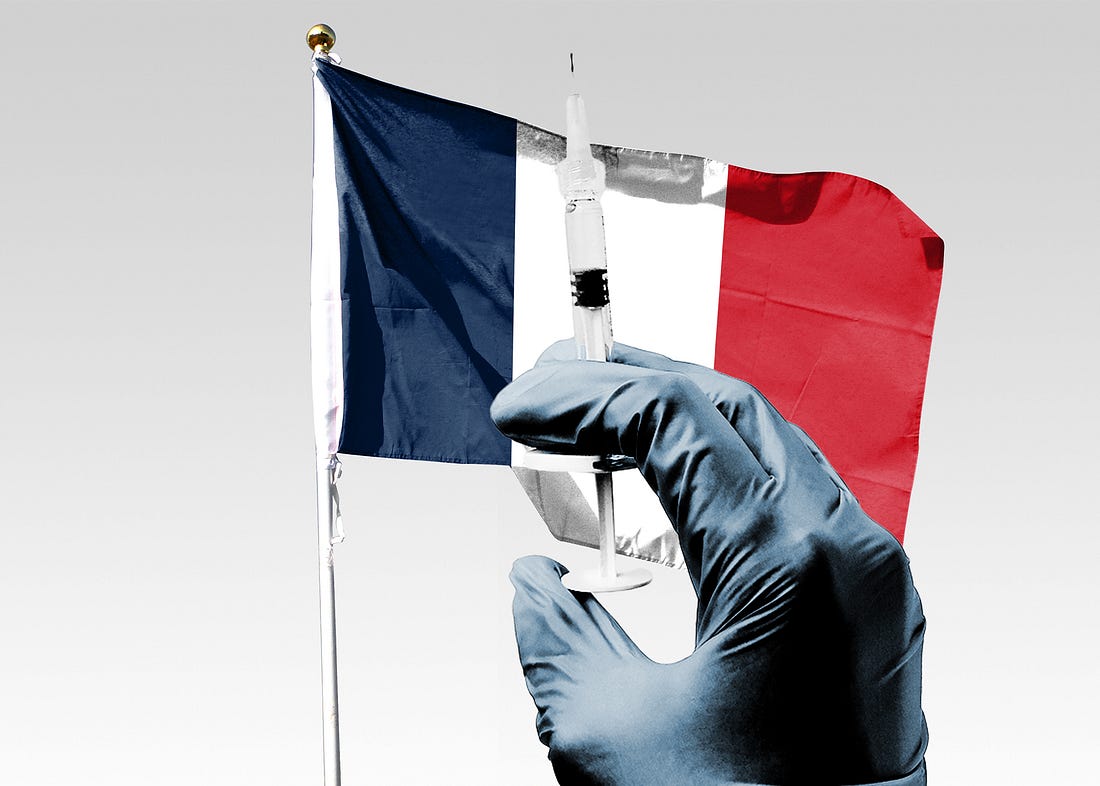
But France’s “schedule”—the list of vaccines required for public child care and school, and covered by national health insurance—had until recently excluded one of the two available meningococcal shots, each one being necessary for protection against different biological strains. A new requirement for the second version had taken effect on January 1, right after Isaac was born, and his appointment to get the vaccine was on the books. But it was not for another six weeks. That meant he remained at the mercy of the community around him, which—without widespread vaccination—included plenty of meningococcal carriers. Evidently one had given it to him.¹
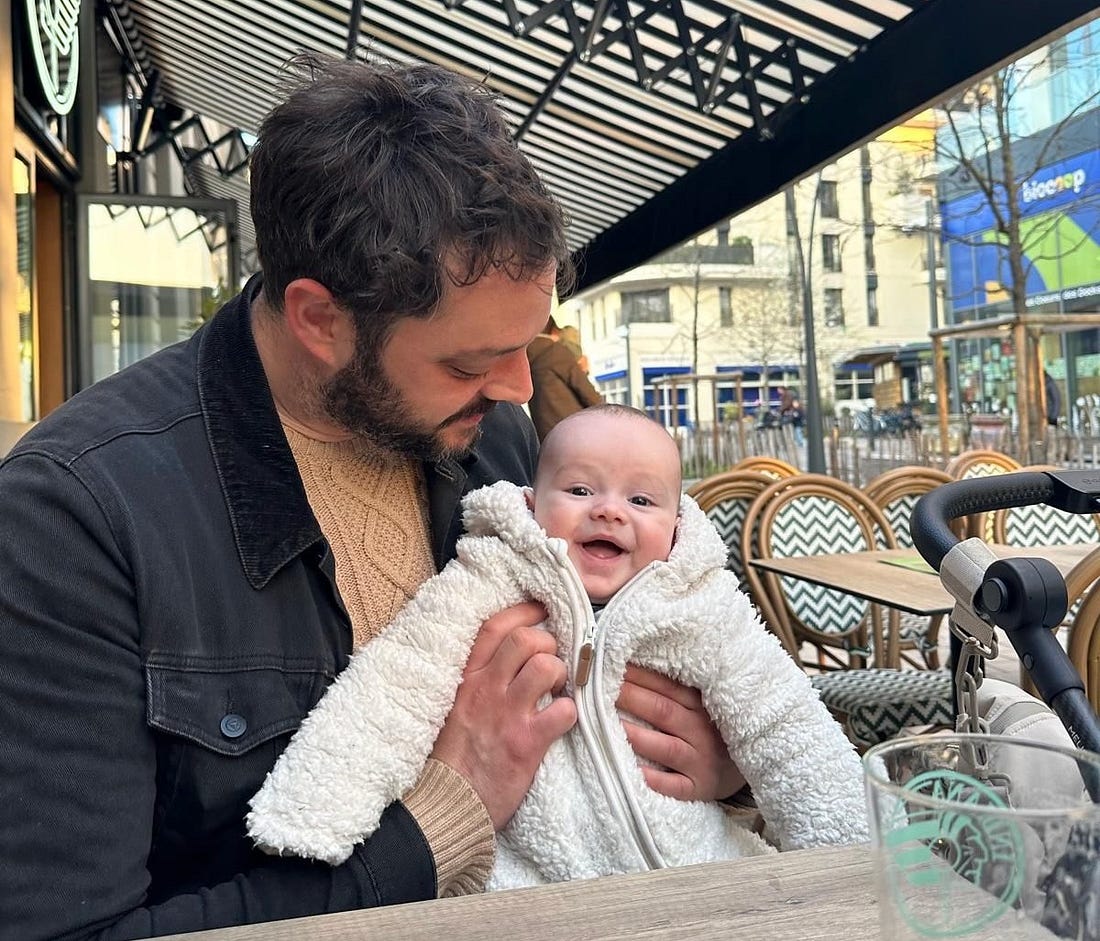
The next few hours remain a blur, Antoine told me. “I lost my footing, I lost my step, my legs were shaking all day,” he said, reaching for the English words to capture a state of mind as much as anything physical. Less than twenty-four hours before, Antoine had been playing with Isaac at an outdoor café, drawing out the baby’s smile with a favorite stuffed monkey that played music when you squeezed it. When Claire had rocked Isaac to sleep by holding him close to her chest, in what had become their routine, he had seemed absolutely fine. Now doctors were putting him into a medical coma, which they said was his best hope for survival.
Claire, who had rushed back to Paris by train, arrived at the hospital not long after that and for a while it looked like treatment might work. Isaac’s vital signs even improved for a bit. But the recovery was illusory and his condition deteriorated.
His heart stopped three times. Doctors were able to revive him after the first two. They were not after the third. At 6:35 p.m., Isaac was gone.
EARLIER THIS MONTH, Health and Human Services Secretary Robert F. Kennedy Jr. announced the CDC would be removing several vaccines from the list that it recommends for all American children. Among those CDC took off the list is the newer meningococcal vaccine, which has an excellent safety record and since its introduction had reduced the incidence of the disease in this country by 90 percent.
Under the new guidelines, the agency recommends the shot only for high-risk groups (like people who are immunocompromised or college freshmen living in close quarters). For others, the agency suggests “shared clinical decision-making,” meaning parents should discuss with their doctors whether the shots are advisable for their children.
Exactly how much will change—and exactly when—is hard to say. Insurers will continue to pay for the vaccines, administration officials said, as will a government-run program that administers immunizations to low-income children. Decisions about whether to require shots for school will remain with states, as they always have.
But physicians, state officials, and insurers all use CDC recommendations to guide their own decisions and advice. That’s one reason the recommendations matter so much, including to people like Kennedy with long histories of hostility to vaccines. Another is that the guidelines make it possible for Americans without medical training to know what the nation’s most trusted scientists believe, based on their assessment of the latest and best available research.
Or at least that’s how it is supposed to work. This month’s retrenchment on vaccine policy—arguably the biggest in American history—is not based on new data or research that’s suddenly become available. Rather, it is based on a reassessment ordered up by Kennedy’s boss, President Donald Trump, that compared U.S. recommendations to those in peer countries around the world. “After an exhaustive review of the evidence,” Kennedy said in a statement, “we are aligning the U.S. childhood vaccine schedule with international consensus while strengthening transparency and informed consent.”
Like so many other arguments Kenne