Lumina Foundation is working to increase the share of adults in the U.S. labor force with college degrees or other credentials of value leading to economic prosperity.
A free expression lawyer, a university system leader, and a civil rights activist were unified in their call to higher education leaders to “stand up” against violations of First Amendment rights and the stifling of free speech on campuses at the annual meeting of the American Association of Colleges and Universities.
During the gathering in Washington, D.C., the legal director at the Foundation for Individual Rights and Expression, Will Creeley, joined John King, chancellor of the State University of New York, and Maya Wiley, president and CEO of the Leadership Conference on Civil and Human Rights, in condemning institutions that have bent to political pressure. They also warned that threats to constitutional rights are no longer a red-state problem.
The University of Texas at Austin is shuttering its longstanding Center for Teaching and Learning at the end of the semester, part of a wave of changes announced recently that include the closure of the Office of Community Engagement, a campus advising center, and the Office of Undergraduate Research.
The announcement, which came in an email from William Inboden, the university’s provost, says these moves are part of an effort to “optimize” and “streamline” academic operations. Inboden wrote that resources provided by the programs would be repurposed but offered no details. Professors, meanwhile, say the changes make little sense.
Last year, federal legislators put a cap on the amount of money that students pursuing advanced degrees will be able to borrow from the government, and high tuition was one big reason. But lawmakers went even further: different graduate programs will have different loan limits. Students heading toward so-called professional degrees will be able to borrow up to $200,000 total in pursuit of their credential. Other programs will have a $100,000 cap.
Two different nursing school programs in Ohio offer a glimpse into what may happen when federal student borrowing has limits.
Arizona State University is launching a new effort to help students who started their college careers but didn’t graduate get back on track and earn their degrees.
Dubbed "Operation Comeback," the program has garnered interest from some 700 people. Nancy Gonzales, ASU's executive vice president and university provost, explains more about the program in this interview, including why she believes tailored advising, clear pathways back, and financial support will make returning to higher education more viable for "Some College, No Credential" individuals.
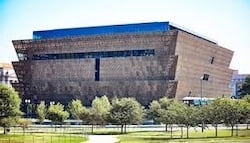
When most Americans think of preserving Black history, they might picture the Smithsonian's National Museum of African American History and Culture. But the nation's Historically Black Colleges and Universities have been doing this work for more than a century—often with far fewer resources and recognition.
A new exhibition at the museum aims to change that narrative. At the Vanguard: Making and Saving History at HBCUs features archival collections from five institutions—Clark Atlanta University, Florida A&M University, Jackson State University, Texas Southern University, and Tuskegee University—demonstrating how these schools have functioned as repositories of African American intellectual, artistic, and activist traditions.
The future of work will demand fluency in both science and technology. From addressing climate change to designing ethical AI systems, tomorrow’s challenges will require interdisciplinary thinkers who can navigate complex systems and harness the power of computation.
If schools want to prepare young people for a future shaped by technology, they must act now to ensure that computer science is not a privilege for a few but a foundation for all, writes Jim Ryan, executive director of OpenSciEd, in this op-ed.





.jpg?width=500&upscale=true&name=istockphoto-2188013015-612x612%20(1).jpg)