| | Israel recovers the body of the last hostage held in Gaza, Donald Trump sends his border czar to Min͏ ͏ ͏ ͏ ͏ ͏ |
| |  Tel Aviv Tel Aviv |  Moscow Moscow | Cape Town |
 | Flagship |  |
| |
|
The World Today | 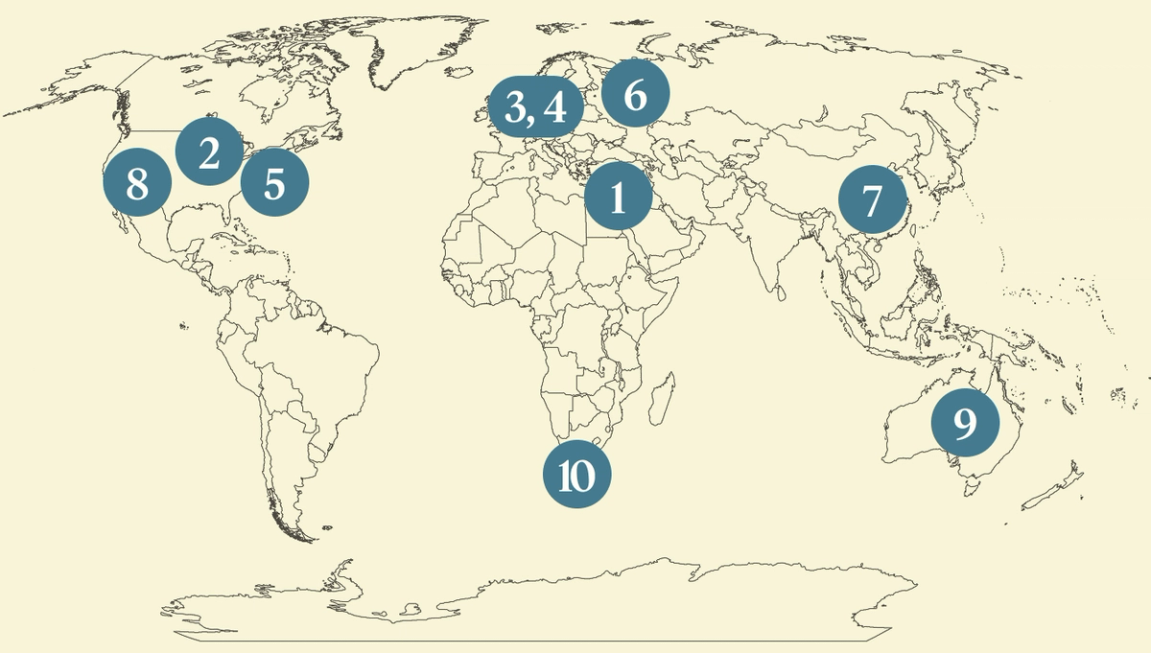 - Israel recovers last hostage
- Trump softens tone on Minn.
- New North Sea wind farm
- EU steps up tech oversight
- US data center lobbying
- A ‘personalist global order’
- Chinese AI apps lure users
- Copper extraction innovation
- Shingles vaccine for dementia
- Yachting team breaks record
 The diplomacy behind embassy art. |
|
Israel recovers body of last hostage |
 Amir Cohen/Reuters Amir Cohen/ReutersIsrael said it recovered the body of the final hostage held in Gaza, a milestone in efforts to advance a US-brokered ceasefire in the enclave. Police officer Ran Gvili was killed fighting Hamas attackers on Oct. 7, 2023 — Israel had resisted moving ahead with the truce until his remains were retrieved. For the first time since 2014, there are no Israeli hostages, dead or alive, in Gaza — “a reminder of the deep roots of this conflict and how difficult it could still be to shape a lasting peace,” the BBC wrote. Israel also said Monday it will reopen a key border crossing between Gaza and Egypt, but the next steps of the peace plan center on more challenging tasks, including Hamas’ disarmament. |
|
Trump softens tone on Minn. shooting |
|
Europe pushes for energy, tech control |
 Stephane Mahe/Reuters Stephane Mahe/ReutersHeightened transatlantic tensions are spurring Europe’s push for energy and tech independence. Ten European countries on Monday agreed to collaborate on a massive offshore wind farm project in the North Sea, linking to all participants via submarine cables. “Energy is now central to this volatile age,” the UK and EU’s energy czars wrote in Politico, emphasizing the need for “homegrown clean power” to achieve security. The EU is also accelerating efforts to promote tech sovereignty, The Wall Street Journal reported, after the US’ Greenland quest sparked concerns of a once unthinkable scenario in which Washington could cut off the region’s access to American tech. Still, a decoupling is unlikely; Europe is hugely reliant on US cloud computing services. |
|
EU ramps up tech enforcement |
 Yves Herman/Reuters Yves Herman/ReutersThe EU signaled it is stepping up oversight of large US tech platforms, risking further ire from Washington. The European Commission on Monday opened an investigation into Elon Musk’s social media network, X, over a proliferation of nonconsensual sexualized deepfakes created by its AI tool. The EU also plans to heighten scrutiny of WhatsApp after subjecting Meta’s messaging platform to the bloc’s toughest standards over its high numbers of users. Brussels began rethinking its Big Tech crackdown last year, but has since faced calls to hold firm and increase enforcement, despite threats of US retaliation over the continent’s regulatory impulses. Efforts to create an independent bloc-wide tech regulator — “Washington’s worst nightmare” — are now picking up steam, Politico EU reported. |
|
US lobbying over data centers intensifies |
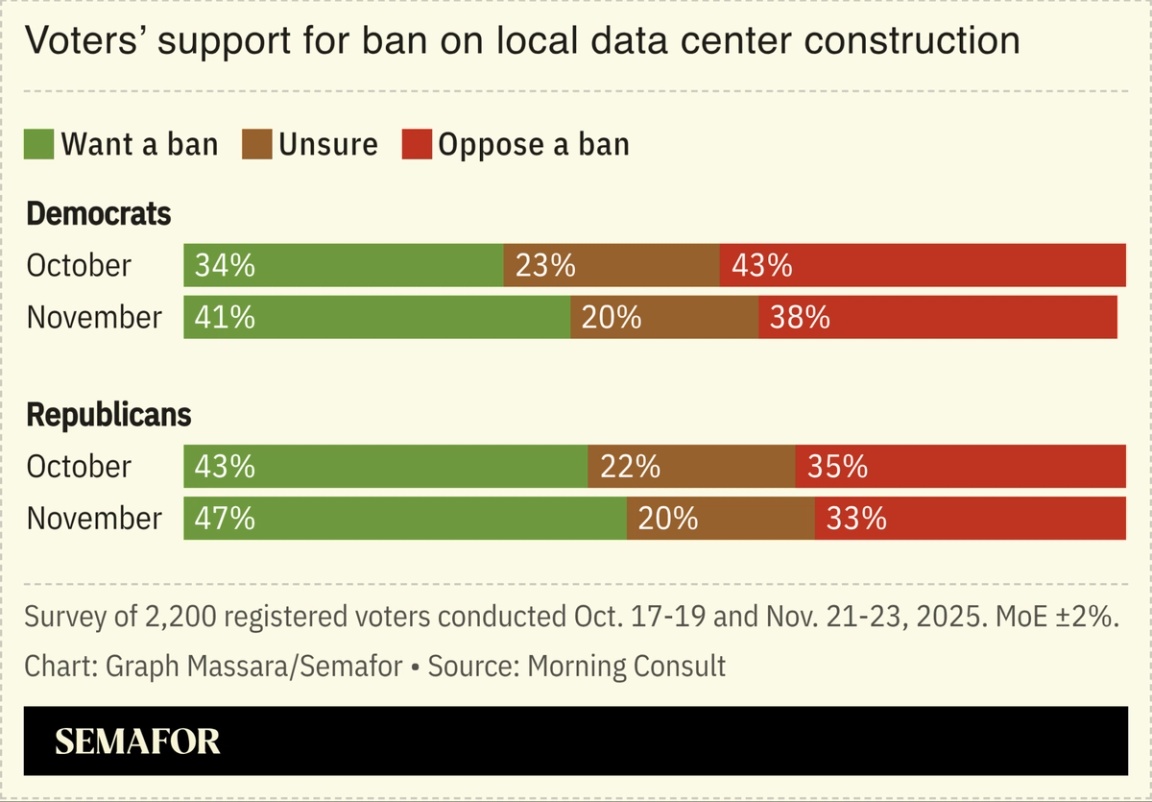 Nvidia is investing $2 billion in cloud computing provider CoreWeave to boost the buildout of data centers, which are set to become a central political focus in the US this year. Some of the country’s largest data center operators plan to boost spending in an attempt to lobby lawmakers and affected communities to back the projects, which have faced heavy resistance over accusations that they drive up energy prices and use too much water. At least 25 projects were canceled last year following local opposition, Heatmap News reported. Another two dozen were blocked or delayed just this month, according to research firm MacroEdge. A populist backlash to data centers could play out in this year’s midterm elections across partisan lines, analysts say. |
|
World order driven by ‘personalist’ leaders |
 Evelyn Hockstein/Reuters Evelyn Hockstein/ReutersUS President Donald Trump’s foreign policy moves are rooted in his “personalist” leadership — a trait shared by the leaders of China and Russia, two political scientists wrote in Foreign Affairs. Personalist leaders, they argued, are “driven purely by their own private fixations and incentives rather than coherent national interests.” The US’ ouster of Nicolás Maduro, for instance, was partly motivated by the Venezuelan leader’s mockery of Trump. Chinese leader Xi Jinping, who recently purged his top general, and Vladimir Putin, whose obsession with revisionist Russian history underpinned his Ukraine invasion, have similarly hoarded authority. While a disregard for norms might sometimes offer surprise diplomatic wins, “a world led by personalist great powers will not aid global stability,” the experts wrote. |
|
Chinese AI apps turn to cash handouts |
 A Baidu booth at a tech expo. Go Nakamura/Reuters A Baidu booth at a tech expo. Go Nakamura/ReutersChinese AI apps are turning to cash handouts to attract new users, the latest sign of the country’s hyper-competitive tech landscape. Tech giants Baidu and Tencent are both offering virtual “red envelopes” as signup incentives — a nod to the cash gifts given to loved ones during Lunar New Year. AI apps have emerged as the next frontier in the country’s tech arms race, as firms rush to inject their chatbots with shopping and payment tools. It reflects China’s focus on widespread AI adoption: Companies are prioritizing proliferation over profitability. AI business models in China “still haven’t been figured out,” a Trivium China analyst argued on a recent podcast. Consumer-facing apps “do have subscriptions, but nobody’s paying for them.” |
|
 Carlos Hank González, Chairman, Grupo Financiero Banorte, is joining the Semafor World Economy Global Advisory Board — a forum of visionary business leaders guiding the largest gathering of global CEOs in the US. The expanded board represents nearly every sector across the US and G20. Joining the Advisory Board at this year’s convening will be our inaugural cohort of Semafor World Economy Principals — an editorially curated community of innovators, policymakers, and changemakers shaping the new world economy with front-row access to Semafor’s world-class journalism, meaningful opportunities for dialogue, and touchpoints designed for connection-building. Applications are now open here. |
|
High prices drive hunt for copper |
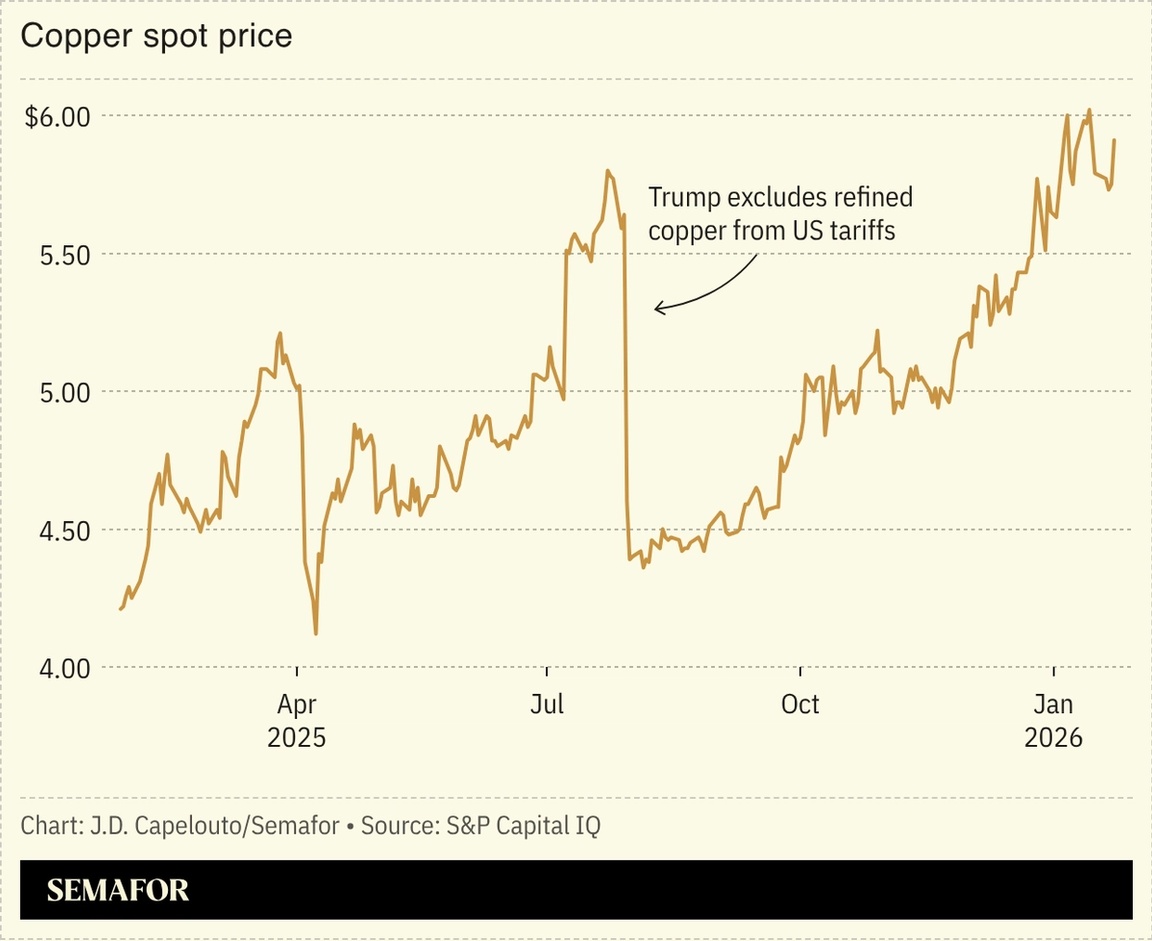 The rising price of copper is making miners turn to previously uneconomic means of extraction. Using bacteria to turn low-grade ore into copper has been possible for decades, but when the metal was plentiful and in low demand, it made little economic sense. Now, with futures prices above $13,000 a tonne, Rio Tinto and other mining groups are turning to that and other methods to extract copper from low-purity sources. Efforts to salvage copper from waste material ejected from mines could also allow old sites to become “an important additional source of copper as demand soars and supply dwindles,” one mining executive told the Financial Times. Copper is vital in energy infrastructure, and new sources of supply are not keeping up. |
|
Shingles shot could cut dementia risk |
 Kevin Lamarque/Reuters Kevin Lamarque/ReutersNew research reinforced the evidence that the shingles vaccine protects against dementia. Previous research had suggested that it could reduce the risk of Alzheimer’s by around 20%; two new studies found similar results. The finding has now been seen in four countries in studies spanning 20 years and millions of people. The research used “natural experiments” — the vaccine was rolled out at different times in regions within the countries studied, allowing comparisons between those who had it earlier and later. The new findings support the idea that the vaccine is protective, the physician Eric Topol wrote, a significant development: If a drug was found that reduced Alzheimer’s risk by 20%, “it would be considered a major breakthrough.” |
|
|


