The varying fortunes of U.S. tech giants amid their AI spending splurge became apparent on Wednesday as the megacap earnings releases got underway.
While Meta’s stock surged as much as 10% overnight on plans for a whopping 73% increase in capital spending this year, Microsoft fell back more than 6% on disappointing results from its cloud computing business.
Tesla was up 2% as it switched focus from ebbing EV sales to AI spending and robotaxis. Apple reports later on Thursday.
As expected, the Federal Reserve left rates unchanged on Wednesday, with Chair Jerome Powell citing a “clearly improving” economic outlook and sounding relaxed about labor market strains and above-target inflation. He indicated that any renewed easing likely wouldn’t come until mid-year, lobbing the ball into his successor’s court as he approaches the end of his term as chair in May.
Powell remained tight-lipped with reporters when asked about his future and the criminal probe launched by the Trump administration.
Long-term Treasury yields continue to nudge higher, however, with attention turning to rising oil prices. Crude benchmarks rose more than 1% on Thursday on fresh U.S.-Iran military tensions. President Trump on Wednesday threatened Iran with a “far worse” attack if it does not make a deal on nuclear weapons, prompting a firm response from Tehran, which said it would retaliate “like never before” to any U.S. action.
Trump is reportedly weighing options for targeted strikes against Iranian leaders and security forces to inspire renewed protests – with the objective, according to two U.S. sources, of creating conditions for “regime change”. One source noted that Trump has not yet made a final decision on military action.
Meantime, precious metals continued their stratospheric rise on Thursday, with gold nearing $5,600 per ounce and silver touching $120 per ounce. Gold prices have risen over $1,000 so far in January.
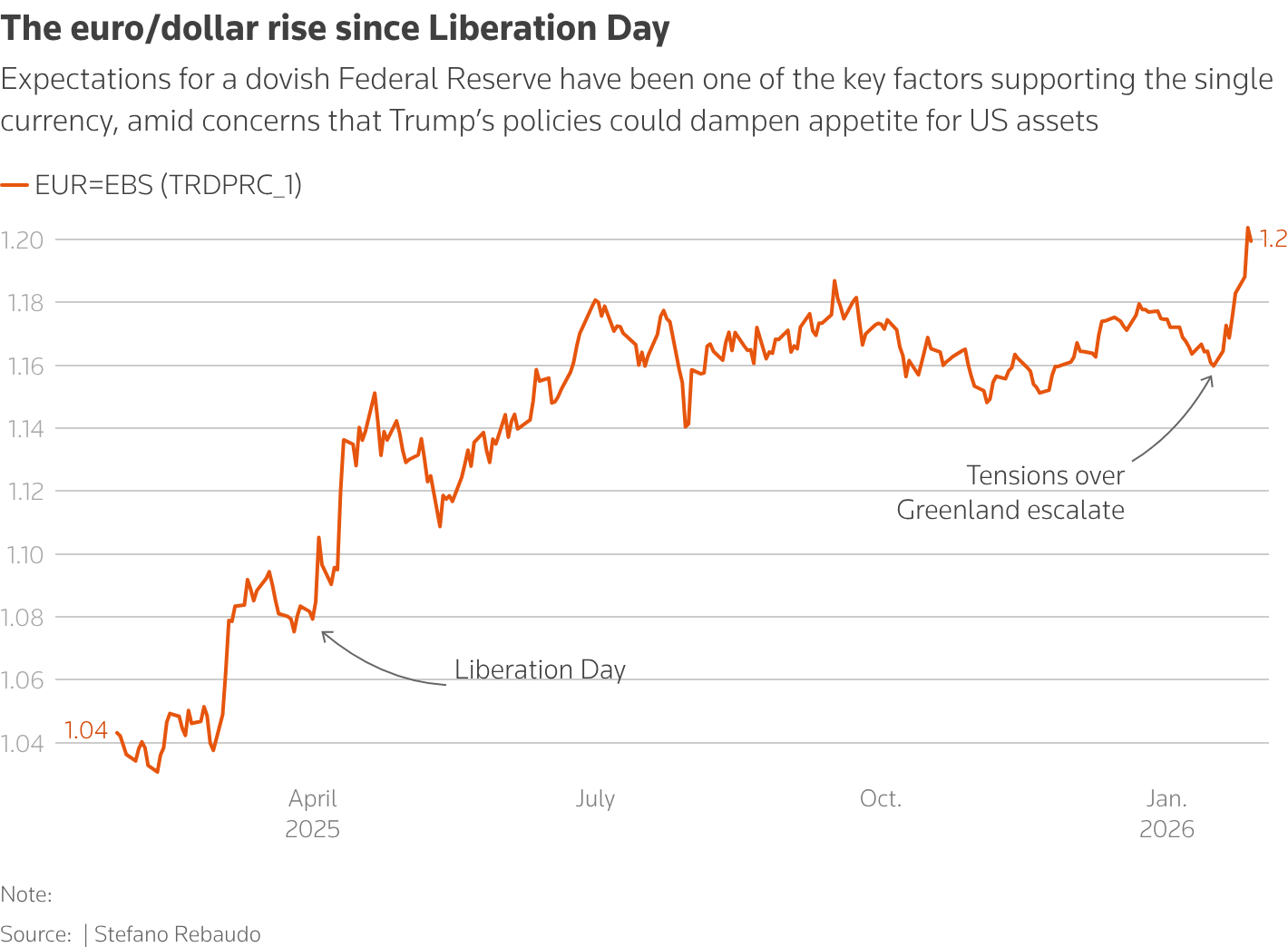
Both oil and gold are also supported by this week's plunge in the dollar across the world, with the greenback ebbing again on Thursday despite Treasury Secretary Scott Bessent's restatement of the U.S. government's slightly ambiguous “strong dollar” policy yesterday.