| | Trump to nominate Warsh for Fed chair, Panama cancels Hong Kong firm’s contracts, US cuts put malari͏ ͏ ͏ ͏ ͏ ͏ |
| |  Panama City Panama City | Maputo |  Svalbard Svalbard |
 | Flagship |  |
| |
|
The World Today | 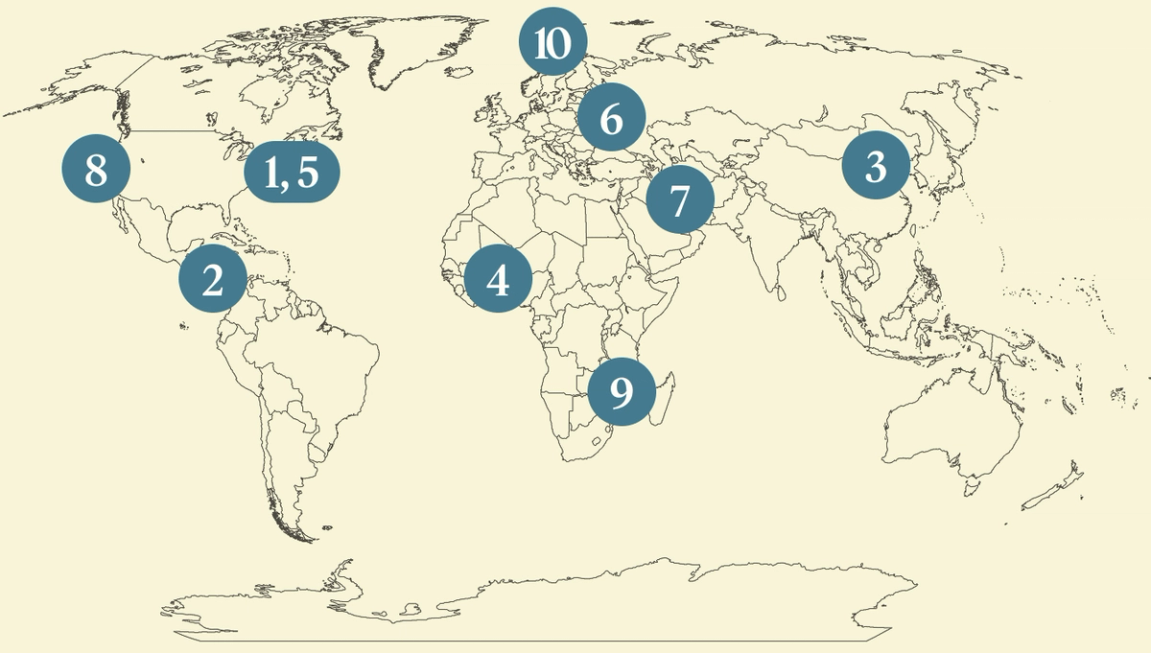 - Trump’s Fed chair pick
- Panama Canal contract ends
- Trump warns Canada, UK
- US cuts hit malaria fight
- US shutdown deal close
- Russia strikes may pause
- Gulf states’ Iran diplomacy
- Apple’s record iPhone sales
- Mozambique gas progress
- Polar bears getting fatter
 A 1977 Fela Kuti track that is ‘one of the greatest pieces of dance music ever recorded.’ |
|
Trump to nominate new Fed chair |
 Kevin Warsh. Brendan McDermid/File Photo/Reuters Kevin Warsh. Brendan McDermid/File Photo/ReutersUS President Donald Trump is expected to nominate Kevin Warsh, a former Federal Reserve governor, to helm the central bank, but the confirmation still faces political hurdles. Treasury yields rose on bets that Warsh would not maintain a campaign of interest rate cuts. Despite having argued for reductions recently, “Warsh has a long hawkish history that markets have not forgotten,” one analyst told Bloomberg. The likely selection has consequences beyond monetary policy: Trump’s pressure on the Fed — he has sought to fire one governor and his administration has launched a criminal investigation into current chair Jerome Powell — has threatened to erode the bank’s independence, with one senator pledging to block any Fed appointments until the Powell probe is resolved. |
|
Panama canal contract up for grabs |
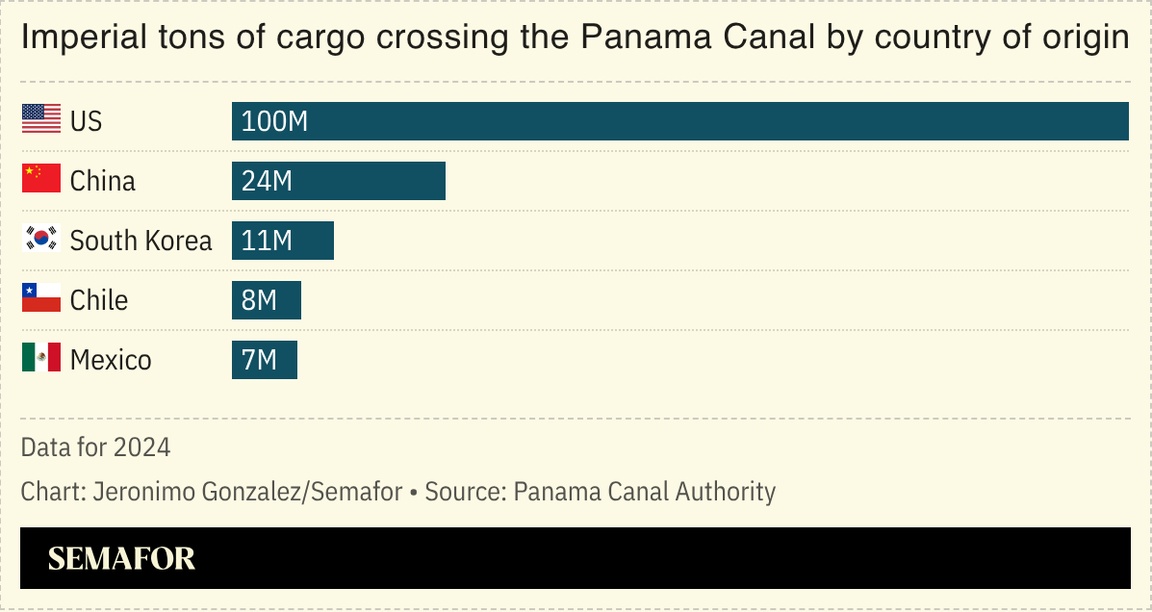 Panama’s Supreme Court cancelled a contract for a Hong Kong firm to run ports along the country’s canal, dealing a blow to Beijing and boosting Washington’s efforts to reassert influence in Latin America. US President Donald Trump has repeatedly vowed to “take back control” of the key shipping route, which he asserts is controlled by Beijing. The ports will now be re-tendered, a move that cancels CK Hutchison’s 25-year contract. Though the Trump administration has recently ramped up its interest in Latin America — part of its push for control of the Western hemisphere — China remains the region’s biggest trading partner, recently boosting trade ties with some of Washington’s closest regional allies. |
|
Trump slams allies over Beijing ties |
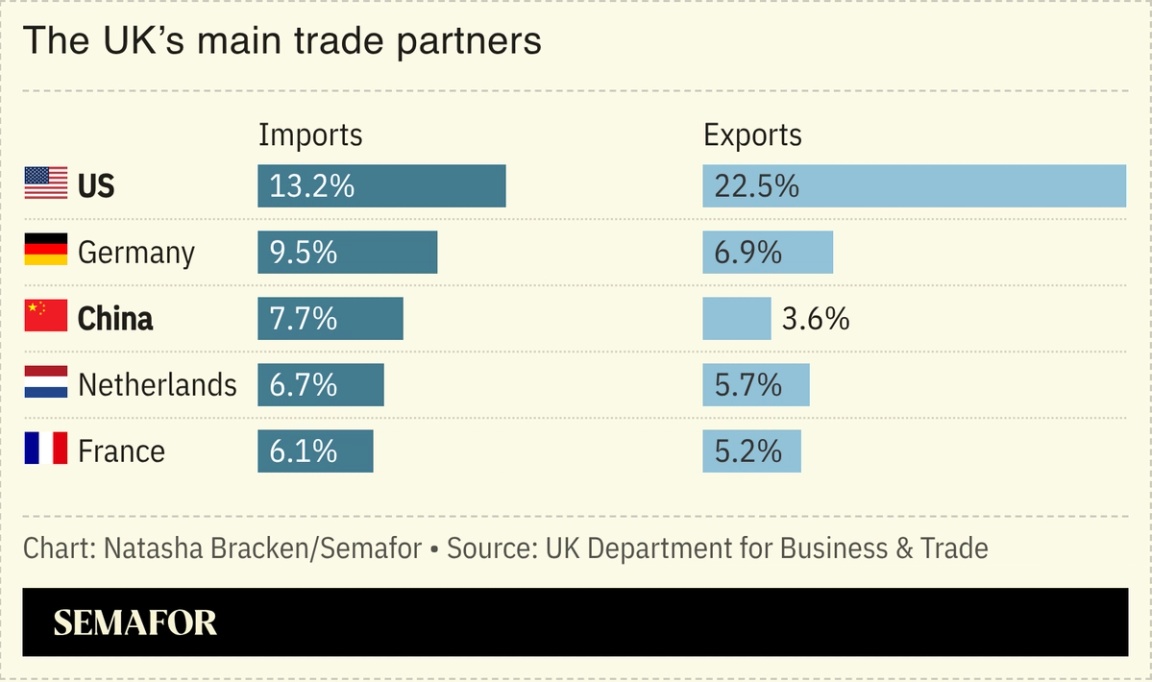 US President Donald Trump threatened Britain and Canada over their deepening of relations with China, after both countries’ leaders struck deals during recent trips to Beijing. Trump warned Britain’s prime minister that it was “very dangerous” to strengthen ties with China, and announced restrictions on Canadian aircraft sales to the US, starkly illustrating — despite insistence from London and Ottawa that they need not choose between Beijing and Washington — that he believes they must. The two countries are among a string of traditional US allies, including Finland, Germany, and South Korea, whose leaders have visited China in recent weeks or are set to soon, underscoring how they are seeking to diversify ties and reduce dependence on an increasingly unpredictable Washington. |
|
US cuts threaten malaria fight |
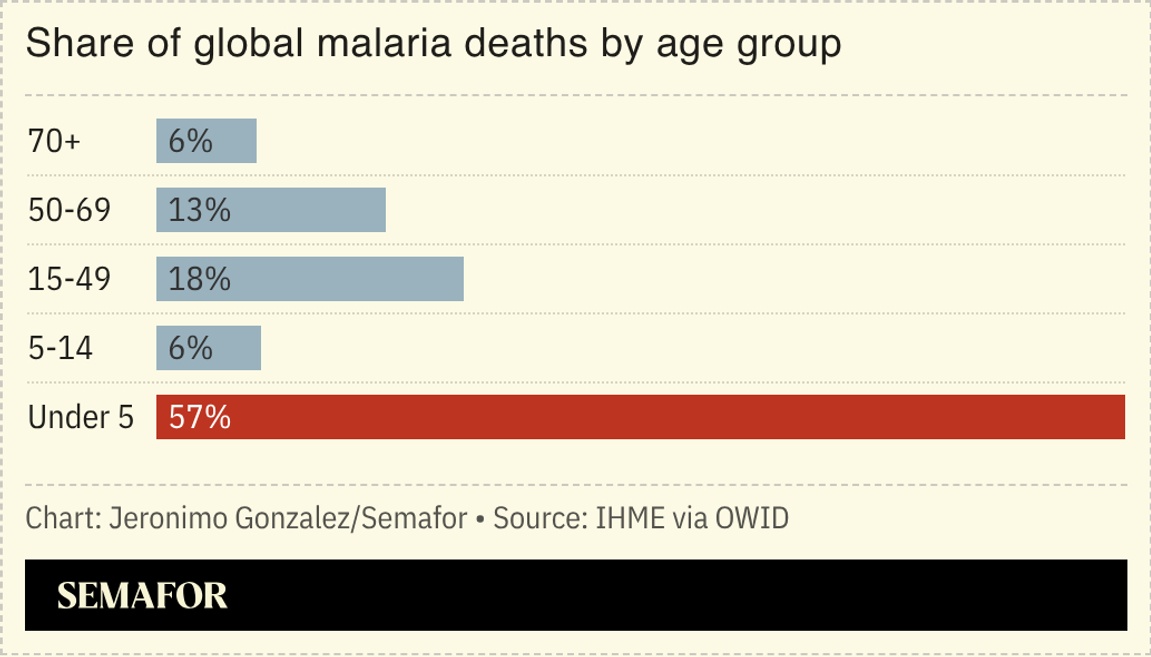 Washington’s cut to funding for a global vaccine alliance could undo decades of progress in the fight against malaria, just as several African nations approach eradicating the disease. Last year, US Health Secretary Robert F. Kennedy Jr. reduced support to the Gavi alliance over what he said was a preservative used in the anti-malaria shots, alleging it causes autism; studies show there are no such links. Resulting lower vaccination rates could cost 19,000 lives, Gavi said, including in countries such as Ghana where malaria has nearly been wiped out. The situation “could get worse,” said Bill Gates — whose foundation is one of Gavi’s biggest backers — with low-income nations scrambling to respond to “the fastest decrease in the history of foreign aid.” |
|
Scramble to avoid US shutdown |
 US Senate minority leader Chuck Schumer. Nathan Howard/Reuters US Senate minority leader Chuck Schumer. Nathan Howard/ReutersUS lawmakers advanced a last-minute, short-term deal to avert a partial government shutdown, although the compromise could still collapse ahead of tonight’s midnight deadline. Senate Democrats are unwilling to fund immigration enforcement after agents killed two protesters in Minneapolis, insisting the Department of Homeland Security’s budget be separated from the wider spending bill. Senators agreed to fund the government until September, but the DHS for just two weeks. President Donald Trump engaged directly in negotiations, Republicans told Semafor, having explicitly said he didn’t want a shutdown. But the bill may struggle to pass the House, and the two-week window to reach agreement on the DHS is tight: Democrats want sweeping changes to immigration enforcement, which Republicans are unlikely to accept. |
|
Trump says Russia will pause attacks |
 Thomas Peter/File Photo/Reuters Thomas Peter/File Photo/ReutersUS President Donald Trump said his Russian counterpart Vladimir Putin agreed not to attack Kyiv and other Ukrainian cities during an ongoing period of “extraordinary cold”. Temperatures in Ukraine are expected to hit -24°C (-11°F) this weekend; Russian attacks have left millions without heating. Moscow acknowledged Trump’s request but did not say whether it had accepted; Ukrainian President Volodymyr Zelenskyy nevertheless welcomed the apparent deal, and the BBC reported that Kyiv agreed to its own pause in response. The partial truce, if real, may be shaky: Air raid alerts went off in four Ukrainian regions Thursday night, and in any case, Kyiv and Moscow are far apart “on everything that matters” when it comes to a prolonged peace, Politico said. |
|
Arab states seek to avert Iran strikes |
 US Navy/Mass Communication Specialist Seaman Apprentice Daniel Kimmelman/Reuters US Navy/Mass Communication Specialist Seaman Apprentice Daniel Kimmelman/ReutersArab states were working to avert US strikes on Iran, with Washington bellicose and Tehran unwilling to look weak. A US carrier is in the Gulf, and President Donald Trump has threatened strikes, initially over Iran’s deadly crackdown on protests, and now over its nuclear program; Iran considers US conditions “akin to surrender,” the Financial Times reported. Oman, Qatar, and the UAE are engaged in frantic diplomacy, warning Trump that an attack could trigger broader conflict. Tehran is vulnerable after Israeli and US attacks, along with unrest, drought, and economic instability. Trump “likes low-cost, high-impact operations,” an analyst told The New York Times, but a conflict in the Gulf could drag on; in Iran, “he could do high impact,” but not low cost. |
|
 On this week’s Mixed Signals, Bell Media CEO Sean Cohan joins Ben and Max to unpack the success of Heated Rivalry and how the gay Canadian hockey romance series became an overnight cultural sensation amidst Hollywood’s heralded vibe shift, as major production companies in the US have increasingly catered to broader or more conservative tastes. Cohan also talks about Bell’s strategy of using licensing deals to reach new audiences, the enduring power of a well-told romance, and why Canadian storytelling is only getting started on the global stage. Listen to the latest Mixed Signals now. |
|
Apple reports record iPhone sales |
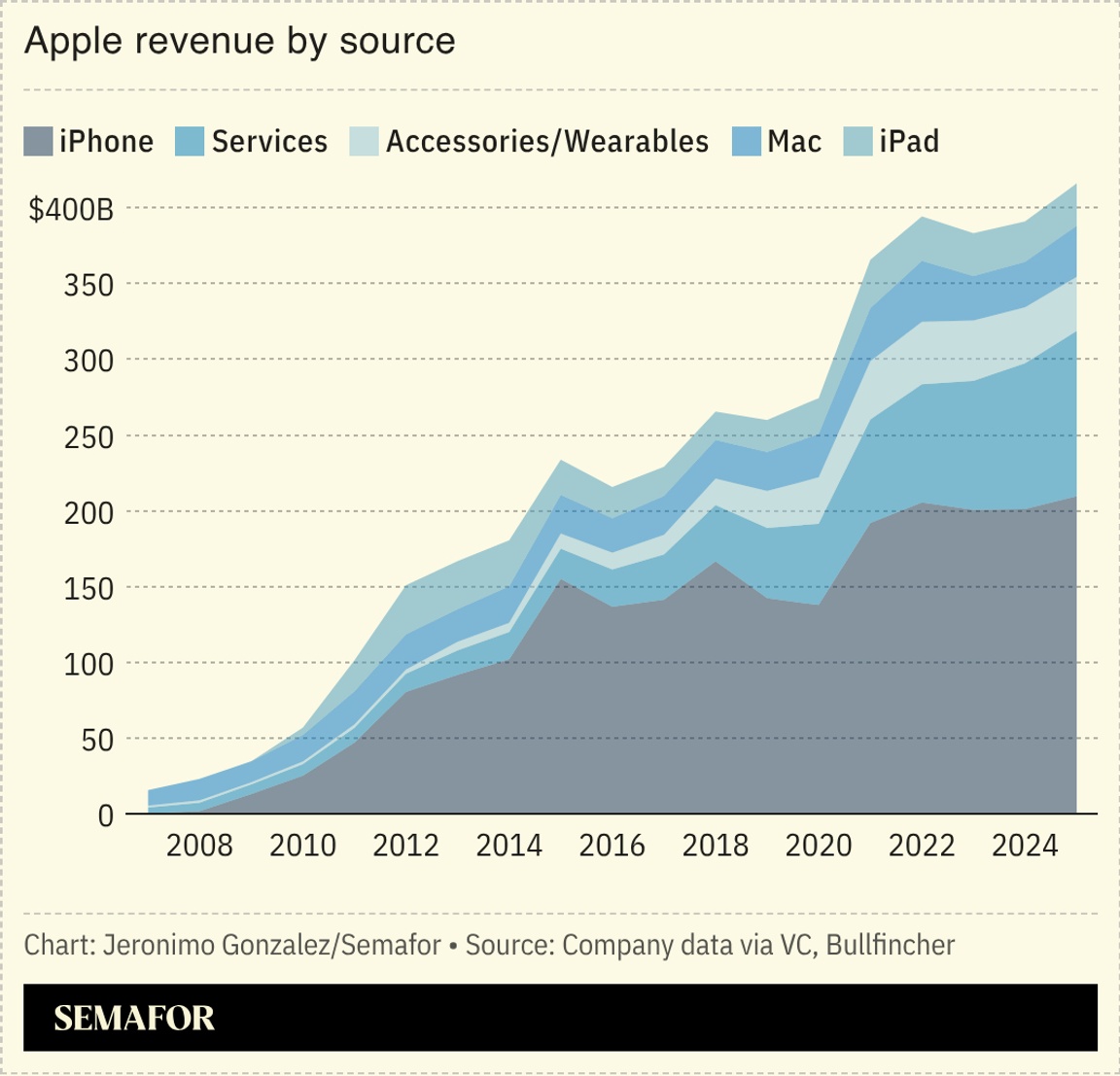 Apple reported its best-ever iPhone sales — due largely to growth in China — but its shares stayed flat as investors worried about rising costs. The $85.1 billion income for its flagship phone was “staggering,” CEO Tim Cook said, with overall revenues up 16% from the previous year, beating expectations. Results were particularly strong in China, where sales surged 38%. But AI companies are rapidly purchasing chips, which Apple, the world’s biggest semiconductor buyer, badly needs, meaning suppliers have leverage to raise prices, The Wall Street Journal reported. Apple is expected to eat the cost increases itself, but that, along with increased tariffs, could mean lower profits on the horizon. |
|
Mozambique gas projects resume |
 Mozambique and French oil giant TotalEnergies agreed to restart a $20 billion natural gas project thanks to improving security in the African nation. Construction was halted in 2021 following a spate of Islamist attacks along Mozambique’s coast, home to some of the world’s largest gas reserves. Another project led by ExxonMobil was also paused five years ago, but is now also slated to begin construction after a deployment of Rwandan soldiers weakened the militias. Progress at either site could be a boon for the country, where almost 80% of the population lives in poverty: The projects have “raised hopes that Mozambique… could become an African version of wealthy Qatar,” AFP reported. |
|
|


