Policy changes, but facts endure. AP delivers accurate, fact-based journalism to keep the world informed in every administration. Support independent reporting today. Donate.
|
|
|
In the news today: Time is running short for a deal to avoid a partial government shutdown; privacy concerns over the Trump administration’s arsenal of digital surveillance tools; and big moves by Venezuela and the U.S. that clear the path for American energy companies. Also, when you’ll get your IRS tax refund. |
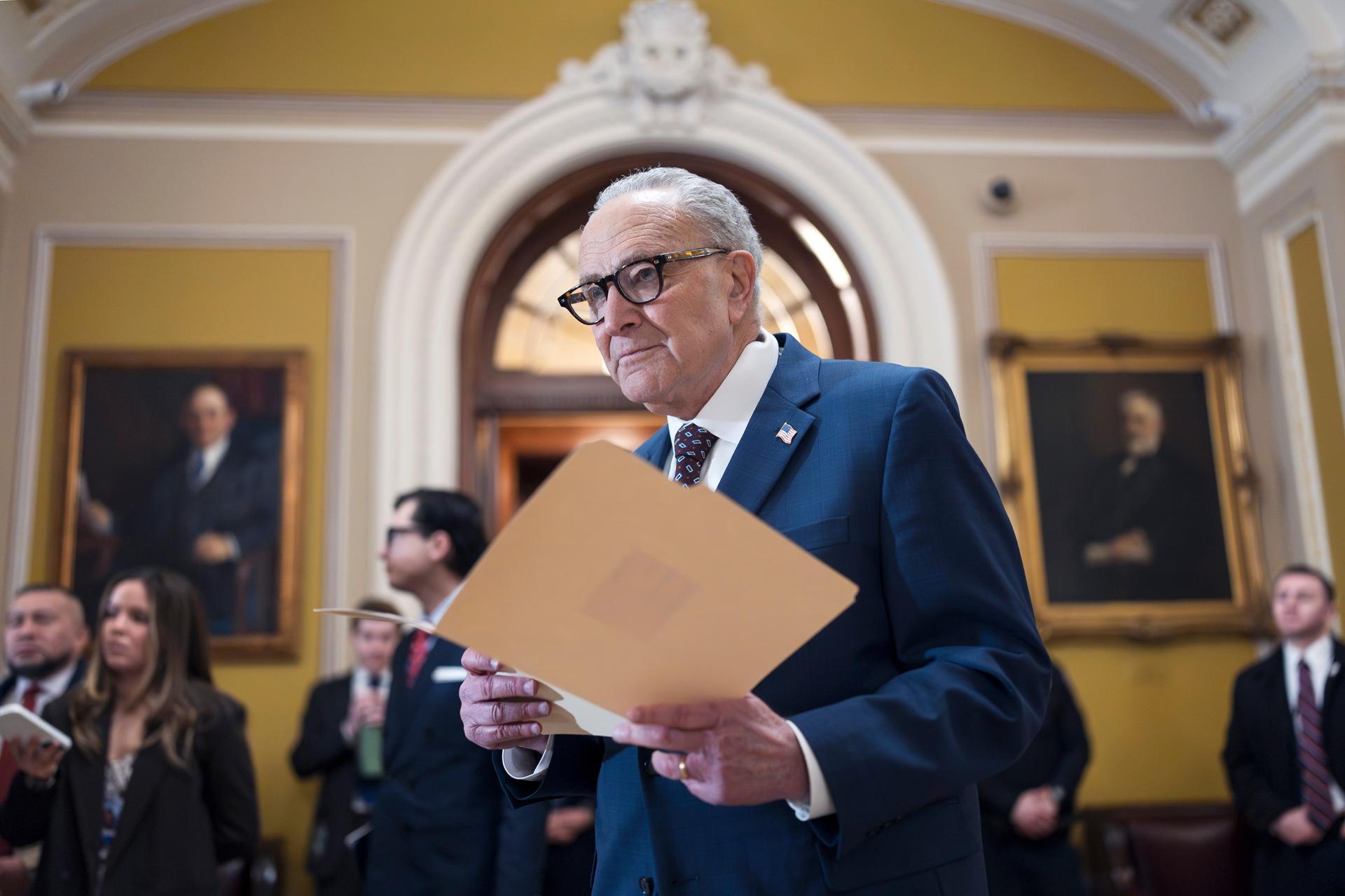
Senate Minority Leader Chuck Schumer, D-N.Y., waits to speak to reporters following a closed-door meeting with fellow Democrats on spending legislation, at the Capitol in Washington, Wednesday. (AP Photo/J. Scott Applewhite, File) |
Senate leaders scramble to avert partial government shutdown |
Senate leaders were working to win enough support for a bipartisan spending deal that would prevent a partial government shutdown at midnight Friday as Democrats have demanded new restrictions on federal immigration raids across the country. Read more. |
|
|
-
The standoff has threatened to plunge the country into another shutdown, just two months after Democrats blocked a spending bill over expiring federal health care subsidies. That dispute closed the government for 43 days as Republicans refused to negotiate.
Democrats struck a rare deal with President Donald Trump on Thursday to separate funding for the Homeland Security Department from a broad government spending bill and fund it for two weeks, while Congress debates curbs on the U.S. Immigration and Customs Enforcement agency. The deal came as irate Democrats had vowed to vote against the entire spending bill and trigger a shutdown in the wake of the deaths of two protesters at the hands of federal agents in Minneapolis.
- But supporters of the deal need to round up enough votes to pass it. Trump encouraged members of both parties to cast a “much needed Bipartisan ‘YES’ vote.” Senate Majority Leader John Thune said there were “snags on both sides.”
|
|
|
How a digital dragnet is powering Trump’s immigration crackdown |
Across Minnesota and other states where the Department of Homeland Security has surged personnel, officials say enforcement efforts are targeted and focused on serious offenders. But photographs, videos and internal documents paint a different picture, showing agents leaning heavily on biometric surveillance and vast, interconnected databases — highlighting how a sprawling digital surveillance apparatus has become central to the Trump administration’s immigration crackdown. Read more.
|
|
|
Over the past year, Homeland Security and other federal agencies have dramatically expanded their ability to collect, share and analyze people’s personal data, thanks to a web of agreements with local, state, federal and international agencies, plus contracts with technology companies and data brokers. Civil liberties experts warn the expanding use of those systems risks sweeping up citizens and noncitizens alike, often with little transparency or meaningful oversight.
When asked by The Associated Press about its expanding use of surveillance tools, the Department of Homeland Security said it would not disclose law enforcement sensitive methods. “Employing various forms of technology in support of investigations and law enforcement activities aids in the arrest of criminal gang members, child sex offenders, murderers, drug dealers, identity thieves and more, all while respecting civil liberties and privacy interests,” it said.
|
|
|
Venezuela’s acting president signs oil industry overhaul, easing state control to lure investors |
Venezuela’s acting President Delcy Rodríguez on Thursday signed a law that opens the nation’s oil sector to privatization, reversing a tenet of the self-proclaimed socialist movement that has ruled the country for more than two decades. Read more. |
|
|
Venezuela has the largest proven reserves of crude in the world. The reform will undoubtedly be her government’s signature policy as it positions the oil sector – Venezuela’s engine – to lure the foreign investment needed to revamp a long-crippled industry. Rodríguez enacted the measure less than a month after the brazen seizure of then President Nicolás Maduro in a U.S. military attack in Venezuela’s capital, Caracas.
At the same time, the U.S. Department of the Treasury officially began to ease punishing economic sanctions on Venezuelan oil and expanded the ability of U.S. energy companies to operate in Venezuela. Rodríguez on Thursday spoke with President Donald Trump and Secretary of State Marco Rubio, who a day earlier explained to U.S. senators in a hearing how the administration is planning to handle the sale of tens of millions of barrels of oil from Venezuela and oversee where the money flows.
|
|
|
|