| |  | | | | |  | By Megan R. Wilson | Did someone forward this newsletter to you? Sign up here to get it in your inbox. In today’s issue: Measles outbreaks continue to spread in the new year. … A new president for UsAgainstAlzheimer’s. … And, what’s happening in health care on Capitol Hill. It’s Groundhog Day, and this is the Health Brief newsletter. The clairvoyant rodent has determined we’ve got six more weeks of winter. I’m not ready. → Today’s must-read is my Washington Post colleague David Ovalle’s story about Florida rolling back access to free HIV drugs — a program that’s helped save lives. Please send story tips and health policy intel to megan.wilson@washpost.com. If you prefer to message me securely, I’m also on Signal at megan.434. This newsletter is published by WP Intelligence, The Washington Post’s subscription service for professionals that provides business, policy and thought leaders with actionable insights. WP Intelligence operates independently from the Washington Post newsroom. Learn more about WP Intelligence. | 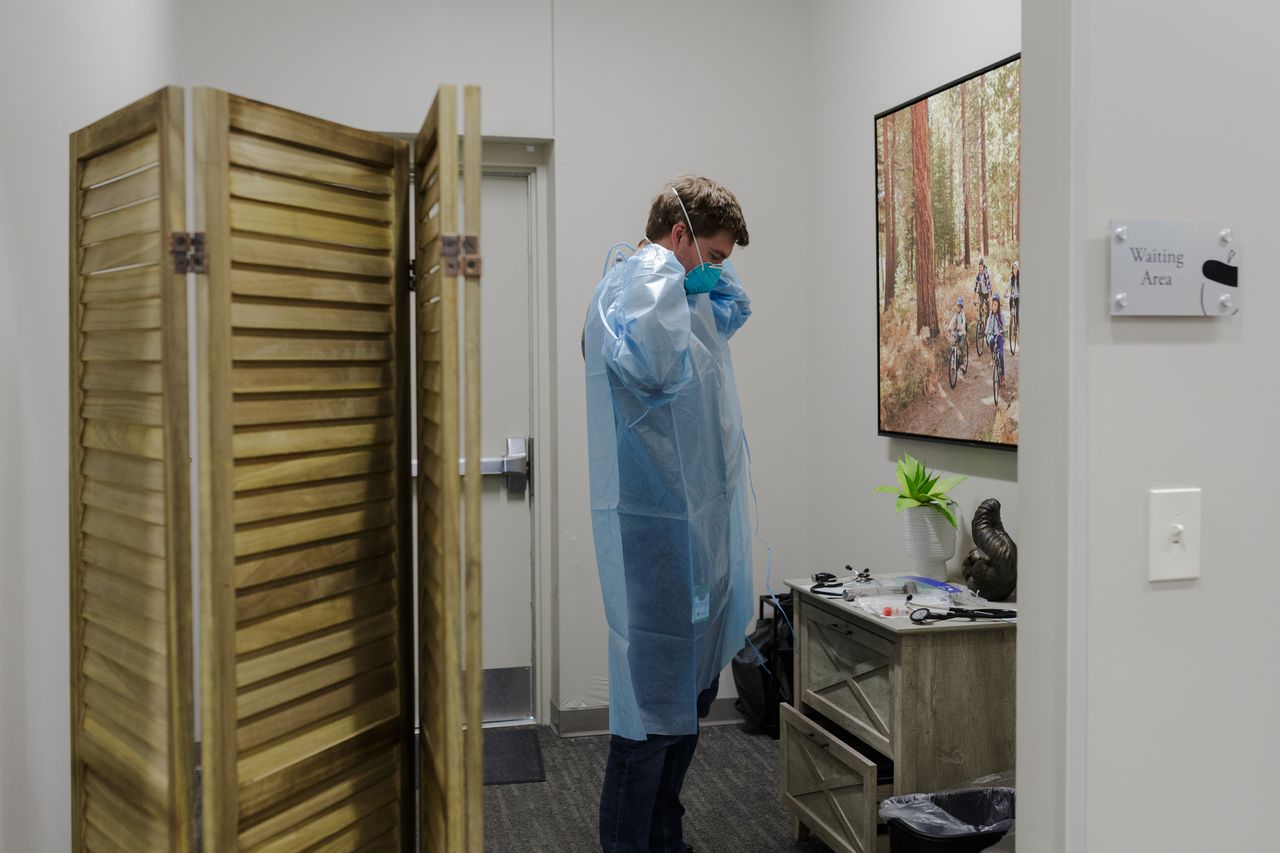 | | A provider in Spartanburg, South Carolina dresses in full PPE gear to asses a patient with measles symptoms. (Juan Diego Reyes/For the Washington Post) | | | |  | The Lead Brief | There were 588 new measles cases reported throughout the U.S. in January, including 14 new cases last week, according to updated data from the Centers for Disease Control and Prevention. Almost all of those cases — 94 percent — occurred in people who were unvaccinated. → Much of the transmission is being driven by an outbreak in South Carolina, where childhood vaccination rates are below the 95 percent needed for herd immunity, as the number of religious exemptions from school-age vaccinations grow. The South Carolina Department of Public Health reported 58 new cases of measles in the state last week, more than logged by the CDC. This brings the total cases in the state to nearly 850 since the outbreak began in October. Hundreds of people are in quarantine to avoid spreading the highly contagious illness. → Read the latest report from The Post’s Lena H. Sun, who wrote about the potential impact South Carolina’s measles outbreak could have on the rest of the country. New cases appear to be declining, she notes, suggesting that the virus may be running out of unvaccinated people to infect. The outbreak began in Spartanburg County, an area that public health officials say has long had lower childhood vaccination rates than much of the state. Lena reports that the number of students in the county who received a religious exemption had more than tripled from the 2018-2019 school year to the 2025-2026 school year. | 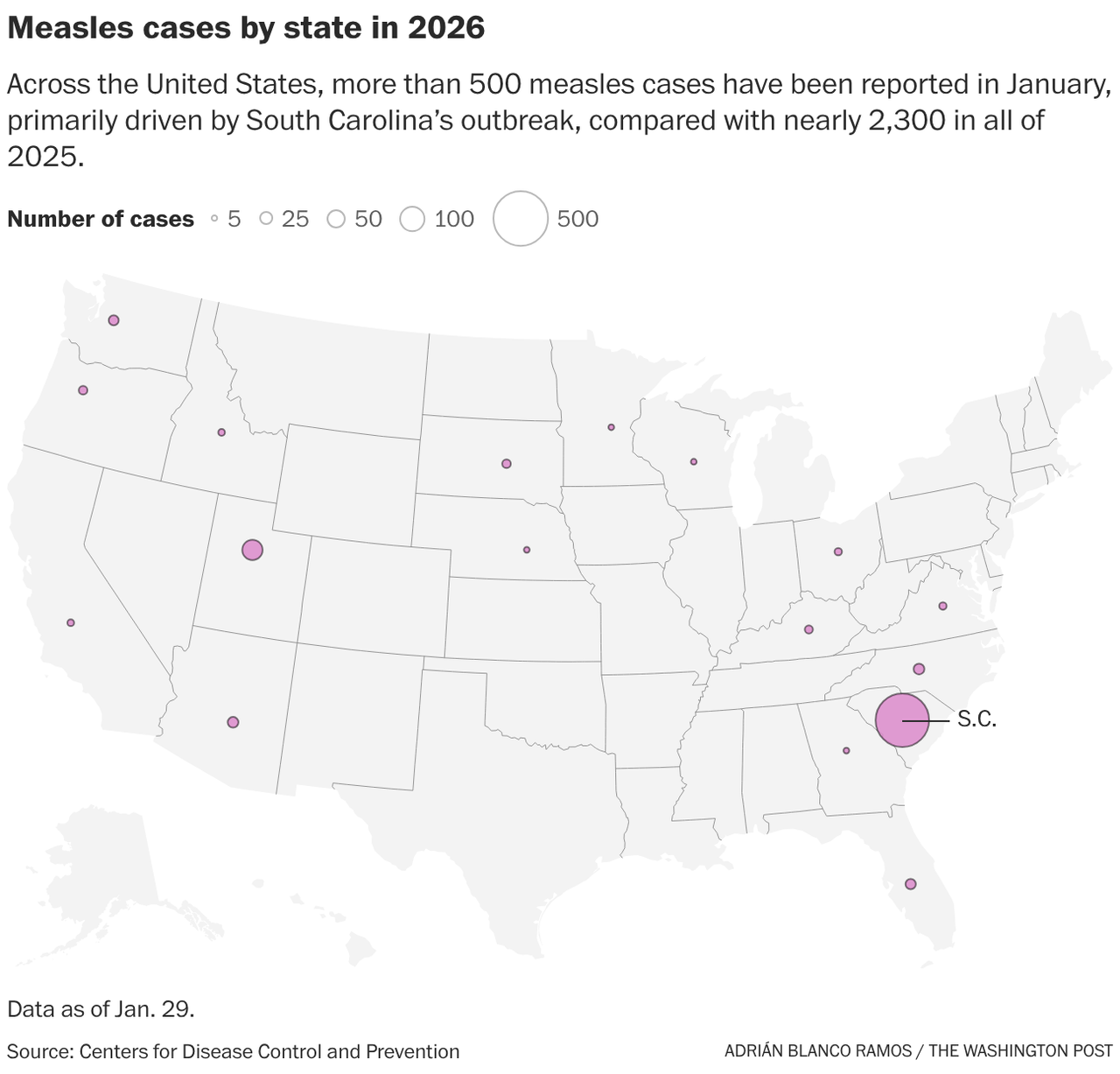 | | However, federal data show that school-age measles vaccination rates for at least 39 states is below the 95 percent herd immunity threshold, which could increase the risk of the virus traveling to surrounding states — including the metropolitan areas around Atlanta, Memphis and Nashville. Outbreaks in those comparable southern regions would be “terrifying,” Scott Thorpe, a former South Carolina health department epidemiologist, told Lena. Kentucky, Tennessee, North Carolina, Georgia and Florida all have sub-95 percent measles vaccination rates. Elsewhere in the country, Oregon and Illinois also have vaccination rates below the herd immunity threshold. - In Washington state, three members of a South Carolina family visited King and Snohomish counties while infectious, leading to three cases there. Washington has a 90.9 percent measles vaccination rate, according to the CDC.
- The South Carolina outbreak has also been traced to cases in neighboring North Carolina.
- In California, an unvaccinated child became ill after visiting South Carolina, according to the Napa County health department. It was the county’s first case since 2012.
- Additional exposures have occurred in Kentucky, Florida, Georgia and Texas, according to a report from HealthBeat that cites internal South Carolina government records obtained via an open records request.
→ Measles can cause fatal pneumonia, long-term complications and damage the immune system, leaving the person vulnerable to other diseases. In 2025, the number of reported measles cases reached nearly 2,300 — more than the prior three years combined. At least 244 people were hospitalized last year due to measles and three people died, according to the CDC. Before that, there hadn’t been a measles death in the U.S. since 2015. | 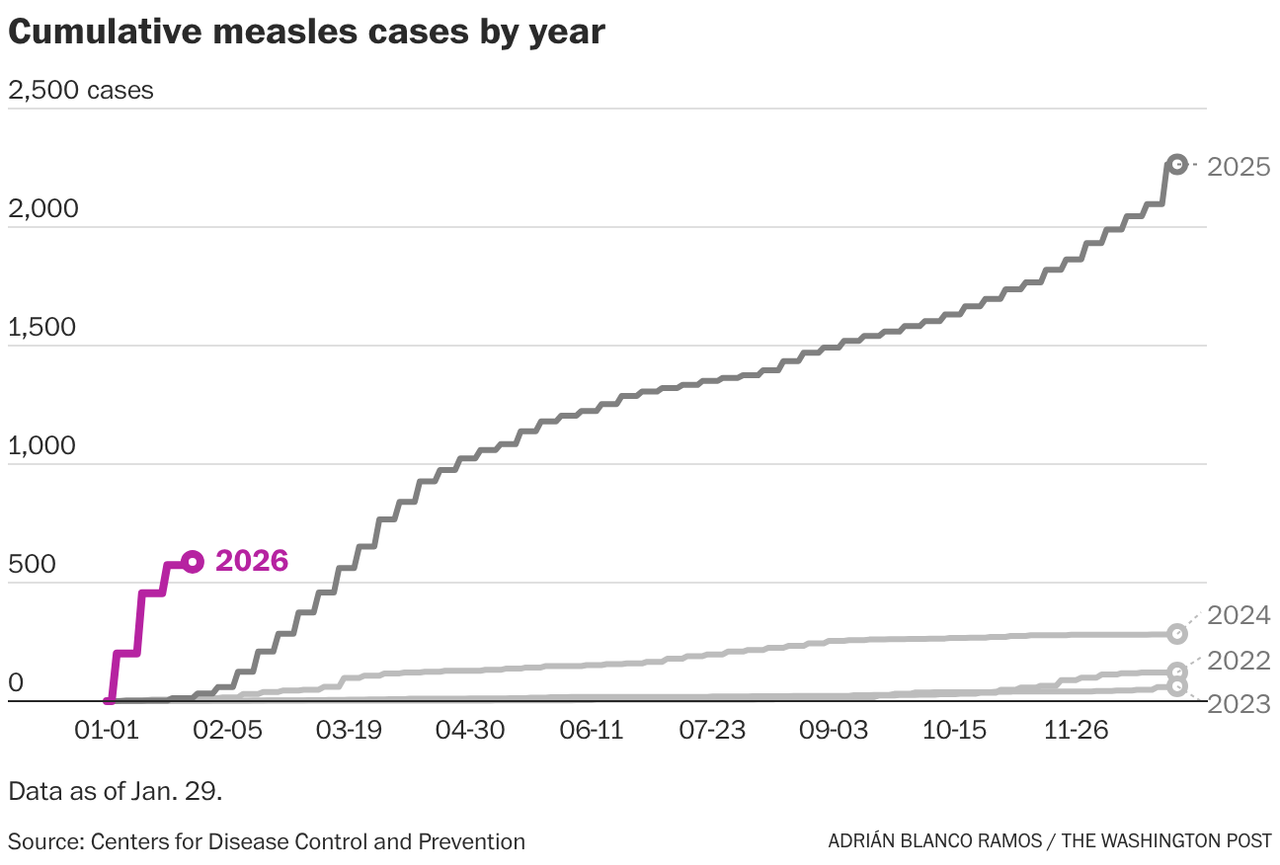 | | “It’s just the cost of doing business," Ralph Abraham, the No. 2 at the CDC, recently told reporters regarding the potential loss of measles elimination status. He pointed to the amount of international travel by Americans. “We have these communities that choose to be unvaccinated; that’s their personal freedom,” he said, while acknowledging that vaccination is the best way for people to prevent measles. He said that leaders — including President Donald Trump and Health Secretary Robert F. Kennedy Jr. — “talk all the time about religious freedom, health freedom, personal freedom, and I think we have to respect those communities that choose to go somewhat of a different route.” | | | | | | Jobs Report | FIRST IN HEALTH BRIEF: Russ Paulsen has been named the new president of patient group UsAgainstAlzheimer’s. Paulsen, who has been with the organization since 2019, will continue serving as its chief operating officer. He will guide the group’s work on strategizing efforts surrounding prevention and early detection of the disease, in addition to expanding treatment access. Paulsen will also manage the UsAgainstAlzheimer’s advocacy portfolio. Last year, UsAgainstAlzheimer’s Action, an associated 501(c)(4) group, spent $300,000 on lobbying the federal government, according to disclosures, including to push for increased research into Alzheimer’s disease and Medicare coverage for “certain standardized tests for cognitive impairment detection.” Why it matters: An estimated 7.5 million Americans are living with Alzheimer’s, the most common type of dementia. It’s the sixth-leading cause of death for Americans age 65 and older, according to the CDC — although the figures could be an undercount, as Alzheimer’s and dementia are not always included on death certificates. → During Paulsen’s tenure as UsAgainstAlzheimer’s COO, he helped create the United for Cures coalition of patient groups to support biomedical research and push back against cuts at the National Institutes of Health and Food and Drug Administration. The organization credits Paulsen with helping it quadruple in size and grow its revenue. Tax forms show that revenue at UsAgainstAlzheimer’s increased to about $10.5 million in 2024, compared to $7.8 million in 2019. The group also has launched patient-centered efforts that provide people with resources to manage their own or a family member’s brain health. George Vradenburg, the co-founder and CEO of UsAgainstAlzheimer’s, said he’ll be partnering with Paulsen to “[build up] UsAgainstAlzheimer’s to new levels of growth and impact.” | | | | | | Health on the Hill | — House GOP leadership is scrambling to pass government funding legislation while grappling with pushback from some conservatives and Democrats, according to my Washington Post colleagues Riley Beggin and Marianna Sotomayor. The federal government is in a partial shutdown after the Senate passed a modified version of the spending package on Friday. - The lapse in funding has caused some programs, including hospital-at-home and Medicare’s broadened coverage of telehealth services, to lapse. Providers will typically hold onto telehealth claims during a shutdown and submit them for reimbursement once the government reopens — but it may pause virtual care for some Medicare beneficiaries if Congress doesn’t pass funding legislation soon.
- During the lapse in appropriations, the Centers for Medicare and Medicaid Services said that mediation of surprise medical bills will continue.
— The Senate Health, Education, Labor and Pensions Committee will hear from Jay Bhattacharya, who leads National Institutes of Health, at a 10 a.m. ET hearing on Tuesday. The plan is to have Bhattacharya discuss “how to modernize the NIH to bring innovative, lifesaving cures to American families.” More details are not yet available. It could be the first of several hearings featuring top Trump administration officials in 2026. Sen. Bill Cassidy (R-Louisiana), who leads the panel, said last month that he hoped Food and Drug Administration Commissioner Marty Makary would testify “very soon” about the agency’s pending review of medication used in abortions. Republicans, including Cassidy, have been frustrated by the pace of the FDA’s review and the agency’s approval of a new generic version of mifepristone, one of the drugs used in medication abortions. At the December hearing, Cassify also said that he wanted Kennedy to come back before the panel and testify. The committee said there are no new updates on those hearings. — The House Energy and Commerce Oversight and Investigations Subcommittee is having a hearing about fraud in Medicare and Medicaid at 10:30 a.m. Tuesday. Witnesses include Kaye Lynn Wootton, president of the National Association of State Medicaid Fraud Control Units, and Stephen W. Nuckolls, CEO of Coastal Carolina Health Care and treasurer of the National Association of Accountable Care Organizations. | | | | | | | | | | | | |


_tstmp_1756933376-1920-1080.png)