Thanks for reading The Briefing, our nightly column where we break down the day’s news. If you like what you see, I encourage you to subscribe to our reporting here.
Greetings!
Talk about pie in the sky. On Monday, Elon Musk announced that his SpaceX had acquired his cash-eating xAI, at a price we reported to be $250 billion. SpaceX was already planning to go public, but now xAI will be able to get some of the cash the newly enlarged company will raise. Of course, that’s not how Musk explained the combination. Instead, he framed the merger as a way of getting around the power limitations faced by Earthbound AI data centers. “In the long term, space-based AI is obviously the only way to scale,” he said. That may be true. But if it’s a long-term play, why is he combining xAI and SpaceX now—won’t xAI’s losses burden SpaceX?
Indeed, Musk’s statement didn’t even attempt to explain how xAI would help SpaceX launch data centers into space. Let’s not forget, that ambition was already expected to be the focus of SpaceX’s IPO pitch. What does xAI bring to the party? The company is an AI model developer, responsible for the Grok models, and sells consumers subscriptions to Grok. It is also trying to sell Grok to businesses, so far not very successfully. It is burning lots of cash, as AI startups do. Oh, and it also owns X, formerly known as Twitter.
There’s no question this move is financially motivated. Musk may be the richest man in the world, but he is facing the same financial realities the leaders of other AI startups face: It’s very difficult to compete in AI development with deep-pocketed tech giants like Google and Meta Platforms, which own cash machines in their advertising businesses. But merging SpaceX with xAI won’t solve his problems. SpaceX doesn’t make anywhere near the money xAI will need in the next few years—it reportedly generated around $15 billion in revenue last year (Meta generated $200 billion). Musk’s other company, Tesla, is much bigger—its 2025 revenues were about $95 billion—but it’s embarking on an intense investment phase already as it pivots into robots and robotaxis. Tesla couldn’t possibly fund xAI and everything it’s already trying to do.
That leaves Musk to persuade investors of his vision for data centers in space, in hopes of raising enough cash in the IPO to fund xAI. He may be able to pull it off—he has a Pied Piper–like ability with investors. But he may run into skepticism on the subject of data centers in space. As we wrote in this deep dive on the subject last year, “there’s a head-spinning array of technical and financial impediments to making” data centers work in space, “from guarding their computers against radiation, to maintaining them, to affording the expense of getting all that hardware into orbit in the first place.” The idea of launching AWS-style data centers in space, skeptics say, was science fiction.
Oracle’s Fundraising
Even as Elon Musk is claiming data centers in space to be the industry’s only option, other companies in the AI sector appear to be operating under a different understanding. Oracle on Sunday announced plans to raise between $45 billion and $50 billion in debt and equity to pay for additional AI data center capacity—presumably on Earth.
Ironically, as Oracle acknowledged, that extra capacity is for customers including xAI and OpenAI. In other words, Oracle is raising money to serve two customers that are also in the market to raise money or shortly will be, presumably to pay their cloud bills. (OpenAI is raising $100 billion from big companies such as Nvidia.) You can see how any problems OpenAI or xAI encounter in raising money could have ripple effects affecting other companies.
Oracle’s shareholders appear jittery about the new fundraising. Oracle shares fell 2.8% on Monday in response to the fundraising, closing at $160, which is where the stock was trading last spring before a rally sparked by enthusiasm over its AI expansion. Bond investors are apparently on board with Oracle’s plans: Bloomberg reported that the company was enjoying plenty of demand for its $25 billion bond offering, which got underway on Monday. We’d bet demand among equity investors might be more limited.
Palantir’s Nvidia Moment
Wow. Even as the subscription software sector suffers a beating from investors worried about the impact of AI, software firm Palantir is on an Nvidia-like business explosion. The company on Monday reported a 70% lift in revenue for the fourth quarter to $1.4 billion, concluding a year where revenue rose 56%.
And Palantir forecast its revenue will rise another 60% to $7.2 billion in 2026. Palantir shares were trading 4.5% higher in after-hours trading on Monday. The results were so good that you can understand CEO Alexander Karp’s effusive shareholder letter, where he quotes everyone from former Chinese leader Deng Xiaoping to onetime Supreme Court Justice Potter Stewart to philosopher Alasdair MacIntyre.
In Other News
• Walt Disney Co. reported a sharp drop in profits from its entertainment segment for the December quarter as lower profits from its TV networks offset better results from its streaming business. Profits from Disney’s sports segment, which includes ESPN, also fell.
• Snowflake has inked a $200 million, multiyear agreement with OpenAI, under which it will incorporate the startup’s AI models in its own application-building service and equip its employees with OpenAI’s business version of ChatGPT.
Today on The Information’s TITV
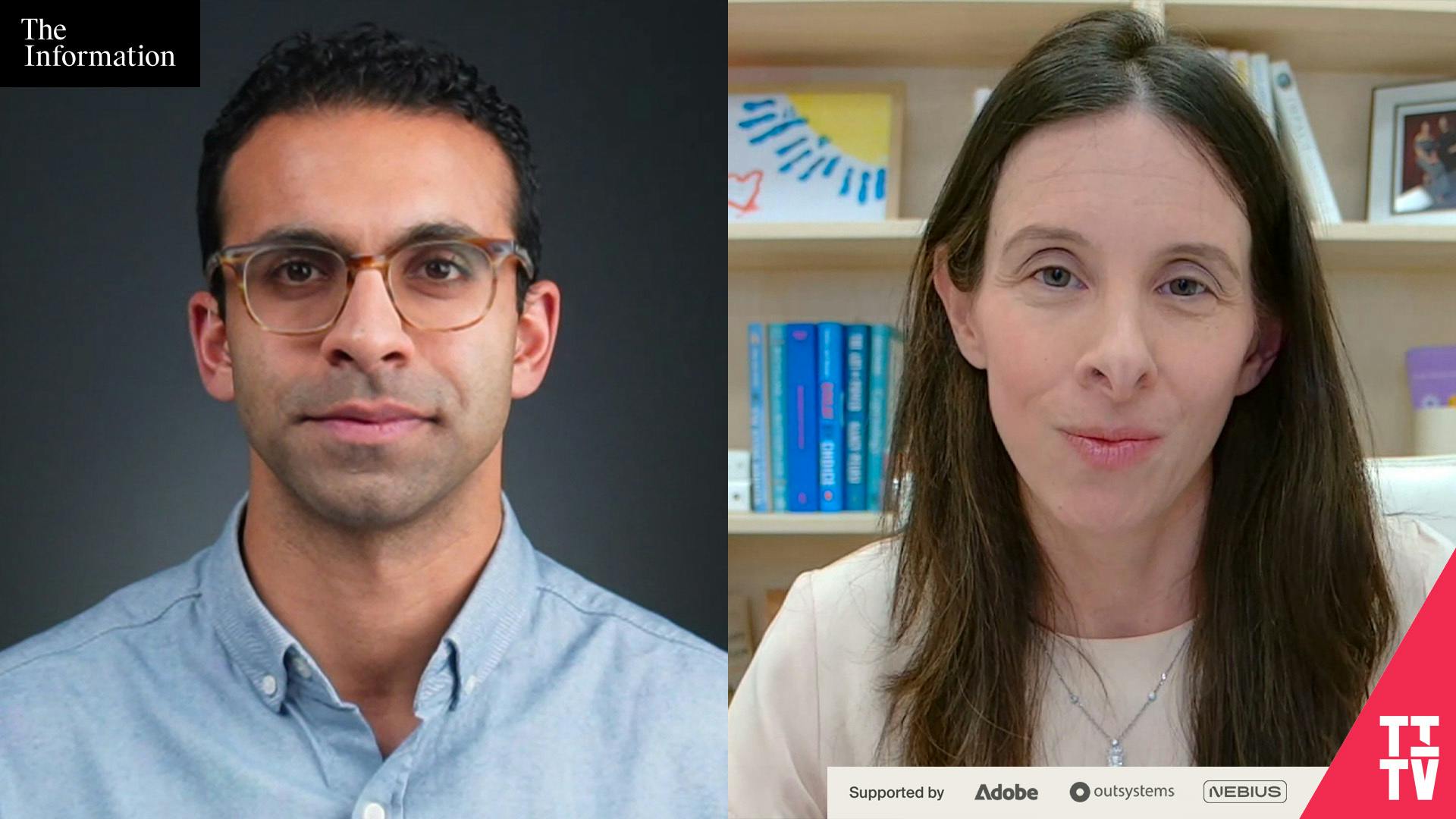
Check out our latest breaking episode of TITV in which Jessica Lessin is first to report the $250 billion price at which SpaceX will buy xAI.
Recommended Newsletter
Start your day with Applied AI, the newsletter from The Information that uncovers how leading businesses are leveraging AI to automate tasks across the board. Subscribe now for free to get it delivered straight to your inbox twice a week.
Join The Information for an intimate, two-day experience at Indian Wells, where tech leaders, investors, and innovators come together around a shared love of tennis. Request an invite today.