Thanks for reading The Briefing, our nightly column where we break down the day’s news. If you like what you see, I encourage you to subscribe to our reporting here.
Greetings!
Last week’s sell-off in software stocks is having an impact. Enterprise software firm Workday revealed Monday it had replaced its CEO, Carl Eschenbach, with co-founder and former CEO Aneel Bhusri, who is returning “to lead the company’s next chapter.” Bhusri, to be clear, has led the company for most of its chapters, having been either co-CEO or sole CEO from 2009 through 2024. What Workday seems to be saying is: “Everyone is freaking out about the impact of AI on software, so we’re bringing back a veteran to reassure everyone that we’ve got this.”
Unfortunately, investors seemed to interpret the move as a sign of panic. How else to explain the fact that Workday stock dropped 5% on Monday after having tumbled 7% last week? It’s not as though Eschenbach was doing a bad job—at least it didn’t look that way from the outside. Yes, revenue growth slowed to 12.6% in the first nine months of the fiscal year ended January, from 16% to 17% in the two years before that. That’s not great, but it’s not terrible. And Workday has been aggressively investing in AI-related areas. In November, it announced the purchase of Pipedream, which connects AI agents to business apps. My colleague Kevin McLaughlin wrote today that Workday had also acquired enterprise AI startups Sana and Paradox and developed its own AI models to automate tasks such as generating job descriptions and scanning résumés.
But those moves haven’t changed the perception of Workday as a software firm narrowly focused on human resources and finance-related offerings. Bhusri may be able to help Workday innovate more or take other big swings. Certainly, the company has to become more aggressive. As Bhusri said in today’s announcement, “We’re now entering one of the most pivotal moments in our history,” adding that AI is a “bigger transformation” than the switch to software as a service “and it will define the next generation of market leaders.” Bhusri has the advantage that he can make major decisions, seeing as he and Workday’s retired co-founder, David Duffield, together have a controlling voting stake in the company.
Eschenbach surely won’t be the only software company CEO to be replaced in the next year or two. And changing top management may not be the only thing software firms do as they look to navigate the disruption. It might make sense for companies to combine forces, not that we’re likely to see mergers and acquisitions anytime soon. No one wants to do anything hasty in a climate as uncertain as this one. Indeed, it took the television industry five years to start consolidating after cord cutting began to shrink the industry’s profits. Still, if software company executives are not already musing about partnering with another company, they might want to start thinking about it now.
Software’s Marketing
Meanwhile, as Workday was changing CEOs, other software firms were talking up their achievements. Check out Databricks, which announced on Monday it had raised $5 billion in new equity funding at a valuation of $134 billion, 34% higher than the value at which it raised money in August.
Databricks CEO Ali Ghodsi said in an X post on Monday, “I now constantly get questions about the SAAS meltdown, role of AI.…I don’t have an answer.…But I do know that we saw an acceleration in our business in Q2, Q3 and now finished the year with accelerating Q4.”
Databricks came out of the fourth quarter with a $5.4 billion revenue run rate, he noted, which is 65% ahead of a year earlier. Of course, it would be better if Databricks reported its financial performance like a public company, with the actual quarter’s numbers, as run rate is not a perfect metric of performance. It’s basically one month’s revenue multiplied by 12 (or one quarter’s revenue multiplied by four). But that is one of the advantages of staying private—you can pick and choose the metrics you release.
Today on The Information’s TITV
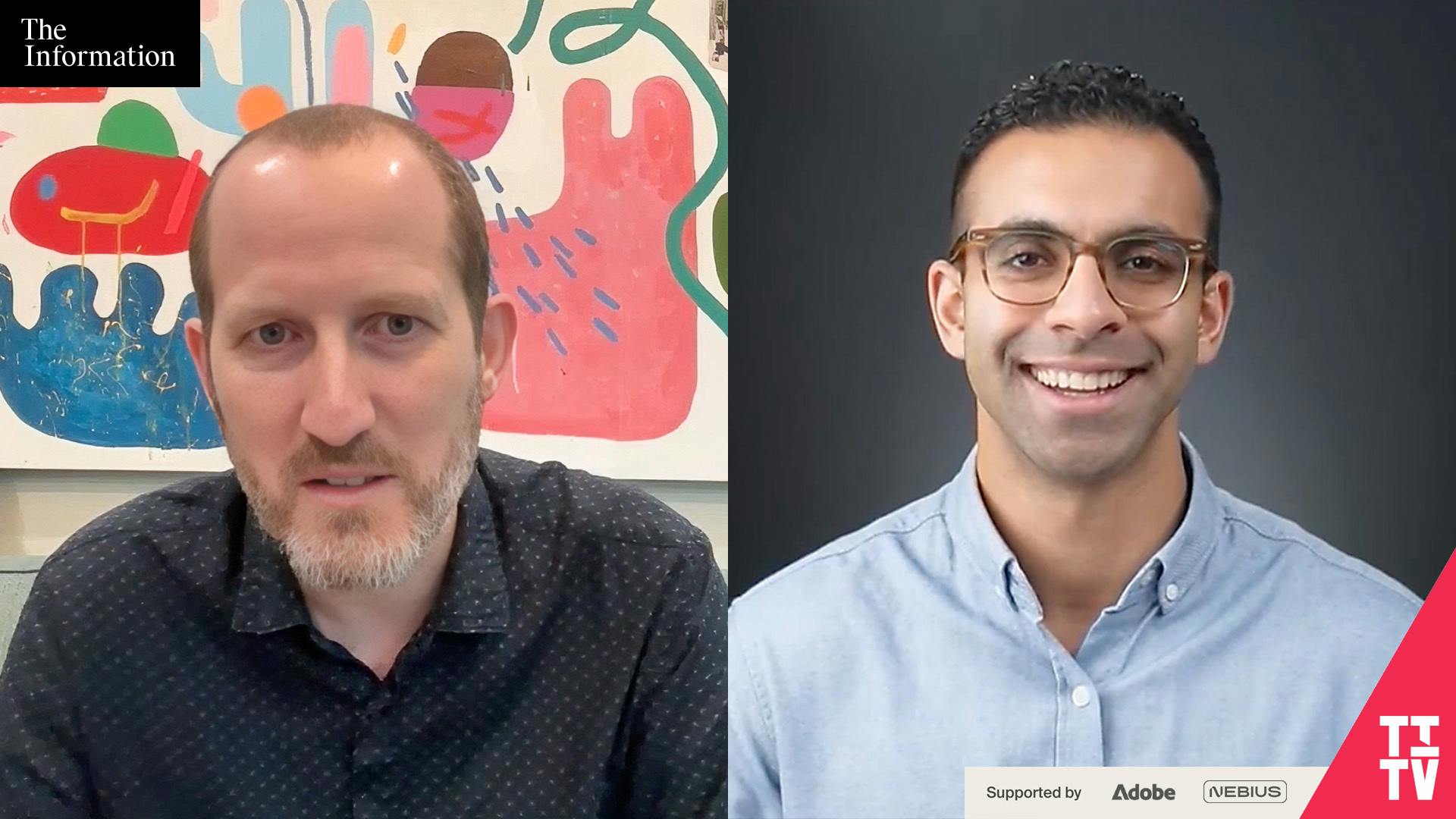
Check out our latest episode of TITV in which Akash speaks with a top engineer at Waymo about its new simulation training model.
In Other News
• OpenAI said Monday it’s beginning to show ads in ChatGPT for some U.S. users. The ads, which OpenAI says are a test, will be shown to logged-in users on the free tier or low-cost Go tier.
• Uber is expanding its presence in Turkey by buying Getir’s food-delivery operations in that country for $335 million in cash. Uber is also paying $100 million to buy 15% of Getir’s grocery-and water-delivery businesses, with purchase of the rest “subject to certain operating and financial performance conditions.”
• Alphabet is set to raise $20 billion in the U.S. bond market as part of a massive debt sale that will also see the company selling bonds in British pounds and Swiss francs, Bloomberg reported.
• Elon Musk said on Sunday in a post on X that Space X has shifted its focus to building a “self-growing city” on the moon, which could be achieved in less than 10 years, rather than doing so on Mars, where it would take more than 20.
Recommended Newsletter
Start your day with Applied AI, the newsletter from The Information that uncovers how leading businesses are leveraging AI to automate tasks across the board. Subscribe now for free to get it delivered straight to your inbox twice a week.
Join The Information for an intimate, two-day experience at Indian Wells, where tech leaders, investors, and innovators come together around a shared love of tennis. Request an invite today.