| | The US posts stronger-than-expected jobs growth, Bangladesh votes in a pivotal election, and AI deco͏ ͏ ͏ ͏ ͏ ͏ |
| |  | Flagship |  |
| |
|
The World Today | 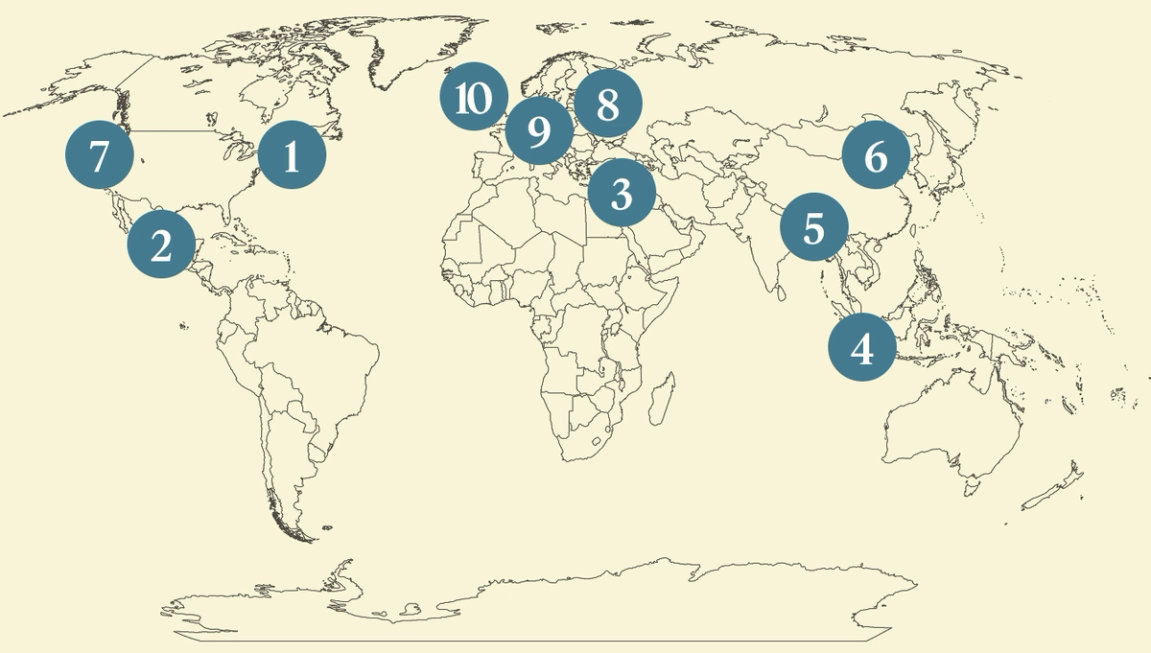 - Strong US job growth
- Trump weighs USMCA exit
- Netanyahu meets Trump
- Jakarta sends troops to Gaza
- Bangladesh’s Gen Z election
- Debate over AI military uses
- White-collar ICE backlash
- Europe vulnerable to attacks
- AI decodes Roman game
- Welcome to Wrexham
 An antidote to AI doomerism. |
|
US job growth stronger than expected |
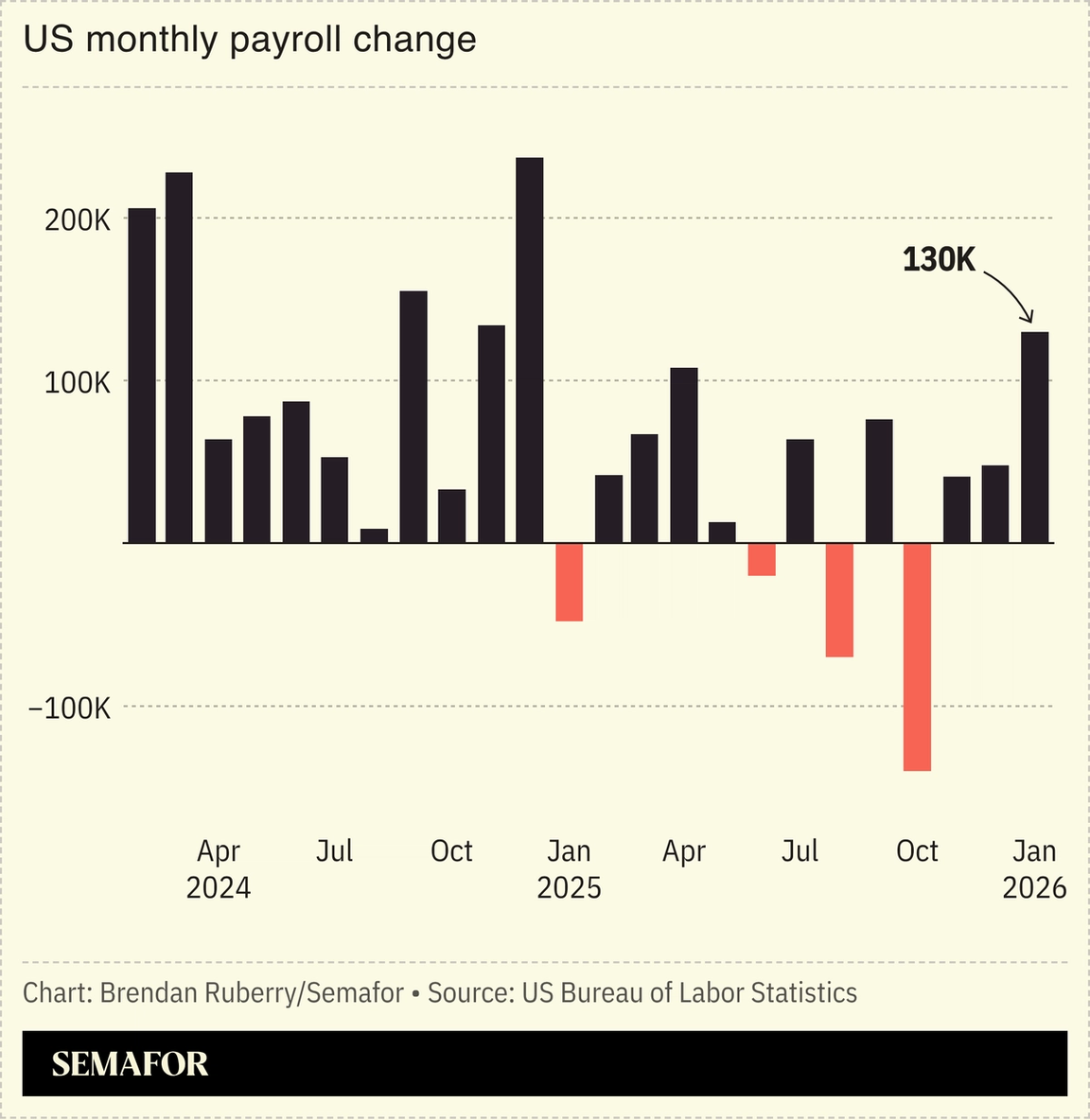 US employers added more jobs in January than economists had expected, but growth was concentrated in just a few sectors. Outside of health care, hospitality, and government, the economy has been “consistently losing jobs,” ING analysts wrote. “This will do nothing to relieve the pressure on household finances,” meaning consumer sentiment will likely remain dim. Health care has consistently powered job growth, thanks to America’s aging population. US President Donald Trump touted Wednesday’s headline figure pointing to a steadying US labor market, and reiterated his call for the Federal Reserve to cut interest rates. But analysts say the report won’t be enough to pull policymakers off of their path of holding rates steady until at least the summer. |
|
Trump muses on quitting USMCA |
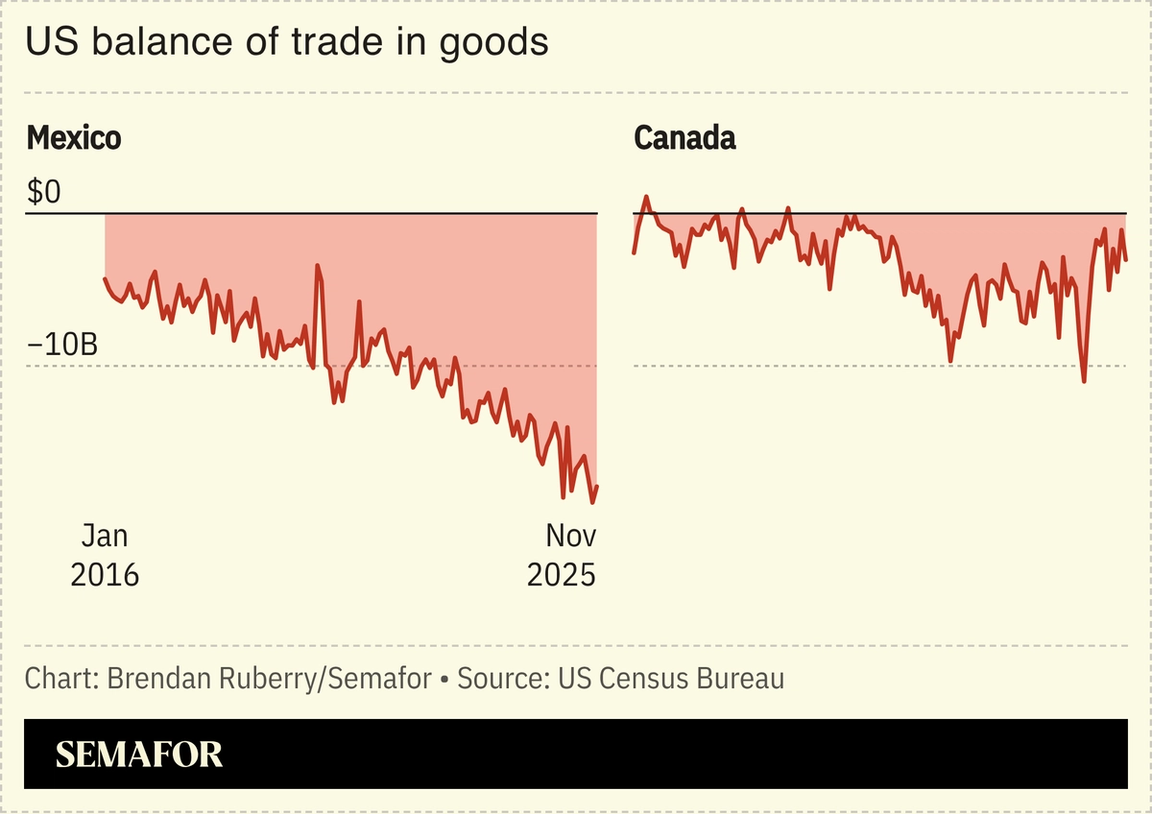 US President Donald Trump is reportedly weighing exiting the North American trade pact he signed during his first term. The US-Mexico-Canada Agreement is up for review this year, and the US trade representative said the White House would hold separate talks with both countries, characterizing Mexico as “pragmatic” and Ottawa as “challenging.” Striking bilateral deals is “so 2018,” a Globe and Mail columnist argued, recalling Trump’s first-term threats to cut Canada out of a free-trade agreement: “That is precisely why we cannot afford to tune him out.” Even the whiff of a US departure from the three-way pact would rattle investors and business groups, Bloomberg wrote, given that it covers $2 trillion in goods and services. |
|
Trump says US still seeking Iran nuclear deal |
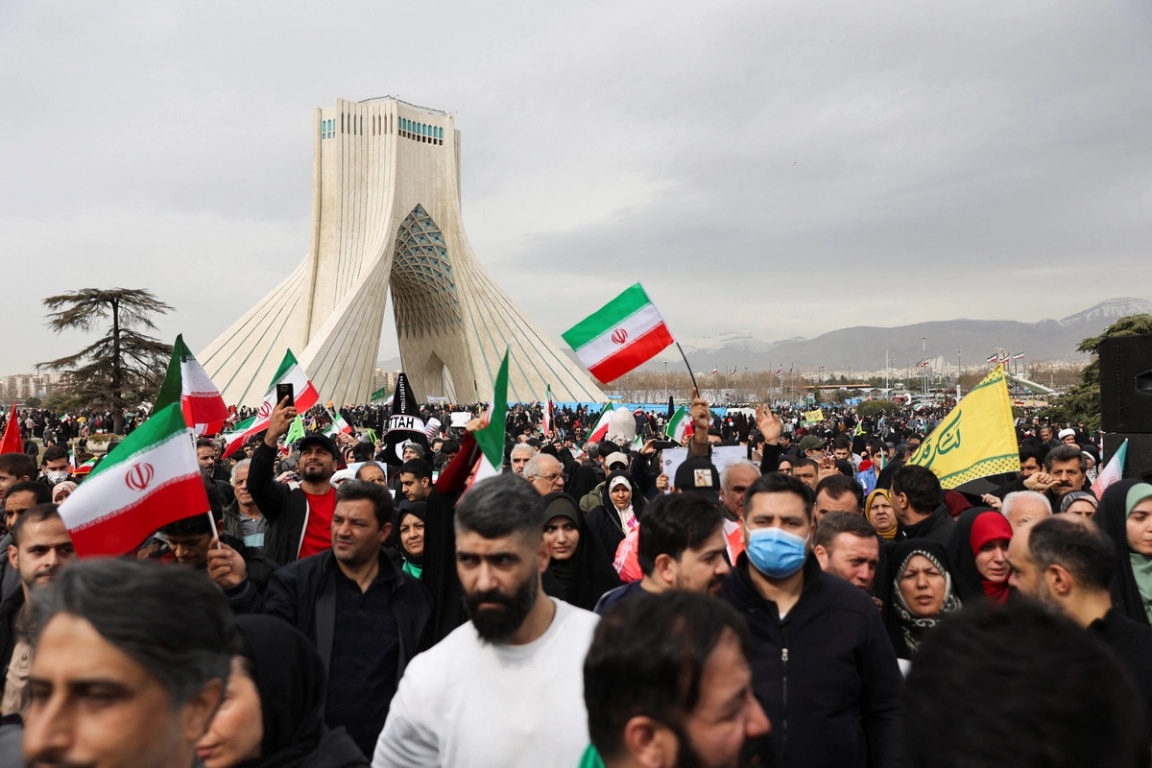 Majid Asgaripour/WANA (West Asia News Agency) via Reuters Majid Asgaripour/WANA (West Asia News Agency) via ReutersUS President Donald Trump said he insisted to Israeli Prime Minister Benjamin Netanyahu that nuclear talks with Iran would continue, despite Israeli skepticism about a diplomatic breakthrough. Israel is inclined to support US military action against Tehran, Axios noted, and while Trump has launched a military buildup in the Gulf, he signaled preference for a nuclear deal, saying the next round of negotiations could happen next week. His closed-door meeting with Netanyahu Wednesday came about after Israel grew concerned Washington could compromise on critical points, or that Iran could renege on commitments it makes now, The Wall Street Journal wrote: It comes at what may be an “inflection point,” as Tehran rebuilds its ballistic-missile program after Israeli attacks degraded it last year. |
|
Indonesia joins Gaza peacekeeping force |
 Prabowo and Trump last year. Suzanne Plunkett/Reuters Prabowo and Trump last year. Suzanne Plunkett/ReutersIndonesian President Prabowo Subianto will attend the first meeting of Donald Trump’s “Board of Peace” next week, officials said Wednesday, as the Southeast Asian country gears up for a bigger role in global diplomacy. Jakarta is also readying to deploy up to 8,000 soldiers to Gaza, the first country to make such a pledge in support of Trump’s planned multinational peacekeeping force in the war-torn region. While other governments have been less willing to send troops, Prabowo — who is also set to sign a trade deal with Washington — has ambitions to raise Indonesia’s international profile, the Financial Times wrote. The former general has called for an independent Palestine, but some believe he is softening his stance toward Israel. |
|
Bangladesh returns to the polls |
 Fatima Tuj Johora/Reuters Fatima Tuj Johora/ReutersBangladesh votes Thursday in its first election since a Gen Z-led uprising toppled the country’s India-allied leader in 2024 — a vote with far-reaching geopolitical implications. The outcome, analysts said, will determine how the populous South Asian nation balances ties with India, China, and the US: Dhaka bolstered ties with China and Pakistan in the last year as relations with India deteriorated. To counter Beijing’s growing influence in Bangladesh, Washington plans to offer the next government alternatives to Chinese military systems, Reuters reported. The US also lowered tariffs on Bangladesh in a new trade deal this week, a move likely aimed at reducing Dhaka’s imports from China. Bangladesh may be “becoming a new ‘proxy war’ ground,’” Indian outlet The Week suggested. |
|
US, China eye military AI uses |
|
 As China quietly reshapes the world, its influence ripples through every corner — from the flow of global trade and the race for innovation, to the government decisions and shareholder meetings that touch daily life around the globe. Launching soon, Semafor China will unpack how China is influencing technology, markets, and energy. Don’t miss the first edition — subscribe for free. |
|
Companies face pushback on ICE ties |
 Leah Millis/Reuters Leah Millis/ReutersBusinesses are facing swelling blowback over their ties to US Immigration and Customs Enforcement. More than 1,400 employees at Salesforce are circulating a letter calling on CEO Marc Benioff to cancel all potential business with ICE, following reports the company was pitching its technology to the agency. Employees at Google and Palantir have raised similar concerns, while French tech giant Capgemini announced it will sell its US subsidiary, which has a contract with ICE. Collectively, the ICE criticism marks a resurgence for employee activism, similar to US President Donald Trump’s first term, albeit slightly more subdued amid a weaker labor market. Tech workers have also pushed back on their companies’ work with the Israeli military. |
|
EU ill-prepared for war with Russia |
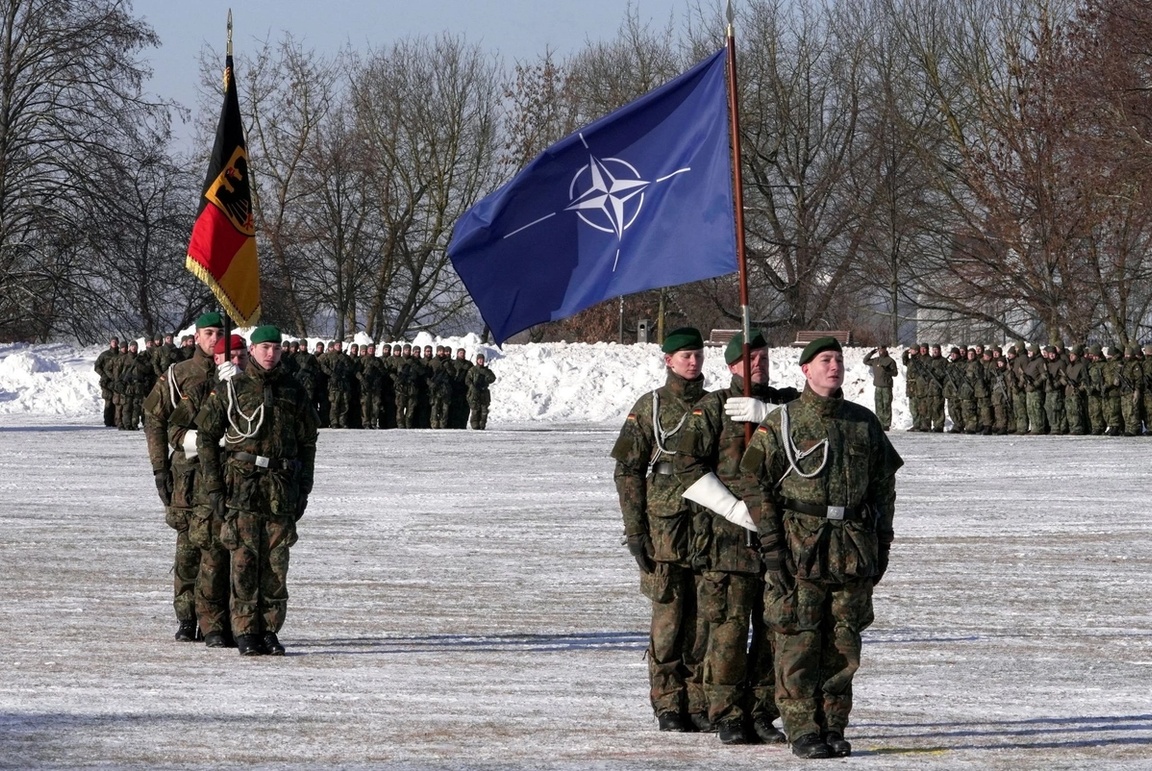 Janis Laizans/Reuters Janis Laizans/ReutersEurope is not ready for war with Russia, a wargame suggested, with a relatively small incursion by Moscow’s forces likely to overwhelm forces in a crucial city in Lithuania. The Die Welt-organized simulation imagined a 15,000-strong force attacking Marijampolė, a key highway hub, with the US declining to invoke Article 5 and European capitals slow to respond. The game saw Russia establish domination over the Baltics within a couple of days, The Wall Street Journal reported. Some defense officials said that intelligence warnings could have helped avoid disaster in real life, but others cautioned that Europe still needs time to build up its defenses. A Sky News-backed wargame imagining a Russian attack on Britain found London’s preparations similarly lacking. |
|
AI decodes Roman board game |
|
|