|
 |



Thirteen years ago today, Marco Rubio gave a cotton-mouthed GOP response to Barack Obama’s 2013 State of the Union address, at one point awkwardly breaking his flow to lean out of frame for a quick drink of water.
Was this the moment we entered the dark timeline from which we have yet to escape? I guess we’ll never really know. Happy Thursday.
 |
Coalition Crackup
by Andrew Egger
Who’s worse for the American right: its antisemites or its Zionists? This seemingly easy question has convulsed the online right for months, with old-school philosemite conservatives trying and mostly failing to exile the new coterie of antisemites, from Tucker Carlson to Candace Owens to Nick Fuentes, from the MAGA coalition. But the White House has largely steered clear of participating—until this week, when it found itself dragged into the fight largely by accident.
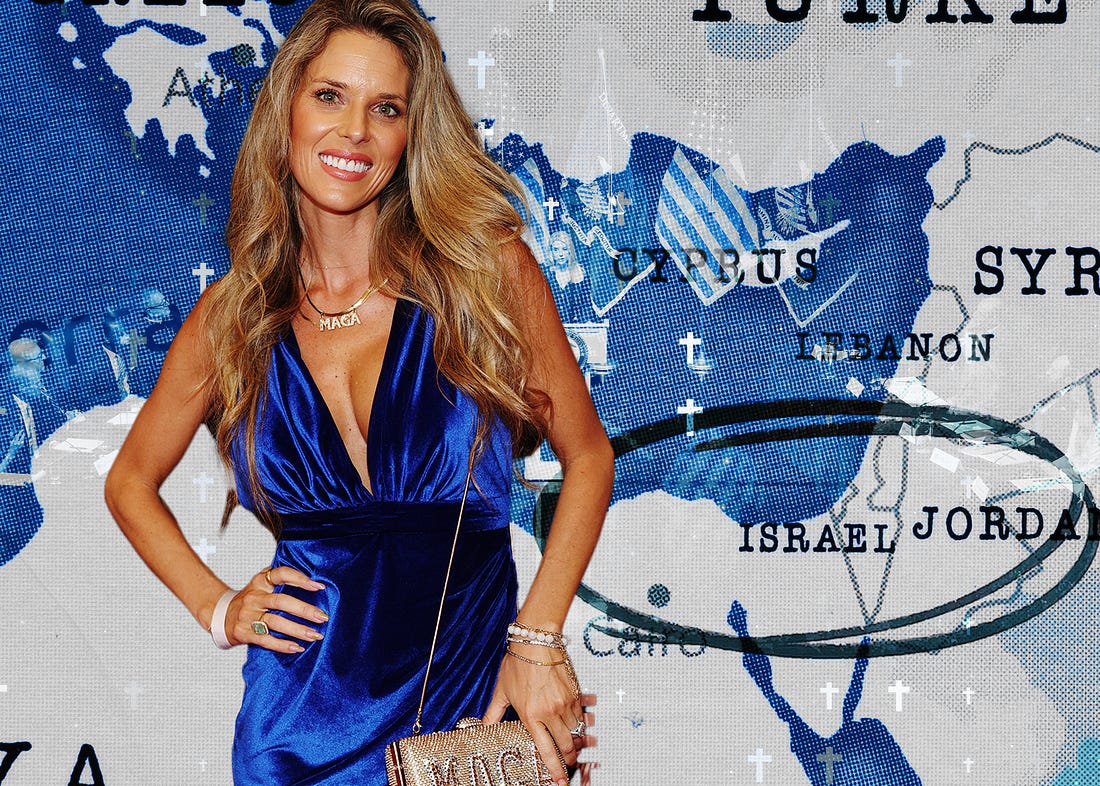
The trouble started Monday, when the White House’s Religious Liberty Commission met in D.C. for a public discussion about the rise of antisemitism. For most of the hearing, the commission stuck to the safe conversational waters of left-wing antisemitism, of the college-campus variety. But commissioner Carrie Prejean Boller—a former beauty queen, right-wing Catholic activist and influencer, and staunch Owens ally—had other plans. What’s this business of calling people like me antisemitic, she repeatedly asked, just because we don’t like Israel?
Throughout the hearing, Prejean Boller all but dared her fellow commissioners and other event participants to call her antisemitic to her face. “Is anti-Zionism antisemitism?” she asked. “If I don’t support the political state of Israel, am I an antisemite, yes or no?” When one participant asserted that Owens and Carlson were indeed antisemites, she scoffed: “There you go again. Everyone’s an antisemite, I guess.”
Commissions like these exist to further the administration’s political messaging, and kicking up intra-MAGA fights wasn’t exactly on the agenda. So it came as little surprise Wednesday when commission Chairman Dan Patrick, the lieutenant governor of Texas, announced that Prejean Boller was no longer a member. His stated reasons were interesting. He steered totally clear of the substance of Prejean Boller’s remarks, saying only that “no member of the commission has the right to hijack a hearing for their own personal and political agenda on any issue.” He added: “This was my decision.”
Prejean Boller wasn’t having it. “You did not appoint me to the Commission, and you lack authority to remove me from it,” she replied to Patrick. “This is a gross overstepping of your role and leads me to believe you are acting in alignment with a Zionist political framework that hijacked the hearing, rather than in defense of religious liberty.”
“I look forward to next month’s hearing,” she added. “I refuse to bend the knee to Israel. I am no slave to a foreign nation, but to Christ our King.”
It would take a lot more space than we’ve got here to fully unpack the beef over antisemitism here. Prejean Boller is actually correct about at least one thing: It’s true that Republican allies of Israel have often used accusations of antisemitism as a cheap rhetorical crutch to shut down all critiques of the way the state of Israel conducts its business—a phenomenon that was on particularly painful display during Israel’s most recent lengthy, brutal occupation of the Gaza Strip.¹ Still, it’s also true that genuine bigots and traffickers in the most noxious conspiracy theories often find it useful to claim that they’re really just critics of the state of Israel. Candace Owens is the poster child for this, and I’m not sure Prejean Boller is beating the allegations either: Yesterday, for instance, she retweeted an Owens post claiming that “Zionists are naturally hostile to Catholics because we refuse to bend the knee to revisionist history and support the mass slaughter and rape of innocent children for occult Baal worshipers.”
But what’s more interesting—at least for our political-newsletter purposes—is the particular way the Trump administration has responded to all this. Patrick’s statement firing Prejean Boller, which declined to weigh in on the substance of the fight and specifically stressed that “this was my decision,” seemed like a last-ditch effort to shield the White House itself from the controversy. (When I reached out to the White House for comment, they wouldn’t even confirm on-record that Patrick’s statement had the president’s blessing—although they didn’t deny it either.) But Prejean Boller’s refusal to accept firing from anyone other than Trump himself seems to have closed off this strategic path. At some point, it seems, somebody’s going to have to say something.
For months if not years now, the White House has faced a bizarre coalition problem: how to keep a bunch of philosemites and a bunch of antisemites both happy with the administration despite their open hatred for one another. As in Trump’s first term, the White House has pursued a foreign policy broadly favorable to Israel. Just as importantly, it has abstained from the sort of moral denunciations of Israel’s conduct in Gaza that so irked many pro-Israel types during Joe Biden’s presidency. At the same time, it has routinely opposed efforts to kick right-wing antisemites out of its political coalition—while pursuing a posture of maximum political retaliation against people it accuses of antisemitism on the left. White House employees who brag in leaked texts about having a “Nazi streak” don’t even lose their administration jobs; pro-Palestinian foreign students who support boycotting Israel see their student visas canceled and get snatched off the street.
This “something for everybody” approach seems to be reaching its limit. MAGA’s philosemites and antisemites are unlikely to keep sharing a political coalition for long—and they seem unlikely to let Trump’s White House stay agnostic in their fight, either.
“Only the President can remove me, since he appointed me,” Prejean Boller proclaimed. “What will Trump do? Stand for my Catholic Religious Freedom or remove me?”
Every political coalition has its fault lines. What else could be internal weaknesses in the MAGA movement? Share your ideas.