|
The Medium identifies essential signals on how technology is shaping creativity, and how creatives are evolving in response.
The "Wow" of Seedance 2.0 Is Not A Business
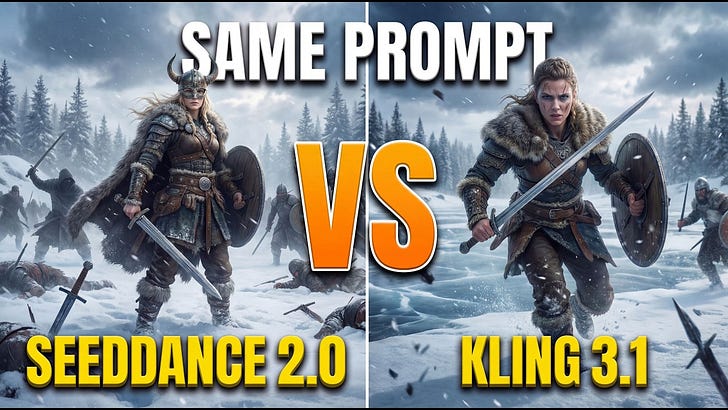
ByteDance's new AI video model produces Hollywood moments in seconds. Netflix will not license them. YouTube will demonetize them. The best storytellers will produce ads instead.
| |||||||||||||||


[Author’s Note: This essay is free for all subscribers.]
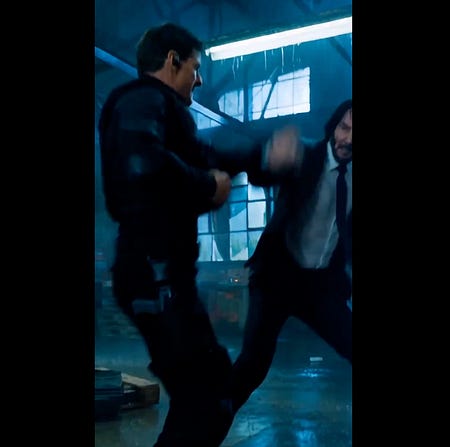
The “wow” factor for short clips from Bytedance’s Seedance 2.0 seems to be dying down. There are fewer clips popping up in my X feeds. Last night I saw a clip of an AI-generated Tom Cruise as Ethan Hunt from “Mission Impossible” fighting against Keanu Reeves as John Wick. I also saw a clip of Robocop fighting Arnold Schwarzenegger as “The Terminator”. Both are obvious copyright violations. Neither presents obvious solutions under the weak intellectual property regimes in China.
There were the obvious “Hollywood is cooked” reactions. They are wrong. We already know from YouTube’s use of its short-form “Shorts” channel that the long-form and short-form business models are diverging. Shorts average over 200 billion daily views and “in a number of countries” including the U.S. earn more revenue per watch hour than traditional in-stream video on YouTube. YouTube uses Shorts to distribute AI-generated content from Veo 3.1 and other tools.
Seedance 2.0 is “faster, cheaper and better” at producing Hollywood moments for short-form consumption. It is TikTok for IP pirates. But it is not a tool for AI storytellers. Storytelling with sustained narratives over longer periods of time belongs elsewhere, either on legacy media-owned streamers or in YouTube creator channels.
 |
Wow Is Hard to Monetize
The same tools that make “wow” content easy to produce also make it hard to monetize.
Netflix has established strict guidelines for AI-generated content using tools like Seedance 2.0 .Sign-off is not guaranteed, even though Netflix is the most likely licensor (or acquirer) of that content. AI-generated content may “wow” audiences on platforms like X, but Netflix sees too much legal risk to license “wow”. The implication is that when “wow”-style AI-generated storytelling emerges to be licensed by streamers, it will need to be almost entirely original except for some background elements.
The precedent of demonetized AI, fan-generated movie trailers on YouTube—which I wrote about last June—reinforces this. Producing “wow” content is getting easier. Monetizing it is not. Platforms will continue to demonetize AI content that uses existing intellectual property. Licensors will remain risk-averse. The ease of use for tools like Seedance 2.0 and Kling 3.0 has never been higher. But the bar for financial success in AI storytelling has also never been higher.
The Business Model Is (Still) Ads
This is more evidence for why the business calculus for truly talented storytellers favors advertising.
Seedance 2.0 (unintentionally) creates a higher bar in monetizing traditional storytelling in distribution channels:
License original content to Netflix for upfront fees and exposure? That requires surviving Netflix’s strict AI guidelines and producing something entirely original.
Leverage AI production speed for volume on YouTube? Only 4.4% of YouTube’s 67 million creators monetize their content, and that power law intensifies as AI-generated content floods the platform.
The rational short-term choice is to create ads. Creators who do so work for advertisers who prioritize cost efficiency, time savings and scalability. In this part of the market, the tools work as advertised: Storytellers get paid and advertisers can test and iterate faster across digital platforms.
As I wrote last week in “Make Ads or Make Stories”, this decision might create the long-term opportunity (scarce original AI content that streamers will pay for). But, “reaching that future requires surviving the present — and the present economics push talent toward advertising.
The “wow” is real. The business model for “wow” storytelling is not — at least not yet.