| Welcome, Weekenders! In this newsletter: |
| • The Big Read: Meet the billionaire financier who has become AI’s debt whiz |
| • Artificial Intelligence: CEOs find new management ethos from AI tools |
| • Wearables: Techies find a surprise alternative use for Oura rings |
| • The Top 5: An emergency guide for salvaging ski season |
| • Plus, Recommendations—our weekly pop culture picks: “The Walkers: The Real Salt Path,” “Super Nintendo” and “A Knight of the Seven Kingdoms” and “Wonder Man” |
| |
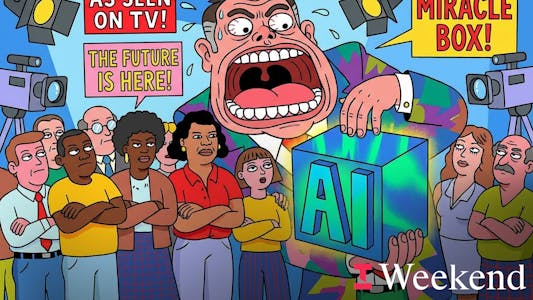
| Ostensibly, the big pile of words assembled by investor Matt Shumer in his viral Twitter essay, “Something Big Is Happening,” is meant as a rallying cry, a call for everyone who doesn’t know a Claude from a Codex to adopt AI with greater urgency. |
| “I was home with family, and I was trying to find the words to explain what’s going on to my parents,” he said in an appearance on The Information’s TITV. “Because, frankly, I do feel like we’ve hit an inflection point.” |
| Matt, I completely agree—we have hit an inflection point. Judging just by capital expenditures, AI is unquestionably a big something: Silicon Valley spent roughly $425 billion on the technology last year, and it will spend more than $600 billion this year. And if that investment is going to pay off, the industry needs to get better at talking about the technology in a way that will actually appeal to people’s parents. It needs to figure out how to speak normie. |
| Because I really can’t imagine too many people’s parents reading “Something Big Is Happening” and becoming AI converts. I thought about testing my thesis on a parent, but I can’t—because my mom isn’t on Twitter. That’s the first problem I can see with relying on something like Shumer’s essay: Its message is directed at the wrong people in the wrong venue. It’s like proselytizing at a church cookout. |
| Look, I can expound at length on the rest of the piece’s faults—like, say, its misguided attempt to liken the AI revolution to the Covid pandemic. (If your goal is to encourage people to use AI, equating it to a time of 7.1 million deaths and mass unemployment seems misguided.) Or I might point out how the essay lacks authorial credibility, as it’s written by someone with a concentrated economic interest in promoting this technology. I could nitpick its unctuous tone, because honestly, Billy Mays was calmer when he was shilling OxiClean. |
| Or I—well, you know what. I’m not gonna commit the same fatal mistake Shumer did: I’m not gonna go on and on and on. |
| It’s not just Shumer who struggles to offer a compelling case for AI. Really, everyone in tech does. Think about all the AI-related commercials in last week’s Super Bowl broadcast. Mostly, they flopped. The Ring ad about people’s lost pets was creepy. The one for AI.com, a would-be agentic AI startup, was too cryptic, and then when people went to AI.com to figure out what was going on, the site crashed. And I’m definitely willing to bet Anthropic’s million-dollar potshot at OpenAI went over most people’s heads: As a matter of fact, the ad was one of the least liked Super Bowl ads in recent years, according to survey data compiled by iSpot, an advertising measurement firm. |
| I don’t think learning to talk about AI in more appealing terms presents an easy challenge for Silicon Valley, a place that covets industry speak and has quickly deemed this equally dadaesque essay by Will Manidis—another tech insider—a tart-tongued rebuke to Shumer. |
| “AI is everywhere in consumption and almost nowhere in output,” Manidis writes. “We are spending unprecedented sums to acquire, configure, deploy, and operate these systems, and the primary product of that spending is the experience of spending it.” |
| Uh-huh. |
| “These are all kanna. These are tool shaped objects,” Manidis continues, trying to string together a metaphor that connects AI to ancient Japanese woodworking. “What makes this particularly difficult to see is that LLMs are also, genuinely, tools. They do real work. The line between the tool and the tool-shaped object is not a line at all but a gradient, and the gradient shifts with every use case, every user, every prompt.” |
| I couldn’t really make heads or tails of what Manidis was saying. Then I worried I was being too harsh, so I went and got a gut check—and no, my mother couldn’t either. |
| What else from this week… |
| • Ay, ay, ay. It’s AI all the time—AI and work, AI and philosophizing, AI and a capitalist mystery. |
| • …and…AI and a new New York City where people go to hang out with their chatbot pals. Looks like San Francisco doesn’t actually have a monopoly on unsociable techno-dweebs. |
| • How might we reverse declining birth rates? Abolish commutes! |
| • The Jony Ive-designed Ferrari looks dope as hell. |
| • McSweeney’s Internet Tendency has a lot of fun at Ring’s expense by satirizing that creepy pet tech I mentioned: “Ring reunites one lost pet with a family each day. Which is not a bad batting average, considering ten million pets go missing each year. A 0.00365 percent yearly success rate is good. This is the whole point!”—Abram Brown (abe@theinformation.com) |
|
|
|
|
 |
|
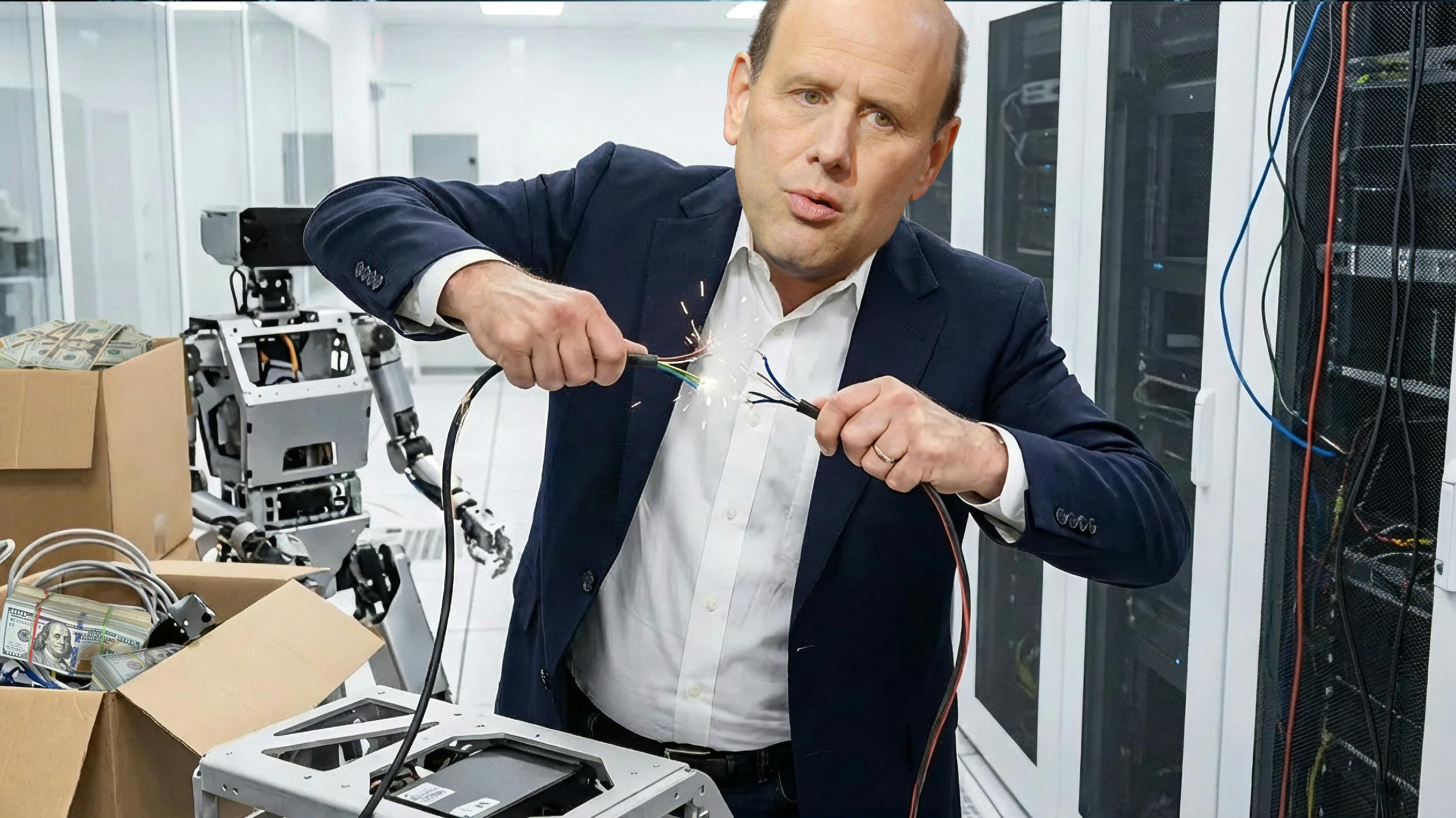
| Billionaire Marc Lipschultz, ever eager for finance’s risky new thing, has made his publicly traded firm into a critical cog within AI. Investors seem unsettled. |
|
 |
|
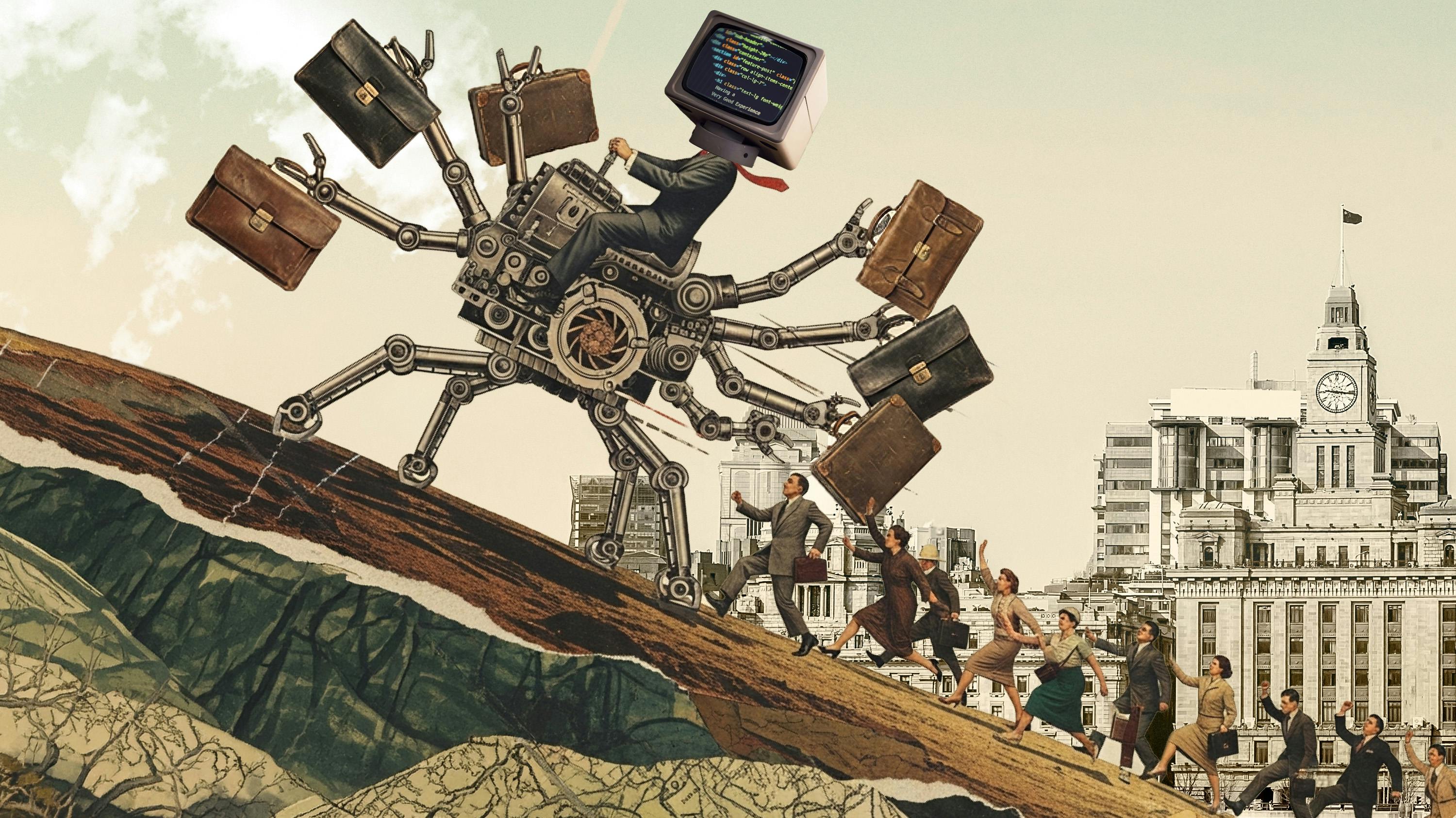
| To an industry full of productivity maximalists, programs like Claude Code and OpenAI’s Codex are a chance to automate time-consuming corporate chores. |
|
 |
|
| As wellness culture has taken hold in Silicon Valley and beyond, the popularity of Oura rings, a health-tracking wearable, has given rise to a curious new subculture of couples turning these biometric trackers into symbols of lifelong commitment. |
|
 |
|