How security details locked down the Munich runway, Alaskan senator Lisa Murkowski and overheard at the Munich Security Conference.
|
Sunday 15/2/26
|

|
|
London
Paris
Zürich
Milan
Bangkok
Tokyo
Toronto
|
|
Munich Security Conference
|
|
Guten Tag from a frosty Munich, where the streets are returning to normal after a weekend of intense security, high-level diplomacy and rhetorical jousting. In this special Munich Security Conference-focused newsletter, we give you a rundown of the weekend’s main talking points, events and styles. Here’s what’s coming up:
THE OPINION: US beats its chest while Europe murmurs under its breath
HOUSE NEWS: Monocle & Hitachi Energy spark fresh perspectives
THE LOOK: How security details locked down the Munich runway
Q&A: Senior US senator for Alaska, Lisa Murkowski
OVERHEARD AT… Munich Security Conference
|
|
OPINION / MUNICH
Amid polite applause and private panic, the western alliance eats itself
By Alexis Self
|
In his opening address to the Munich Security Conference (MSC) on Friday morning, the German chancellor, Friedrich Merz, described the event as a “seismograph for relations between the United States and Europe”. Since its inception, this talking shop, attended by the world’s highest-ranking political, military and business leaders, has usually been a weekend of hearty feasts and even heartier agreement. Indeed, if anything was likely to show up on Merz’s seismograph it would probably be as a result of an overenthusiastic post-schnapps backslap. But last year, US vice president JD Vance sent tremors through the main hall of the five-star Hotel Bayerischer Hof – the aftershocks of which are still being felt. Vance, whose position essentially made him the guest of honour, stood up at the lectern on the opening morning with the intention of taking down his hosts. He called out Europe’s leaders for being undemocratic, degenerate and complicit in their own cultural demise, in a speech that set the tone for a dizzying 12 months of transatlantic rupture. This year’s event, following a few weeks after the Greenland crisis pushed the alliance to the brink, felt like a very public way of processing some of the continent’s grief.
| |
|
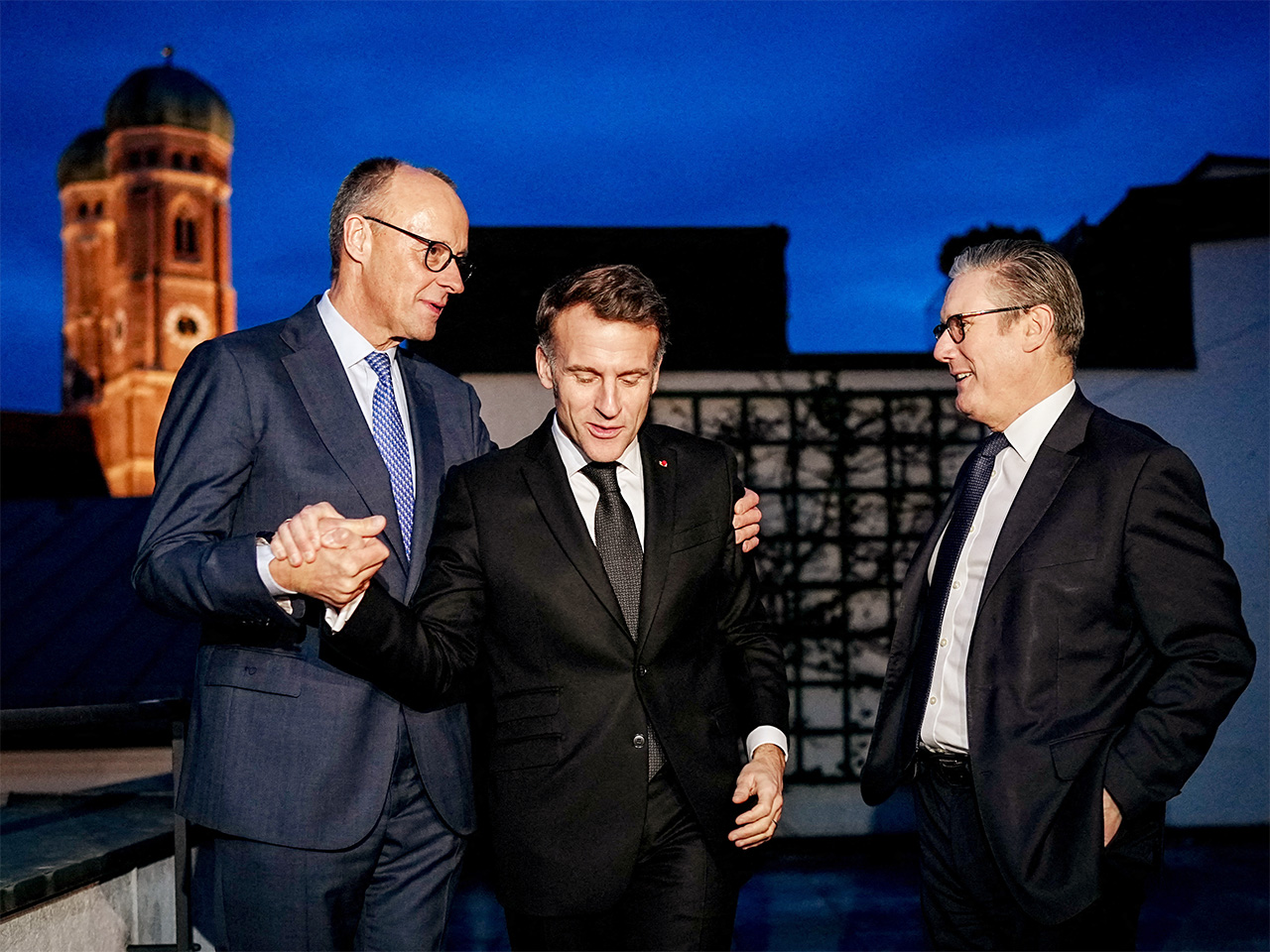
Work friends: European leaders presented a united front
|
|
On the eve of the conference, the event’s organisers published their annual report assessing the state of international relations. Its title was “Under Destruction” and it made no bones about where it believed the main source of our present instability comes from. “The world has entered a period of wrecking-ball politics”, reads the report’s first line.“At the forefront of those who promise to free their countries from the existing order’s constraints and rebuild stronger, more prosperous nations is the current US administration.” Such directness, it was thought, would set the tone for an MSC during which Europe’s leaders would begin the rhetorical fightback against Washington.
Merz’s speech, brought forward on request from the traditional Saturday slot reserved for the incumbent German leader, began with an unsparing assessment of the present world order. “If there had been a unipolar moment after the fall of the Berlin Wall, a unipolar moment in history, it has long passed,” said Merz, who always seems to be looking over the top of his glasses like a long-suffering accountant going through your receipts. “The United States’ claim to leadership has been challenged and possibly lost.” He went on to explain – to anyone without a firm grasp of German history – why his country cannot “go it alone” and would always seek to move as one with its allies. All of this felt like the build-up to, at the very least, a forthright repudiation of recent American behaviour. But instead, mindful perhaps of the decorum expected of him as host, Merz reverted to MSC-standard, insisting on the primacy of the western alliance.
After an underwhelming first round, the Europeans that I spoke to still seemed up for a fight, or at least a bit of light cussing. At an event featuring the preposterously folksy South Carolina Republican, Lindsey Graham, the US senator exclaimed: “Who gives a shit who owns Greenland?” Someone behind me scoffed, “I think Denmark does.” If Merz wouldn’t give the people back some fighting pride, then it was up to zany Uncle Manu to speak for a continent. The French president, whose sideburns seem to grow longer as his own influence wanes, was his usual boisterous self. He touted Europe’s response to Trump’s threats to annex Greenland as “politely declining unjustified claims on European territory”, without quite managing to shake the half-smirk he always appears to have on his face. In the end, Macron’s speech passed fairly uneventfully.
| |
|
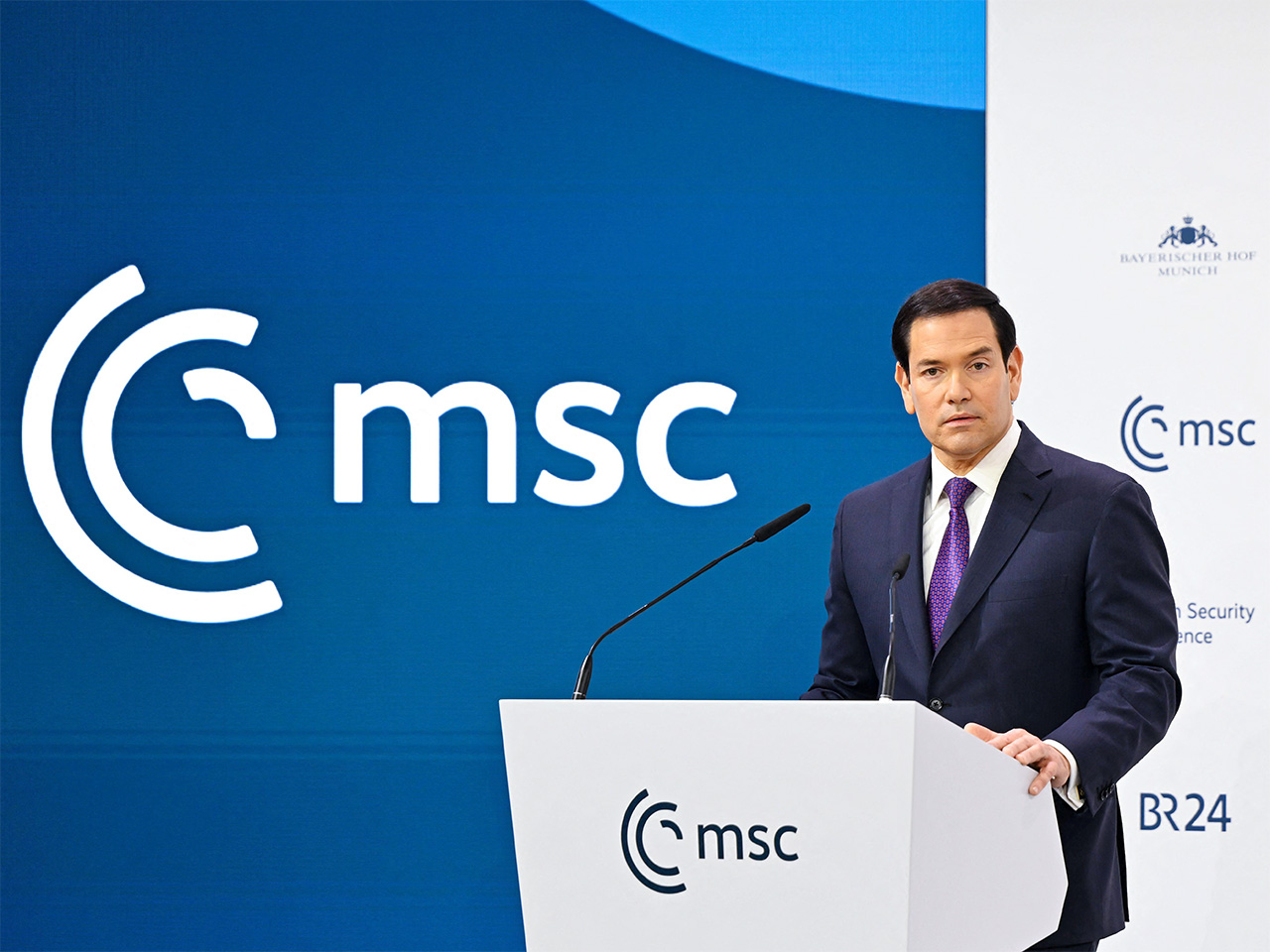
Going it alone: US secretary of state Marco Rubio
|
|
As the attendees retired to their evening’s bratwurst, there was a feeling of bathos that only the pulling of punches can bring. Still, perhaps the upside of this would be a repentant US secretary of state Marco Rubio mending ties in the weekend’s showpiece speech. America’s chief diplomat has sometimes appeared sullen and shrunken since taking up the role. But on Saturday morning he delivered the most articulate expression of the current US administration’s thinking that has been made yet. He declared an intention to renew the western alliance, an endeavour in which he said it was hoped Europe would be closely involved. Rubio called his country a “child” of the continent while praising it as the birthplace of Western civilisation. “Ultimately our destiny is and always will be intertwined with yours,” Rubio said. Then, like all middle-aged Americans of European stock, he revealed himself as an amateur genealogist, invoking 18th-century forebears from Sardinia and Spain. The speech, which also mentioned Mozart, Shakespeare and The Beatles, was intended to flatter Europe’s cultural sensitivities – but since it also derided the continent for being weak, in hock to a “climate cult” and ashamed of its own heritage, it had the same scolding flavour as Vance’s, and was perhaps more unsettling for being delivered soothingly. It also failed to mention Ukraine, an omission compounded by Rubio’s skipping a meeting with Volodymyr Zelensky the night before.
So as the MSC circus packs up its lanyards and Heckler & Koch UMPs, where does this leave the transatlantic alliance? Although Mark Rutte, Ursula von der Leyen and UK prime minister Keir Starmer were quick to characterise Rubio’s speech as a much-needed olive branch, outside of the keynotes and fireside chats, there was a more unguarded sense of how bad US-Europe relations have become. The firmest rebuke to US rhetoric came from the EU's foreign policy chief, Kaja Kallas, who joked on Sunday morning that, “contrary to what some say, woke decadent Europe is not facing civilisational erasure.” For those still keening for a return to the status quo ante, hope was offered by the large Democratic Party contingent in attendance, including California’s governor, Gavin Newsom, and New York congresswoman Alexandra Ocasio-Cortez, both of whom insisted that current US foreign policy was an aberration rather than the new normal. An alternative vision was offered by Wang Yi, China’s foreign minister, who, with a smile slightly more restrained than Macron’s, said, “multilateralism should always be promoted and strengthened. It must not happen that some countries dominate others.” You don’t need a seismograph to work out who he was referring to.
Alexis Self is Monocle’s foreign editor. For more opinion, analysis and insight, subscribe to Monocle today.
|
|
house news / Monocle & Hitachi Energy
Cocktails and conversation power a night of ideas in Munich
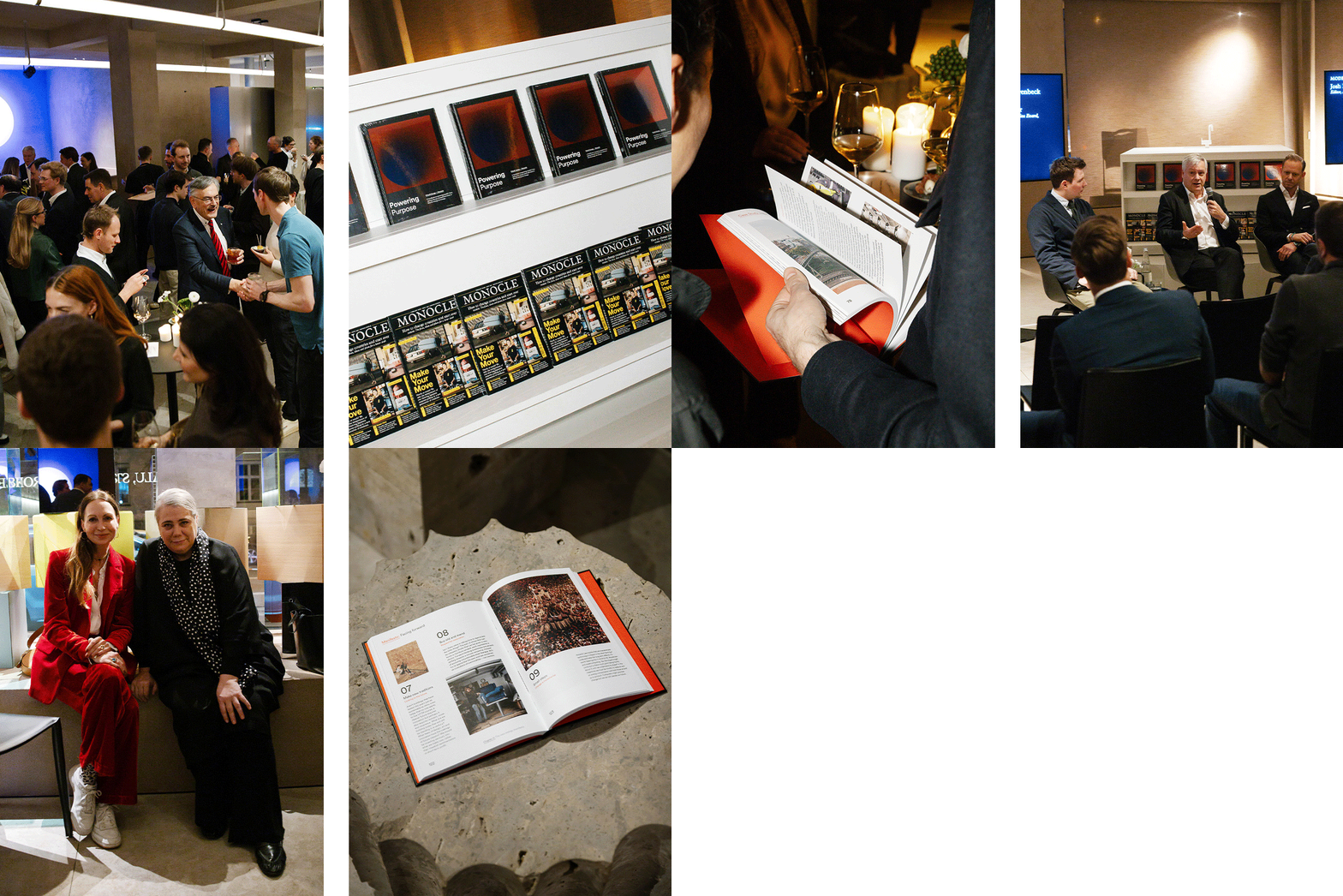
On Thursday night, Monocle and Hitachi Energy hosted a panel discussion at Munich’s Holzrausch Studio on energy security and technological innovation. Speakers, who included Hitachi Energy CEO, Andreas Schierenbeck, Bavaria’s state minister for science and the arts, Markus Blume, and Bianca Rech, director of FC Bayern Women, covered subjects such as what it takes to run a diverse, international business in the 21st century and how Europe can compete on an R&D level with the US and China.
The riveting discussion was accompanied with delicious cocktails mixed by the white uniform-wearing maestros of Munich’s legendary Schumann’s bar. Conversation continued late into the evening – the perfect warmup to a momentous weekend.
|
|
The lOOK / IT'S ALL IN THE DETAIL
Detail-oriented: Henchmen secure the runway to strut their stuff
The Munich Security Conference (MSC) is Pitti Immagine Uomo for the military-industrial complex (writes Alexis Self). But while there’s enough brass and braid on display for a 21st-century reproduction of Bedknobs and Broomsticks, it is not the patent visors and epaulettes of the many four-star generals in attendance that draw the eye. For three days each February, the lobbies and alcoves of the Bavarian capital’s two most august hotels, the Bayerischer Hof and Rosewood Munich, become runways for the world’s most VIP security details.
| |
|
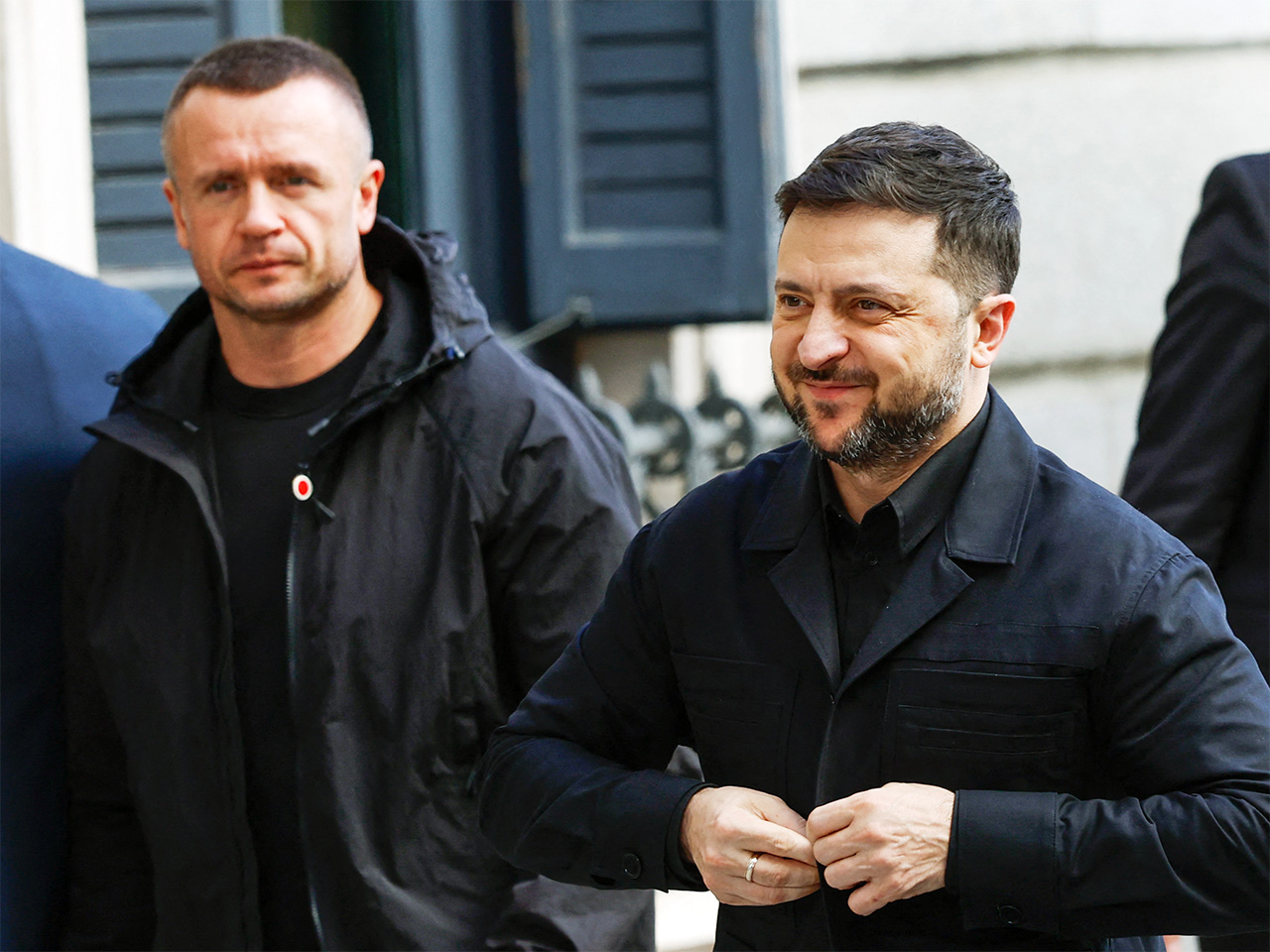
Men in black: Zelensky with his uniformly cool security detail
|
|
Everywhere else, the attempts of these massive guys to blend in are about as convincing as the seams on their slowly unstitching suits. But at MSC, their crossed arms and curly earpieces really are part of the seven-foot furniture. The only way you can distinguish them is by their lapel pins – the five-pointed “Service Star” of the US Secret Service (truly the Mean Girls of security details), the red-and-white chequerboard of the Croatians or the dismissive tricolour of the French. That is except for Volodymyr Zelensky’s bodyguards. Not only are the Ukrainian leader’s henchmen taller and wider than anyone else (their bulletproof vests help account for the latter), they are also the best turned out.
After last year’s dressing-down in the Oval Office, Zelensky decided to dress up: ditching the zip-up fleeces of the early war years for an all-black ensemble of military-inspired workwear and gorpcore hiking shoes – a pair of Lowa Innox Pro GTX Lo by the looks of it. His bodyguards have also received a sartorial pass, sparing them the discomfort of their peers’ ill-fitting blue suits. With their sleek black fatigues and closely cropped hair, Ukraine’s finest (and most fearsome) wouldn’t look out of place in the queue for Berghain – though their bright green MSC lanyards might prevent them from gaining entry.
Further insights on geopolitical style?
Dressed to influence: How World Governments Summit attendees tailored their image
|
|
Q&A / LISA MURKOWSKI
‘Division and dissension’: US senator Murkowski on Trump’s disrespectful Arctic policy
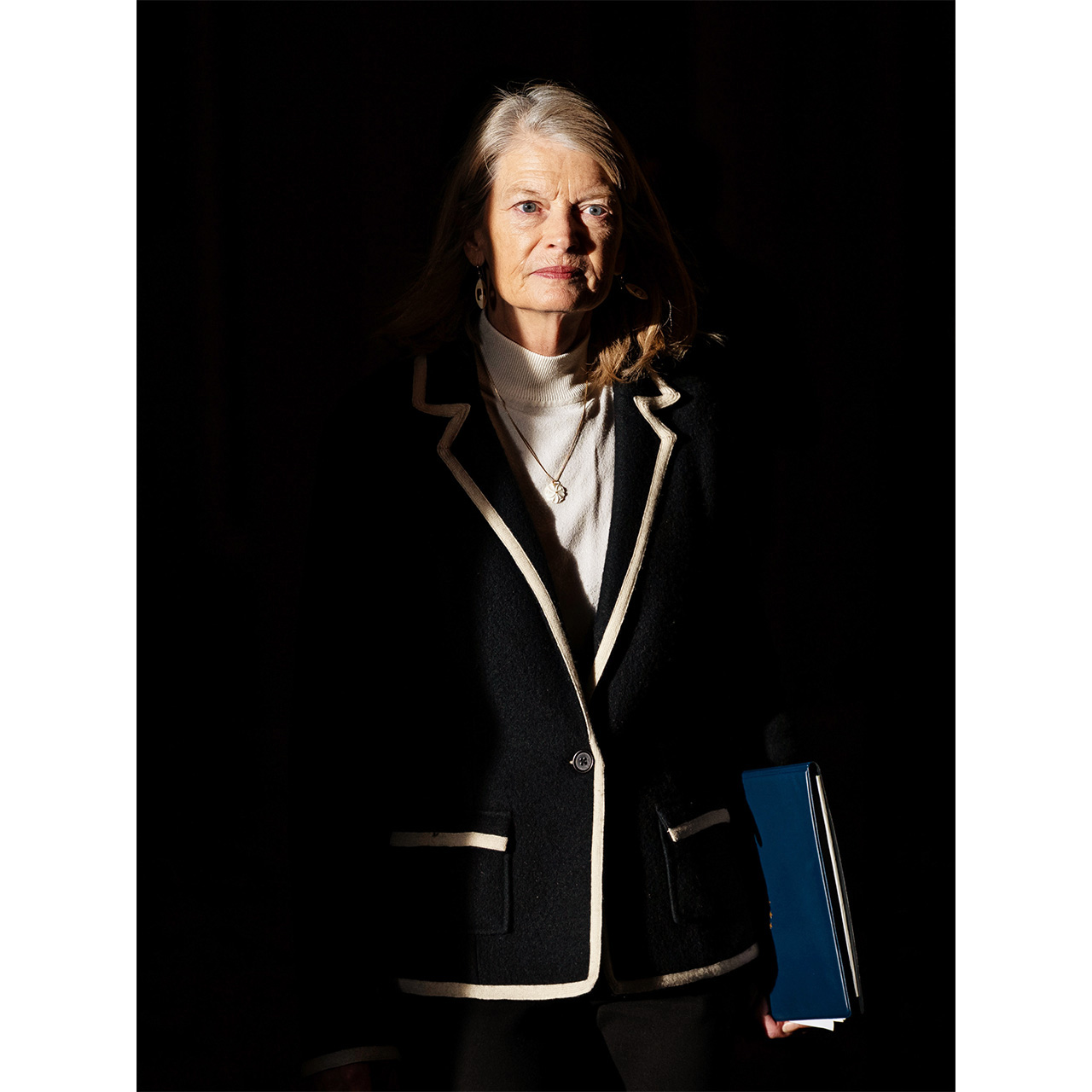
Lisa Murkowski is the senior US senator representing Alaska, a seat she has held for the Republicans since 2002 – despite repeated efforts by her own party to oust her (writes Andrew Mueller). Murkowski did not endorse – or by her own account vote for – US president Donald Trump in any of his three election campaigns, and she was one of seven Republican senators who voted to remove Trump from office at his second impeachment trial in 2021. Senator Murkowski spoke to The Foreign Desk at the Munich Security Conference; she had just visited Greenland in the wake of Trump’s threats to seize the territory from the Kingdom of Denmark, by force if necessary.
| |
|
Between two worlds: US senator Lisa Murkowski
|
|
How much damage has Trump’s Greenland fixation done to the transatlantic alliance?
Relationships matter. How we treat our friends matters. The trust that has built up over decades and generations matters. And so when words like ‘occupy’ or ‘take over’ or ‘buy’ or ‘acquire’ are used that disrespect a sovereign territory, and disrespect the autonomy of the people of Greenland, that’s a problem. But it’s something that can be reconciled through honest dialogue and openness about what is being sought. If we’re talking about shared security interests in the Arctic space, let’s think about it.
|
|
Overheard AT: MUNICH SECURITY CONFERENCE
‘Everyone’s hugging it out’ and other quotes from a weekend in Munich
The Munich Security Conference is a rearming world’s premier talking shop (writes Alexis Self). Here’s our pick of the quotes from the weekend’s keynotes and fireside chats.
“If there had been a unipolar moment after the fall of the Berlin Wall, a unipolar moment in history, it has long passed. The United States’ claim to leadership has been challenged and possibly lost.”
Germany’s chancellor, Friedrich Merz, in his opening address
“Donald Trump is doubling down on stupid, he is taking us back to the 19th century.”
California’s governor, Gavin Newsom, in a panel discussion on climate change
“Our great Midwestern heartland was built by German farmers and craftsmen who transformed empty plains into a global agricultural powerhouse. And, by the way, dramatically upgraded the quality of American beer.”
US secretary of state, Marco Rubio, attempting to ease transatlantic tensions by appealing to a common hoppy heritage
“If we want to be taken seriously on the European continent and beyond, we must show the world how unwavering our commitment is to defend our own interests. It started, of course, with continuing to extend our support to Ukraine, but it could nicely follow with fanning off unjustified tariffs and politely declining unjustified claims on European territory.”
France’s president, Emmanuel Macron, tries to strike a defiant tone
“I think we’re good, everyone’s hugging it out.”
Republican senator for South Carolina Lindsey Graham on US-Europe relations
“It’s Ukrainians who are holding the European front. Behind our people stands an independent Poland and the free Baltic states, there can be a soaring Moldova and a Romania without dictatorship, and even one Victor can think about how to grow his belly, not how to grow his army to stop Russian tanks from returning to the streets of Budapest.”
Volodymyr Zelensky delivers a, um, thinly veiled rebuke to Hungarian prime minister, Victor Orbán
|
|
Image credits: Kay Nietfield/Getty Images, Sven Hoppe/Alamy, Manuel Nieberle, Pierre-Philippe Marcou/AFP via Getty Images, Graeme Sloan/Bloomberg via Getty Images, Illustration: Studio Pong
If you would like to read this email online, click
here
Unsubscribe from Monocle On the Road.
| | |