| | In this edition: South Africa’s unemployment rate falls, a new US ambassador, and Russia’s growing i͏ ͏ ͏ ͏ ͏ ͏ |
| |  Johannesburg Johannesburg | Ouagadougou | Mbabane |
 | Africa |  |
| |
|
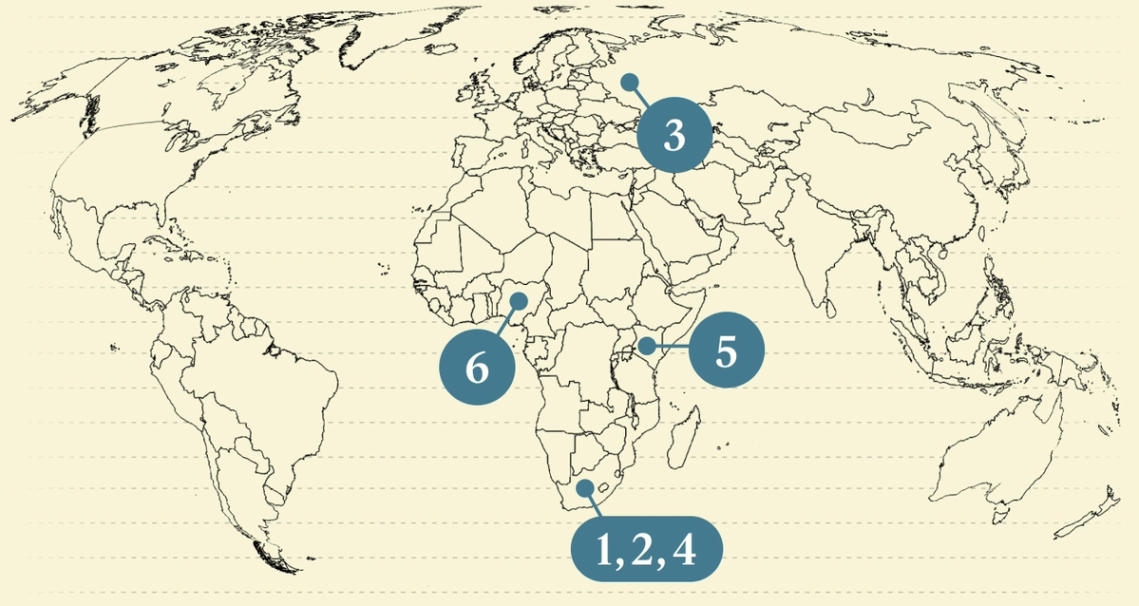 - Unemployment rate falls
- S. Africa’s new ambassador
- Russia’s growing influence
- MTN acquires IHS
- Venture capital stabilizes
- Creative economy grows
 A fishing competition is revived in Nigeria. |
|
S. Africa unemployment falls |
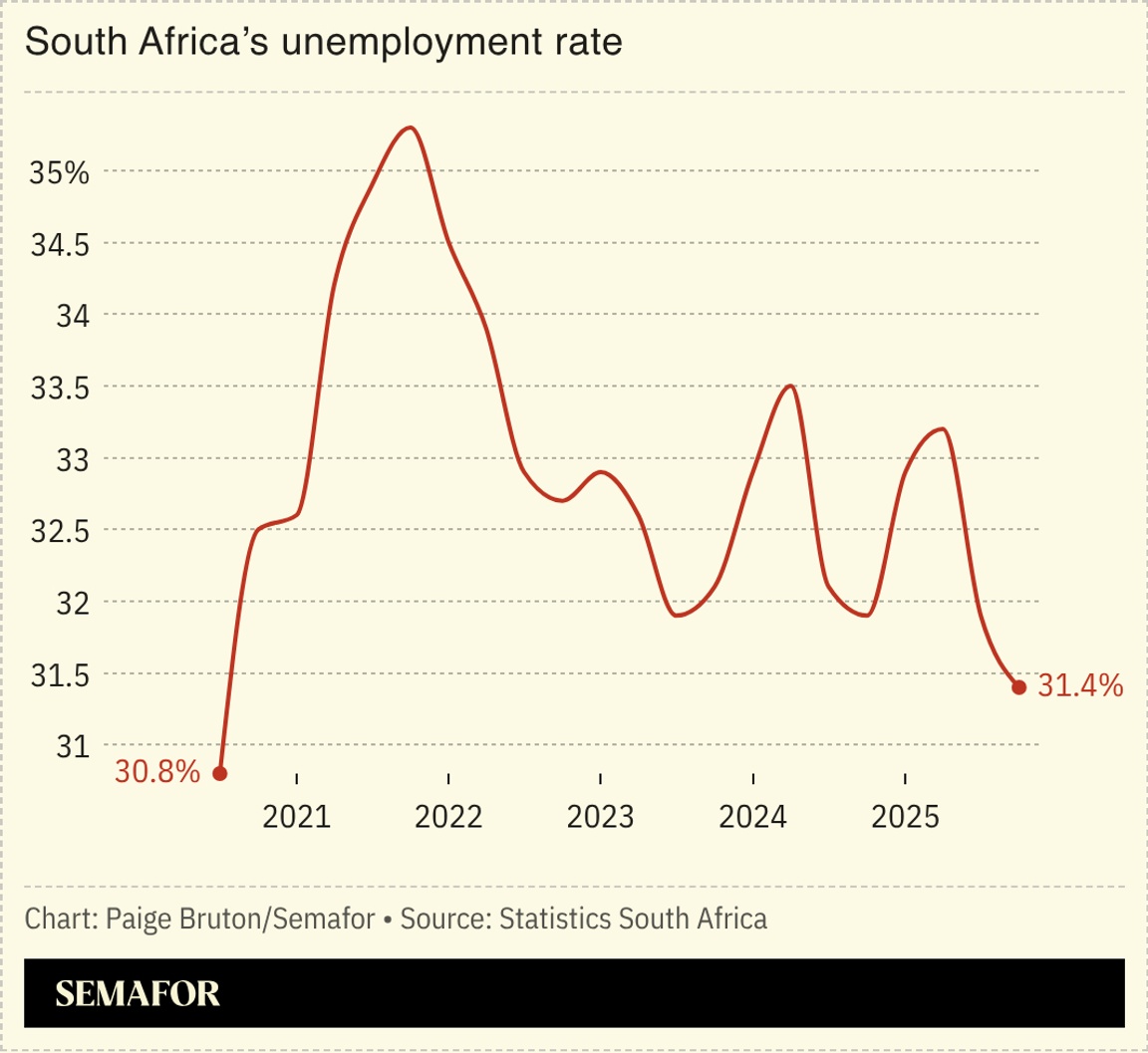 South Africa’s unemployment rate fell to its lowest level in more than five years, the latest sign that the continent’s biggest economy is finally gathering momentum. More than 30% of South Africans remain jobless despite broad-ranging government efforts in a country that has one of the highest unemployment rates in the world. Nevertheless, the figures offered a boost to authorities ahead of the unveiling of the country’s budget next week. Net total employment rose by 21,000 in the last quarter of 2025 compared with the same period a year earlier, largely due to increases in the number of people employed in the transport, social services, and construction industries, the statistics agency said. Improving electricity supply and easing logistics bottlenecks have also helped bolster the economy, while analysts expect inflation to ease over the course of this year and next. Morgan Stanley economists projected a series of interest rate cuts beginning next month as a result, and forecast that “growth in 2026 is set to improve.” The IMF estimated that the country’s economy will grow by 1.4% this year, a small improvement on last year’s 1.3%. |
|
South Africa gets new US ambassador |
 US Ambassador to South Africa Leo Brent Bozell III. Kris Connor/Getty Images. US Ambassador to South Africa Leo Brent Bozell III. Kris Connor/Getty Images.Leo Brent Bozell III, Washington’s ambassador to South Africa, finally arrived in the country, amid ongoing tensions between the two nations. The US has not had an ambassador in Pretoria since January 2025, and South Africa has not had an ambassador in Washington since the Trump administration expelled its last one. Relations between Pretoria and Washington have sharply deteriorated during US President Donald Trump’s second term: Trump has repeatedly accused Pretoria of carrying out a “genocide” against South Africa’s white population, a charge experts reject. He has also imposed onerous tariffs on the country and the pair have sparred over Pretoria’s legal action against Israel over the Gaza war. The White House’s pressure has pushed Africa’s biggest economy closer to China — the two recently signed a free-trade agreement — even as Washington is looking to outmuscle Beijing on the continent. A version of this item first appeared in Flagship, Semafor’s daily global affairs briefing. Subscribe here. → |
|
|
Russia expands its influence |
 Olympia de Maismont/AFP via Getty Images Olympia de Maismont/AFP via Getty ImagesRussia is ramping up a campaign to extend its influence across Africa. Last week, Moscow’s foreign minister said that around 100 employees had been redeployed from Europe to diplomatic missions in Africa, where Russia is planning to reopen a dozen or so new embassies. Meanwhile, the Russian Orthodox Church has expanded to at least 34 countries across the continent in recent years, and Russia has tripled its scholarship places for African students. As Moscow struggles with a weakening wartime economy, its diplomatic push on the continent offers a way to increase its global footprint, one in which it can avoid committing to deliver massive infrastructure investments such as those offered by China or the US. The Kremlin also recently created a new international relations department that focuses on countries selected by Russian President Vladimir Putin: A special team will look after Africa policy, Bloomberg reported. |
|
 Siphiwe Sibeko/Reuters Siphiwe Sibeko/ReutersMTN Group, Africa’s largest telecom operator, confirmed a deal to acquire IHS Towers, a strategic reversal for MTN, which previously spun off its tower portfolio to unlock capital and boost returns. The deal, which values IHS’ equity and debt at about $6.2 billion, paves the way for the tower group’s delisting from the New York Stock Exchange. IHS, which was founded in Lagos, operates nearly 29,000 towers across key MTN markets including Cameroon, Côte d’Ivoire, Ghana, Nigeria, and Rwanda, serving multiple mobile network operators. Bringing the towers back in-house will allow MTN to keep the profits it currently pays to IHS, better manage costs, and earn more from third-party tenants, tightening its grip on critical digital infrastructure across Africa. |
|
 Semafor will convene with leaders in Nairobi on Tuesday, March 24 to advance financial inclusion at the intersection of long-term capital, policy, and financial infrastructure. Bringing together investors, policymakers, and financial system leaders, the conversation will move beyond ecosystem-building toward action — mobilizing capital, strengthening infrastructure, and closing persistent access and affordability gaps. Join us as we dive into how coordinated public–private efforts can accelerate inclusive growth across East Africa and other emerging markets. March 24 | Nairobi | Request Invitation |
|
Venture capital stabilizes |
 The amount raised by African startups across more than 500 deals in 2025, according to a report by the African Private Capital Association. The industry group for venture capital and private equity investors said the year’s performance signaled that Africa’s startup scene had entered “a phase of disciplined stabilization” after previous years marked by declining investment. African investors accounted for a new high of 45% of the total sum raised — up from an average of 23% between 2022 and 2024 — with corporates and African development finance institutions leading the charge. Another notable trend in 2025 was that venture debt reached $1.8 billion, nearly double the amount in 2024 — corroborating other assessments that venture debt is becoming normalized in the continent’s startup funding landscape. |
|
Creative economy opportunities |
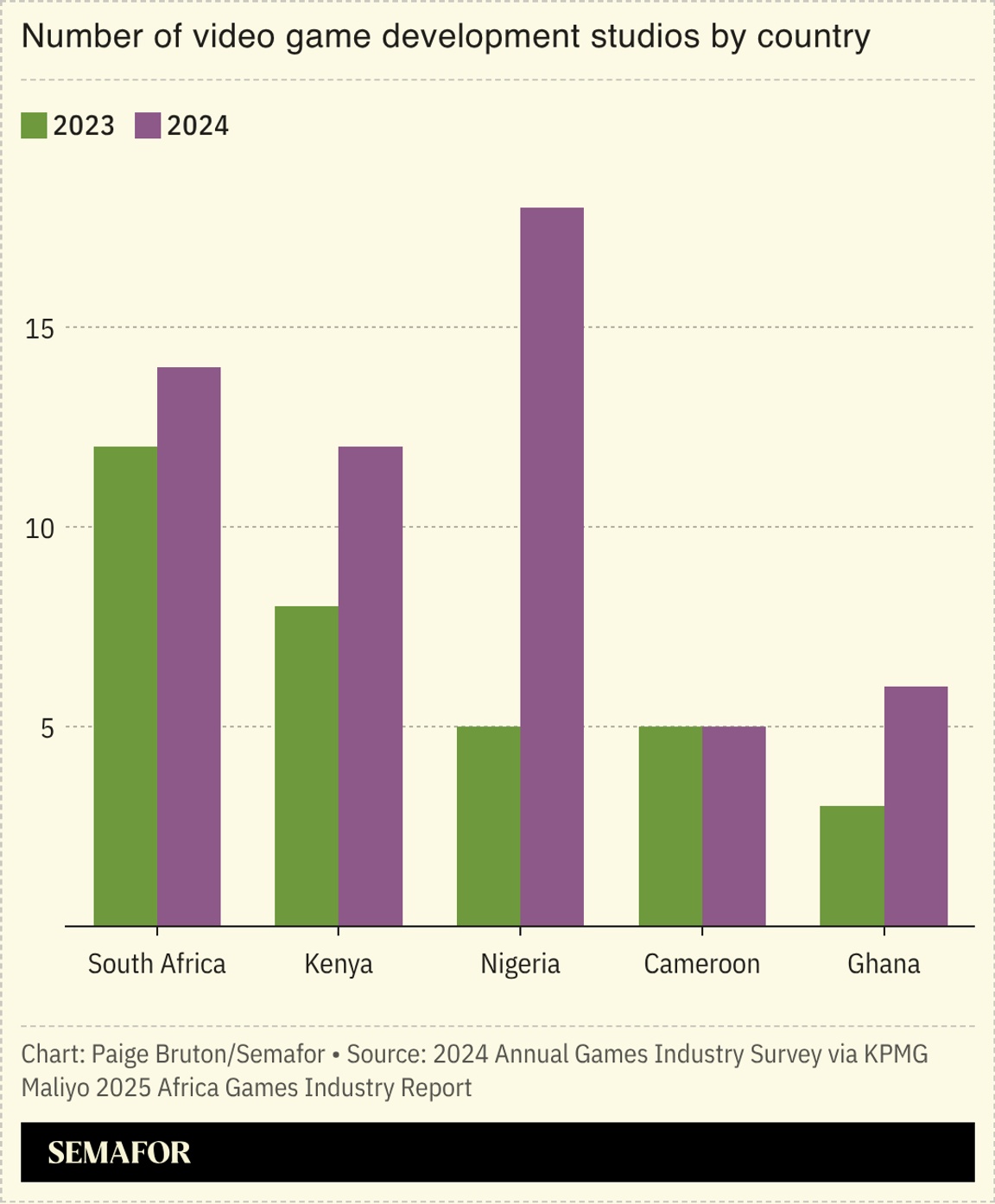 Africa’s creative economy could be worth $200 billion by 2030 and offers “unprecedented opportunities for strategic investors,” according to new analysis from the Brookings Institution. The continent has seen major growth in its music, fashion, film and gaming industries in recent years: In 2024, Africa’s gaming industry revenue was projected to surpass $1 billion, with 66 active studios across 23 countries, wrote Landry Signé, senior fellow at the US think tank’s Africa Growth Initiative. He spotlighted South Africa as a particular hub for esports and said Africa’s gaming industry offers “tech-enabled scalability with proven monetization models” that could incorporate industries like mobile money. |
|
 Business & Macro |
|
|


