|



 |
When we introduced Polymarket embeds in 2024, creators started weaving prediction market data into their analysis, from election forecasts to AI breakthroughs to economic policy. As more creators have integrated and responded to this data in their work, we’ve been building tools to support how they reference and discuss it on Substack.
Today, in partnership with Polymarket, we’re introducing native tools that make it easier to share, discuss, and debate prediction market data directly on Substack. Polymarket has also joined our sponsorships pilot, supporting a cohort of creators who integrate these tools into their work.
What are prediction markets, and why do they matter?
Prediction markets are an emerging technology that aggregates real-time estimates of what will happen in the future. While the stock market lets people trade shares of companies, and the price reflects an estimate of how much a business is worth, Polymarket lets people trade shares of future events, like elections, economic trends, and scientific breakthroughs. The price reflects a market estimate of how likely an outcome is to happen.
So while the stock market can tell you how much traders think Nvidia is worth, Polymarket can tell you whether traders think the Fed will raise interest rates, that Ukraine will join NATO this year, or that One Battle After Another will win Best Picture at the Oscars. As with the stock market, these prices offer powerful insights into how participants are assessing the likelihood of different outcomes—everyone is free to disagree about how much Nvidia is actually worth, or what movie will win, but everyone still sees the same ticker of what it’s trading at, up to the second.
What’s new
When we first introduced Polymarket embeds, creators had to paste external links into posts. Even with that extra step, one in five of Substack’s top 250 highest-revenue publications started using them. Today, we’re making it easier with three new features, now available on iOS, Android, and web:
Notes embeds
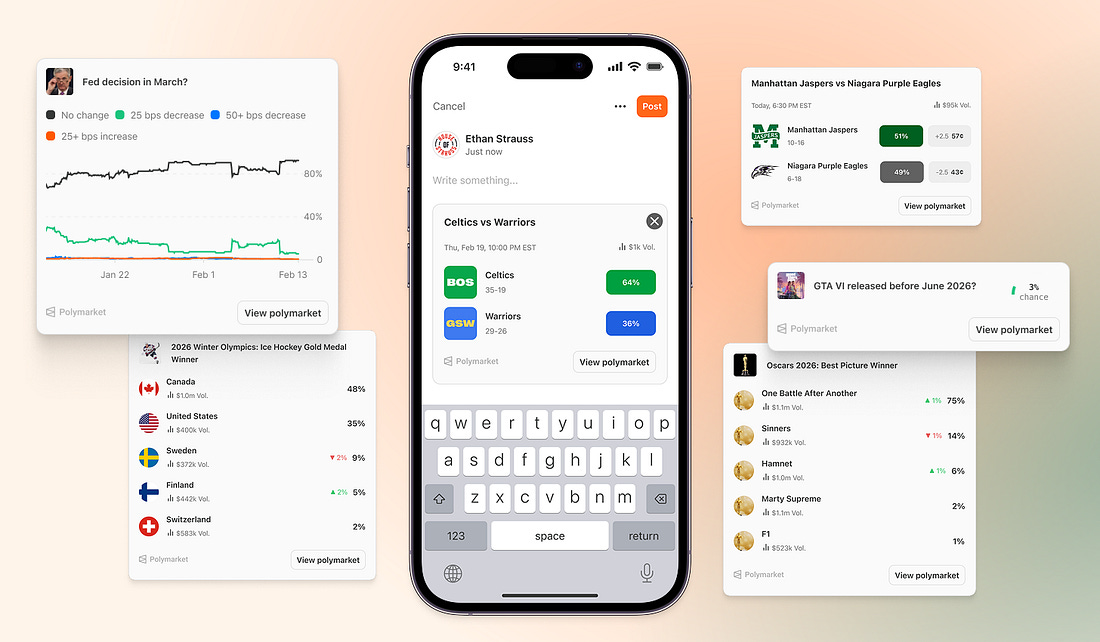
Polymarket data can now be embedded directly in Notes, not just posts. This means you can quickly reference a prediction market that automatically refreshes with the latest odds, while sharing commentary, responding to news, or sparking a discussion—whether you’re writing a full article or a quick note.
Writer and podcaster Konstantin Kisin referenced market expectations in a note about different timelines for Keir Starmer’s potential exit as U.K. prime minister, while tech analyst Azeem Azhar used a Polymarket embed in Notes to comment on how Anthropic’s research progress moved prediction market sentiment around AI model performance.
Search within Substack
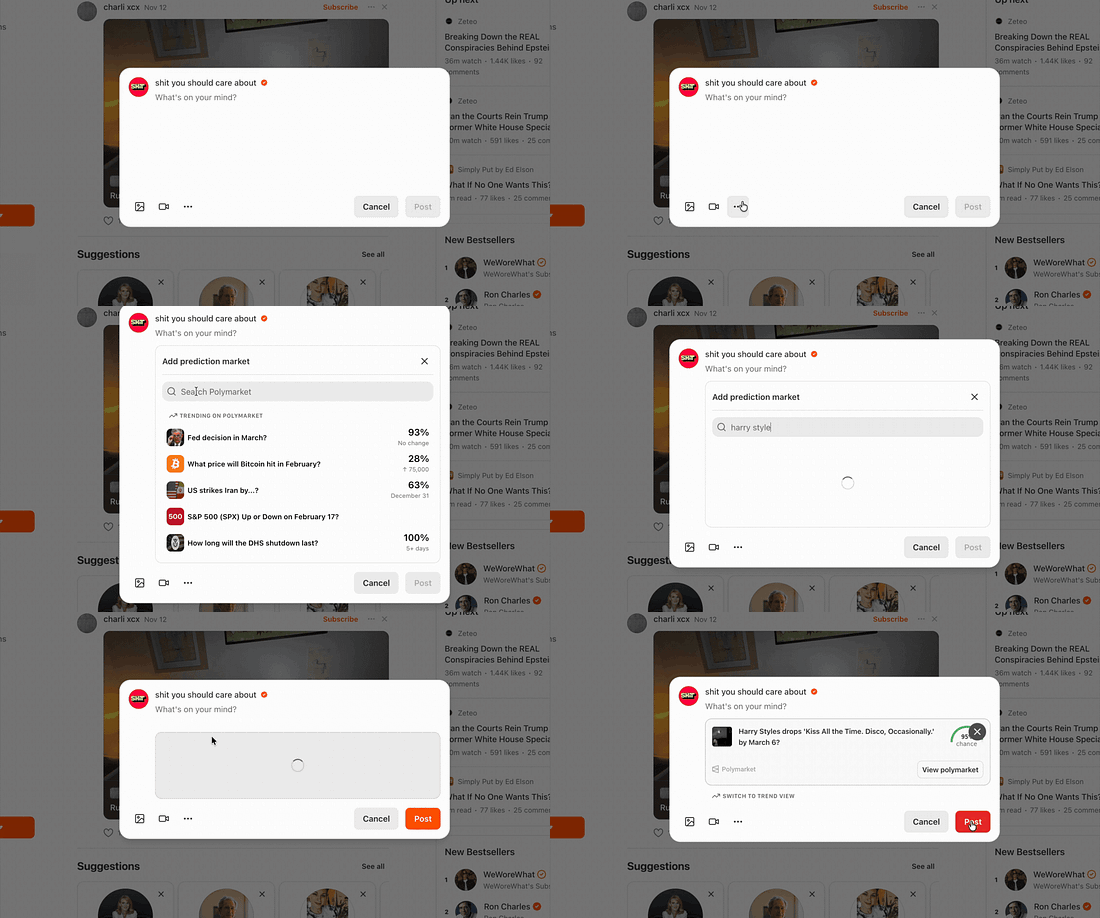
You can now search for Polymarket data directly from the post editor or Notes composer. No need to open a new tab, find the right market, and copy a link back. Just search, select, and insert an embed directly alongside your analysis.
 |
Dynamic visualizations
Polymarket embeds now adapt their visual format to match the type of question you’re referencing—a yes-or-no question looks different from one with multiple possible outcomes. Substack automatically selects the right format to ensure that the data is clear and easy to read.
For example, when Cartoons Hate Her embedded data on the Democratic favorite for 2028—with the caveat that it’s still “way too early to say”—it automatically displayed as a multi-candidate ranking. When shit you should care about embedded a question about whether the U.S. will confirm before 2027 that aliens exist, it displayed as a simple percentage.
 |