| | Russia-Ukraine talks yield no breakthroughs, China targets “quasi-naked” officials, and Mark Zuckerb͏ ͏ ͏ ͏ ͏ ͏ |
| |  | Flagship |  |
| |
|
The World Today | 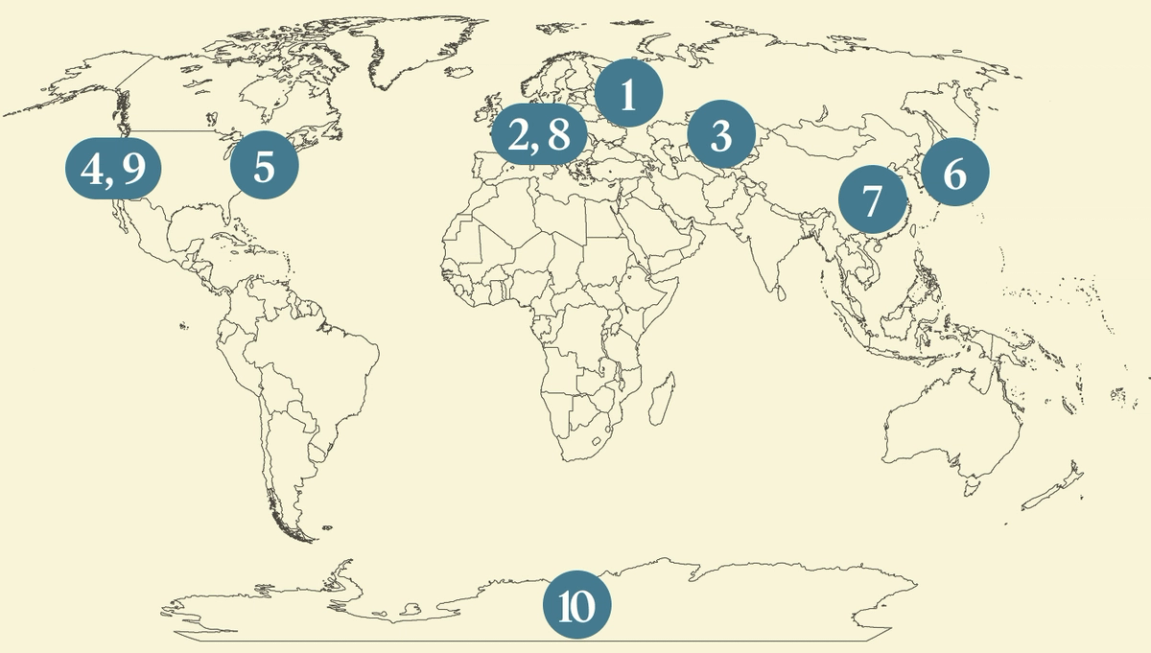 - Little Russia-Ukraine progress
- ECB succession race is on
- The US’ ‘big beautiful belt’
- Zuckerberg takes the stand
- Apple is an AI outlier
- Japan’s bond ‘battlefield’
- China widens anti-graft push
- Germany’s population decline
- AI agents hire humans
- A shark in the Antarctic
 A must-read book, according to Christine Lagarde. |
|
No breakthrough in Russia-Ukraine talks |
 Press service of the National Security and Defense Council of Ukraine/Handout via Reuters Press service of the National Security and Defense Council of Ukraine/Handout via ReutersTwo days of negotiations between Russia and Ukraine failed to yield any major breakthroughs to end the nearly four-year war, despite US President Donald Trump’s rising impatience. “Surprise, surprise,” Politico wrote: The peace talks have essentially become “political theater,” with both Kyiv and Moscow trying to convince Trump that the other side is to blame for the impasse. The Kremlin has reportedly offered Trump some $12 trillion in deals as part of a ceasefire agreement, but that is “plainly hyperbole designed to please” him, The Economist wrote, given that Russia’s available riches “are a small fraction” of what Moscow is touting, The Economist reported. |
|
ECB tamps down Lagarde exit chatter |
 Jana Rodenbusch/Reuters Jana Rodenbusch/ReutersThe European Central Bank said its chief Christine Lagarde hasn’t made a decision on stepping down before her term ends, but the contest to replace her has already kicked off. The Financial Times reported Lagarde is expected to quit early so French President Emmanuel Macron would have a say in her successor before France’s elections next year, which could see populist factions surge to power. While economists downplayed the far right’s potential sway over the appointment, they warned a politically engineered succession could undermine the bank’s reputation. Spain on Wednesday publicly staked its claim to the powerful post, with its former central bank chief seen as a top contender. “The race is on,” an EU official said. |
|
Trump’s ‘big beautiful belt’ of influence |
 Jonathan Ernst/Reuters Jonathan Ernst/ReutersUS President Donald Trump’s new Board of Peace, which convenes for the first time Thursday, reflects the inroads Washington has made in Central Asia and other regions where China has sought to increase its influence. A bulk of the board’s 27 signatories belong to what one analyst called a “big beautiful belt” stretching from Morocco to Kazakhstan, Nikkei wrote. The White House’s efforts could counter the growing clout Beijing wields in some of those countries through the infrastructure-focused Belt and Road Initiative. But the Board of Peace, which Trump has cast as a UN alternative, has a somewhat obscure mandate, and its marquee initiative — rebuilding Gaza — faces myriad hurdles. |
|
Meta CEO testifies in landmark trial |
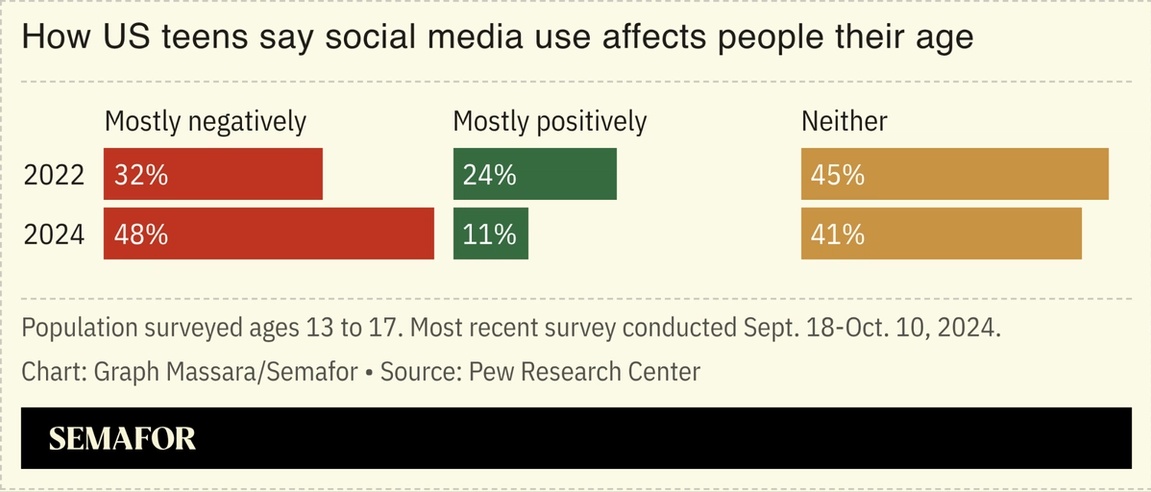 Mark Zuckerberg testified in court Wednesday that increasing engagement time on Instagram wasn’t Meta’s goal, as he defended his company in a landmark trial over social media addiction. The California case has drawn comparisons to the lawsuits brought against Big Tobacco in the 1990s, which forced a national reckoning over the harms of smoking. The case also targets Google’s YouTube, and will serve as a test for a bevy of suits against other platforms, including TikTok and Snap. Governments around the world have lobbed similar accusations against social media sites and are pursuing outright bans for teen users. |
|
Apple survives AI whack-a-mole |
 Mark J. Rebilas-Imagn Images Mark J. Rebilas-Imagn ImagesApple is increasingly diverging from its tech giant peers on the stock market as it dodges the AI-fueled anxiety roiling the industry. The company’s correlation to the tech-heavy Nasdaq 100 index is at its lowest point since 2006. That’s a positive, one strategist said, given that the market is playing “AI whack-a-mole” as investor sentiment swings from fears of dramatic AI investments not paying off to worries that AI is going to kill traditional software businesses. But Apple “doesn’t fit the bill on either side of that angst,” Bloomberg wrote. While the company has faced challenges integrating AI into its products, it also hasn’t joined the mega-spending spree that has strained its competitors’ finances. |
|
Japan’s veteran bond traders in demand |
 Kiyoshi Ota/Pool via Reuters Kiyoshi Ota/Pool via ReutersA swell of fresh interest — and anxiety — around Japan’s bond market is pulling a niche class of traders back into the spotlight after decades of monotony. The Bank of Japan’s 0% interest rates made Japanese government bond yields essentially flatline for years; that changed after Prime Minister Sanae Takaichi rose to power with an expansionist fiscal agenda, which sent yields jumping. Global investment firms are looking to bond veterans, many of whom are now in their 60s or older, for help navigating the volatility, The New York Times reported. “It’s becoming a ‘battlefield’ again,” one longtime trader said. “It’s just like the old days.” Some experts, though, see the surge as a troubling sign for Japan’s debt. |
|
China targets ‘quasi-naked’ officials |
 Go Nakamura/Reuters Go Nakamura/ReutersBeijing has quietly expanded its anti-corruption push, the South China Morning Post reported, scrutinizing officials whose children live abroad. The Chinese Communist Party’s personnel organ carried out a nationwide survey last year on state employees’ foreign ties. Beijing for years has cracked down on “naked officials” (those whose spouses and children don’t live in China), but is now extending scrutiny to “quasi-naked” officials who only have kids living overseas. While experts say there’s no evidence that such CCP members are more corrupt, the clampdown reflects leader Xi Jinping’s efforts to curb graft and tighten his grip on power. After the ouster of two top military generals, Pekingologists are trying to guess who’s next to go. |
|
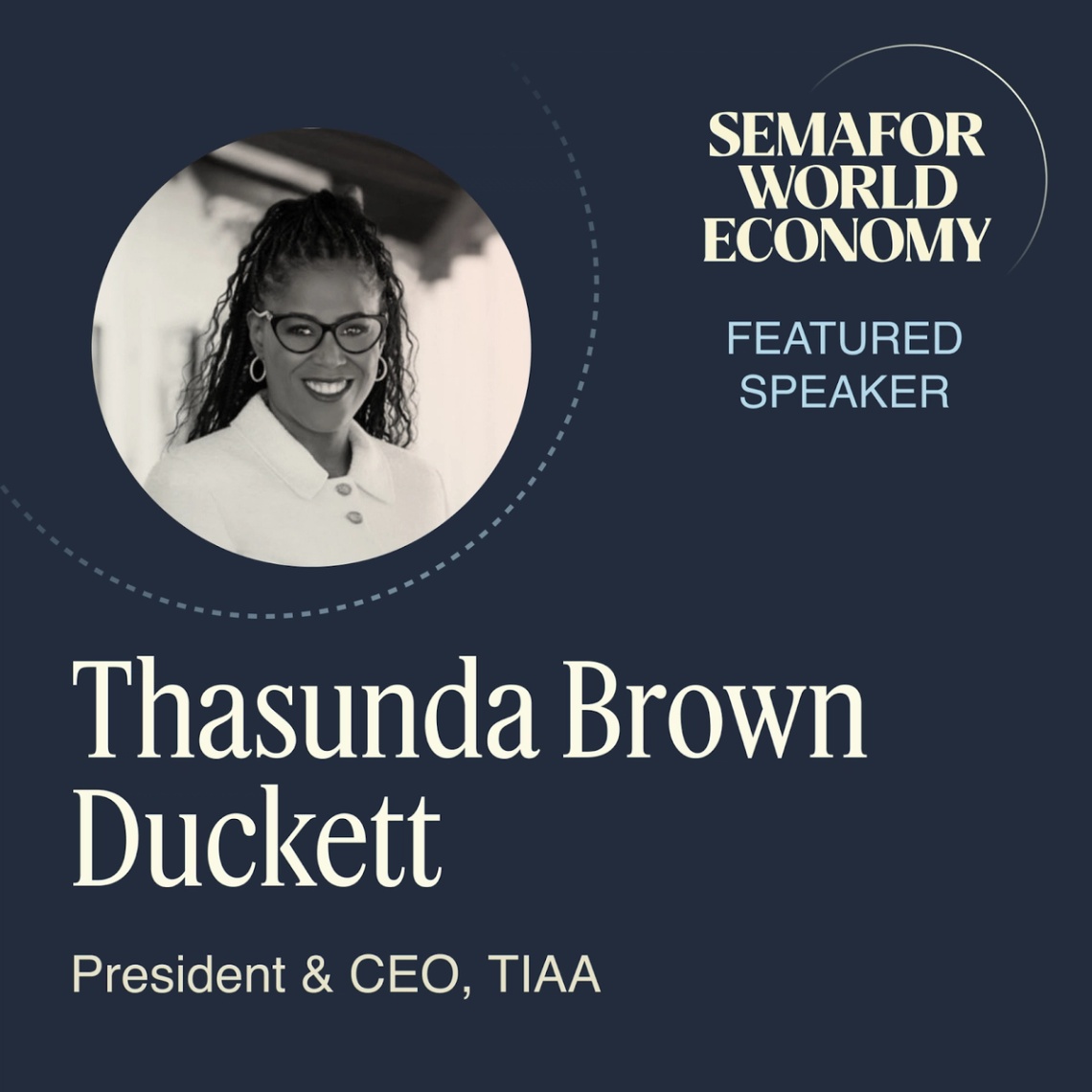 This April, President and CEO of TIAA, Thasunda Brown Duckett, will join global leaders at Semafor World Economy — the premier convening for the world’s top executives — to sit down with Semafor editors for conversations on the forces shaping global markets, emerging technologies, and geopolitics. See the first lineup of speakers here. |
|
Germany’s population to shrink |
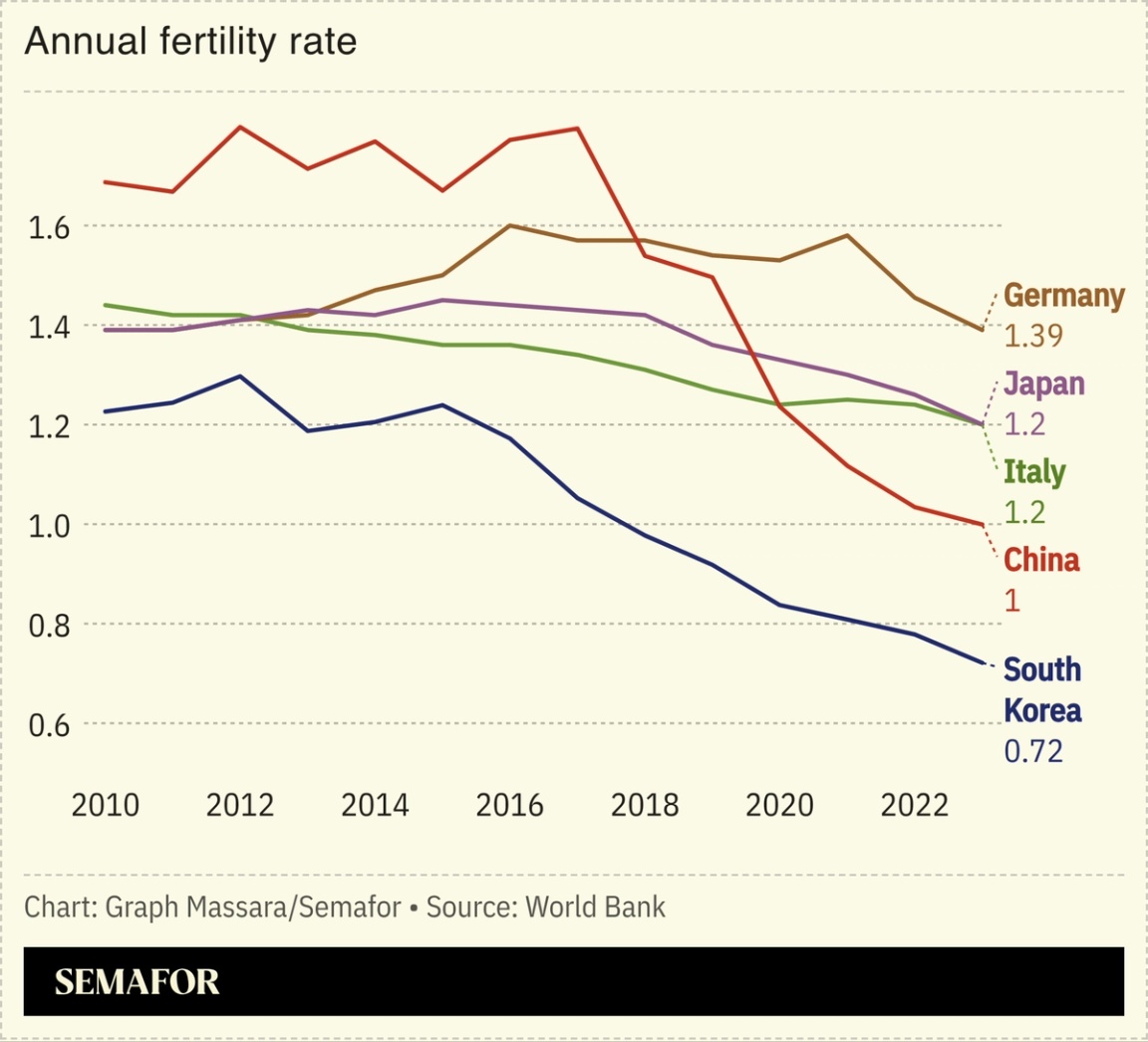 Germany’s population is set to shrink 5% by 2050, much faster than previously anticipated, new forecasts suggest. The shift risks further straining a pension system that already accounts for about a quarter of the country’s budget. Previous predictions had underestimated present population, net migration, and birthrate decline. Other countries have similar problems — Japan and China both saw plummeting birth rates in 2025. But “there is no powerful reason to fear declining populations,” the Financial Times’ chief economics commentator argued: While there will be more pensioners dependent on fewer workers, there will also be fewer children dependent on their parents, and rising retirement ages and AI-fueled productivity could stave off economic collapse. |
|
AI agents need humans, too |
 Courtesy of RentAHuman.ai Courtesy of RentAHuman.aiA new startup began offering human labor to AI agents. AI models are increasingly autonomous, but are largely unable to interact with the physical world. RentAHuman puts agents in touch with humans who can do manual tasks for them. The site now has around 11,000 job ads, including requests to “count pigeons in Washington ($30/hour); deliver CBD gummies ($75/hour); play exhibition badminton ($100/hour),” WIRED reported. One agent helping run a convention paid a human to deliver beer after it noticed supplies were low. AI safety activists have often warned that agents could pose an existential threat despite being disembodied. Hopefully none of the ads request anything like “synthesize viral DNA.” |
|
|


