| | Trump hosts the first Board of Peace meeting, Andrew Mountbatten-Windsor is arrested over his Epstei͏ ͏ ͏ ͏ ͏ ͏ |
| |  Buenos Aires Buenos Aires |  Seoul Seoul | Pyongyang |
 | Flagship |  |
| |
|
The World Today | 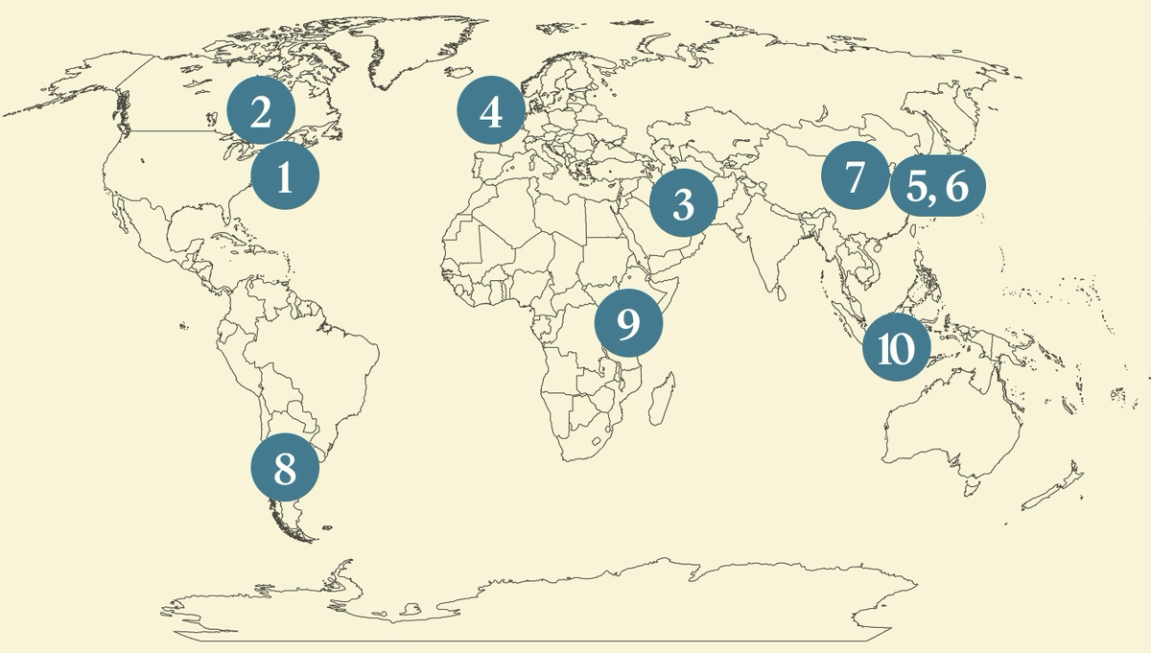 - Trump hosts Board of Peace
- Canada’s trade bloc plans
- US increases Gulf buildup
- Ex-Prince Andrew arrested
- S. Korea’s Yoon jailed
- N. Korea unveils weapons
- IMF China subsidy warning
- Argentina general strikes
- Africa’s debt refinancing
- Asia’s book renaissance
 A new BBC podcast about the 1999 apartment bombings across Russia, and who might have been behind them. |
|
Trump hosts first Board of Peace meet |
 Denis Balibouse/File Photo/Reuters Denis Balibouse/File Photo/ReutersUS President Donald Trump will convene the inaugural meeting today of his Board of Peace, an organization ostensibly focused on rebuilding Gaza but that critics fear has ambitions of unseating the UN as the main forum for global diplomacy. More than 45 countries are to take part, and the White House will announce upwards of $5 billion in pledges, but much is still to be resolved. The EU is present as an observer, but many European nations have eschewed invites; Southeast Asian and Gulf leaders, by contrast, are more enthusiastic. Israel is a member but no Palestinian representatives are involved, despite the Board’s stated focus on Gaza. “On the ground,” a Western diplomat told Le Monde, “nothing is happening.” |
|
Canada eyes middle-power trade boost |
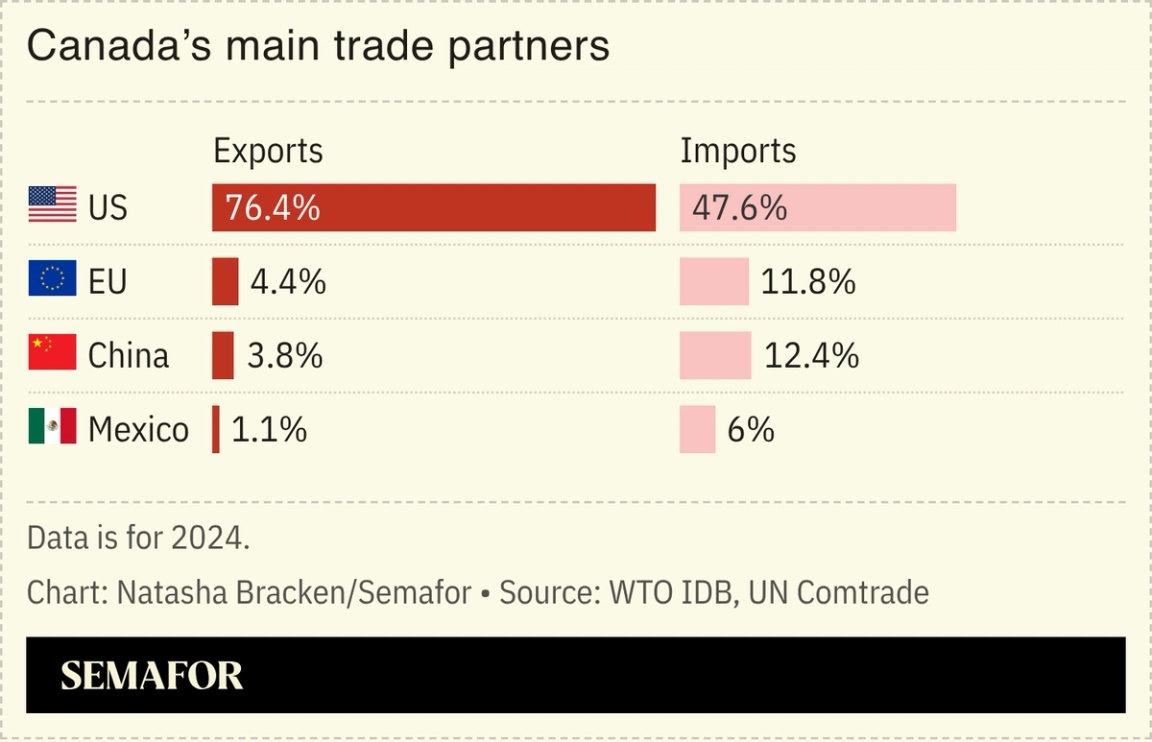 Canada’s prime minister offered to “broker a bridge” between two gigantic trade blocs — neither of which include the US or China — as part of his middle-power diplomatic push. Mark Carney’s remarks follow a Davos speech in which he said medium-sized countries needed to prepare for a world in which superpowers were unlikely to enforce liberal norms. His latest proposal would involve deepening ties between the European Union and the CPTPP, a Pacific trade organization. Such an agreement would be fiendishly complex, bringing together more than 40 countries across sprawling, unconnected territory, but the EU and its peers must “learn to move more quickly, and in a more flexible way,” experts at the European Council on Foreign Relations noted. |
|
US increases Iran pressure |
 Ricardo Arduengo/Reuters Ricardo Arduengo/ReutersThe US ramped up pressure on Iran, sending its largest concentration of air power to the Middle East since 2003. Two aircraft carriers and dozens of land-based planes have moved to the Gulf, enough to wage “a sustained, weekslong air war against Iran,” The Wall Street Journal reported. US President Donald Trump has demanded Tehran give up its nuclear ambitions — negotiators met this week but the White House said the two sides were “still very far apart” — though it is unclear whether Trump’s aim is to destroy Iran’s nuclear program or overthrow the regime. Iran’s leaders, meanwhile, face internal pressure as well: Memorial services for the thousands killed in a recent crackdown sparked fresh protests and renewed government violence. |
|
UK’s former Prince Andrew arrested |
 Andrew Mountbatten-Windsor. Toby Shepheard/File Photo Andrew Mountbatten-Windsor. Toby Shepheard/File PhotoAndrew Mountbatten-Windsor, formerly the UK’s Prince Andrew, was arrested by British police over his connections with the late sex offender Jeffrey Epstein. The ex-royal had already been stripped of his titles over his ties to the disgraced financier, further revealed in emails and images recently released by US law enforcement. His arrest comes amid widening global fallout from the Epstein controversy: Microsoft cofounder Bill Gates canceled a speech at an Indian AI conference after being named in the files, and French prosecutors announced two separate investigations, into human trafficking and financial offences, after finding evidence of crimes on French soil. Trawling through the 3.5 million documents released will be “a Herculean task,” Le Monde reported. |
|
S. Korea ex-president jailed for life |
 Kim Soo-hyeon/Reuters Kim Soo-hyeon/ReutersSouth Korea’s former president was jailed for life for leading an insurrection, in one of the country’s biggest criminal trials in decades. Yoon Suk Yeol attempted to impose martial law in 2024, accusing opponents of harboring “anti-state forces” sympathetic to North Korea. He ordered soldiers to storm the parliament, but they were prevented from reaching the chamber. Yoon was charged with insurrection, one of the few criminal charges from which a president is not immune — it can also carry the death penalty, although Seoul has not executed anyone in decades. The case has revealed deep divisions in the country, which only became democratic in 1987: Yoon supporters told the BBC that “leftist forces” want to unite with the north. |
|
N. Korea unveils new weapons |
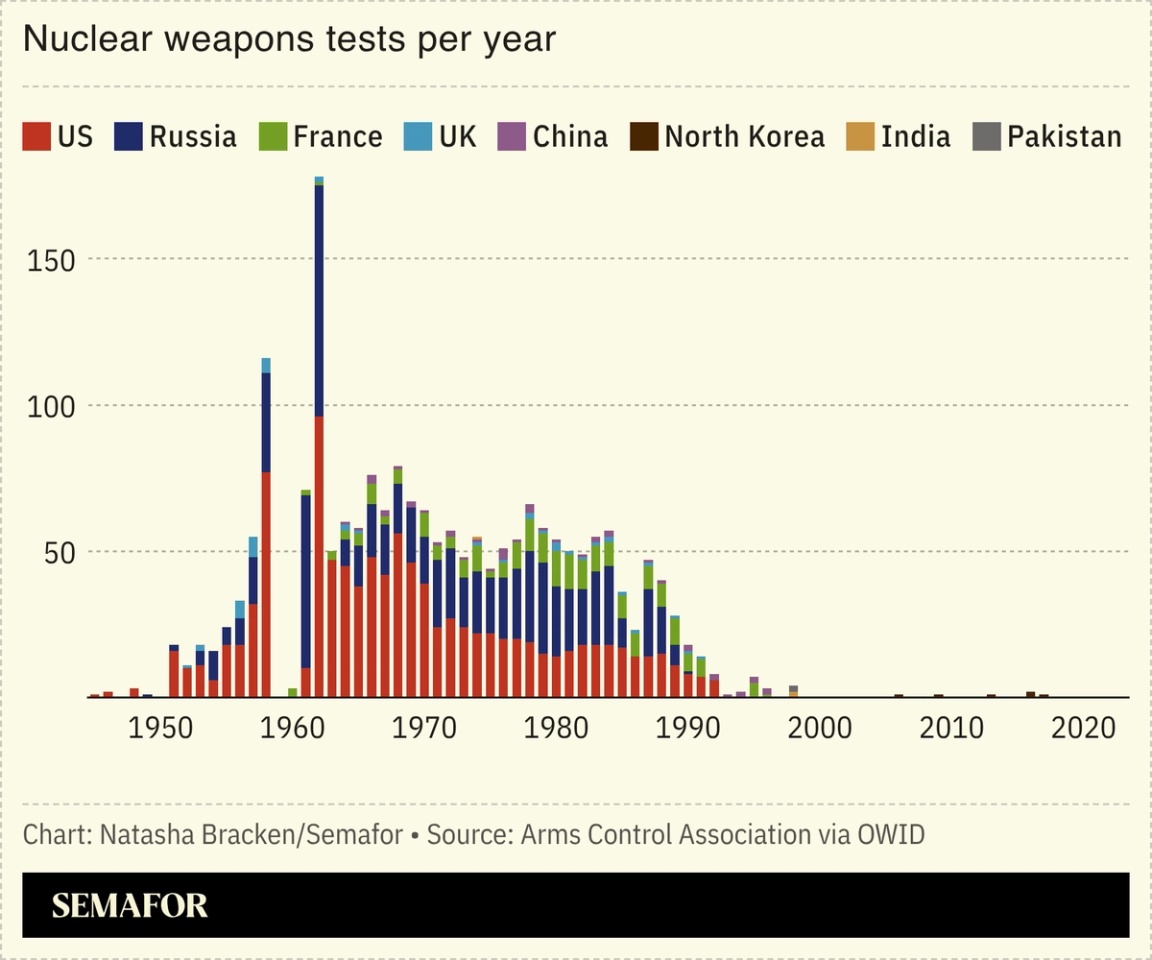 North Korean leader Kim Jong Un unveiled nuclear-capable rocket launchers, part of efforts to tout Pyongyang’s military capabilities ahead of an upcoming meeting of the ruling communist party. Photos released by North Korean state media showed the devices stationed outside the building that will host the party congress. The announcement follows moves aimed at expanding and showcasing Pyongyang’s military capacity: North Korea launched suspected ballistic missiles into the sea last month in an apparent weapons test, and Kim has ordered increased missile production. The rare party meeting will be closely watched, analysts at the Washington-based Stimson Center noted, with changes to the leadership, major organizations, or policy seen as “highly probable.” |
|
IMF urges China on industrial subsidies |
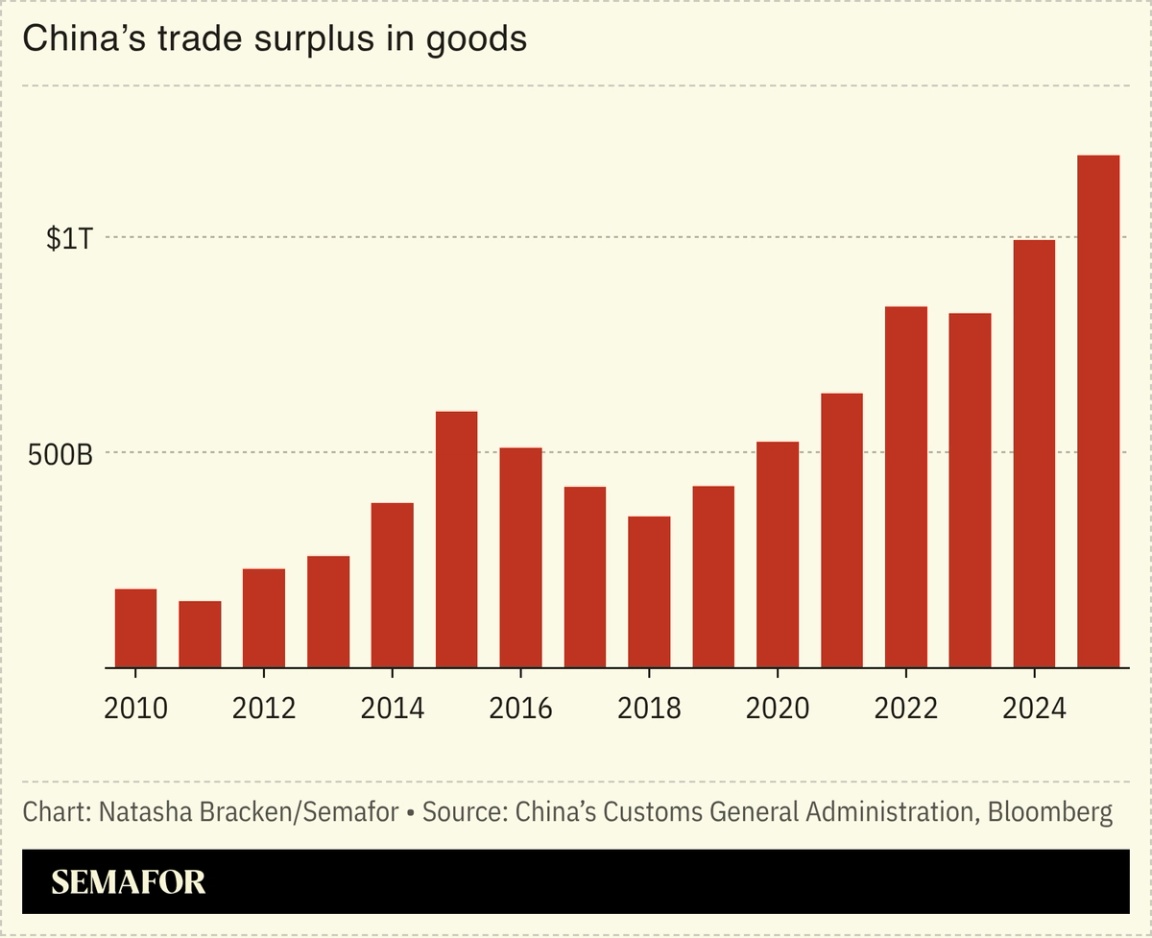 The International Monetary Fund called on China to halve its industrial subsidies, as concerns mount about manufacturing overcapacity in the world’s second-biggest economy. Beijing has in recent years ramped up exports of manufactured goods, notably EVs and green energy technology, and built up a trade surplus of over $1 trillion. It has led to worry overseas and at home: Policymakers worry that domestic supply gluts are causing damaging price wars and deflation. The IMF’s China chief proposed that Beijing cut subsidies from 4% of GDP to about 2%, and start to move toward “consumption-led growth,” saying that its industrial policy has enabled tech innovation but that “overall the impact on the economy has been negative” because of resource misallocation. |
|
 This April, Brad Garlinghouse, CEO of Ripple, will join global leaders at Semafor World Economy, the premier convening for the world’s top executives. The event brings together Semafor editors and industry leaders for conversations on the forces shaping global markets, emerging technologies, and geopolitics. See the first lineup of speakers here. Applications for Semafor World Economy Principals are now open — apply now. |
|
Argentina unions strike over reforms |
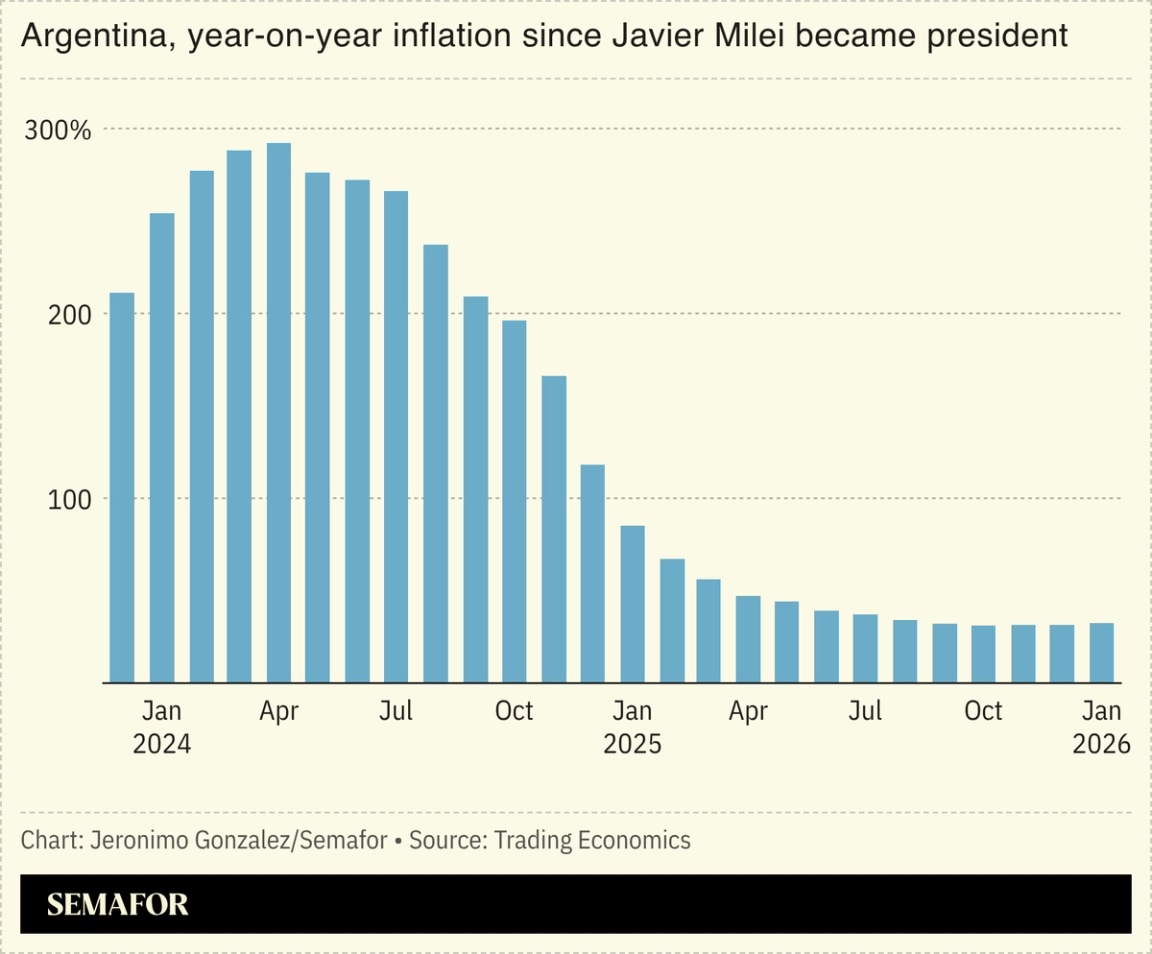 Unions in Argentina held a general strike to protest President Javier Milei’s labor reforms. Milei wants to make it easier to hire and fire workers and extend working hours. The Senate approved the measure, and the lower house, where he and his allies hold a majority, is debating it. But a protest last week ended in riots and a police crackdown, El País reported. The libertarian leader has reduced government regulation and spending, and has brought inflation down from 211% in 2023 to around 30% today. Cuts to health care and state subsidies have been unpopular with some workers — this is the fourth general strike of Milei’s presidency. But not everyone disapproves; he won a landslide in last year’s midterms. |
|
African nations refinance debt |
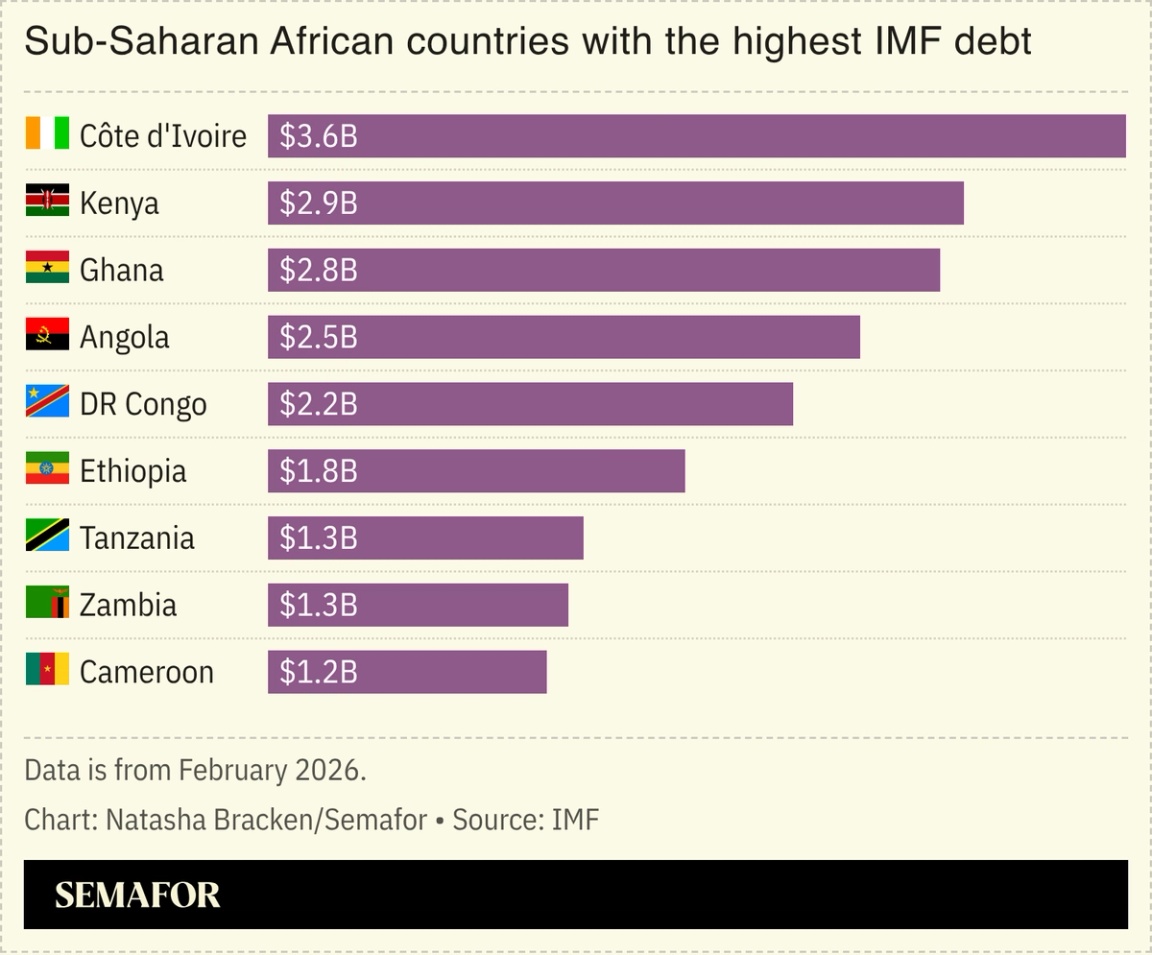 Several African nations are taking advantage of their improved credit ratings and a fall in borrowing costs to refinance their debt. Kenya will buy back outstanding bonds and issue new dollar debt after its credit rating was raised last month, while Côte d’Ivoire is readying a similar strategy, Bloomberg reported. Benin and Cameroon have already tapped debt markets this year, while Angola, the Democratic Republic of Congo, and the Republic of Congo are planning debt sales, too. The moves showcase how African finance ministries are proactively managing their borrowing loads rather than simply warding off debt distress. Yet challenges persist: Several nations still have high debt-servicing costs, while others struggle to generate fiscal revenues, McKinsey noted recently. |
|
|


