What matters in U.S. and global markets today

Global news you can trust.

Download the Reuters App.


Morning Bid U.S.

Morning Bid U.S.

A Reuters Open Interest newsletter

What matters in U.S. and global markets today


By Mike Dolan, Editor-at-Large for Finance and Markets

After a bumpy few weeks, Big Tech stocks got something of a reprieve on Wednesday after Nvidia, the world's most valuable company, said it had signed a multi-year deal to sell to Meta Platforms millions of its current and future AI chips.

There was no dollar figure placed on the deal and Nvidia's 1.6% share price rise was modest - but it likely starts a drumbeat ahead of the chip giant's quarterly results next Wednesday.

I’ll get into that and more below.

But first, check out my latest column on why hawks might prevail amid change at the head of the world's top two central banks.

And listen to the latest episode of the Morning Bid daily podcast. Subscribe to hear Reuters journalists discuss the biggest news in markets and finance seven days a week.


Data refreshes every time you open this email. For more U.S. market news, click here. Please send any feedback to morningbid@thomsonreuters.com.


Today's Market Minute

  • Oil prices rose more than 4% on Wednesday as traders weighed potential supply disruptions amid concerns of U.S.-Iran conflict, and after Ukraine-Russia talks ended without a breakthrough.
  • Fed policymakers were in near-unanimous agreement to keep interest rates on hold at their January meeting, but remained split over next steps, grappling with AI's implications for the economy.
  • The BOJ is likely to raise its key interest rate to 1% by end-June, according to a Reuters poll, with some expecting a move in April amid concerns about inflation and a weak yen.
  • The current crude oil price premium over U.S.-Iran tensions fluctuates with headlines, but there is an underlying assumption everything will turn out fine, writes ROI Asia Commodities and Energy Columnist Clyde Russell.
  • The scrapping of the foundation for U.S. federal climate regulations has upended energy investor narratives, sparking a re-think on which sectors might win and lose, writes ROI Energy Transition Columnist Gavin Maguire.
 

Oil spoils tech tonic

The Nvidia-Meta deal is another indicator of the scale of capex already earmarked for 2026 by the so-called hyperscalers, as Meta plans to almost double its AI-related investment spending. The deal will also soothe some recent nerves around Nvidia's growing competition.

On the other hand, it also speaks to the intertwined nature of the AI leaders and just how narrowly concentrated all the frenetic activity is in a handful of stocks. Nvidia's last results showed 61% of its revenue jump came from just four customers. And in the background of all this is the creeping debt load in the sector.

Private capital firm Blue Owl Capital, whose shares have halved over the last year, said it was selling $1.4 billion in assets from three of its credit funds so it can return capital to investors and pay down debt.

And the equities mood seems to have shifted again, with S&P 500 futures back in the red ahead of today's bell.

Elsewhere, crude oil prices are building a head of steam, coming within a whisker of the year's highs after a more than 4% jump on Wednesday amid U.S.-Iran tensions and U.S.-mediated talks between Ukraine and Russia.

In Geneva, parallel talks on both fronts have been underway this week. Those between Ukraine and Russia ended on Wednesday without a concrete breakthrough. Meantime, despite some optimism around the U.S.-Iran standoff, both sides have since stepped up military activity and maneuvers.

Crude was also lifted by news that U.S. industrial production and manufacturing recorded the biggest monthly rise in almost a year in January.

Also irked by rising oil, U.S. Treasury yields crept back higher after the minutes of the Federal Reserve's latest meeting showed considerable resistance to further easing, as well as split views on the impact of the AI boom on productivity and inflation.

The dollar slipped back, meantime, but held above recent lows.

Later on Thursday, attention will switch to Walmart results, weekly jobless numbers and the Philadelphia Fed's latest business surveys.


Hawks circle as top two central banks switch leaders

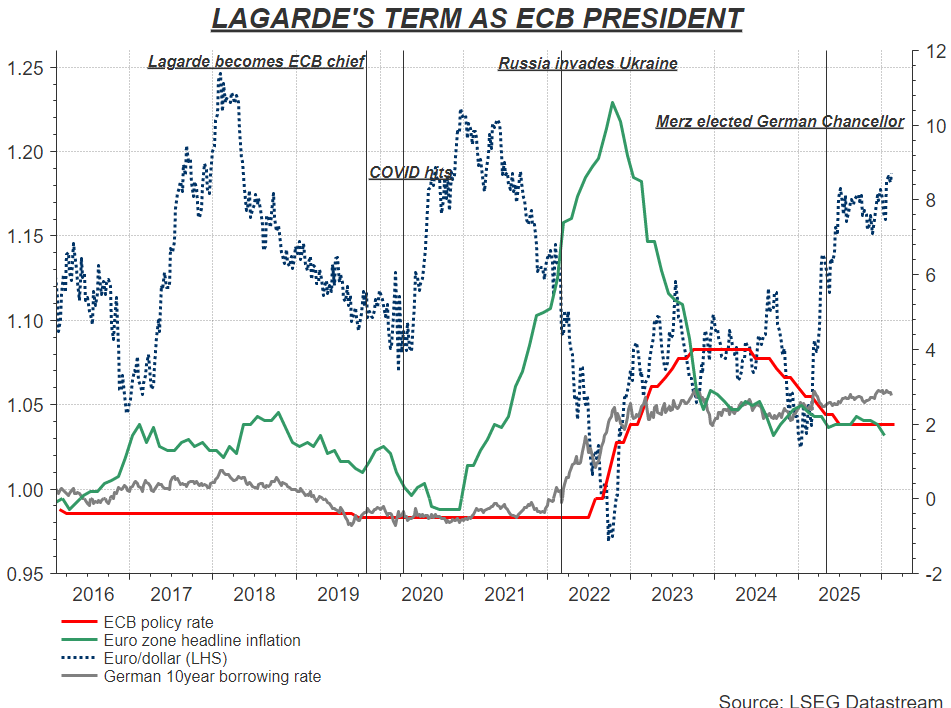
If the world economy is shifting into a boom that risks overheating, the case for more hawkish central bankers will grow louder — just as the top jobs at the Federal Reserve and European Central Bank come into play.

Markets have been obsessing for months about political pressure on the Fed and the impact of U.S. President Donald Trump's choice of Kevin Warsh to lead the central bank from May.

And now Europe seems set to put its own monetary policy leadership up for grabs this year too.

Although the ECB claims no final decision has been made, the Financial Times reported on Wednesday that ECB chief Christine Lagarde may step down early - well before her eight-year term ends in October 2027.

The two most powerful roles in global monetary policy may be about to change hands at the same time.


Graphics are produced by Reuters.

Read the full column