By Jorge Liboreiro
When the international community gathered last September to endorse the peace plan brokered by the United States to end Israel’s war on Gaza, there was widespread recognition for the diplomatic feat. While Donald Trump’s foreign policy has been, and still is, the object of fierce criticism, his actions in the Middle East did produce a tangible outcome: a ceasefire.
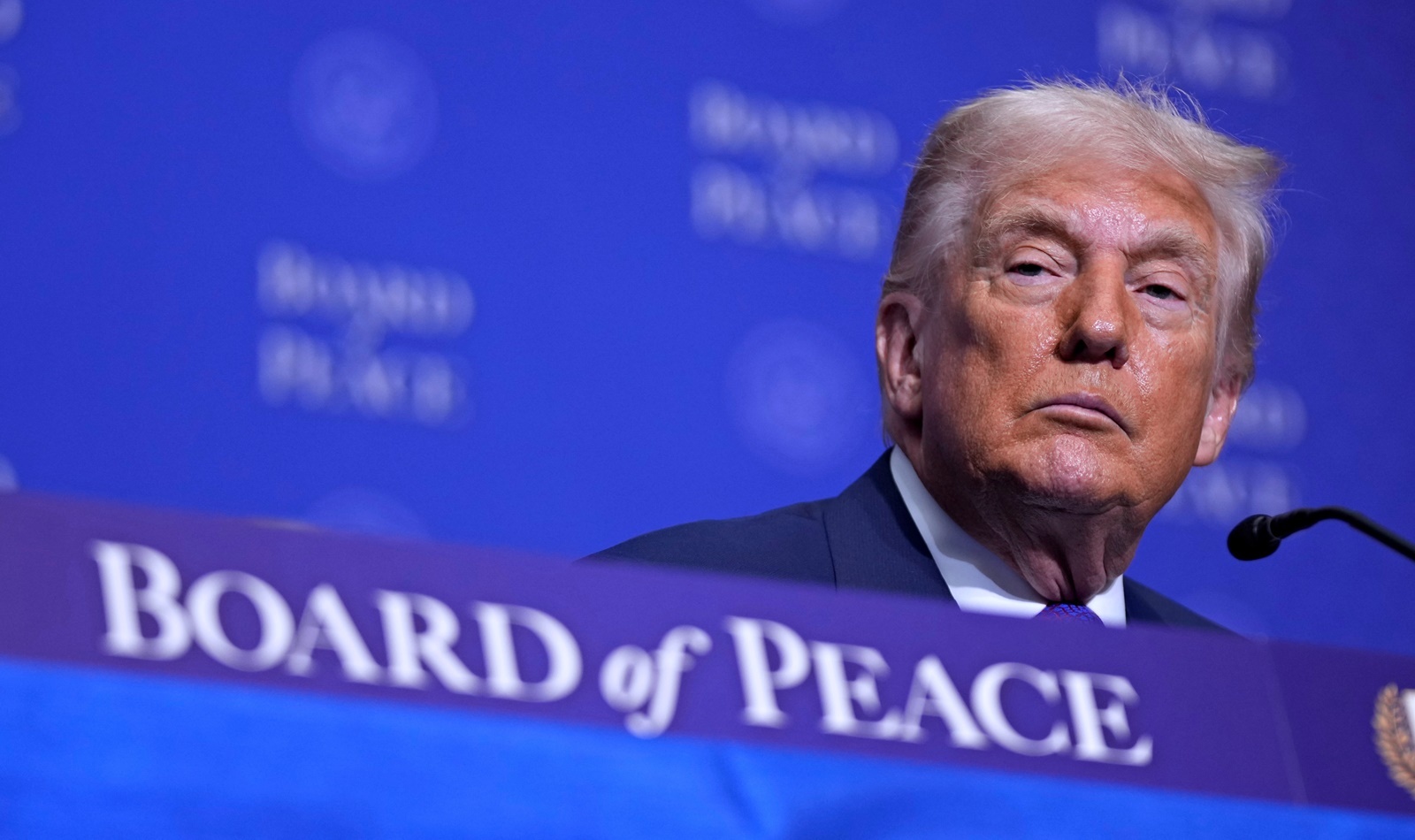
The relief came with concessions. In Resolution 2803, the United Nations recognised the establishment of the Board of Peace, a novel entity envisioned by White House to uphold the peace plan and guide Gaza’s post-war recovery. In an unusual move, the resolution accepted that the board would be chaired by Trump himself, while framing the initiative firmly in the context of Gaza.
But months later, the story took a wild twist when the founding charter of the Board of Peace was published, and there was no reference to Gaza to be found. Not once.
Instead, the project was fashioned as the global guarantor of concord. “The Board of Peace is an international organisation that seeks to promote stability, restore dependable and lawful governance, and secure enduring peace in areas affected or threatened by conflict,” the charter said.
The charter positioned Trump at the very centre of the board, entrusting him with sweeping powers to invite new members and establish subcommittees at his will. Trump was automatically appointed chairman for life, meaning he would continue to oversee the board after leaving the White House. He would then have the authority to appoint his own successor.
Europe swiftly baulked. The wording of the chapter heavily suggested that Washington was attempting to supplant the United Nations as the ultimate seat of multilateralism. Capital after capital distanced itself from the nascent initiative. Only Hungary and Bulgaria agreed to join.
An internal EU analysis concluded: “The autonomy of the EU legal order militates against a concentration of powers in the hands of the Chairman.”
This made it all the more surprising when, earlier this week, the European Commission confirmed that Dubravka Šuica, the Commissioner for the Mediterranean, would attend the first formal gathering of the Board of Peace in Washington. The news caught everybody in Brussels by surprise, given the Commission’s well-noted scepticism about Trump’s initiative and the fact that its president, Ursula von der Leyen, had foregone an invitation to join.
The tensions came to a boil on Wednesday during a meeting of ambassadors.
France, Spain, Belgium, Ireland, Slovenia and Portugal were among those who raised institutional and political objections. Germany, Sweden and Lithuania also spoke up.
According to diplomats, France set the tone by arguing that Šuica’s attendance was in breach of the EU treaties because the Commission is not entitled to set foreign policy, which is conducted based on unanimous positions agreed by member states, something that clearly doesn’t exist in this case.
This view was shared by a large majority of ambassadors.
The harshest critics then pointed out that Šuica, as Commissioner, is a political representative and therefore her presence in Washington carries substantial weight. A civil servant would have been a more appropriate pick, they said.
Feeling cornered, the Commission pushed back on Thursday.
“Our participation is to be seen in the context of our long-standing commitment to the implementation of the ceasefire in Gaza, as well as our commitment to take part in international efforts when it comes to the recovery and reconstruction of Gaza,” a spokesperson said. “We do believe that we need to be at the table. Otherwise, we will simply be a payer and not a player.”
Šuica, meanwhile, was all smiles at the inaugural event. (She skipped the family picture, though.) About 14 EU countries sent a representative of some kind, with Romania choosing the president himself.
The finger-pointing saga is yet another example of the extreme fine line that the EU has been walking since Trump’s re-election. Countries are still caught between the strategic necessity to engage with the White House on all relevant foreign policy matters, from Gaza and Ukraine to Iran and China, and the shock and dismay caused by Trump’s no-holds-barred foreign policy.
“It’s a conundrum. It’s clear there are issues with the Board of Peace,” said a senior diplomat. “But at the same time, it’s there. And it’s going to play a role in the reconstruction of Gaza.”
|