|
|
We talk a lot about how food affects our bodies through factors like blood sugar, cholesterol, and energy levels. But what about its effect on our brains?
A growing area of research is looking at how diet may play a role in mental health. A pair of recent studies examined whether a ketogenic diet could help people with depression, particularly those who haven’t responded to traditional treatments. The results are encouraging, but should we be cautious about adopting this way of eating?
|
|
|
|
|
|
|
Let’s get into it,
Tim Snaith
Newsletter Editor, Healthline |
 |
|
Written by Tim Snaith
February 24, 2026 • 3 min, 30 sec read |
|
|
|
|
|
 |
|
|
| Going keto may help with depression — but as usual, it’s complicated |
| Keto — short for ketogenic, the state where your body burns fat for fuel instead of carbs — has long been associated with weight loss. But the diet has much older roots. It was first developed back in the 1920s to treat epilepsy in children, and it’s still used for that purpose today. Now, two recent studies suggest it might also affect your mood. |
| A 2025 pilot study tracked 16 college-age students with major depressive disorder over 10 to 12 weeks and found up to a 70% reduction in depression symptoms in those who followed a keto diet. |
| A larger trial published this month looked at 88 people with treatment-resistant depression, the kind that doesn’t respond to standard medication or therapy. Researchers found that about 25% of those who went keto achieved remission after 6 weeks, compared with 9% on a vegetable-rich, lower-saturated-fat control diet. |
| Those numbers sound promising, but there is a catch. The pilot study was small and had no control group. And the control group (which followed a vegetable-rich, lower-saturated-fat diet) in the most recent, larger trial saw nearly as much improvement as the test group. |
| There may be other downsides. Keto is highly restrictive and hard to sustain. In the long term, it can cause nutrient deficiencies, and some researchers have raised concerns about changes in cholesterol levels, though the evidence is mixed and debated. Experts say it should only be tried under close medical supervision for a limited time. |
| Early research also hints that the keto diet may help with other mental health conditions like bipolar disorder and schizophrenia by reducing inflammation and oxidative stress — but that evidence is still very preliminary. |
| The takeaway? What you eat can affect how you feel, and that’s worth paying attention to, but if you’re managing depression, talk with your doctor or a registered dietitian before making big dietary changes. |
|
|
| Want to learn more about food, diets, cooking, or some other nutrition subject? Let us know at nutritionedition@healthline.com and we’ll look into it for you! (Heads up, we may use your response in an upcoming newsletter.)
|
|
| Sponsored by |
|
 |
|
|
|
| Dinner in 15 |
| |
| |
 |
| Gobble |
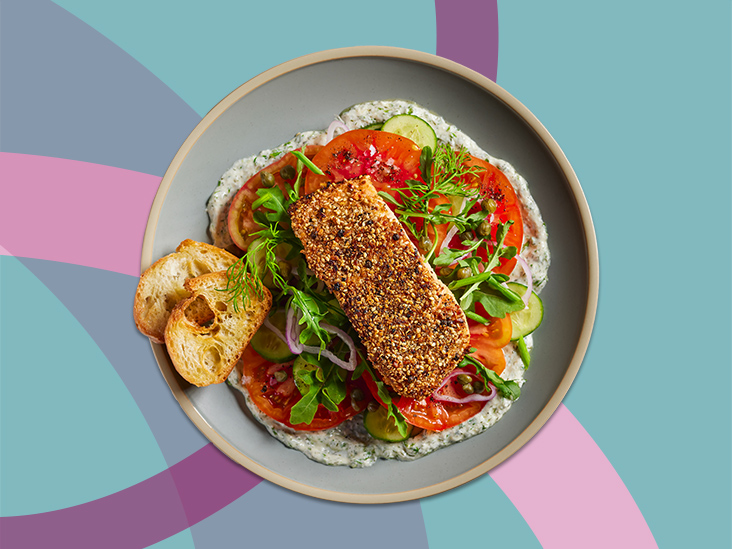
Raise your hand if dinner, including figuring out what to eat and prep, sometimes feels like a whole event, something you could pencil in your calendar. If your hand is up, Gobble could be your next best consideration.
Gobble simplifies the entire dinner process: Just pick your meals from its expansive weekly menu, let a team of chefs handle the prep, and wait for your box to arrive at your doorstep. Ready to eat? Simply pop a meal in the oven for 15 minutes, wait for the timer to beep, and dig in! New customers get $100 off 4 boxes and free shipping.
|
|
|
| Every product we recommend has gone through either Healthline’s or Optum Now’s vetting processes. If you buy through links on this page, we may receive a small commission or other tangible benefit. Healthline has sole editorial control over this newsletter. Potential uses for the products listed here are not health claims made by the manufacturers. Healthline and Optum Now are owned by RVO Health. |
| |
|
|
|
| |
|
|
|
| What we’re digesting |
| ⚕️ Peyronie’s disease: Why doctors say don’t wait. What untreated scar tissue buildup can mean for sexual health. |
| |