| | The Middle East is thrust into a widening war, oil prices are set to jump, and a look at Ayatollah A͏ ͏ ͏ ͏ ͏ ͏ |
| |  | Flagship |  |
| |
|
The World Today | 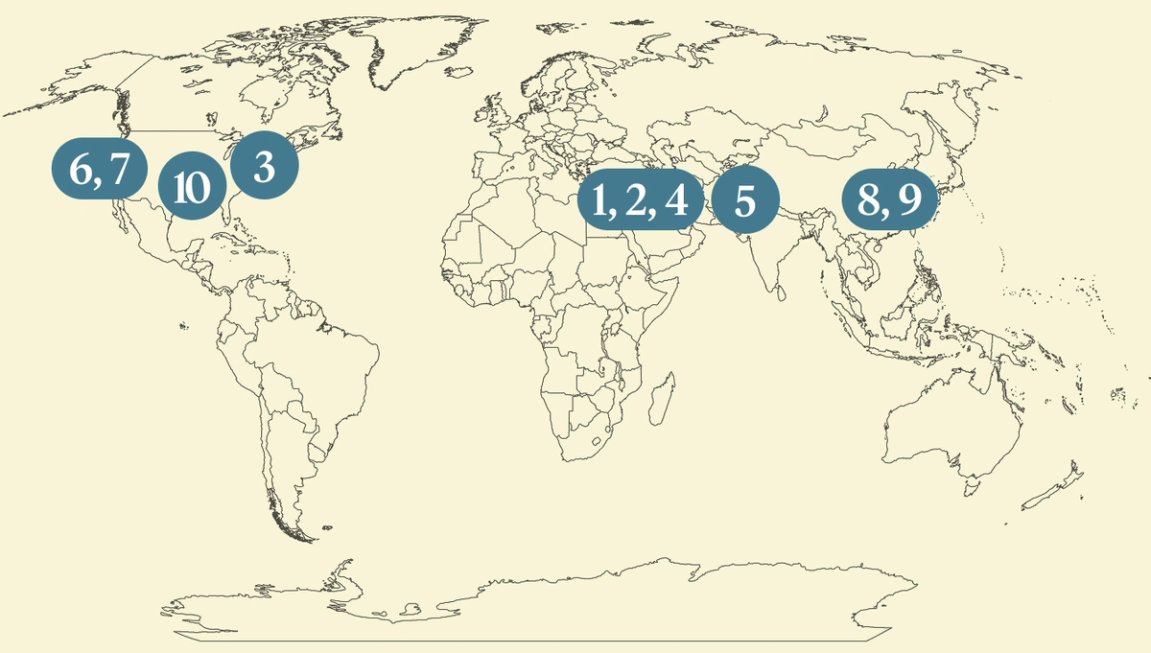 - US, Israel kill Khamenei
- Iran conflict hits markets
- Trump changes war norms
- How Khamenei held power
- Pakistan’s attacks rock Kabul
- Anthropic downloads surge
- Uber CEO gets an AI clone
- China’s car price war returns
- Alzheimer’s research in China
- Podcasts overtake radio in US
 A book looks at why the US was blind to the fall of Iran’s shah in 1979. |
|
US, Israeli strikes kill Khamenei |
 Smoke rising from Khamenei’s compound in Tehran. Airbus DS 2026/Handout via Reuters Smoke rising from Khamenei’s compound in Tehran. Airbus DS 2026/Handout via ReutersThe Middle East was thrust into a widening war after US and Israeli strikes on Iran killed the country’s supreme leader. An interim committee took over governing Iran after the death of Ayatollah Ali Khamenei, who had ruled since 1989 and oversaw a nuclear program that triggered punishing sanctions. Several top commanders were also killed and no clear successor is lined up, but experts said that grassroots regime change, which US President Donald Trump encouraged, remains challenging. Tehran retaliated by striking Israel and US Gulf allies, rattling nations whose economic booms require security and stability. “What follows could be a generational transition that reshapes the region for the better. Or it can be the start of an unpredictable conflict,” Semafor’s Gulf editor wrote. |
|
Conflict weighs on energy markets |
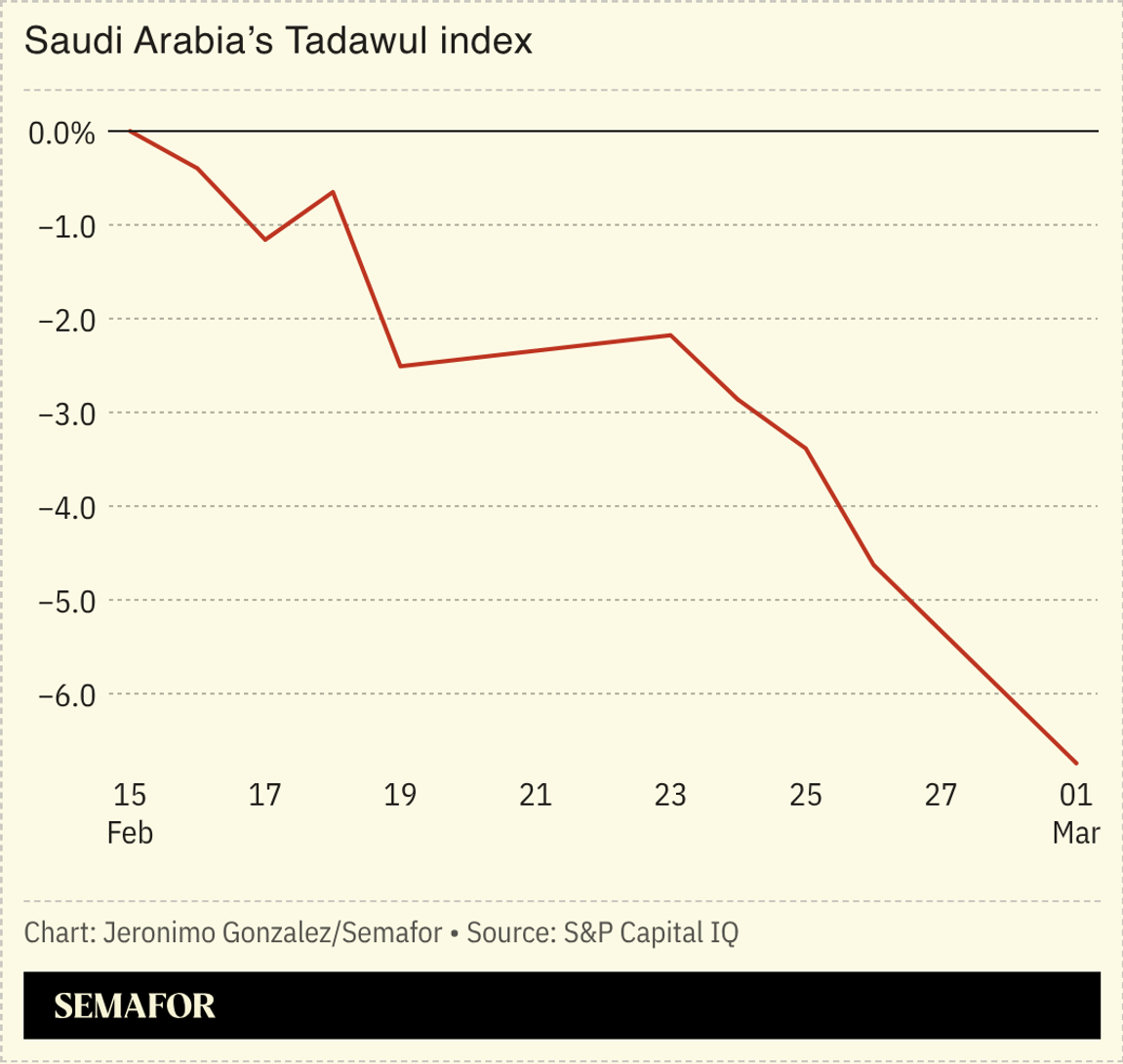 The ballooning Middle East conflict is set to weigh on global markets, with oil prices poised to spike as investors worry about a shutdown of energy flows. The OPEC+ group of oil-producing nations agreed to modestly raise output, but that may come up against the practical challenge of actually getting Gulf oil into global markets. “To forecast where oil prices go, watch the Strait, not the strike tallies,” energy commentator Wael Mahdi wrote, noting that the largest risk is a blockade of the Strait of Hormuz, a vital artery for commercial ship traffic. Some shipping companies have halted passage through the waterway, but for Tehran, a complete shutdown would be “economic self-harm at the worst possible moment,” Mahdi argued. |
|
 People cheer the ayatollah’s death in New York City. Jeenah Moon/Reuters People cheer the ayatollah’s death in New York City. Jeenah Moon/ReutersThe audacious mission to take out Iran’s leader underscored US President Donald Trump’s brand of foreign policy, defined by unpredictability and a willingness to disregard longstanding norms, analysts said. Trump has embraced unilateral uses of force — including the once-taboo targeting of heads of state, a Harvard professor noted — to achieve his foreign policy goals. He’s also bucked a long-held strategy that Washington should only enter war with clear objectives and an exit strategy, a foreign policy analyst said: “Instead Trump has preserved the flexibility to adapt based on how things unfold.” As Trump moves to reshape the Middle East’s regional order, the strikes leave China and Russia — Iran’s key partners — with little power to influence events on the ground. |
|
How Khamenei amassed power |
 Office of the Iranian Supreme Leader/WANA (West Asia News Agency)/Handout via Reuters Office of the Iranian Supreme Leader/WANA (West Asia News Agency)/Handout via ReutersThe killing of Iranian Supreme Leader Ayatollah Ali Khamenei ended more than three decades of rule marked by an entrenchment of Islamist ideology and the rise of Iran as a powerful adversary of the West. After playing a behind-the-scenes role in the revolution that toppled the country’s US-backed monarchy, Khamenei survived numerous challenges, including a 1981 assassination attempt. He steadily amassed power after taking over as supreme leader in 1989 while blocking attempts at domestic reform, cracking down on dissent, and arming proxy militias abroad. A former US hostage in Iran said Khamenei and his allies clung to power by benefiting from “the incompetence of their opponents, their willingness to be brutal, and to compromise when necessary.” |
|
Afghanistan-Pakistan conflict intensifies |
 Stringer/Reuters Stringer/ReutersMilitary conflict between Pakistan and Afghanistan intensified over the weekend, deepening instability in a region that was further rattled by US and Israeli strikes on Iran. Islamabad declared “open war” on Kabul’s Taliban government on Friday, following years of tensions and border clashes between the neighbors: Pakistan has accused Afghanistan of harboring militants that have waged attacks in Pakistan. As blasts and gunfire rocked Kabul on Sunday, analysts said there is still room for escalation and no clear off-ramp. Global powers including the US, China, and India have interests in the region; Beijing, which has invested billions in an economic corridor with Pakistan while cultivating ties with the Taliban, said it is working on mediation. |
|
Claude attracts users on Pentagon spat |
 Evelyn Hockstein and Bhawika Chhabra/Reuters Evelyn Hockstein and Bhawika Chhabra/ReutersDownloads of Anthropic’s Claude chatbot app surged in the US after the AI startup’s spat with the Pentagon escalated. Anthropic refused to give the US military unfettered access to its technology, prompting the Department of Defense to designate the company a “supply chain risk,” meaning no one that does business with the US military can do business with Anthropic. Daily Claude signups have tripled since November, the company said, showing how the startup can benefit if it is “remembered as a principled and moral actor,” Semafor’s tech editor wrote. Still, he noted, existing laws and built-in safeguards would have addressed the same concerns Anthropic raised, including domestic surveillance by the Pentagon, which is already illegal. |
|
Uber employees make AI clone of CEO |
 Kris Triplaar/Semafor Kris Triplaar/SemaforUber employees built an AI clone of their CEO to help them prepare for presentations. Dara Khosrowshahi said the “Dara AI” lets staff fine-tune their pitches by mimicking his responses. The tool is essentially a toy at this stage, but CEOs’ strategic decision-making could well be automatable like many other white-collar jobs, as Google CEO Sundar Pichai has said before: A 2024 Harvard Business Review report found that an LLM “consistently outperformed top human participants” in a corporate strategy simulation. Khosrowshahi said that for now, AI models struggle to make decisions based on new information, but “when the models can learn in real-time, that is the point at which I’m going to think that, yeah, we are all replaceable.” |
|
 With Pix, deciding what to watch, read, or listen to next has never been easier. Sign up for free Pix newsletters to get the latest on trending shows, movies, books, and more — delivered straight to your inbox. Fun, easy to read, and filled with trusted picks worth your time. |
|
Chinese car price war picks back up |
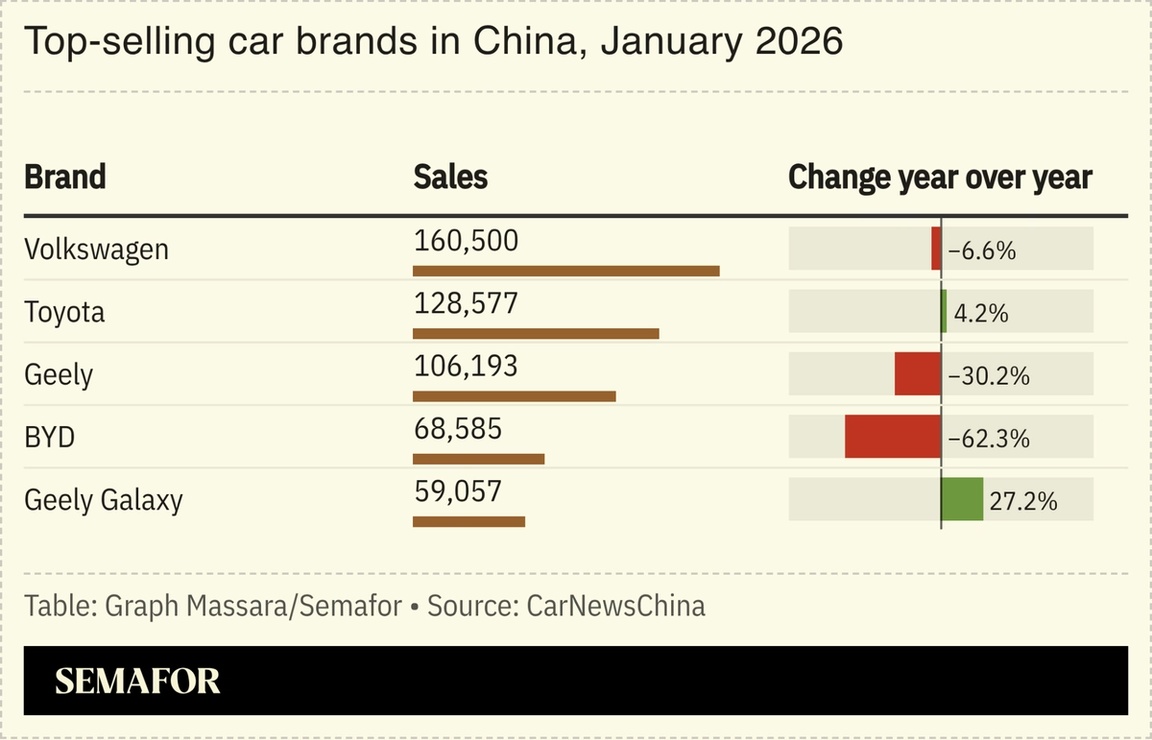 China’s carmakers are reigniting a fraught price war in a bid to reverse a slump in sales. Faced with swelling inventories, several auto brands announced post-Lunar New Year incentives that reflect “mounting pressure across the industry,” Caixin wrote, with foreign brands like Tesla also joining in on the price cuts. Car sales in the largest global auto market fell 14% in January year-on-year as government subsidies dried up. But some brands might be reluctant to partake in another price war given regulatory scrutiny from Beijing aimed at curbing so-called “involution,” a race-to-the-bottom competitive spiral. Chinese carmakers’ challenges extended to Europe: They have made deep commitments on the continent, but their share of the regional market dipped in January. |
|
China spends big on Alzheimer’s research |
China is investing heavily in Alzheimer’s research as its population ages. Almost 30% of all patients with dementia worldwide are in China, about 17 million people, and the burden on its health care and welfare systems is projected to dramatically increase. Cases of Alzheimer’s in China could hit 66 million by 2050. The government has boosted efforts to find biomarkers to identify the disease and potential treatments, and although investment levels are behind those in the US, the research is accelerating, Nature reported: In 2021, just nine clinical trials into Alzheimer’s treatments were underway in China; in 2024, there were 107. Recruiting Chinese scientists who have worked abroad is a priority, as it has been in other areas, notably physics. |
|
Podcasts overtake talk radio in US |
|
|


