| | US President Donald Trump threatens to sever trade with Spain over its Iran stance, the dollar recla͏ ͏ ͏ ͏ ͏ ͏ |
| |  | Flagship |  |
| |
|
The World Today | 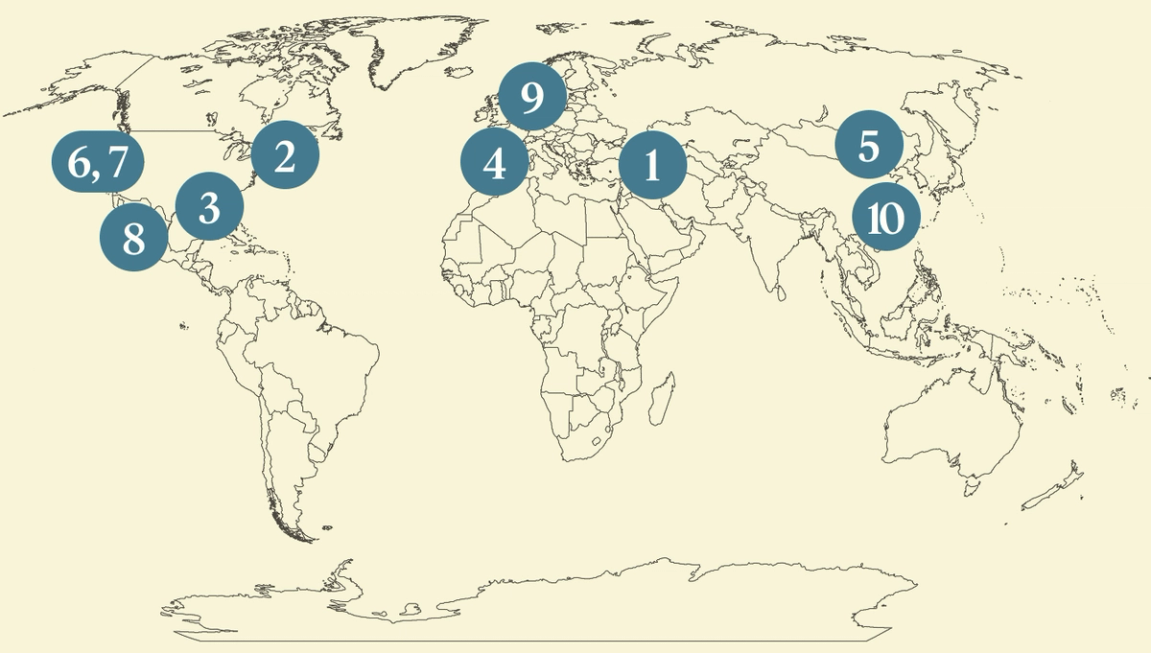 - Trump open to militias in Iran
- Dollar surges amid conflict
- Windfall for LNG exporters
- Europe’s fractured response…
- … And China’s restraint
- Anthropic vs the Pentagon
- AI chatbots favor escalation
- Cartels don’t pay well
- ‘Breaking Bad effect’ is real
- Chinese youth ‘retire’ early
 A book imagines a world of houses grown from seed, and talking pants. |
|
Trump open to armed militias in Iran |
 US Navy/Handout via Reuters US Navy/Handout via ReutersPresident Donald Trump is open to backing armed militias to help topple Iran’s government, US officials told The Wall Street Journal, as the expanding war raises questions about Washington’s endgame. Trump discussed the conflict with Kurdish leaders Sunday, Axios reported, though he hasn’t yet committed to providing material support to anti-regime groups. Trump also hasn’t ruled out putting US boots on the ground, a move that would further deflate the noninterventionist image he campaigned on: One Republican senator said it would cross a red line, Semafor’s DC team reported. Still, Republican lawmakers appear likely to vote down measures curtailing presidential war powers this week. |
|
US dollar surges amid conflict |
 Brendan McDermid/Reuters Brendan McDermid/ReutersThe dollar surged as the war in the Middle East panicked investors and stoked US inflation fears. Stock markets tumbled and oil prices spiked after the US assault on Iran, with even traditional haven investments such as gold falling. The market was further rattled by President Donald Trump warning that the conflict could continue for some weeks, CNBC reported. The news is good for dollar holders, but likely only in the short term: While inflation could stave off rate cuts, which would make dollar-denominated assets less attractive, in the longer run that same inflation would reduce the currency’s value. If the dollar has got “its mojo back,” Reuters’ finance editor noted, it is “only by default.” |
|
War creates windfall for US gas exporters |
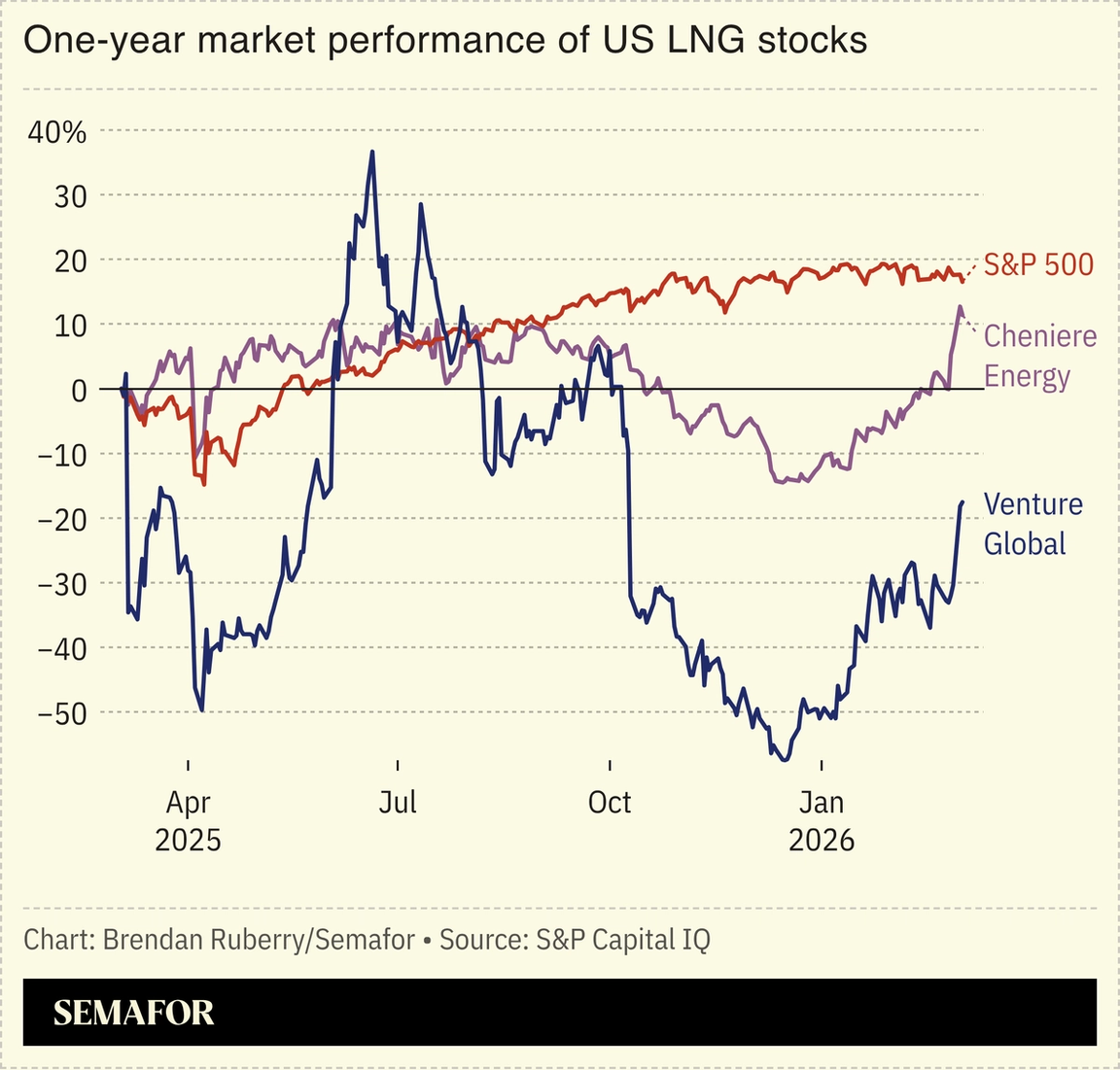 The Iran conflict is giving a boost to US natural gas exporters, with shares of the two biggest American producers surging this week. Following Qatar’s LNG production shutdown after Tehran’s retaliatory attacks, gas prices in Europe jumped more than 20% on Tuesday, in the largest spike in European energy prices since Russia’s 2022 invasion of Ukraine. “And as in that case, this latest disruption will pit European and Asian LNG buyers against each other, to the benefit of US exporters,” Semafor’s energy editor wrote, noting there are few strategic gas reserves and little export capacity to fire up on short notice. One analyst warned that a prolonged Qatari shutdown could portend “a larger gas market shock than in 2022.” |
|
Trump slams Spain, UK over Iran stance |
 Jonathan Ernst/Reuters Jonathan Ernst/ReutersPresident Donald Trump on Tuesday threatened to sever trade with Spain over its Iran stance. Spain’s leader has condemned the US and Israeli strikes on Iran and restricted Washington’s access to its military bases. Trump also criticized the UK for not fully backing his military campaign. His remarks came after meeting Germany’s chancellor, who acknowledged the war was damaging European economies. With energy prices climbing at a blistering pace, the prospect of an expanding Middle East conflict risks derailing the European economy’s recovery, which was enjoying low inflation and better-than-expected growth. But the continent has “struggled to find a united voice” on the conflict, BBC’s Europe editor argued, appearing “at best uncoordinated, if not fractured and decidedly without leverage.” |
|
China’s restrained response on Iran |
 Tingshu Wang/Reuters Tingshu Wang/ReutersChina’s top diplomat on Tuesday urged his Israeli counterpart to end attacks on Iran, but Beijing is unlikely to offer more than boilerplate criticism of the strikes against its regional partner, analysts said. Beijing hasn’t extended practical help to Tehran — which supplies more than 13% of China’s imported crude oil — because, as Semafor’s Andy Browne argued, nothing would give Beijing “more satisfaction than watching the US bog itself down in another Middle East quagmire, diverting Washington’s attention and resources from China’s own backyard.” With US President Donald Trump’s China visit only weeks away, Beijing is positioning itself as a stabilizing force, while hoping to “engage the US president when he’s at his most dangerous,” Browne wrote. |
|
Anthropic could win in Pentagon feud |
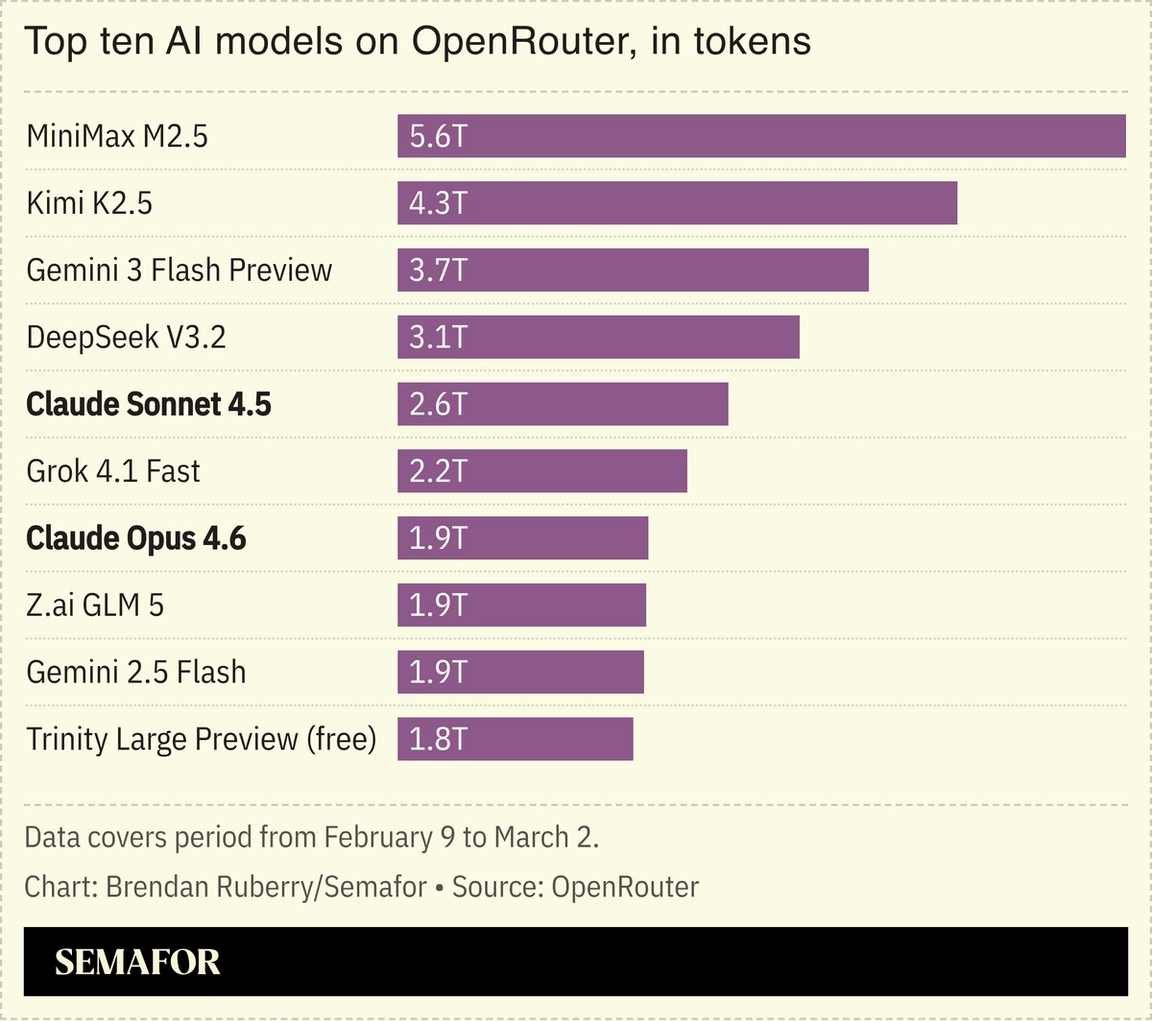 The US government’s effort to designate Anthropic a “supply chain risk” will not survive contact with the legal system, law scholars argued. The Pentagon threatened to declare that no other defense contractor could use Anthropic’s products. The startup is expected to appeal, and will likely win, Lawfare said: The government is arguing simultaneously that Claude is vital to military operations, and that it is so risky that it cannot be used. “It’s like the joke from Annie Hall,” the authors wrote: “The food is terrible and the portions are too small.” Perhaps a legal fight of this kind was inevitable: If “private companies develop the Machine God,” governments were always likely to take steps to control it, an analyst told Politico. |
|
Chatbots favor wargame escalation |
 Kim Hong-Ji/Reuters Kim Hong-Ji/ReutersIn wargames, Anthropic’s Claude chatbot is a “calculating hawk,” OpenAI’s GPT-5.2 was “Jekyll and Hyde,” and Google’s Gemini a “madman” — and the games usually involved nuclear blasts. Researchers tested the chatbots in simulated international crises; all demonstrated self-awareness, an ability to model opponents’ thinking, and a grasp of game theory. They also often tended toward escalation. The findings can’t be extrapolated to the real world — the scenarios were extreme, with the regimes often facing first strikes or annihilation — but revealed AIs’ skill at strategic reasoning, as well as a certain bloodthirstiness: AI models deployed at least one tactical nuclear weapon in 95% of simulated games. |
|
 Business — and the way companies operate — is transforming in ways both subtle and seismic. The forces moving Wall Street and global enterprise are accelerating, powered by AI breakthroughs, shifting capital flows, and evolving ideas about risk. In every sector, technology, regulation, and government are rewriting the balance of power and possibility. To help decode the fast-changing forces reshaping business and markets, Semafor is launching Compound Interest from Semafor Business — a podcast featuring in-depth conversations with the leaders building the next chapter of the global economy. Led by Semafor Business journalists Liz Hoffman and Rohan Goswami, Compound Interest will pull back the curtain, and talk directly to the operators, experts, and innovators behind some of the world’s most consequential companies. On this week’s inaugural episode, Uber CEO Dara Khosrowshahi explains how the company is evolving from ride‑hailing app to an AI‑era operating system for moving people and stuff around cities. |
|
Spreadsheet reveals cartel wages |
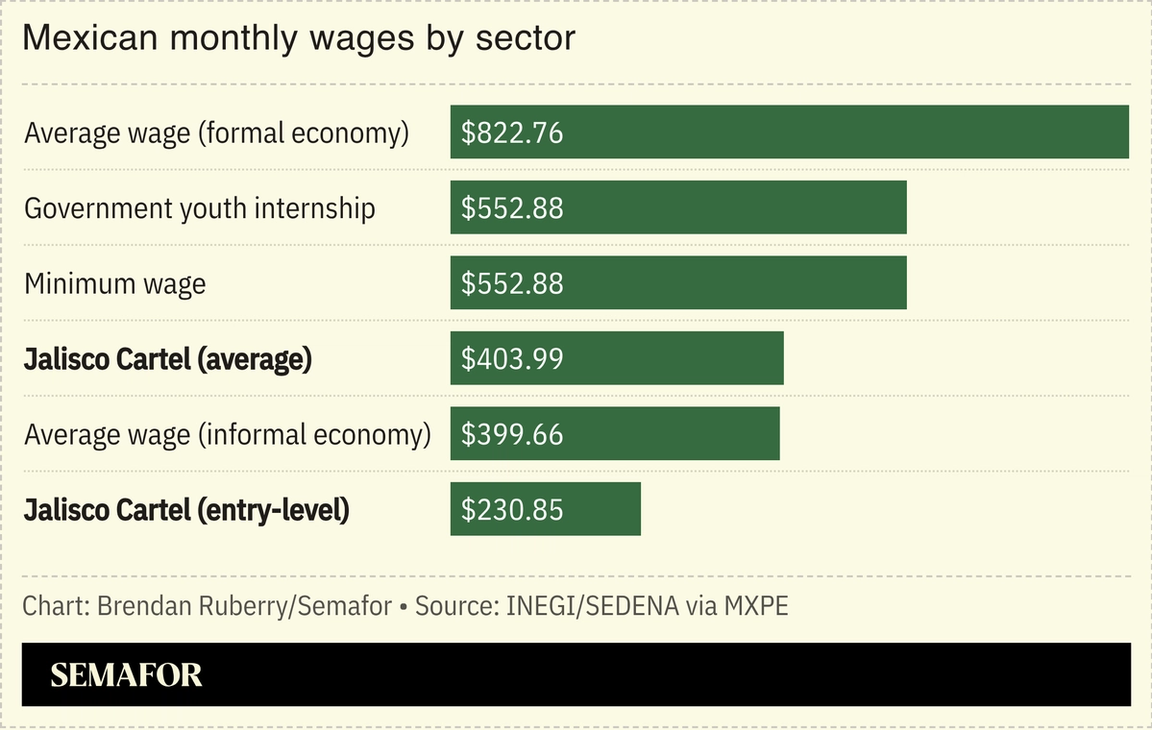 Crime really doesn’t pay, according to a spreadsheet obtained by Mexican authorities following the February killing of a top cartel boss. Though roughly equivalent to average informal economy wages, the average cartel salary is $400 per month — less remunerative than government-funded internships, which are key to President Claudia Sheinbaum’s efforts to tackle “root causes” of cartel recruitment, The Mexican Political Economist wrote. Less than half of Mexicans are fully formally employed, JPMorgan noted, helping to make the country one of Latin America’s least dynamic and slowest-growing economies. The country’s growth is heavily dependent on Washington, which is keen to see Mexico demonstrate progress against drug trafficking ahead of a joint review of the continent’s trade agreement this July, Goldman Sachs wrote. |
|
Cancer diagnosis linked to criminality |
Cancer patients are 14% more likely to be convicted of crimes in the decade followin |
|
|


