| Forwarded this email? Subscribe for more |



 |
| By The Free Press |
|

It’s Wednesday, March 4. This is The Front Page, your daily window into the world of The Free Press—and our take on the world at large. Today: River Page on the internet’s favorite Iran “expert” and his web of conspiracy theories. Ted Gioia on how, in the age of AI, human touch is cool—and profitable—again. Olivia Reingold and Maya Sulkin report on a troubling spate of antisemitic threats at an elite American university. And much more.
But first: What is Trump’s endgame in Iran?
Hundreds dead in Iran, six U.S. service members killed, strikes on cities across the region, and major trade routes disrupted as oil prices skyrocket. As the war in the Middle East rages on, the whole world has the same questions: How long will it last—and what will come next?
According to Michael Doran, it’s possible to glimpse the path forward through the fog of war. He says the war will end one way: with a call from Trump to Benjamin Netanyahu to say, “Bibi, it’s time for a ceasefire.”
Iran knows this, and their strategy is simple: Force Trump’s hand sooner rather than later by raising the stakes at every opportunity. At stake is nothing less than control of Iran and the future of the Middle East. Read Michael’s piece for a sense of where this is headed:
What are the rules dictating Trump’s decision-making in this war? Elliott Abrams, who served as Special Representative for Iran in Trump’s first administration, dives into that question in his piece for us today. Complicating the picture: a president constantly rewriting his own rule book when it comes to “forever wars,” boots on the ground, and regime change. So what are the president’s red lines, and will he stick to them?
When the Islamic Republic came to power in 1979, it looked to remake the Middle East, writes Aaron MacLean. After the past few days, we can now say it has succeeded, though not in the ways it had hoped.
Israel and Arab nations are more aligned than ever, while the Iran regime is on the ropes and lashing out at just about everyone in the region. Iran is more isolated than ever. This isn’t just the story of a regime that overplayed its hand once or twice; it’s an exhaustive account of just how badly they blew it.
This war didn’t start on Saturday, argues Michael Oren, Israel’s former ambassador to the United States. It started in 1979. And if the Iranian revolution was the beginning, October 7, 2023 was the beginning of the end.
That was when the regime made a potentially fatal miscalculation. The regime triggered a catastrophic backlash with what Tehran and its proxies called the Al-Aqsa Flood. Today, Michael traces the tinderbox ignited with Trump’s February 28 attacks on Iran back to October 7, a time when Iran seemed much stronger and more sure of itself, before the regime’s house of cards collapsed.
—The Editors
|

 |
Meet the Internet’s New Iran Expert—Who Thinks the Illuminati Runs the World | ||||
 | ||||
|
Being Human Is Cool Again | ||||
 | ||||
|
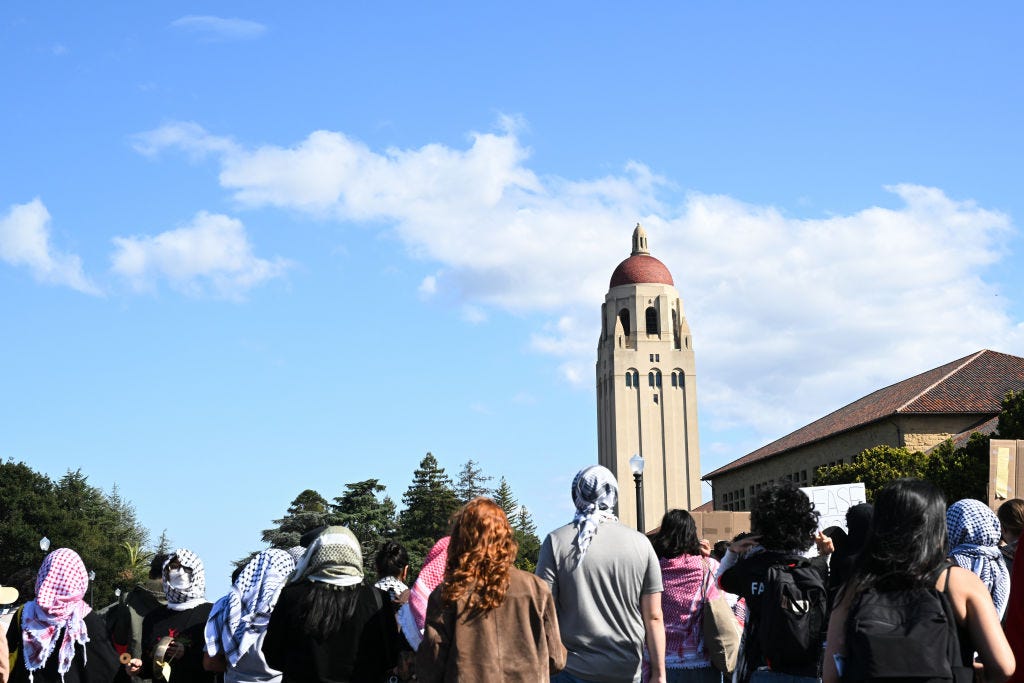
EXCLUSIVE: ‘Holocaust 2.0’ Threat Sent to Stanford Chabad House | ||||
 | ||||
|