| | In this edition: Fears of African inflation grow amid Middle East conflict, US sanctions Rwanda, and͏ ͏ ͏ ͏ ͏ ͏ |
| |  Johannesburg Johannesburg | Kigali |  Dakar Dakar |
 | Africa |  |
| |
|
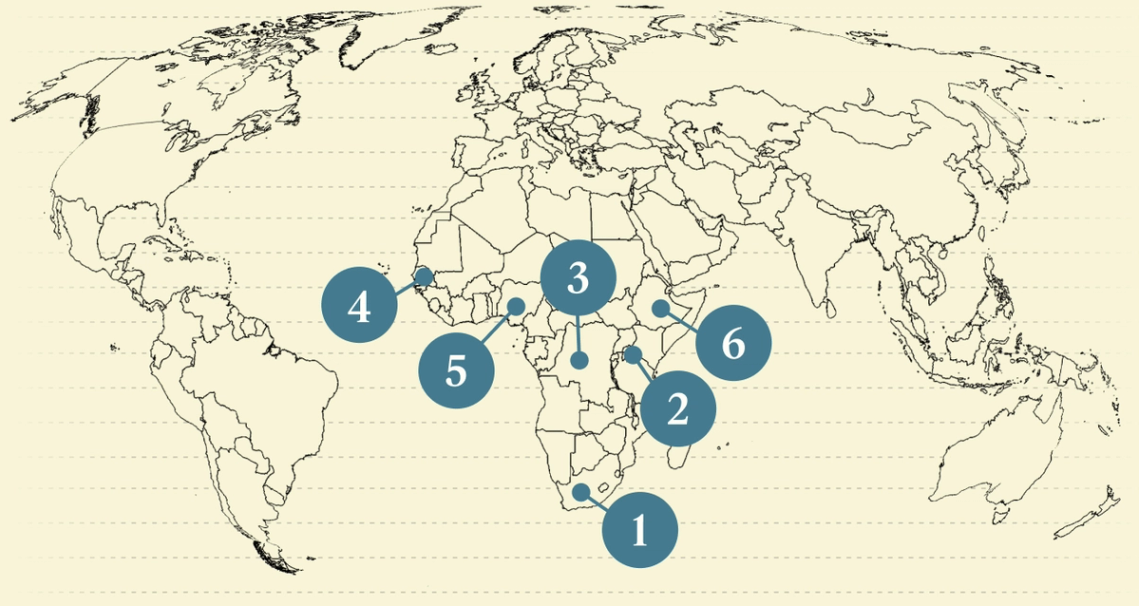 - Africa inflation fears grow
- US sanctions Rwanda
- Rawbank signs $265M deal
- Senegal PM’s warning
- Nigerian reserves rise
- A $40 smartphone
 An international film festival is underway in Johannesburg. |
|
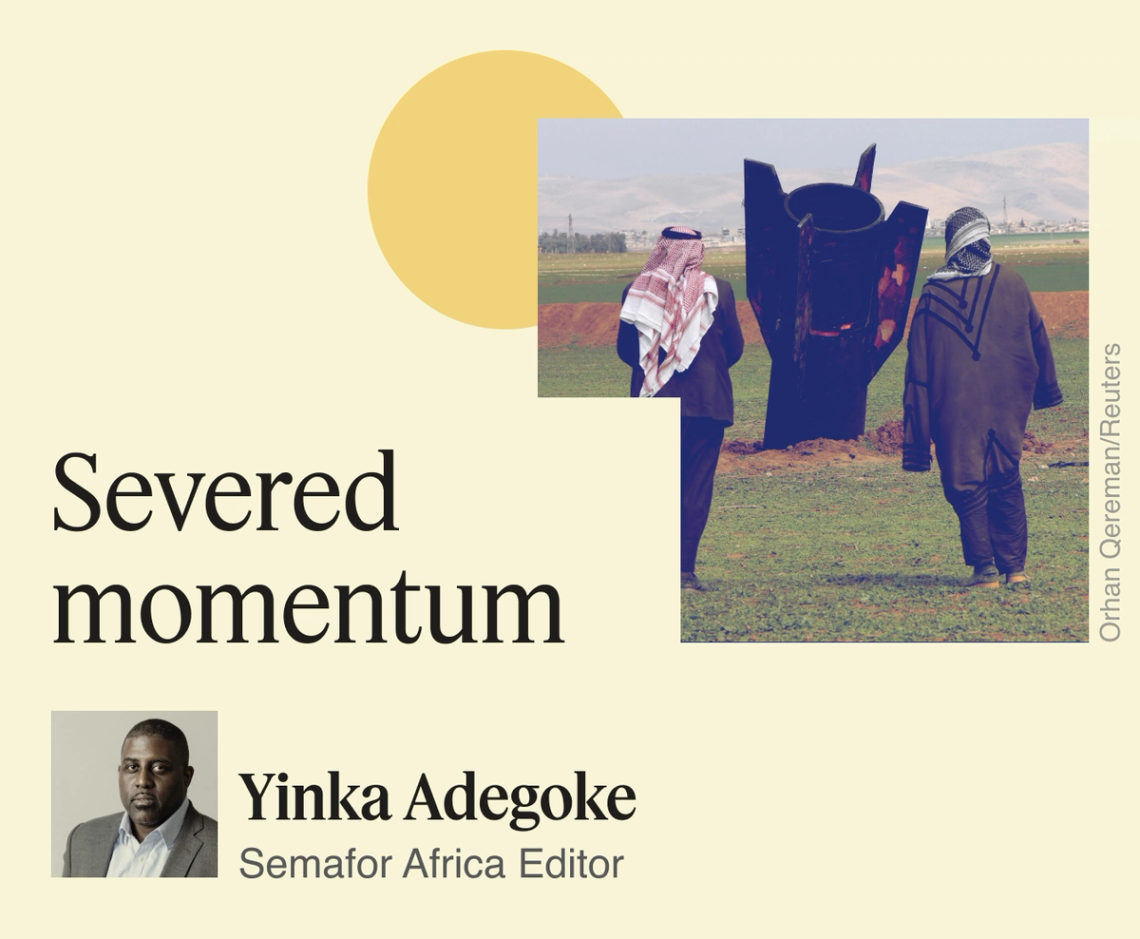 In recent years Africa’s political and business leaders have come to see Gulf nations as the perfect counterweight to diversify away from Washington and Beijing and tap new sources of capital. That story was less geopolitical fantasy than hard necessity, as traditional funding options dwindled. Over the last decade, the Gulf Cooperation Council has put more than $100 billion into Africa across energy, ports, logistics, and tech, dwarfing the US and rivaling Europe. Dubai, Abu Dhabi, and Doha have become regular backdrops for African presidents, ministers, and CEOs. And elites were as likely to fly to the Emirates for financing as to New York or Shanghai. But that momentum has been severed: The US-Israel war on Iran — and Tehran’s reprisal attacks on Gulf powers — threaten to pull the region’s attention, capital, and political bandwidth back home. As missiles strike cities long assumed to be safe, sovereign wealth funds that have been pouring money into African renewable grids, ports, and startups may soon redirect toward immediate domestic priorities. Africa is already exposed: Western FDI and development aid has faltered, China has signaled a pullback from large infrastructure loans, and Gulf capital was only beginning to fill that gap. What looked like a reliable “third way” could become another source of uncertainty. The ripple effects could go further. One analyst told me that Gulf states may reduce support for proxies, security initiatives, and diplomatic outreach in Sudan and the Sahel — shrinking their footprint at precisely the moment Africa faces its own compounding crises. Diversification away from the West and China was meant to reduce vulnerability. Instead, the continent may discover that in an interconnected world, there is no true hedge — and no partnership is truly immune. |
|
African markets brace for inflation |
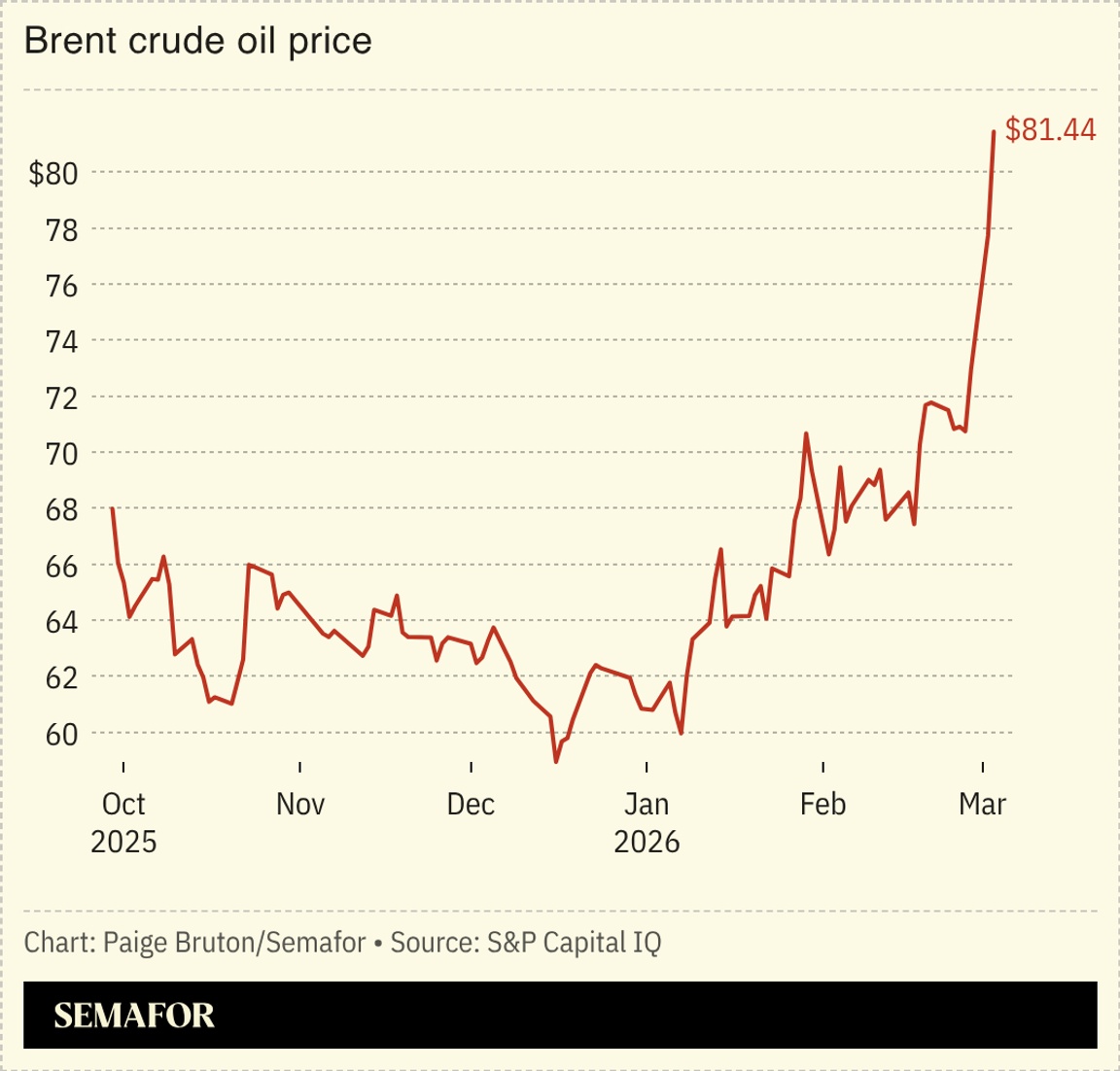 The fallout from the US and Israeli war with Iran threatens to spur inflation across Africa, halting a wave of interest rate cuts and undermining continent-wide economic recoveries. Nine African central banks have lowered borrowing costs in recent weeks — including DR Congo, Kenya, and Nigeria — with policymakers citing slower inflation after years of price rises driven by the COVID-19 pandemic and Russia’s war in Ukraine. But higher oil prices because of the Middle East conflict could reverse that. African financial markets have been hit by foreign investors selling off assets as they flee perceived risk and retreat to the dollar, weakening local currencies. “Borrowing and raising capital just got harder,” Charlie Robertson, author of The Time Travelling Economist, told Semafor. He said it was unlikely that African markets would bounce back to pre-war levels before April. “There will be a little more caution and distrust of any ceasefire,” he said. African economies “simply do not have the buffers for another prolonged global shock,” cautioned Tighisti Amare, Africa program director at Chatham House think tank in London. — Alexis Akwagyiram |
|
 US President Donald Trump and Rwandan President Paul Kagame in December. Kevin Lamarque/Reuters. US President Donald Trump and Rwandan President Paul Kagame in December. Kevin Lamarque/Reuters.Washington imposed sanctions on Rwanda’s army and top military officers on Monday, but it’s unclear whether the move will prompt Kigali to alter its course on backing militants in eastern DR Congo. The sanctions, announced Monday, challenge Rwanda’s longstanding denial of support for the M23 rebel group in a conflict that has displaced more than 1 million people. The White House’s move also marks a notable shift in Washington’s approach to Rwanda under President Donald Trump. While Kinshasa expressed optimism over the sanctions, analysts were more mixed about the impact on the ground. Mvemba Phezo Dizolele, an Africa policy analyst, described the penalties as “very significant” and said sanctioning the Rwandan Defence Force was “a big deal,” arguing that it was “a matter of time” before Rwanda stopped supporting M23. Cameron Hudson, a former White House official, said, however, that he “seriously doubted” it would cause an immediate change in behavior: “[Rwanda] seem well committed to the path they are on.” — Adrian Elimian |
|
DR Congo’s Rawbank inks $265M deal |
 Glody Murhabazi/AFP via Getty Images Glody Murhabazi/AFP via Getty ImagesRawbank, DR Congo’s largest bank by assets, signed a $265 million financing deal with a group of development financing partners to boost its balance sheet for lending to small and medium-sized businesses. The deal is led by the World Bank’s private lending arm IFC, alongside France’s Proparco, the UK’s British International Investment, and two other development lenders, Rawbank executives told Semafor. DR Congo’s banks have traditionally run largely on short-term deposits, putting a cap on how much they can lend. Rawbank’s head of development finance partnerships, Laurence Feza, said the risk-sharing with its partners allowed it to offer longer term loans and take on more exposure. The deal targets at least 1,500 new SME loans over four years and is a first close on a broader $300 million fundraise, Feza told Semafor, with more lenders expected this year. — Ruben Nyanguila |
|
Senegal PM threatens split |
 Senegal’s Prime Minister Ousmane Sonko (L) with the country’s president, Bassirou Diomaye Faye. Ngouda Dione/Reuters. Senegal’s Prime Minister Ousmane Sonko (L) with the country’s president, Bassirou Diomaye Faye. Ngouda Dione/Reuters.Senegalese Prime Minister Ousmane Sonko said that he was considering withdrawing his party from the government and returning to opposition amid escalating tensions with President Bassirou Diomaye Faye. Senegal is holding major debt reconciliation talks with the International Monetary Fund but Sonko has resisted the Washington lender’s call for restructuring. He said the option of taking his political party out of his “soft power-sharing situation” with Faye was on the table should disagreements persist. Sonko chose Faye, then his protégé, to become the now ruling Pastef party’s presidential candidate in the 2024 elections after Sonko was jailed by the previous government. But a power struggle has threatened to derail the current administration’s efforts to lift Senegal out of its worst economic crisis in decades. |
|
Nigeria’s foreign reserves jump |
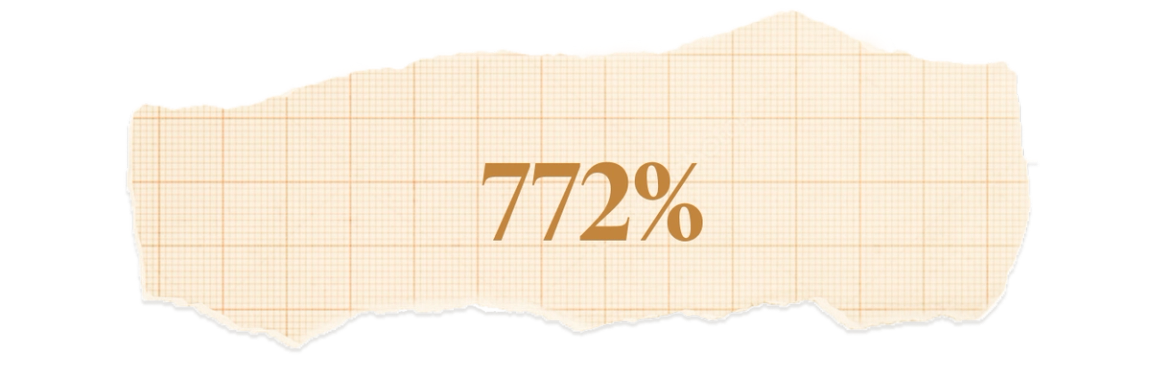 The growth of Nigeria’s net foreign exchange reserves over the last two years — rising to $34.8 billion in 2025 from $3.99 billion in 2023, according to central bank Governor Olayemi Cardoso. For much of the last decade, Nigeria faced a dollar shortage crisis that left foreign companies unable to move earnings abroad, which deterred investors, even as the government struggled with oil theft along pipelines that limited forex revenues. Foreign currency reserves have grown following a raft of policy changes put in place by Nigerian President Bola Tinubu since taking office in 2023, including removing a fixed peg for the naira currency, while the central bank has resolved a backlog of forex obligations. Better reserve management and stronger dollar inflows have continued to lift the country’s foreign currency reserves, which stood at $23.11 billion at the end of 2024, Cardoso said. |
|
Africa telcos target $40 smartphone |
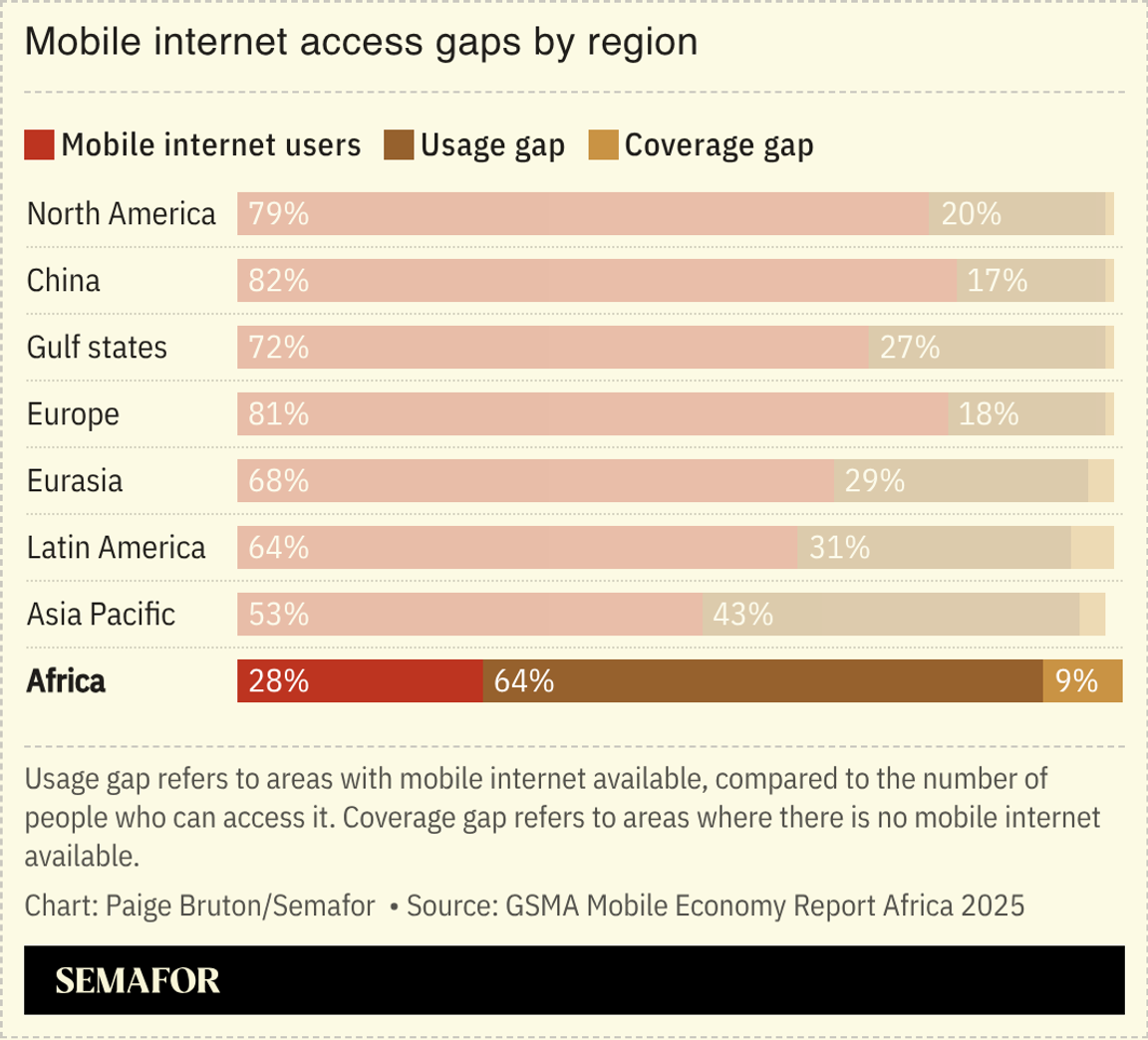 Africa’s leading telecom network operators plan to roll out a new $40 4G smartphone as part of a push to bridge affordability gaps that limit access to digital services on the continent. Airtel, Axian Telecom, Ethio Telecom, MTN, Orange, and Vodacom — who together serve some 800 million Africans — are in talks with manufacturers on the device’s specifications, as part of an affordability coalition brought together by the mobile industry trade body, the GSMA. DR Congo, Ethiopia, Nigeria, Rwanda, Tanzania and Uganda will be pilot countries for the phone’s launch, with no date released as yet. Africa’s mobile phone market is dominated by Chinese brands that sell models offering functionalities that are more sensitive to the needs of users on the continent, and are much cheaper than higher-end products from Apple and Samsung. Still, just one in four people in Africa owned a smartphone in 2024 compared to the global average of more than half, a recent GSMA study said, with affordability cited as the main reason for the trend. |
|
 Business — and the way companies operate — is transforming in ways both subtle and seismic. The forces moving Wall Street and global enterprise are accelerating, powered by AI breakthroughs, shifting capital flows, and evolving ideas about risk. In every sector, technology, regulation, and government are rewriting the balance of power and possibility. To help decode the fast-changing forces reshaping business and markets, Semafor is launching Compound Interest from Semafor Business — a podcast featuring in-depth conversations with the leaders building the next chapter of the global economy. Led by Liz Hoffman and Rohan Goswami, Compound Interest will pull back the curtain, and talk directly to the operators, experts, and innovators behind some of the world’s most consequential companies. On this week’s inaugural episode, Uber CEO Dara Khosrowshahi explains how the company is evolving from ride‑hailing app to an AI‑era operating system for moving people and stuff around cities.
|
|
 Business & Macro |
|
|


