|
 |



On Tuesday in Texas, Democratic voters in Dallas and Williamson Counties, Texas, had their work cut out for them if they wanted to vote. They had to figure out, on the day of, where their polling places were. That’s because the local Republican parties backed out of the years-long tradition of holding joint primaries, and that information wasn’t communicated widely. One voter reported showing up at his polling place and being sent somewhere else, a 15-minute drive away, only to be told to return to the original location. This is just flat-out voter suppression— designed to deny people their right to vote.
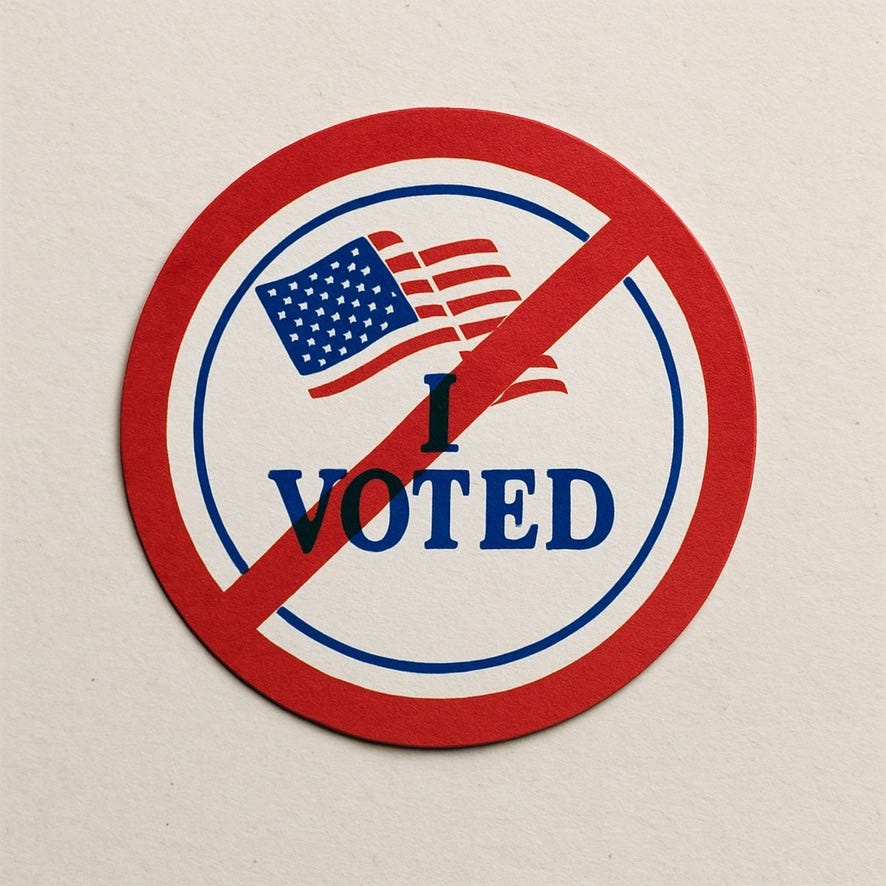 |
It feels like a test run for the midterm elections.
According to posters on Twitter who had receipts in the form of videos like this one, Black and Brown voters showed up to vote, only to be told that the polling place was “only for Republicans.” This type of last-minute gambit is appalling. But voter suppression is nothing new to Democrats in the Deep South. In fact, it defines the landscape. Examples range from mailers targeting Black voters that tell them their day to vote is the Thursday after an actual election to last-minute changes to assigned polling place locations to impossibly long lines to inadequate ballot deliveries to heavily Democratic boxes that require voters to wait for additional deliveries before they can vote.
We expect and try to prepare our communities for those experiences. We shouldn’t have to.
 |
So far this cycle, the president of the United States has asked state Republican leaders to draw new, rigged voting maps so he can try to retain Republican control of the House. He tried to pass a major voter suppression law, the SAVE Act. And he has repeatedly called on Republicans to “nationalize” elections, which is to say to take control away from local folks (Democrats) who are charged with running them. It’s an open call for mass voter suppression. Last night was yet another wake-up call.
As we have recently discussed—and it bears repeating—voting is a right, not a privilege. Increasingly, Republicans, frequently motivated by the leader of their party, feel free to treat it like a privilege, one that exists only for them. I hate the advice I’m about to give, because it should be easy for every qualified American to vote, but the reality is, we are going to have to work hard and fight to be able to exercise that right this year. That means:
Advance planning so you can register to vote, stay registered, vote, and make sure your vote is counted (I write about this in detail in my book, Giving Up is Unforgivable: A Manual For Keeping A Democracy)
Using your financial resources to obtain, and if you can, help others get the ID they need through groups like VoteRiders.
Getting involved with your local League of Women Voters to help spread advance education about polling places and voting requirements in your community.
The time to figure out where you’re going to plug in is now. There are lots of groups who will warmly welcome you. Sharing information with friends and family is critically important, and something each of us can to do make sure everyone is up to date or important details like changes in polling places.
But there’s more.
Last month, Justice Clarence Thomas wrote the majority opinion in U.S. Postal Service v. Konan. He held that the government could not be sued for intentional nondelivery of mail. That, of course, includes mail-in ballots. The decision was 5-4. In a dissent authored by Justice Sonia Sotomayor, and joined by Justices Elena Kagan, Neil Gorsuch, and Ketanji Brown Jackson, Sotomayor argued that the majority delivered far more protection from lawsuits to the Postal Service than Congress had intended to give it and that it’s not “the role of the Judiciary to supplant the choice Congress made because it would have chosen differently.”
But choose differently, the majority did. Although Konan is about the delivery of residential mail, its impact on voting will be far-reaching, removing any consequences of even intentional misdelivery or withholding of mail-in ballots. That’s alarming in the context of a government office that has a history, under the leadership of Trump crony Louis DeJoy, of using anti-voter tactics. DeJoy stepped down last March after reporting surfaced that he had invited DOGE to help him find “further efficiencies” at USPS. David Steiner, a former Waste Management CEO who has served on the board of USPS competitor FedEx, is the new Postmaster General.
Trump is undoubtedly pleased by the Supreme Court’s recent opinion, given his well-documented hostility toward mail-in ballots—an animosity that remains puzzling given that he (and reportedly other Republicans) frequently uses them. People who want to keep other people from voting may see value in the Konan decision, because it adds an element of uncertainty into mail-in voting, and people who were planning on using it or have no other option may just give up because they think their ballot won’t get counted. And, with no consequences for even intentional failure to deliver mail, there could be a disruption of ballots from, say, certain parts of certain counties in advance of election day.
That’s not to say that Konan should permit the Post Office to do this, and there are other laws that protect elections. But increasingly, we live in a world where we have to contemplate the worst case scenario and prepare for it when it comes to voting if we want our votes to count.
Many people, and especially those who are ill, away for school, have a disability, or must travel on election day rely on mail-in voting. Eight states permit elections to be conducted entirely by mail: California, Colorado, Hawaii, Nevada, Oregon, Utah, Vermont, and Washington state. Nebraska and North Dakota permit counties to opt in to mail-in voting. Other states have a mail-in voting option for small elections or rural counties. If the Court ends the counting of late-delivered ballots, it will undoubtedly disenfranchise voters who may not hear about the new rule in time and appreciate the consequences. Without regard to which candidates are hurt the most by this—apparently Republicans who are pursuing these actions are betting it will be Democrats—it’s rank voter suppression.
The only real answer to this debacle is that voters who routinely use mail ballots need to advance their timelines, and people who need to apply for an absentee mail ballot should do so as soon as possible and mail it in as soon as possible. It will be increasingly important to track your ballot’s delivery and make sure it gets counted.
Everything Trump touches dies. Sadly, even the Postal Service.