| Forwarded this email? Subscribe for more |



 |
| By The Free Press |
It’s Thursday, March 5. This is The Front Page, your daily window into the world of The Free Press—and our take on the world at large. Today: The Dubai expats sheltering in luxury. Europeans get mugged by climate reality. Newsom misses the point in Iran. And much more.
But first: If the Iranian regime falls, what comes next?
President Donald Trump hasn’t eased his campaign to batter Iran’s regime into submission. Iran “has no navy, it’s been knocked out. They have no air force, that’s been knocked out. They have no air detection, that’s been knocked out,” Trump declared from the Oval Office, less than 100 hours into the fighting.
Yet few U.S. reports so far have captured how Iranians opposed to the regime are responding amid the rubble and twisted steel. Even a battered regime will likely cling to power until its remains are pushed out by an organized force.
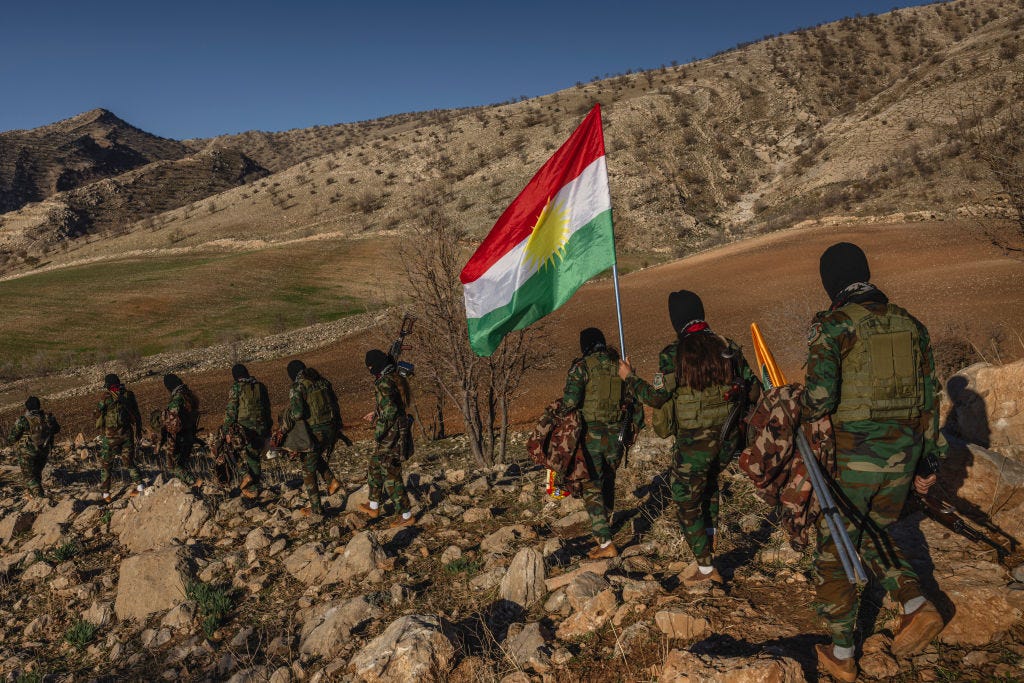
For early signs of resistance, look to the Kurds. The minority group in Iran’s mountainous northwest has clashed with the regime since before the 1979 revolution reached its end. Last month, five Kurdish groups committed to fight the regime, and now they’re organizing under the cover of U.S.-Israeli air power. Jay Solomon reports on whether these fighters could push out the regime—or plunge Iran into civil war:
Iran’s Persian majority lacks much organized resistance because their rulers have killed, jailed, or cast out would-be opposition leaders. Now millions are looking to those exiled and imprisoned men to emerge and command their nation. Amy Kellogg profiles some of the brightest lights, from the former prime minister who stood up to the hard-liners, to Reza Pahlavi, the deposed crown prince who could restore the shah’s throne.
With the internet and cellular networks knocked out across much of Iran, it’s difficult for dissidents to rally, or even know what’s going on in the war. For decades, the U.S. had a tool tailor-made for this purpose—until the Trump administration began to dismantle it last year. What motivated Trump to gut radio services like Voice of America, which could draw millions of Iranians toward America’s mission? Read Frannie Block’s investigation to find out.
—Mene Ukueberuwa
 |
Missiles Fall Nearby, but Dubai’s Expats Don’t Want to Leave | ||||
 | ||||
|
The NYC Public Defender Who Sends Books to Prisoners | |||||||||||
 | |||||||||||
|


How Reality Destroyed Europe’s Green Energy Dreams | ||||
 | ||||
|
Newsom Looks Small in the Face of a Big War | ||||
 | ||||
|
