|
|
|
|
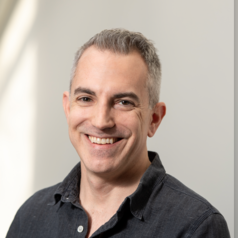
Just days after Iran’s supreme leader, Ali Khamenei, was killed in the US-Israeli airstrikes on his country, the regime appears close to naming his son as his successor.
So, who is Mojtaba Khamenei, and what kind of leader would he be?
According to Islamic studies expert Mehmet Ozalp, Mojtaba is not known for his religious authority or public persona. Rather, he is a behind-the-scenes operator who has built considerable power and influence by aligning himself closely with the Islamic Revolutionary Guard Corps.
During war and instability, autocratic regimes typically prioritise continuity and control, Ozalp writes. So we shouldn’t expect a major shift from Mojtaba, compared to his father.
In fact, given Mojtaba’s ties to the security establishment, the regime will only harden its animosity towards the US and Israel and continue to meet public unrest with swift repression, he says.
|
|
Justin Bergman
International Affairs Editor
|
|

Mehmet Ozalp, Charles Sturt University
Ali Khamenei’s son is known less for speeches or religious authority than for his influence and the networks he’s built behind the scenes.
|

Michelle Grattan, University of Canberra
In 2003, Labor was strongly against the Iraq war. More than 20 years later and now in power, Albanese has had to do a different sort of political calculus.
|

Rebecca Strating, La Trobe University
Even before Trump’s return to power, Australia has been building stronger mini-groupings and bilateral ties in the region.
|

José-Miguel Bello y Villarino, University of Sydney; Henry Fraser, Queensland University of Technology
Australia is taking a ‘wait and see’ approach to AI regulation.
|

David Ubilava, University of Sydney
Australia gets half its urea – a crucial nitrogen fertiliser – from countries now impacted by the war. But research suggests higher food prices aren’t a given.
|

Dan van den Hoek, University of the Sunshine Coast; Anthony Bedford, University of the Sunshine Coast; Bridgette O'Malley, University of the Sunshine Coast
New F1 regulations could have a huge impact this year, starting with the Melbourne Grand Prix – which no Australian has ever won.
|

Erik Meijaard, University of Kent; Kristofer M. Helgen, University of Technology Sydney; Tim Flannery, Australian Museum
A plantation worker photographed this new genus of mammal in New Guinea, thought to have been dead for 6,000 years.
|

Emily Brayshaw, University of Technology Sydney
By creating a costume that can be taken off, even a ‘naked’ one, costume designers help create an important separation between the role and the actor.
|
Politics + Society
|
-
Michelle Grattan, University of Canberra
Labor is expected to be returned to power in a landslide. But the election is also the first test of One Nation’s ability to turn its surging popularity into seats.
-
Denis Muller, The University of Melbourne
The fact their partnership lasted so long invites a reflection on the contradiction between the kind of society we say we want and the kind of media we prize.
-
Jack Anderson, The University of Melbourne
Current geopolitical uncertainty means the Winter Paralympics’ opening ceremony is attracting attention for the wrong reasons.
-
Michelle Grattan, University of Canberra
Addressing the federal parliament, Carney once again pressed his now familiar argument for middle power activism as the old world order disintegrated.
-
Michelle Grattan, University of Canberra
The byelection for the regional New South Wales seat of Farrer, vacated by former opposition leader Sussan Ley, will be held on May 9.
-
Hilary A Smith, Te Kunenga ki Pūrehuroa – Massey University
The recently introduced English Language Bill will change little, but highlights a deeper
issue. NZ still lacks a coherent framework for language policy.
-
Vaughan Cruickshank, University of Tasmania
Dennis Cometti was one of Australia’s finest sports broadcasters, with many of his one-liners to live on in footy vernacular.
|
|
Health + Medicine
|
-
Henrietta Byrne, University of Sydney; Alex Broom, University of Sydney; Katherine Kenny, University of Sydney
When a loved one is in palliative care, the last thing you want to think about is money. But financial stress at this difficult time is front and centre.
-
Trevor Mazzucchelli, Curtin University
Nothing is perfect, nothing lasts and nothing is ever finished. That’s the core of wabi-sabi. Psychology suggests this Japanese philosophy may be onto something.
-
Shalini Arunogiri, Monash University
Starting a GLP-1 drug was linked with a 14% overall reduced risk of new substance use disorders and a lower risk of harm for those with existing use disorders.
|
|
Business + Economy
|
-
Heather Bray, The University of Western Australia
Australian and NZ farmers have long argued only cow’s milk should be sold as ‘milk’, in line with UK and European laws. This is what our current rules allow.
-
Rohan Havelock, University of Auckland, Waipapa Taumata Rau
Rising premiums and insurer retreat reflect deeper shifts in risk – and strain on a system built for a different era.
|
|
Environment + Energy
|
-
Alan Brent, Te Herenga Waka — Victoria University of Wellington
New Zealand could meet its electricity needs through renewables and avoid power shortages in dry years by combining battery systems with pumped hydro schemes.
-
Andrew Weeks, The University of Melbourne; Adam Miller, RMIT University; Collin Ahrens, Western Sydney University
Population crashes are dangerous and can be irreversible. But new research shows they are not always an evolutionary dead end.
-
Hussein Dia, Swinburne University of Technology
Conflict in the Middle East has led to long petrol queues in Australia. Going electric ends reliance on fuel imports – but will you get back the EV premium?
|
|
Science + Technology
|
-
James Dwyer, University of Tasmania
Torpedoes are hard to stop – and harder to see coming.
-
T.J. Thomson, RMIT University; Aimee Hourigan, Queensland University of Technology
More control is a good thing – but be wary of privacy risks and ensure your media ‘diet’ is still balanced.
|
|
|
| | |


